
 Khyati Sharma 2026-11-18
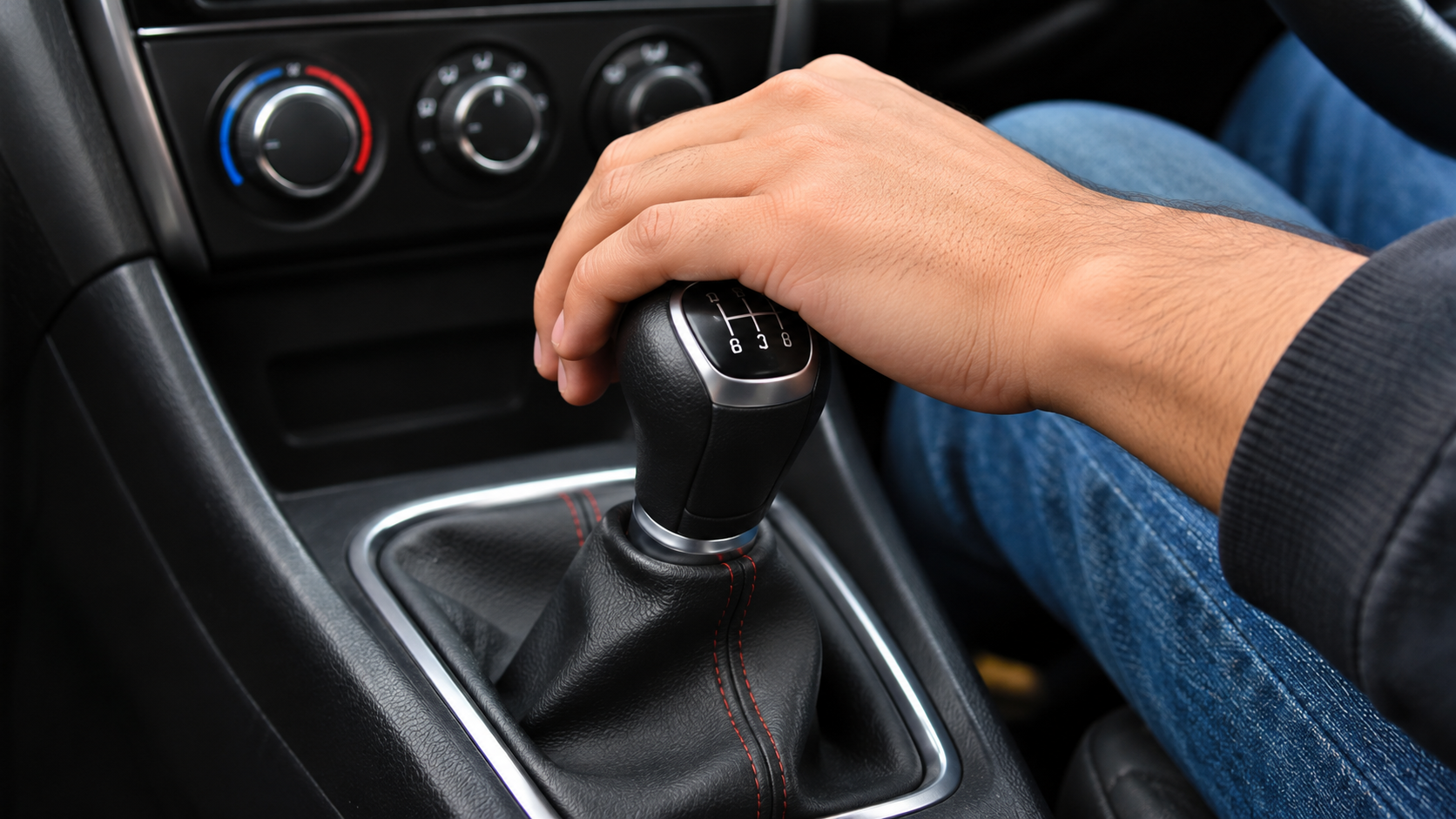
Many drivers develop small habits while driving without realising that they may affect their vehicle over time. One common example is resting a hand on the gear lever while driving a manual car. It may feel comfortable, especially during long journeys or in heavy traffic, but is it actually harmful to the gearbox?
Some drivers believe that even light pressure on the gear lever can damage internal transmission components, while others consider this warning an exaggerated myth. The truth depends on the type of transmission, the amount and direction of pressure applied, and the design of the gear-shifting mechanism.
Sport Mode Increases the Engine’s Maximum Power in Every Car: Myth or Fact?
The common belief is that keeping your hand on the gear lever while driving puts continuous pressure on internal gearbox components. This pressure may affect the selector forks, synchroniser assembly and other parts responsible for engaging the gears.
In a manual car, the gear lever is connected to a mechanical shifting mechanism. When the driver selects a gear, movement from the lever is transferred through the linkage or selector mechanism to components inside the transmission.
The concern is that resting a hand on the lever may unintentionally apply pressure to this mechanism even when the driver is not changing gears.
However, it is important to understand that simply touching the gear knob does not automatically mean the gearbox is being damaged. The amount and direction of force matter, and transmission designs differ between vehicles.

Yes, it can contribute to premature wear in some manual transmission designs, particularly when the driver continuously pushes or pulls the lever while driving.
The gear lever should normally be used when selecting or changing gears. Keeping unnecessary pressure on it can place additional load on parts of the shifting mechanism.
Some vehicle manufacturers specifically advise drivers not to use the gear lever as a hand rest. For example, Kia's owner's manual warns that doing so can cause premature wear of the transmission shift forks.
However, this does not mean that placing your hand lightly on the gear knob for a moment will immediately damage the gearbox. The risk is associated with repeated or sustained unnecessary pressure, especially when it moves the selector mechanism against components that are rotating inside the transmission.
Therefore, the most sensible approach is to avoid making the gear lever a permanent hand rest.
To understand the issue, it helps to know how a manual transmission operates.
A manual gearbox contains several gears, shafts, synchronisers, selector forks and other mechanical components. These parts work together to transfer engine power to the wheels at different speeds and torque levels.
When a driver wants to change gears, the following process takes place:
The driver moves the gear lever into the required position.
The movement is transferred through the gear linkage or selector mechanism.
The selector fork moves the relevant synchroniser sleeve.
The synchroniser helps match the rotational speeds of the components.
The selected gear is engaged, allowing power to pass through the transmission.
Once the gear is selected, the driver should release the gear lever rather than continue applying unnecessary pressure.
The selector forks and synchroniser components are designed to operate during gear changes. Continuous pressure that moves or loads these components unnecessarily may increase wear, depending on the transmission's design.
Down Payment and Car Loan EMI: How Much Should You Pay?
Resting your hand on the gear lever is generally discussed in relation to manual transmissions. The main components that may be affected by excessive or sustained pressure include:
1. Selector Forks
Selector forks help move the synchroniser sleeves into position when a driver changes gears. They are important parts of the manual transmission mechanism.
If unnecessary pressure is repeatedly applied to the gear lever in a direction that loads the selector mechanism, it may increase stress or friction on the selector forks and their contact surfaces.
Over time, this can contribute to premature wear in some gearbox designs.
2. Synchroniser Assembly
Synchronisers help match the rotational speeds of transmission components before a gear is engaged. This allows smoother gear changes and reduces the chances of gear grinding.
If the shifting mechanism is held under unnecessary pressure, some designs may experience additional contact or loading around the synchroniser assembly.
However, light contact with the gear knob alone does not necessarily mean that the synchronisers are wearing out.
3. Gear Linkage
The gear linkage connects the gear lever to the transmission's internal selection mechanism. Depending on the vehicle, it may use rods, cables or other mechanical arrangements.
Repeatedly pushing or pulling the lever when no gear change is required can place unnecessary load on the linkage and its associated components.
Resting your hand on the gear lever is not the only driving habit that can contribute to unnecessary transmission wear. Several other practices should also be avoided.
Forcing the gear lever: Trying to push a gear into position when the transmission does not engage smoothly can put unnecessary stress on the shifting mechanism.
Changing gears without fully pressing the clutch: In a manual car, incomplete clutch disengagement can make gear changes difficult and increase wear.
Selecting reverse while the car is moving: Always bring the vehicle to a complete stop before selecting reverse in a conventional manual transmission.
Keeping pressure on the lever: Avoid continuously pushing or pulling the gear lever after selecting a gear.
Ignoring gearbox oil maintenance: Using the incorrect transmission lubricant or neglecting the recommended replacement schedule can affect gearbox performance.
Aggressive gear changes: Rough or hurried shifting can increase stress on the synchronisers and other transmission components.
Good driving habits and regular maintenance can help keep the gearbox operating smoothly for longer.
|
Transmission type |
Effect of resting a hand |
Recommended practice |
|
|
Manual gearbox |
Sustained directional pressure may contribute to wear in the selector mechanism, depending on design |
Release the lever after shifting |
|
|
AMT gearbox |
Gear changes are controlled electronically and mechanically; resting on the selector is generally not the same as loading a manual shift fork |
Use the selector as instructed in the owner's manual |
|
|
Torque-converter automatic |
The selector operates through a different mechanism and is not normally connected to manual-style shift forks |
Keep your hand on the steering wheel |
|
|
CVT gearbox |
The selector controls transmission operating modes rather than manually engaging individual gears |
Avoid unnecessary movement or pressure on the selector |
|
|
Dual-clutch transmission (DCT) |
Gear selection is electronically and mechanically controlled through a different system |
Follow the manufacturer's operating instructions |
|
Even when the gearbox is unlikely to be affected by simply resting a hand on the selector, drivers should avoid unnecessary contact and keep their hands ready to control the steering wheel.
Apart from mechanical considerations, there is another important reason to avoid resting your hand on the gear lever: driving safety.
Keeping both hands on the steering wheel, whenever practical, helps drivers maintain better control of the vehicle. Sudden braking, unexpected obstacles, sharp turns and emergency situations may require quick steering corrections.
When one hand remains on the gear lever unnecessarily, the driver may have less control or take longer to respond to an unexpected situation.
This is particularly important on highways, busy city roads and during bad weather.
After completing a gear change, return your hand to the steering wheel. This simple habit encourages safer driving and avoids unnecessary pressure on the gear lever.
A New Car Needs No Checks Before Delivery: Myth or Fact?
Resting your hand on the gear lever does not automatically mean that your gearbox is damaged. However, drivers should pay attention to unusual transmission behaviour.
Some possible warning signs include:
Difficulty selecting certain gears.
Grinding sounds while changing gears.
Unusual vibrations from the gear lever.
Gears slipping out of position.
Increased resistance while shifting.
Unusual noises coming from the gearbox.
These symptoms can have several causes, including worn synchronisers, clutch problems, linkage issues or incorrect transmission oil. They should not automatically be attributed to resting a hand on the gear lever.
If you notice persistent symptoms, have the vehicle inspected by a qualified mechanic instead of continuing to drive with forceful gear changes.

A manual gearbox is designed to handle regular gear changes, but correct driving habits can help reduce unnecessary wear.
Here are some useful practices:
1. Use the gear lever only when changing gears: Once the required gear is selected, release the lever and return your hand to the steering wheel.
2. Press the clutch fully: Always follow the manufacturer's instructions when changing gears in a manual car.
3. Avoid forcing gears: If the gear does not engage smoothly, do not apply excessive force. Have the issue checked if it happens repeatedly.
4. Stop completely before selecting reverse: This helps avoid unnecessary stress on the transmission.
5. Follow the recommended gearbox oil schedule: Use the lubricant specification and replacement interval mentioned in the owner's manual.
6. Avoid aggressive shifting: Smooth and controlled gear changes help reduce unnecessary stress on transmission components.
7. Pay attention to unusual noises: Grinding, whining or persistent shifting problems should be inspected by a professional.
Resting your hand on the gear lever is not an instant gearbox killer, but it is a habit worth avoiding.
In some manual transmission designs, sustained pressure on the lever can place unnecessary load on the selector mechanism and contribute to premature wear. However, simply touching the gear knob or briefly resting your hand on it does not automatically damage the gearbox.
The best practice is straightforward: use the gear lever when changing gears, release it once the gear is selected, and keep your hands on the steering wheel whenever practical.
A little attention to everyday driving habits can help maintain smoother gear changes, reduce unnecessary mechanical stress and support the long-term health of your vehicle.