
 Khyati Sharma 2026-06-21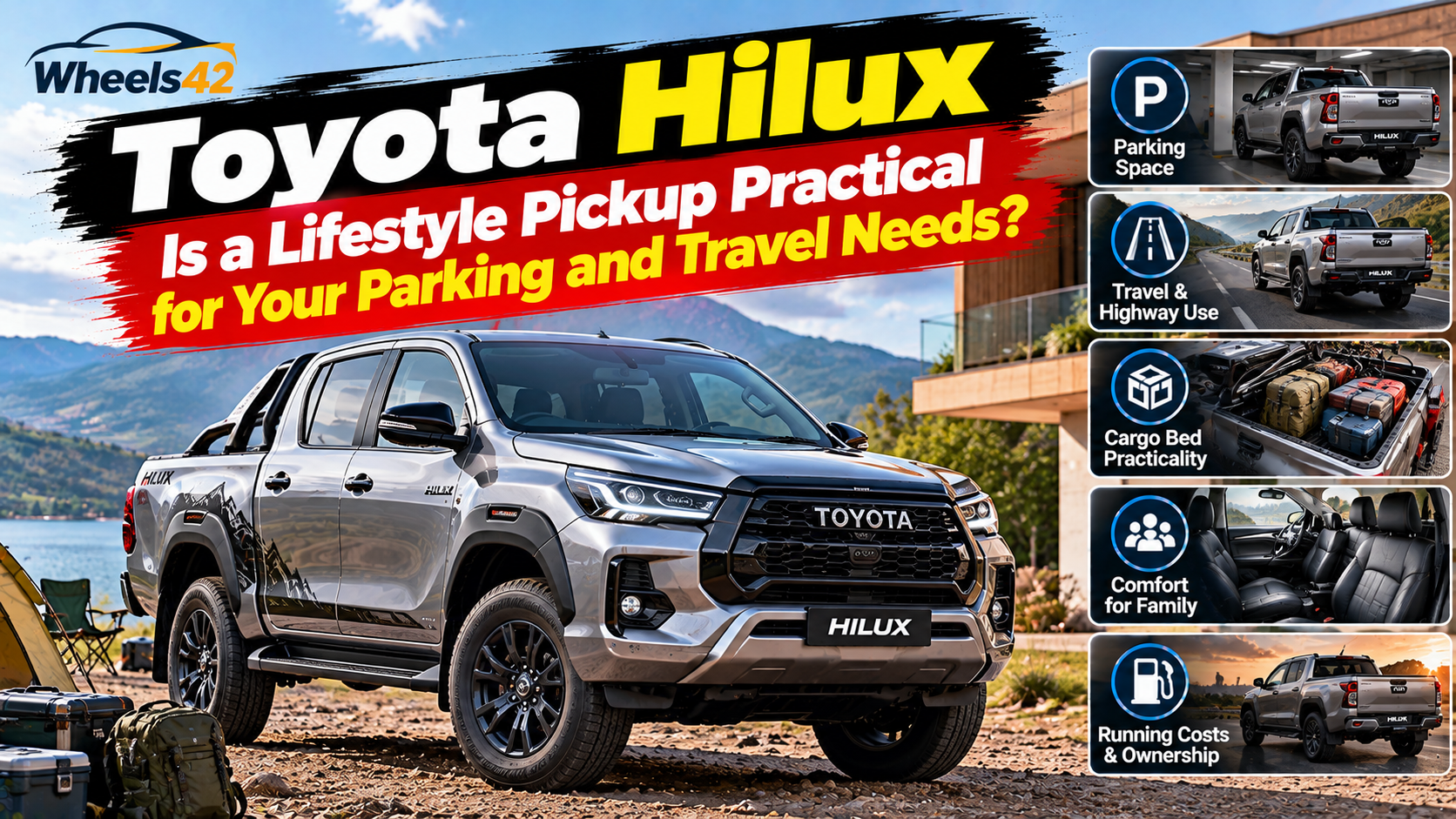
The Toyota Hilux is a lifestyle pickup designed for buyers who want a combination of rugged capability, strong road presence and everyday versatility. Unlike conventional SUVs, the Hilux features an open cargo bed, a body-on-frame construction and a design intended to handle demanding driving conditions.
In India, the Hilux appeals to enthusiasts, outdoor travellers and buyers who want a vehicle that stands out from the usual family SUV. It can be useful for highway journeys, outdoor adventures and carrying equipment, but its large dimensions raise an important question: is it practical for everyday parking and regular travel?
Before investing in a lifestyle pickup, buyers should consider their parking arrangements, daily routes, passenger requirements, fuel expenses and the frequency with which they will use the cargo bed.
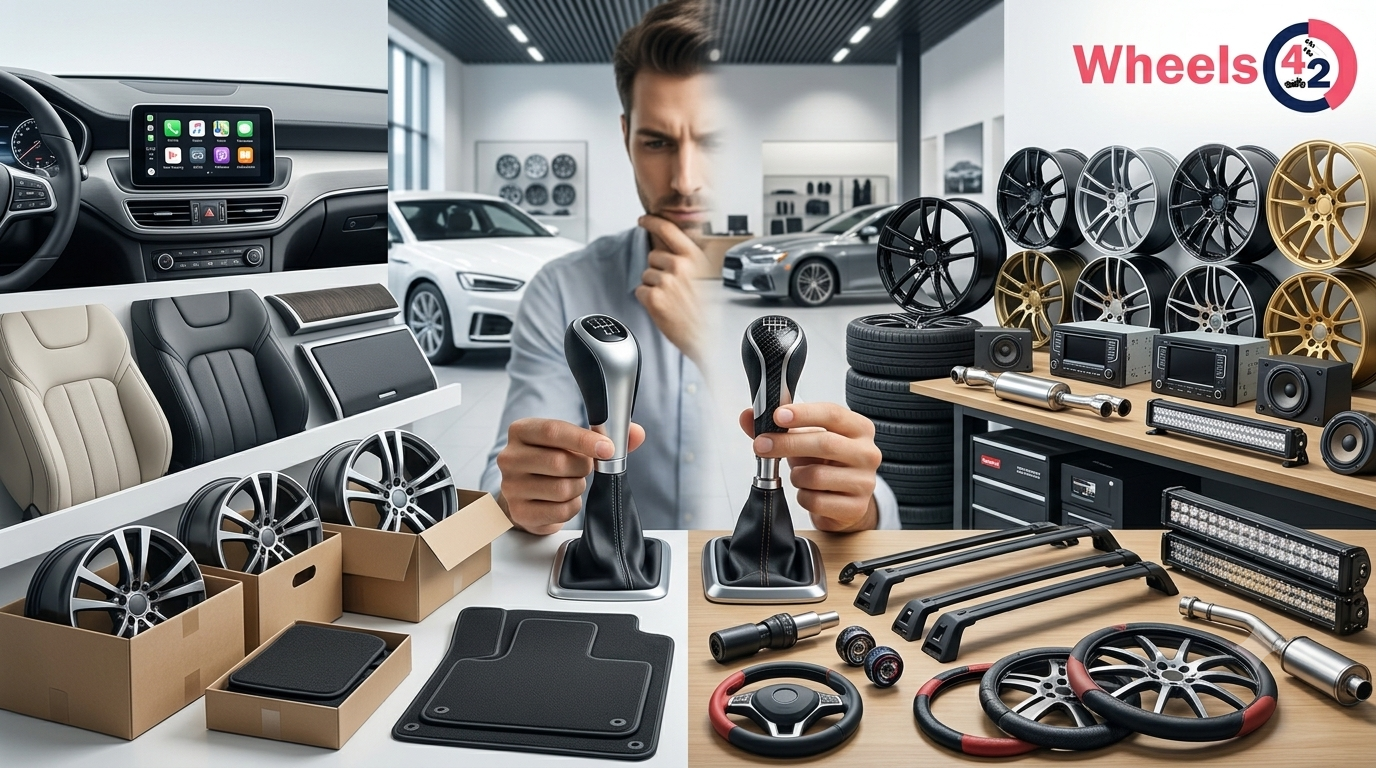
Company-Fitted vs Aftermarket Accessories: Which Is Better?
One of the biggest challenges of owning the Toyota Hilux is its size. Its long body and wide stance provide a substantial road presence, but they can make parking more demanding than in a compact SUV.
The Hilux measures approximately 5.3 metres in length, depending on the specification. This means owners need to pay attention to parking-bay length, turning space and clearance around the vehicle.
In apartment complexes, older residential neighbourhoods and crowded commercial areas, parking may require additional planning. A space that comfortably accommodates a hatchback or midsize SUV might not be suitable for a pickup of this size.
Before purchasing, check the following:
Home parking: Measure the available parking space, including the room needed to open the doors.
Office parking: Confirm that the vehicle fits within the allocated parking bay.
Basement access: Check ramp width, turning angles and height restrictions.
Street parking: Consider whether the vehicle will obstruct traffic or make manoeuvring difficult.
Turning space: Test how easily the pickup can enter and leave tight spaces.
A test drive through your regular neighbourhood can reveal practical challenges that may not be apparent during a dealership visit.
The Hilux is built around a rugged pickup platform, which gives it a different driving character from a typical urban SUV. Its elevated seating position provides a commanding view of the road, while the large exterior dimensions require more attention in congested traffic.
On wider roads and highways, the Hilux can feel well suited to longer journeys. However, narrow lanes, crowded markets and tight U-turns may require additional manoeuvring.
Drivers moving from a compact car should also become familiar with the vehicle's dimensions and rear visibility. Parking sensors and a reversing camera, where equipped, can help, but they do not eliminate blind spots.
For buyers who mainly commute through busy city centres, a smaller SUV cars may be easier to live with. The Hilux makes more sense when its capability and distinctive pickup format provide genuine value.

The Hilux can be an appealing option for highway travel, weekend road trips and outdoor adventures. Its diesel engine provides strong pulling power, while its body-on-frame construction is designed to support demanding usage.
However, ride comfort differs from that of many monocoque SUVs. The suspension is engineered to handle a variety of loads and road conditions, and the pickup may feel firmer over uneven urban roads, particularly when the cargo bed is empty.
Before purchasing, assess:
Front-seat comfort during longer drives.
Rear-seat legroom and backrest comfort.
Suspension response over potholes and speed breakers.
Cabin noise at highway speeds.
Ease of entering and exiting the cabin.
Ride comfort with and without additional cargo.
Buyers who regularly travel with family should take everyone along for the test drive. The Hilux's lifestyle appeal is important, but passenger comfort should remain a central consideration.
Best Time of the Year to Buy a New Car in India
The open cargo bed is one of the Hilux's defining advantages. It can accommodate outdoor equipment, camping gear, tools, sports equipment and other items that may be awkward to fit inside a conventional SUV.
For people who enjoy camping, cycling, photography trips or outdoor activities, the cargo bed offers flexibility that a traditional enclosed boot may not provide.
However, the open design also introduces some limitations. Cargo can be exposed to rain, dust and theft unless appropriate covers or accessories are installed. Heavy or irregularly shaped items also need to be secured properly.
The cargo bed is not necessarily useful for every buyer. If you rarely transport bulky equipment, you may find that a conventional SUV offers more convenient enclosed luggage storage.
The Indian-market Toyota Hilux has been offered with a 2.8-litre diesel engine paired with manual or automatic transmission options, depending on the variant and model year.
The engine's torque-focused character suits highway cruising, carrying loads within permitted limits and tackling challenging road conditions. Four-wheel-drive variants offer additional capability for appropriate off-road use.
However, buyers should distinguish between off-road capability and everyday convenience. The Hilux's dimensions and construction may be advantageous on rough terrain but less convenient in narrow urban environments.
The exact power output, torque figures, drivetrain and equipment should be checked against the current variant being considered.
|
Specification |
Details |
|
Vehicle type |
Lifestyle pickup truck |
|
Engine |
2.8-litre diesel |
|
Transmission |
Manual or automatic, depending on variant |
|
Construction |
Body-on-frame |
|
Seating capacity |
Five |
|
Cargo area |
Open rear cargo bed |
|
Drivetrain |
Depends on variant |
|
Primary strengths |
Ruggedness, highway touring and cargo versatility |
|
Main practical consideration |
Large exterior dimensions and parking requirements |
A lifestyle pickup can involve higher running costs than a smaller commuter vehicle, depending on driving conditions and usage.
Actual fuel consumption depends on traffic, driving style, load, road conditions and drivetrain. Frequent city driving may result in different fuel economy from steady highway cruising.
Ownership expenses should also include insurance, scheduled servicing, tyres and any accessories required for the cargo bed.
Potential accessories such as a bed cover, cargo liner, protective equipment or additional storage solutions can improve practicality, but they also add to the overall purchase cost.
Before buying, estimate your annual driving distance and compare expected fuel and maintenance expenses with those of a conventional SUV.

The Hilux offers seating for five, making it possible to use as a family vehicle. However, its rear-seat comfort, ease of access and overall dimensions should be considered carefully.
Families that frequently travel with children or elderly passengers should assess how easily everyone can enter and exit the cabin. The rear seating arrangement should also be checked for comfort on journeys lasting several hours.
Luggage requirements are another consideration. Although the cargo bed can carry substantial equipment within the vehicle's permitted limits, it is not as convenient as a covered boot for everyday shopping, luggage and valuables.
For buyers who primarily need a comfortable family vehicle, a conventional SUV may offer a more balanced combination of passenger comfort, enclosed luggage space and urban usability.
|
Requirement |
Toyota Hilux |
Conventional SUV |
|
Parking in tight spaces |
More challenging due to size |
Often easier, depending on the model |
|
Carrying bulky equipment |
Open cargo bed is useful |
Depends on boot space and seat-folding options |
|
Family travel |
Suitable after checking rear-seat comfort |
Often more passenger-focused |
|
Urban commuting |
Requires additional manoeuvring |
Smaller models can be more convenient |
|
Outdoor adventures |
Strong lifestyle and off-road appeal |
Depends on ground clearance and drivetrain |
|
Enclosed luggage storage |
Requires suitable cargo protection |
Usually more convenient |
|
Daily running costs |
Depends on usage and specification |
Varies by vehicle size and engine |
The Hilux may suit buyers who have adequate parking space, regularly travel on highways and enjoy outdoor activities that benefit from an open cargo bed.
It can also appeal to people who want a rugged vehicle for trips involving camping equipment, bicycles or other bulky items.
On the other hand, drivers who mostly travel through congested city centres, use narrow residential streets or depend on small parking spaces should carefully assess its everyday practicality.
Before booking, take a test drive on familiar routes, verify the parking dimensions and compare the total ownership cost with that of a conventional SUV.