
 Khyati Sharma 2026-10-01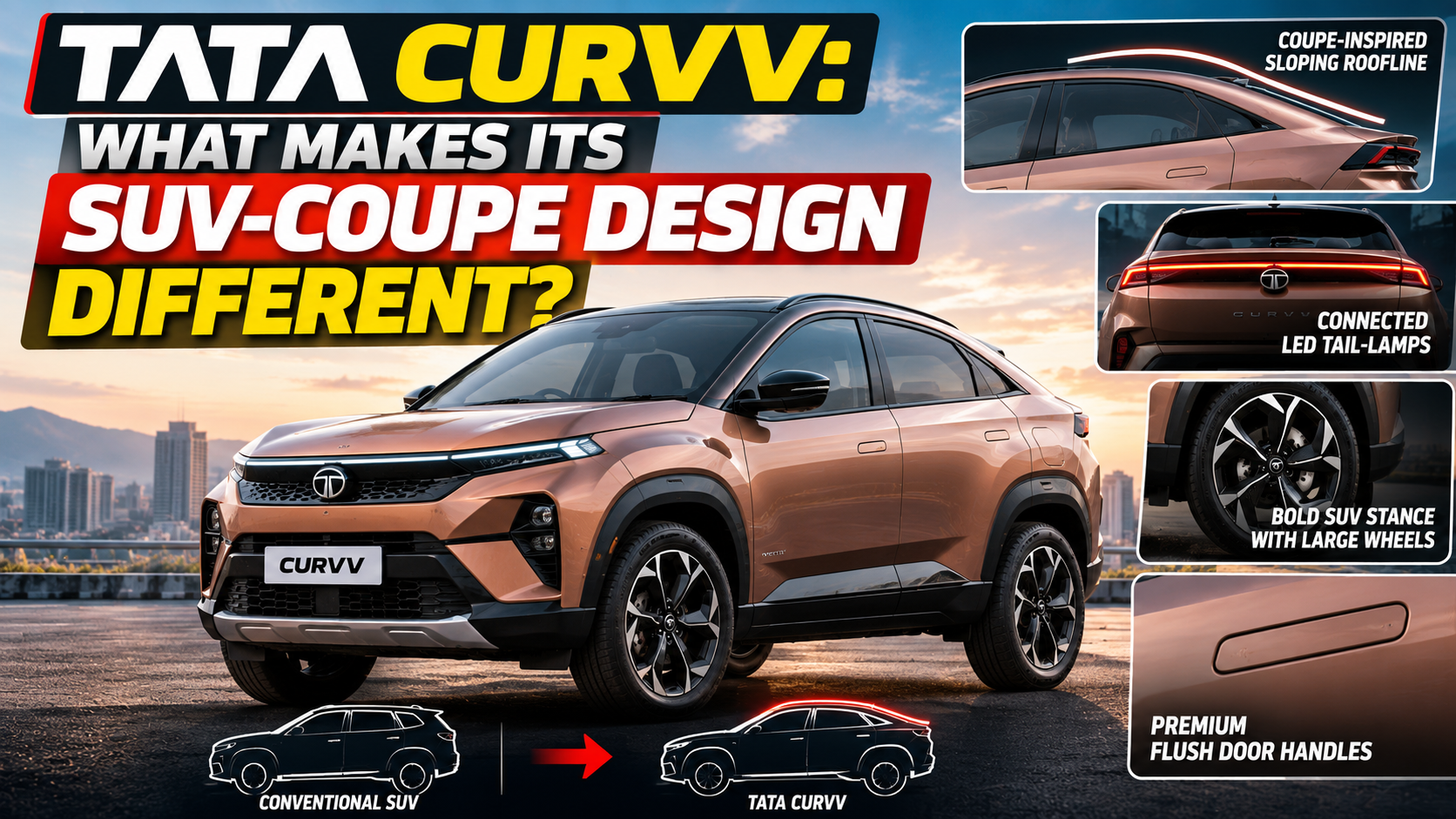
The Tata Curvv stands apart from conventional SUVs with a design that combines the raised stance and road presence of an SUV with the sleek, flowing silhouette of a coupe. Instead of following the traditional upright and boxy SUV formula, the Curvv introduces a more aerodynamic profile while retaining the practicality expected from a family-oriented vehicle.
Tata Motors positions the Curvv as India's first SUV-coupe in the mainstream mid-size SUV segment. The model is available with both internal-combustion and electric powertrain options, giving buyers the choice between different forms of propulsion while retaining the same distinctive design philosophy.
But what exactly makes the Curvv's design different from a conventional SUV?
The most noticeable feature of the Tata Curvv is its sloping roofline.
Traditional SUVs generally have a relatively upright roof and rear section to maximise cabin and luggage space. The Curvv takes a different approach, with the roof gradually dropping towards the rear.
This gives the vehicle a more dynamic side profile and makes it look closer to a coupe than a conventional SUV.
The design also helps the Curvv stand out on the road. Its flowing roofline is combined with a raised body, prominent wheel arches and SUV-inspired proportions, creating a combination of sporty and rugged styling.
While the roof resembles a coupe, the Curvv does not lose the visual characteristics associated with an SUV.
The vehicle has:
A raised driving position
Strong wheel arches
SUV-style body cladding
A prominent front section
Large alloy wheels
Increased ground clearance
Distinctive front and rear lighting
This combination gives the Curvv a planted appearance without making it look as upright as a conventional SUV.
Tata's design approach essentially combines two different body styles into one vehicle.
The front fascia follows Tata's newer SUV design language, with a slim LED daytime running light signature positioned above the main headlamp units.
The lighting arrangement gives the Curvv a wider visual appearance, while the sculpted bonnet and strong front-end treatment add to its SUV character.
The lower portion of the bumper provides a more muscular appearance, helping balance the sleekness created by the roofline.
The overall result is a front end that looks modern without relying entirely on the traditional large-grille SUV design.
The rear of the Curvv is another major styling highlight.
A connected LED tail-lamp design stretches across the rear section, giving the vehicle a wider appearance at night. The rear lighting also complements the flowing roofline.
The tailgate and bumper have been shaped to maintain the sporty character of the vehicle while keeping the rear practical enough for everyday family use.
This is important because the Curvv isn't designed simply as a style-focused coupe. It attempts to combine its distinctive appearance with everyday usability.
The Curvv's wheel design plays an important role in maintaining its SUV identity.
Depending on the variant, the model can be equipped with wheels up to 18 inches, with aerodynamic inserts available on higher versions.
The larger wheels visually fill the wheel arches and complement the sloping roofline.
This creates a more balanced side profile instead of allowing the coupe-style roof to dominate the entire design.
Another design element that immediately differentiates the Curvv is its flush door handles.
Rather than traditional protruding handles, the flush units sit closer to the body and create a cleaner surface.
When combined with the flowing shoulder line, this gives the side profile a more sophisticated appearance.
The handles are also integrated with a welcome-light function on applicable versions, adding to the vehicle's premium character.
The coupe-style roof isn't purely a styling decision.
A more smoothly flowing roof and rear section can help the vehicle move through the air more efficiently than a very upright design. Tata's design philosophy for the Curvv specifically emphasises aerodynamic proportions while retaining SUV characteristics.
The result is a body that appears to flow continuously from the front towards the rear rather than ending in a sharply vertical tail.
One of the biggest questions surrounding an SUV-coupe is whether the sloping roof compromises everyday usability.
Tata has designed the Curvv to retain a relatively practical cabin and luggage area despite the distinctive roofline.
The ICE version measures 4,308mm in length, 1,810mm in width and 1,630mm in height, with a 2,560mm wheelbase. It also offers a claimed 500-litre boot, giving it useful luggage-carrying capacity for family use.
This is an important part of the Curvv concept. The vehicle isn't intended to be a two-door-style sports coupe with limited practicality. Instead, it uses coupe-inspired styling while retaining a conventional family-SUV format.
The exterior design is complemented by a modern and relatively uncluttered cabin.
The dashboard uses a technology-focused layout, while higher variants offer features such as a panoramic sunroof, digital displays, premium upholstery and connected technology.
The panoramic roof is particularly useful with the coupe-inspired exterior because it helps make the cabin feel more open and spacious.
The cabin also retains the fundamental usability expected from a five-seat SUV.
Another interesting aspect of the Curvv is that its SUV-coupe design isn't restricted to a single type of powertrain.
The Curvv family was developed around Tata's multi-powertrain strategy, with petrol, diesel and electric versions. The Curvv.ev uses Tata's dedicated electric architecture, while the ICE version is offered with petrol and diesel engines.
This means buyers don't have to choose the body style based solely on the type of engine they want.
The Curvv design remains the central identity of the range.
|
Feature |
Tata Curvv |
|
Body style |
SUV-Coupe |
|
Seating capacity |
5 |
|
Length |
4,308 mm |
|
Width |
1,810 mm |
|
Height |
1,630 mm |
|
Wheelbase |
2,560 mm |
|
Boot space |
500 litres |
|
Maximum wheel size |
18 inches |
|
Roof design |
Sloping coupe-style roofline |
|
Rear lighting |
Connected LED tail-lamps |
|
Door handles |
Flush-type |
|
Sunroof |
Panoramic |
|
Powertrain options |
Petrol, Diesel and Electric |
|
Ground clearance |
SUV-style raised stance |
The biggest difference is the way Tata has balanced contrasting design elements.
A conventional SUV generally prioritises an upright cabin, squared-off proportions and maximum visual bulk. The Curvv instead uses:
SUV stance + coupe roofline + aerodynamic profile + modern lighting + large wheels
The result is a vehicle that looks lower and sportier than many conventional SUVs while still retaining the visual strength associated with an SUV.
The Curvv's design could appeal to buyers who want something different from the increasingly common box-shaped SUV profile.
At the same time, Tata has attempted to avoid some of the traditional compromises associated with coupe-shaped vehicles by retaining five seats, a sizeable boot and SUV-like ground clearance.
The 500-litre boot is particularly important because luggage capacity is one of the areas where a dramatically sloping rear design can create compromises. Tata has designed the Curvv's rear section to provide useful storage while maintaining the coupe-inspired silhouette.
For everyday city driving, family trips and highway use, the design therefore aims to offer visual distinction without turning the vehicle into a purely style-oriented product.
The Curvv's biggest design achievement is its ability to combine two traditionally different vehicle categories.
It has the height, wheel arches, ground clearance and road presence of an SUV, but its roofline, proportions and flowing rear section bring the visual character of a coupe.
The connected rear lighting, flush door handles, large wheels and modern front-end treatment further strengthen its identity.
Rather than simply making another conventional SUV, Tata has used the Curvv to introduce a different silhouette into the mainstream Indian market.