
2026-09-30

Negotiate in this order: car price first, then accessories and handling charges, then your trade-in, then financing. Never let a dealer combine all four into one number. That's how they hide where your money's going.
Get at least three quotes before you sit down to talk numbers. Know your walk-away price before you walk in. And don't say yes to anything on the spot, no matter how good it sounds in the moment.
That's the short version. Here's how to do each part, and why it works.
You can't negotiate what you haven't defined. Walking in without a fixed target is how people end up agreeing to whatever number feels "close enough."
Settle these three things first:
Here's the catch: a good salesperson can tell within five minutes whether you've done this homework. It shows in the questions you ask.
Don't start inside a showroom. Contact three or four dealers, ideally in different parts of your city, and ask each one the same question over email or WhatsApp: "What's your best on-road price for this exact variant, including everything?"
Written quotes matter for two reasons. You get everything in one place to compare, and you take the pressure off yourself. It's a lot easier to say no over text than face to face with someone smiling at you across a desk.
Once you have three or more quotes, don't just pick the lowest one. Use it to figure out how much room is actually left.
Deal Tightness = (Highest quote − Lowest quote) ÷ Lowest quote × 100
| Deal Tightness | What it usually means | What to do |
| Under 2% | Dealers are aligned, little slack left | Take the lowest quote back to the others once, then close |
| 2% to 5% | Normal spread | Push the lowest quote to every other dealer, ask them to beat it |
| 5% to 10% | Someone's leaving real margin on the table | Keep pushing, you likely have more room than you think |
| Above 10% | Something's off | Check the quotes match spec for spec, sometimes a lower number quietly drops an accessory or insurance year |
Say three dealers quote ₹9.40 lakh, ₹9.55 lakh and ₹9.90 lakh for the same variant. That's a tightness score of about 5.3%, so there's real room. Go back to all three with the ₹9.40 lakh number and see who moves.
A lot of negotiation guides, most of them American, tell you to find the dealer's invoice price and negotiate from there. It's solid advice. It just doesn't translate directly here.
In India, dealers don't publish an invoice price the way US sites like Edmunds or KBB do. What you're negotiating against instead is the dealer's margin, which is baked into the gap between the ex-showroom price and what the dealer actually paid the manufacturer.
That margin isn't fixed. It moves with how fast a model is selling. A car that's flying off the lot might carry a dealer margin as thin as 2%. A slow mover, especially one nearing a model-year change, can carry 6% or more. You won't get an exact number, but you can read the signal: ask how long that variant has been sitting on the lot. A hesitant answer usually means there's room.
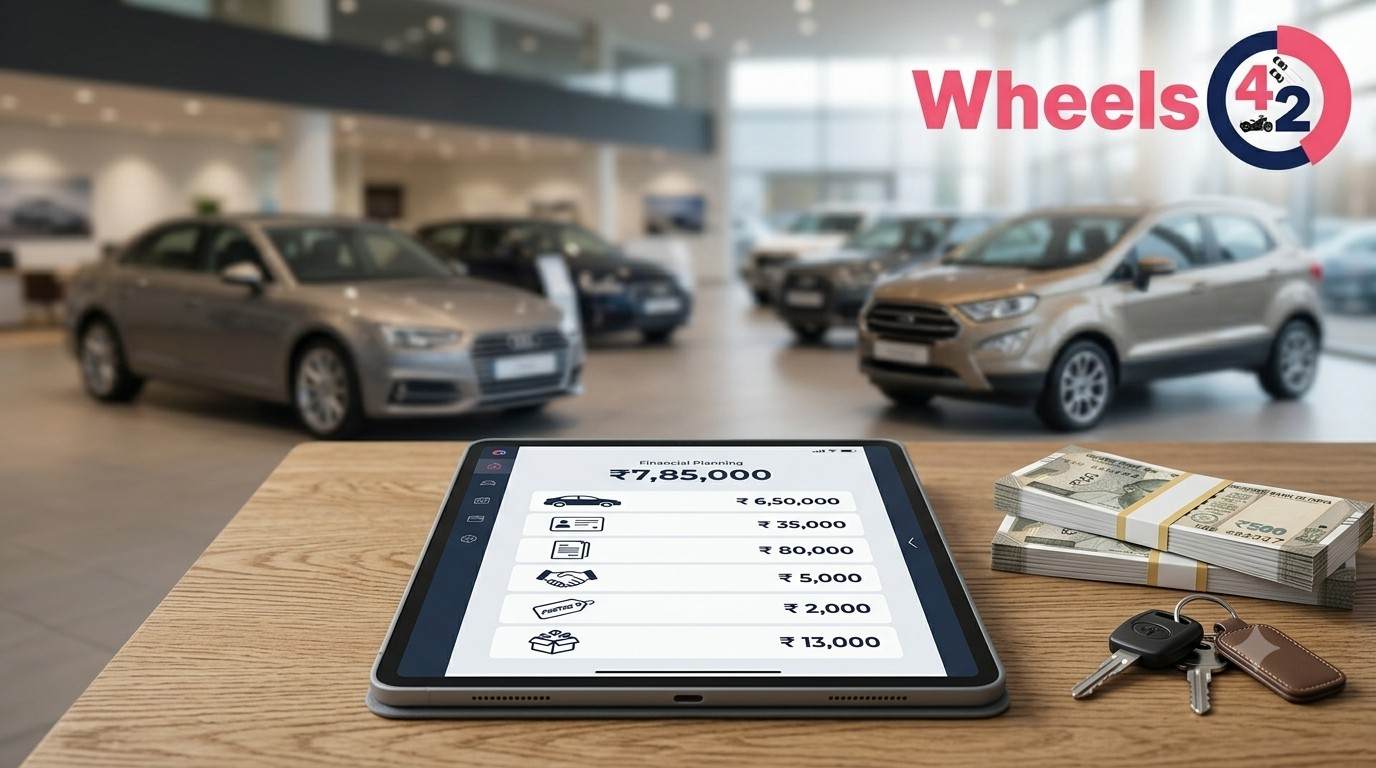
Here's the mistake almost everyone makes. They lock in a great price on the car, feel good about it, and then get surprised when the final number is ₹40,000 higher than expected.
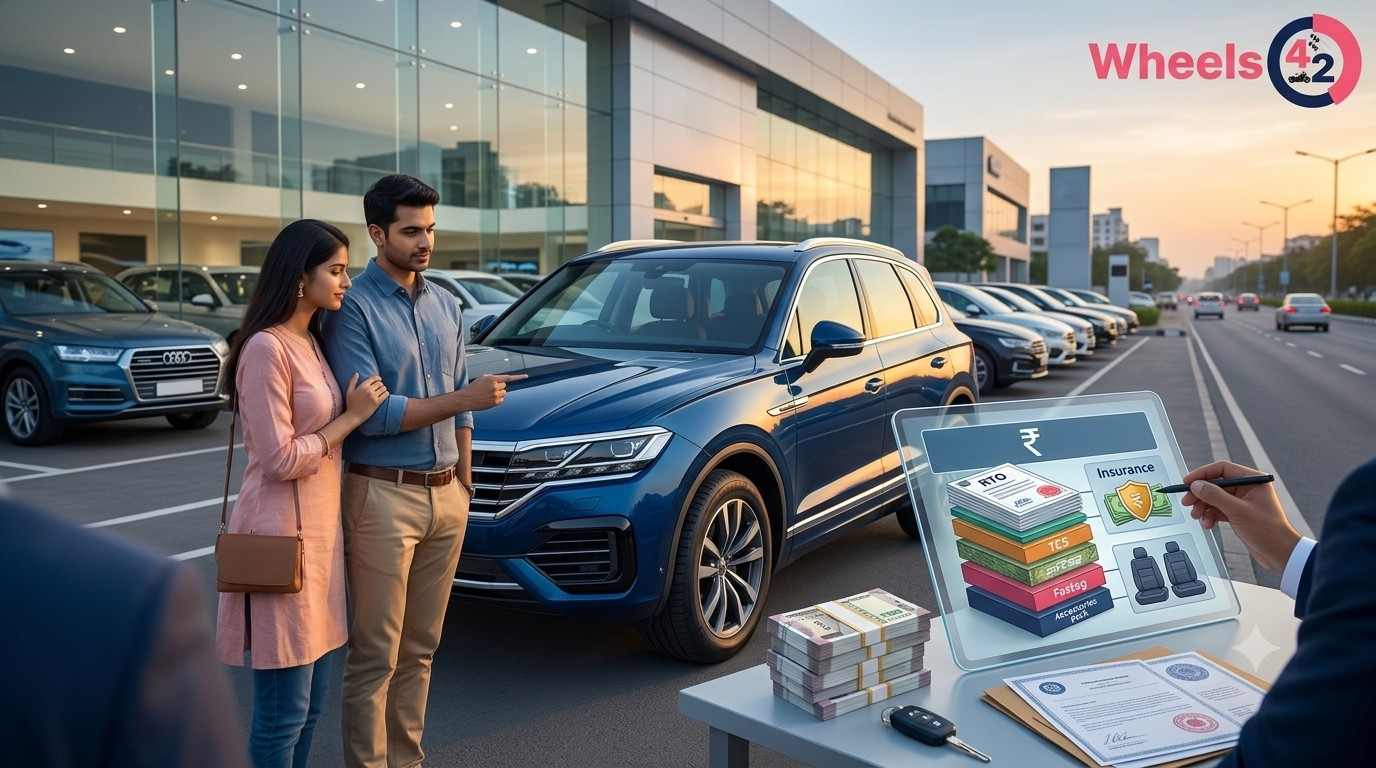
That gap is the difference between ex-showroom and on-road price, and it's where dealers do most of their real negotiating, just not on the line you're watching. Road tax, RTO charges and third-party insurance are fixed by law. No dealer can move those, and if one tells you otherwise, that's a red flag, not a discount.
What is negotiable sits in a completely different bucket: handling charges, accessory kits, extended warranty, paint protection. Some guides call this the "doc fee" conversation. In India, it shows up as a line called handling or logistics charges, and it's often the softest number on the entire quote. Ask the dealer to justify it. If they can't explain what it actually covers, ask for it to be dropped or halved.
Say the phrase out loud in your head before you go in: "I want one number, out the door, everything included." Then hold the dealer to it.
You don't need to be aggressive. You need to be specific and calm. Here's language that works, almost word for word.
Opening the conversation:
"I've decided on this variant and I've got written quotes from two other dealers. I'm ready to buy this week if we can agree on an out-the-door price."
When they ask for your monthly payment first:
"I'd rather talk about the total price. We can look at financing after that's settled."
When they bundle accessories into the price without asking:
"I didn't ask for these. Please remove them or take them off the total."
When they say "this is our best price, take it or leave it":
"Understood. I'll think it over." Then actually get up. You can always come back.
When they push you to decide today:
"If this is genuinely your best price, it'll still be your best price tomorrow. I'm not deciding under a clock."
That last one matters more than it sounds. So many deals fall apart later not because the price was bad, but because the buyer felt rushed into it.
A few phrases hand the dealer leverage without you realizing it.
Some of these are decades old and still work because they're aimed at your instincts, not your logic.
The rookie act. A salesperson claims they're new and needs the sale to keep their job. It's designed to make you feel like you're helping them, not negotiating against them. If you sense this, ask to speak with someone senior. That alone usually resets the tone.
The "what will it take" question. It sounds helpful, but answering it hands them your number before they've moved theirs. If asked, say the price needs to come down, full stop, without naming a figure yet.
The good salesperson, tougher manager routine. Your salesperson is friendly and "on your side," while a manager keeps rejecting your offers from the back room. It's built to wear you down until you accept whatever number appears next. Negotiate one point at a time and don't let the pace push you.
The post-agreement add-on. This is the one Indian buyers report most often. You agree on a price, you're ready to sign, and suddenly floor mats, underbody coating or an "essential" accessory kit appear on the invoice, quietly padding your on-road number. Ask for the final invoice before you agree to anything, not after.
Walking away is the single strongest thing you can do in this entire process, and it costs you nothing.
If the numbers aren't moving, say so plainly: "I don't think we're going to get there today. I'll check with the other dealers and come back if it makes sense." Then leave. Not dramatically, just calmly.
Two things tend to happen. Either the dealer calls you within a day with a better number, which tells you exactly how much room they had, or they don't call, which tells you that was genuinely close to their floor. Either way, you've learned something real, and you've lost nothing.
The truth is, dealers expect some buyers to walk. What they don't expect is for you to walk calmly, without an argument, because that's the version of walking away they can't easily talk you out of.
If you're trading in an old car, keep that conversation completely separate from the new car's price. The moment a dealer blends the two, they can quietly lower your trade-in value to protect the discount they gave you on the new car, and you'll never see it happen.
Get your old car valued independently first, through an online valuation tool or a couple of used-car buyers, before you even mention it to the new-car dealer. Walk in already knowing what it's worth. If the dealer's offer comes in noticeably lower, sell it separately instead. It's more effort, but it's usually worth a few thousand extra rupees.
Timing changes how much flexibility a dealer actually has, and it's not just folklore.
Salespeople and dealerships work against monthly and quarterly targets, so the last week of any month tends to bring softer negotiating positions, especially the last few days. That effect gets stronger at quarter-end (June, September, December) and stronger still in March, the end of India's financial year.
Festive season, Navratri and Diwali especially, adds another layer, since manufacturers push extra incentives down to dealers during that window. For a fuller breakdown of exactly which months and years tend to work best, our guide to the best time of the year to buy a new car in India goes deeper into the pattern.
Before you sign anything, run through this:
If you're earlier in the process than this and haven't nailed down the basics yet, our complete guide to buying a new car in India is the place to start before you get to the negotiating table.
1. Should I negotiate the price before or after the test drive?
After. Negotiating before means you're haggling over a car you haven't confirmed you actually want, and it weakens your position if you fall in love with it mid-drive. Drive it first, stay quiet about how much you liked it, then negotiate.
2. Can I actually negotiate RTO charges or road tax with the dealer?
No. Road tax, RTO registration and third-party insurance premiums are fixed by the government and IRDAI. Any dealer who claims they can "reduce" these is either padding something else or not being straight with you. Save your energy for the lines that do move.
3. Will negotiating hard hurt my free services or goodwill later?
No, not if the deal is in writing. Free services, warranty and goodwill support come from the manufacturer's policy tied to your VIN, not the salesperson's mood. Get every promised freebie listed on the invoice itself, since verbal promises tend to disappear at delivery.
4. Is it better to negotiate in person, over call, or on WhatsApp?
Written channels (email or WhatsApp) work better for the first round, because you can collect quotes from multiple dealers without pressure and compare them side by side. Save the in-person visit for closing the deal once you already know your target number.
5. Does a bigger discount always mean a better deal?
Not always. A steep cash discount on the car price sometimes gets clawed back through a higher accessory package, a costlier finance rate, or a lower trade-in offer. Check the total out-the-door number, not just the one line that got cut.


Honda
₹19.00 - 23.54 Lakh