Moving from a regular family car to a premium SUV cars is a significant decision. Buyers usually expect more space, stronger performance, better comfort and additional technology, but the higher price also means the vehicle needs to fit their daily requirements.
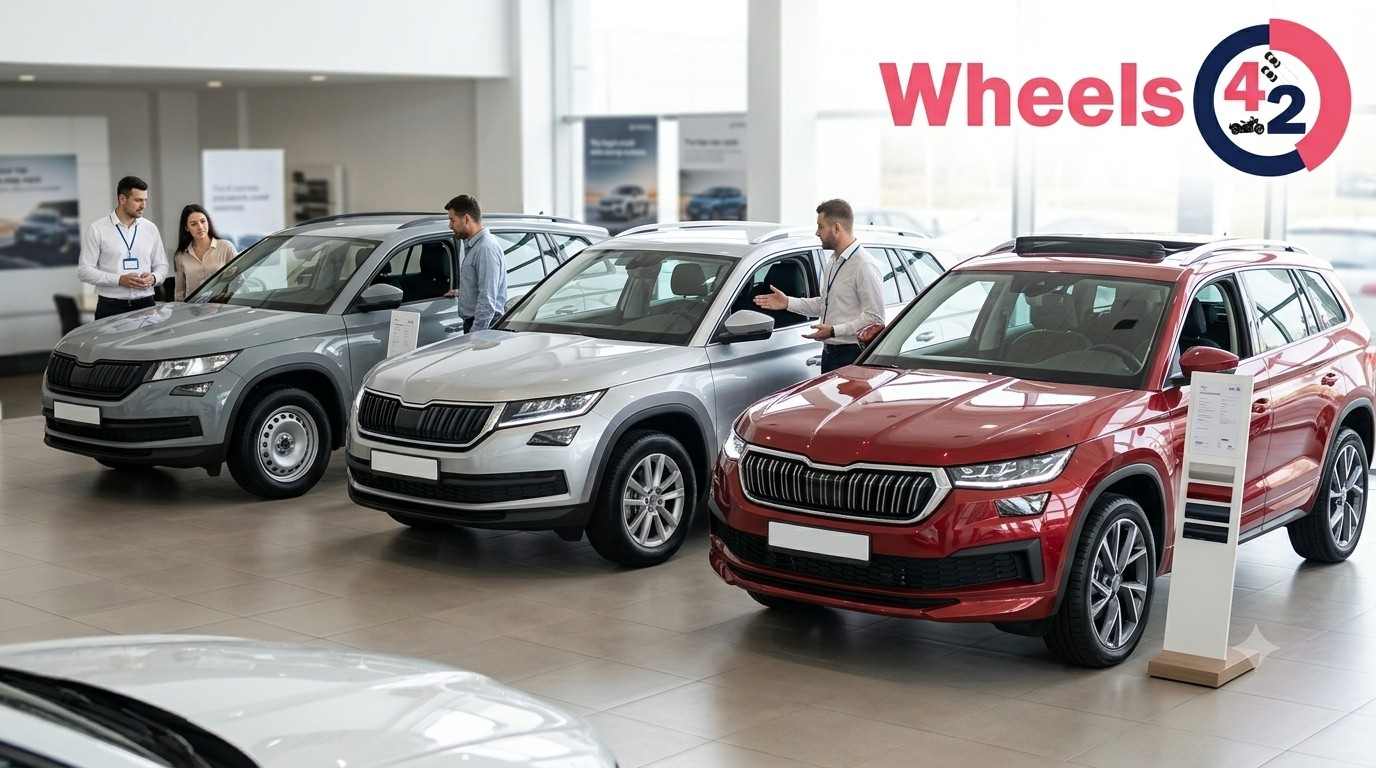
The Škoda Kodiaq is aimed at families who want a spacious and premium SUV without moving into the much more expensive luxury-SUV segment. Its three-row layout, premium cabin and SUV stance make it an interesting upgrade for larger families.
However, before making the switch, there are several factors worth checking.
1. Is the Kodiaq's Size Right for Your Family?
The first thing to consider is the SUV's physical size.
The Kodiaq is considerably larger than a typical five-seat family SUV. That extra size provides more cabin space, but it can also make the vehicle less convenient in crowded urban environments.
Think about your regular driving conditions:
If most of your driving happens in open areas and highways, the Kodiaq's larger footprint may not be a major concern. However, frequent city driving requires some adjustment.
How to Choose Between Two Similar Car Models: A Decision Framework
2. Check the Third-Row Practicality
One of the biggest reasons families consider the Kodiaq is its three-row seating arrangement.
But simply having seven seats does not automatically mean all three rows will be equally comfortable for every passenger.
Before buying, sit in the third row and check:
If your family regularly carries seven adults, third-row comfort should be one of the most important things on your test-drive checklist.
3. What Happens to Boot Space With All Seats Occupied?
Another important question is luggage space.
When all three rows are being used, available boot space is naturally more limited than in a conventional five-seat SUV.
For a family, this matters during holidays when you may need to carry suitcases, backpacks and other equipment.
Try a practical test before purchasing. Take the luggage you normally use on a family trip and check whether it can fit comfortably.
Petrol vs Diesel vs CNG vs Electric Cars: How to Choose the Right Fuel Type
4. Evaluate Engine Performance
A premium family SUV should offer enough performance for both city driving and highway travel.
The Kodiaq's turbo-petrol powertrain is designed to provide a balance between performance and everyday usability.
During a test drive, don't concentrate only on the claimed power figure. Instead, evaluate how the SUV behaves in real-world situations:
-
Starting from a traffic signal
-
Overtaking on highways
-
Climbing steep roads
-
Carrying several passengers
-
Accelerating with luggage
-
Driving at highway speeds
A family SUV should feel relaxed rather than constantly requiring heavy throttle inputs.
5. Check Ride Comfort
Premium positioning should translate into a comfortable driving experience.
Pay attention to how the Kodiaq handles potholes, speed breakers and uneven roads. Also check whether the suspension remains comfortable when the vehicle is carrying several passengers.
During the test drive, try to experience different road surfaces rather than driving only on a smooth dealership route.

6. Examine the Interior Carefully
The cabin is one of the main reasons for upgrading to a premium SUV.
Look beyond the dashboard design and check whether the interior actually works for your family.
Important areas include:
-
Front-seat comfort
-
Second-row space
-
Third-row accessibility
-
Quality of materials
-
Storage spaces
-
Cupholders
-
Charging ports
-
Visibility
-
Infotainment usability
-
Climate-control access
If children will regularly use the vehicle, check whether the second and third rows are easy to access and clean.
Hatchback vs Sedan vs SUV: Which Car Type Suits You Best?
7. Check Safety Features
Safety should be a priority when buying a large family SUV.
The Kodiaq offers a range of active and passive safety technologies, but buyers should check exactly which features are available on the specific variant they are considering.
Look for features such as:
-
Multiple airbags
-
Electronic stability control
-
ABS and electronic brake-force distribution
-
Parking sensors
-
Camera assistance
-
Driver-assistance technologies
-
ISOFIX child-seat mounts
Families should also check whether child seats can be installed comfortably in their preferred seating positions.
8. Understand the Technology Before Paying Extra
Premium SUVs often come with a long list of technology features.
However, not every feature will necessarily be useful to every buyer.
Before upgrading, ask yourself whether you actually need features such as:
-
Connected-car functions
-
Advanced driver assistance
-
Premium audio
-
Panoramic sunroof
-
Powered seats
-
Multi-zone climate control
-
Wireless smartphone connectivity
-
Digital instrumentation
The objective should be to buy features that improve your family's everyday experience rather than simply choosing the variant with the longest equipment list.

9. Think About Fuel and Running Costs
Moving to a larger and more powerful SUV can increase running expenses.
Fuel consumption depends heavily on driving conditions, traffic, driving style and vehicle load.
If your annual running is high, calculate your estimated fuel expenditure before upgrading.
You should also consider:
-
Insurance premiums
-
Service costs
-
Tyre replacement
-
Brake components
-
Extended warranty
-
Roadside assistance
A premium vehicle should fit comfortably within your long-term ownership budget, not just your initial purchase budget.
10. Check the SUV's Parking Convenience
The Kodiaq's size provides plenty of interior space, but it also means parking requires more attention than with a smaller SUV.
During your test drive, try parking it in:
Check the visibility around the vehicle and how effectively the parking sensors and cameras assist you.
11. Compare It With Other Premium Family SUVs
|
Area
|
What to Compare
|
|
Price
|
Ex-showroom and on-road cost
|
|
Seating
|
Number of usable seats
|
|
Third Row
|
Adult comfort and accessibility
|
|
Boot
|
Luggage capacity
|
|
Engine
|
Power, torque and refinement
|
|
Transmission
|
Smoothness and response
|
|
Ride
|
Comfort over broken roads
|
|
Safety
|
Airbags and driver-assistance features
|
|
Technology
|
Infotainment and connected features
|
|
Running Cost
|
Fuel, service and insurance
|
|
Resale
|
Expected long-term value
|
|
Service
|
Network and ownership support
|
12. Consider Your Long-Term Family Needs
A family vehicle should ideally remain practical for several years.
Think about how your family could change during your ownership period.
For example:
-
Will you regularly need seven seats?
-
Will children need child seats?
-
Will you take frequent road trips?
-
Will older family members use the third row?
-
Will you regularly carry luggage?
-
Will the SUV mainly be used in the city?
Answering these questions can help determine whether the Kodiaq's larger size and three-row layout will actually be useful.
Who Should Consider the Škoda Kodiaq?
The Kodiaq could be a strong choice for buyers who want:
-
A premium family SUV
-
Three-row seating
-
A spacious cabin
-
Comfortable highway travel
-
Strong turbo-petrol performance
-
A feature-rich interior
-
A more premium experience than a mainstream five-seat SUV
It may not be the ideal choice for someone who mostly drives alone in congested cities or rarely needs the third row.
Final Verdict
The Škoda Kodiaq is more than an upgrade in size. It is a move towards a more premium family-car experience, but buyers should make sure they actually need the additional space and equipment before spending more.
The most important checks are third-row comfort, boot practicality, engine performance, ride quality, interior space, safety equipment, running costs and parking convenience.
A detailed test drive with your family is the best way to determine whether the Kodiaq fits your lifestyle. If the third row is genuinely useful and the premium features add value to your daily routine, the Kodiaq can make a convincing case as a family SUV upgrade.

 Khyati Sharma 2026-10-08