2026-11-14
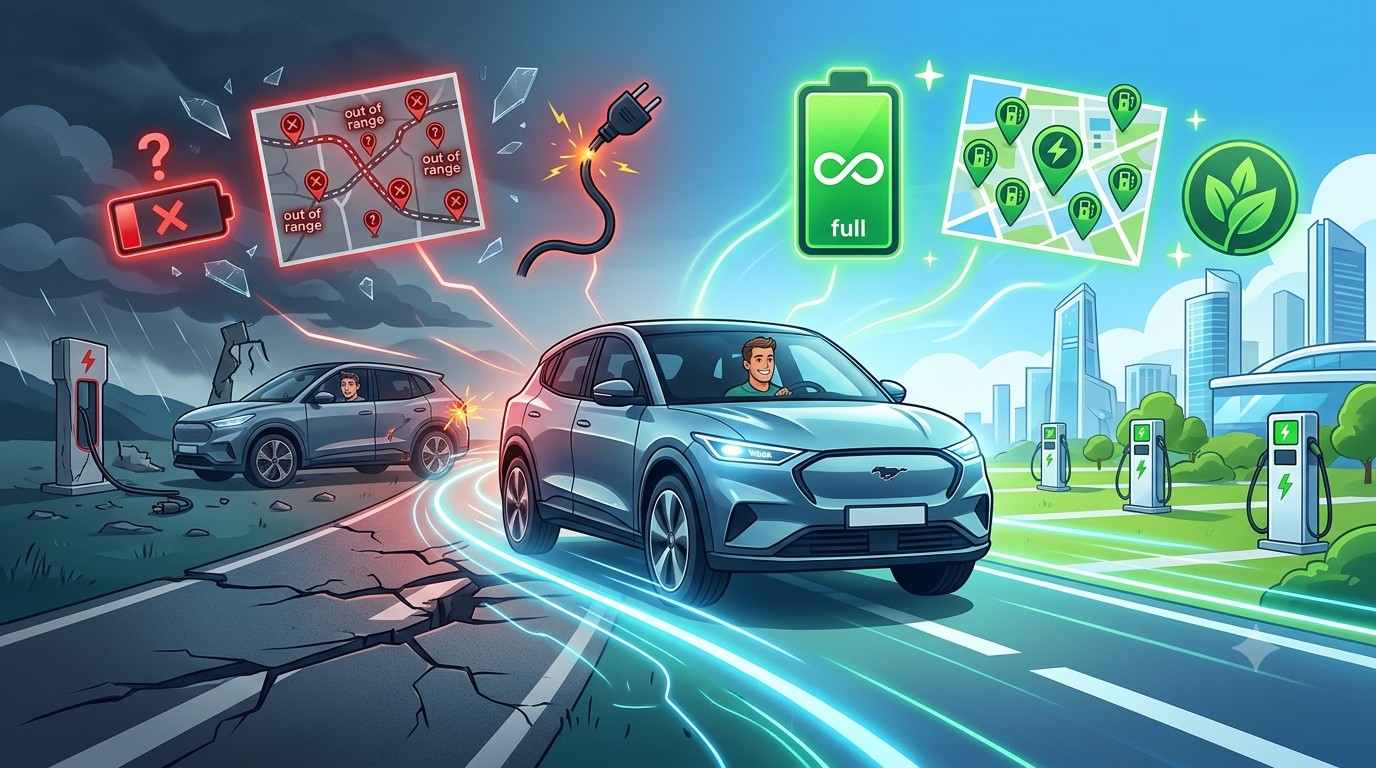
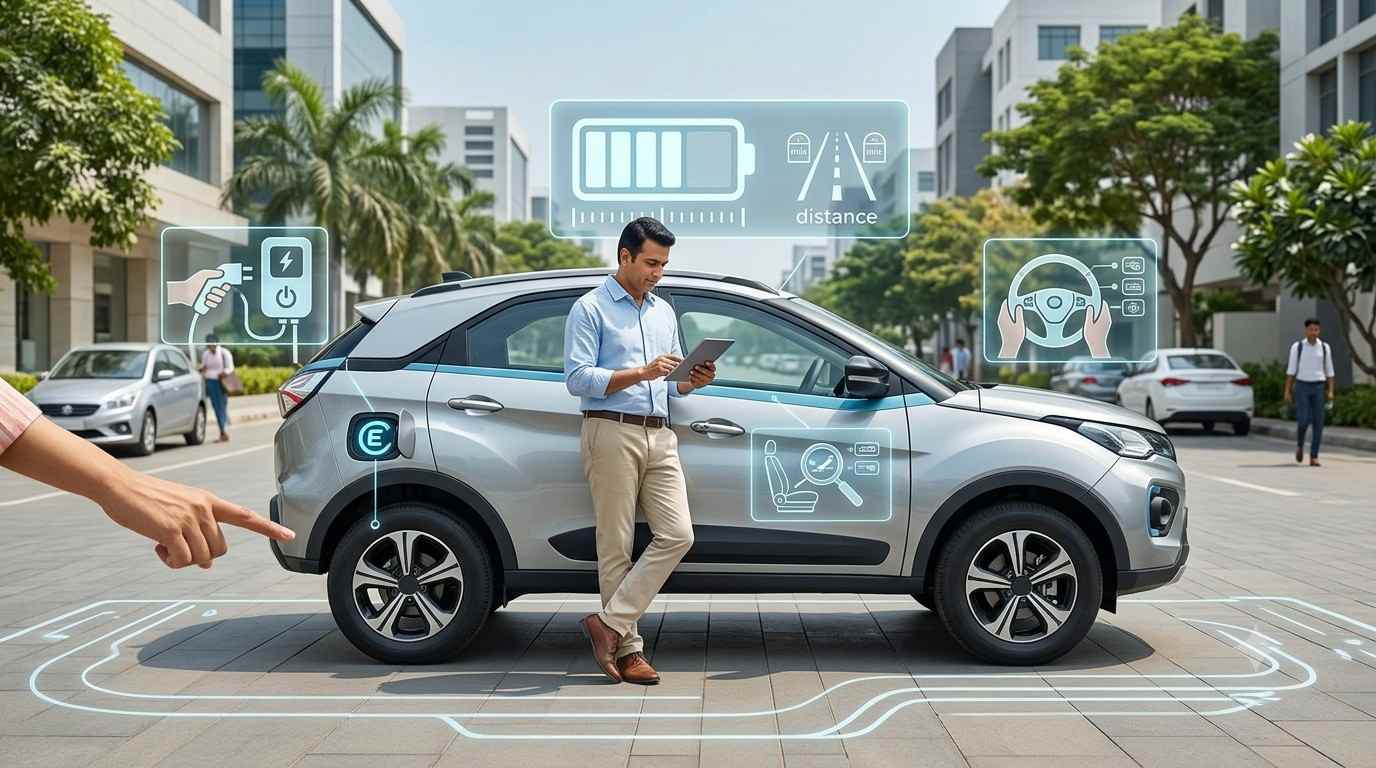
Yes, for many Indian buyers, but not for everyone. An EV is worth it when you can charge at home or work, your yearly kilometres repay the price gap before you sell, and you keep the car long enough to collect the savings. It isn’t worth it yet if you can’t charge reliably, drive little, or make frequent long trips where fast chargers are thin. Running cost is the strongest fact in its favour. Range, battery and charging worries are real for some buyers and myths for others.
| Worth it if | Not yet if |
|---|---|
| You can charge at home or work | You have no charging access you control |
| Your driving repays the price gap within the years you’ll keep the car | You drive few kilometres a year |
| You’ll hold the car five years or more | You plan to sell within three years |
| Long trips are occasional and routes have fast chargers | You make frequent long trips on thin routes |
Run three tests. Each takes a few minutes, and failing one tells you exactly what to fix or why to wait. We call it the Wheels42 worth-it test, and it’s our own rule of thumb, not an industry standard.
| Test | A pass looks like | Why it matters |
| 1. Charging | Home or work charging you control | Home charging costs about ₹1.2 per km, public fast charging about ₹3 |
| 2. Kilometres | Yearly saving × years you keep the car beats the price gap | Running savings repay the premium |
| 3. Holding period | You keep the car at least as long as the payback | Resale is still uncertain |
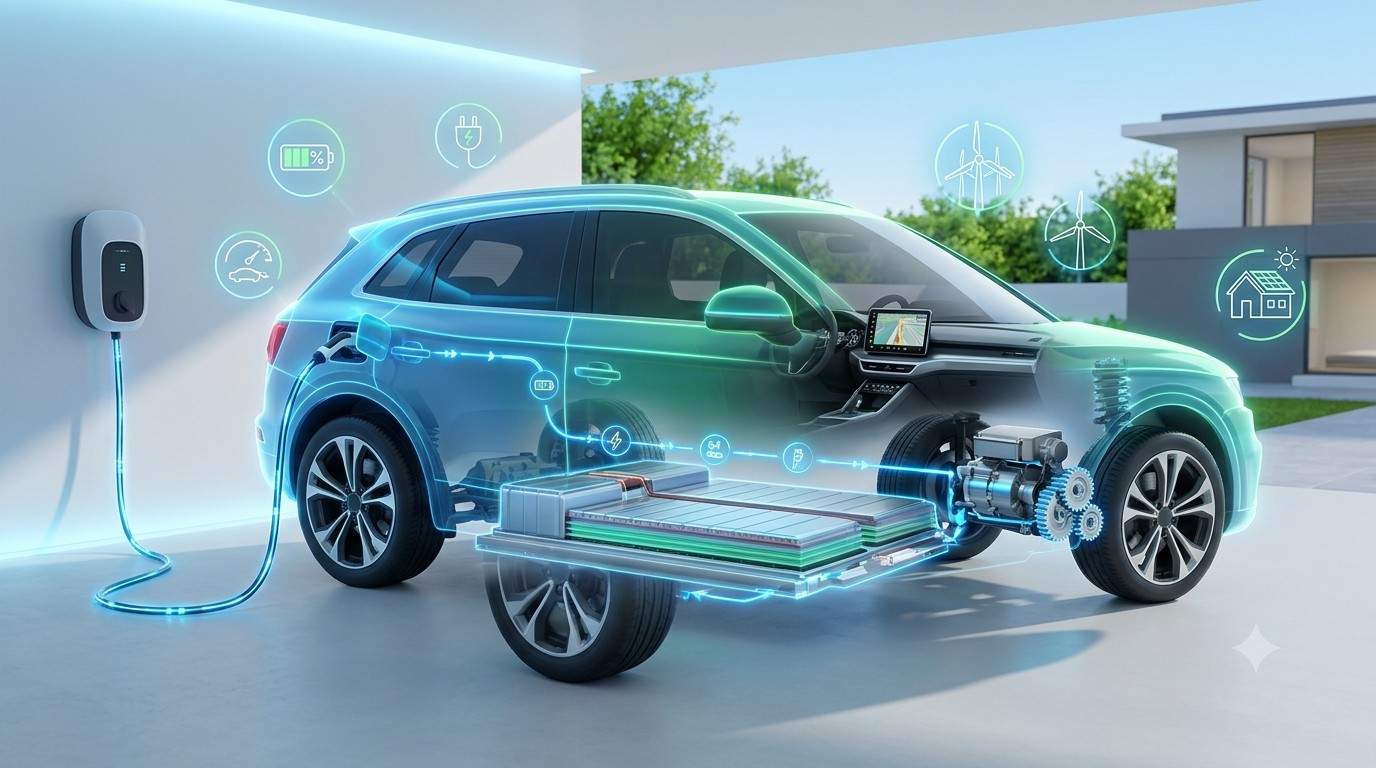
This is the one that matters most, because it sets your cost per km. With home charging at about ₹8 a unit and 0.15 kWh per km, an EV costs about ₹1.2 per km. A petrol car at ₹100 a litre and 15 km a litre costs about ₹6.7. Rely on public fast chargers at about ₹20 a unit, and the EV’s cost rises to about ₹3 per km.
The saving per km is about ₹5.5 with home charging. The table shows how long a price gap takes to repay. Premiums vary by model pair, and ₹3 lakh to ₹5 lakh covers many of them.
| Yearly driving | Annual saving (home charging) | Payback, ₹3 lakh premium | Payback, ₹5 lakh premium |
| 6,000 km | ₹33,000 | About 9 years | About 15 years |
| 12,000 km | ₹66,000 | About 4.5 years | About 7.6 years |
| 20,000 km | ₹1,10,000 | About 2.7 years | About 4.5 years |
These are illustrative and assume petrol at ₹100 a litre and electricity at ₹8 a unit. Maintenance usually favours the EV, while insurance can favour the petrol car. If 30% of your charging happens at public fast chargers, your blended cost is about ₹1.7 per km, and every payback figure gets longer.
Savings arrive slowly, month by month, while the price gap arrives on day one. So match your holding period to the payback. If you’ll sell before the payback ends, resale has to cover the difference, and EV resale is still settling.
Ten claims decide most buyers’ minds. Here’s what’s true, and what to do about each.
Half true. They cost more to buy and far less to run. At home charging rates, an EV costs about ₹1.2 per km against about ₹6.7 for petrol. GST on electric cars is 5% with no cess, while most petrol and diesel cars moved to 18% or 40% in the September 2025 revision, which narrowed the price gap. The central PM E-DRIVE scheme gives no direct purchase subsidy on private electric cars, so any extra help comes from your state.
What to do: run test 2 with your own kilometres.
The battery loses capacity gradually. It rarely fails suddenly. Mainstream electric cars in India commonly carry battery warranties of about eight years or 1.6 lakh km, often with a minimum capacity near 70%. Out-of-warranty replacement estimates vary widely, from roughly ₹4 lakh for small packs to ₹10 lakh or more for large ones.
The warranty ending doesn’t mean the battery fails that day. Whether an EV battery must be replaced the day its warranty expires covers what actually happens.
What to do: read the warranty for years, kilometres, the capacity floor and whether it transfers.
It isn’t. The brochure figure comes from a lab test cycle, and real roads add air conditioning, speed, load, tyre pressure and heat. Whether an EV’s advertised range is what every owner will achieve is worth reading before you trust a number.
What to do: plan with a real-world estimate, and check it on your test drive.
Mostly a myth in cities, partly true on some routes. The government told Parliament in July 2026 that India had 52,718 public EV charging stations as of 31 March 2026, including 16,561 with fast chargers for cars. Counts vary by source and definition. Coverage is uneven, though. The eight north-eastern states had 562 stations between them in March 2026, against about 5,900 in Karnataka.
For most owners, home charging does the daily work, and public charging covers trips.
What to do: check your regular routes in more than one charging app.
Occasional fast charging on trips is normal. Heat and constant high-power sessions add wear over the years. What to do: charge at home on AC day to day, and use fast chargers when you need them.
Normal rain isn’t a problem, because the battery pack and charge port are sealed for it. Deep waterlogging is the real risk. What to do: avoid wading through flooded roads, and don’t charge with a wet or submerged connector.
They produce none from the tailpipe. But building the battery and generating the electricity both create emissions, so the full picture depends on your grid and how long you keep the car. Whether an EV produces no emissions anywhere in its life cycle lays out the trade-off.
What to do: treat the environmental case as a bonus, not the reason to buy.
There’s no solid evidence that EVs catch fire more often than petrol cars, though India-specific data is thin. EV fires do burn differently and need trained responders. What to do: check the model’s safety rating, battery cooling and nearby service support.
They need less, not none. There’s no engine oil or clutch, but you still pay for coolant, brake fluid, tyres, the 12V battery and software updates. What to do: budget a smaller, steady service cost.
It’s uncertain, not terrible. The used market is young, and values are still settling. What to do: ask whether the battery warranty transfers to the next owner, and keep service records and a battery health report.
Waiting isn’t failing. Charging access and prices both change, and a “not yet” today can become a “yes” later.
Nisha and Imran are hypothetical buyers, not real customers. Both are looking at the same EV, with a ₹4 lakh premium over its petrol twin. Here’s how the test sorts them.
| Nisha | Imran | |
| Yearly driving | 15,000 km | 6,000 km |
| Charging | Home charger, 70% home and 30% public | No home or work charging, public only |
| Cost per km | About ₹1.7 | About ₹3.0 |
| Annual saving vs petrol | About ₹74,400 | About ₹22,200 |
| Payback on ₹4 lakh | About 5.4 years | About 18 years |
| Years kept | 7 | 3 |
| Test 1 | Pass | Fail |
| Test 2 | Pass | Fail |
| Test 3 | Pass | Fail |
| Verdict | Worth it | Not yet |
Nisha ends up about ₹1.2 lakh ahead after seven years, or about ₹1.8 lakh if she charges only at home. Imran would be about ₹3.3 lakh behind after three years, before resale. Resale offsets part of the gap for both cars, and EV resale is the less certain of the two.
The car didn’t change. Their charging, kilometres and holding periods did. Imran picked a petrol car now, with a plan to revisit if he gets charging access. These figures use the assumptions above, and they ignore insurance, financing and resale differences.
Compare prices, range and battery sizes across electric cars listed on Wheels42, then run the worth-it test on each shortlisted car. Make the final checks from a written list, since an EV sale involves a few steps a petrol purchase doesn’t. The full inspection list sits in the complete EV buying guide for India.
A quick checklist:
It can be the best value, if you check the battery first. Ask for a state-of-health report and for the remaining warranty, and confirm that the warranty transfers. Check how the car was charged and used, since heavy fast-charging or fleet use wears a pack faster. A three-year-old EV with five transferable years of warranty left is often a safer buy than a six-year-old one with expired cover at a similar price. Test the range on the trip meter before you pay.
Find three owners of the exact model in your climate, through long-term reviews and owner groups, and ask for their energy use per 100 km and their monthly electricity bill. Average the three figures, not the best one. Then take the car on your own commute and compare the indicated range drop with the distance you drove. Anyone who won’t share real numbers is telling you something.
Expect about 150 units a month for 12,000 km a year, at 0.15 kWh per km. At ₹8 a unit, that’s about ₹1,200 a month. A bigger load can push you into a higher slab, though, so check your distributor’s slabs. Ask whether an EV tariff or time-of-day rate exists, since night charging may be cheaper. A separate meter can also make your charging cost easier to track.
Usually, with planning. On a 600 km day, a car with a 40 kWh battery needs roughly 56 kWh from fast chargers. At an average of about 60 kW, that’s about an hour of charging in total, normally split across two or three stops. Check the chargers on your regular routes before you buy. If long trips happen only two or three times a year, renting a petrol car for those days can cost less than owning a second car.
Waiting has a price. At 12,000 km a year, you give up about ₹66,000 of running savings per year, or about ₹5,500 a month. So waiting a year only pays if the price drops by more than about ₹66,000. If your current car is fine and you aren’t buying anyway, waiting costs nothing. If you are buying, price drops are guesswork, and the monthly saving isn’t.
This article gives general information, not personal financial or technical advice. Prices, tax rates, incentives and warranty terms change, so confirm current figures with your dealer and state transport department. For a purchase this size, speak with a qualified advisor.
Sources: Government of India reply to Parliament on public EV charging stations (21 July 2026); GST Council decisions on EV and car rates (September 2025); Ministry of Heavy Industries, PM E-DRIVE scheme guidelines; manufacturer warranty documents.