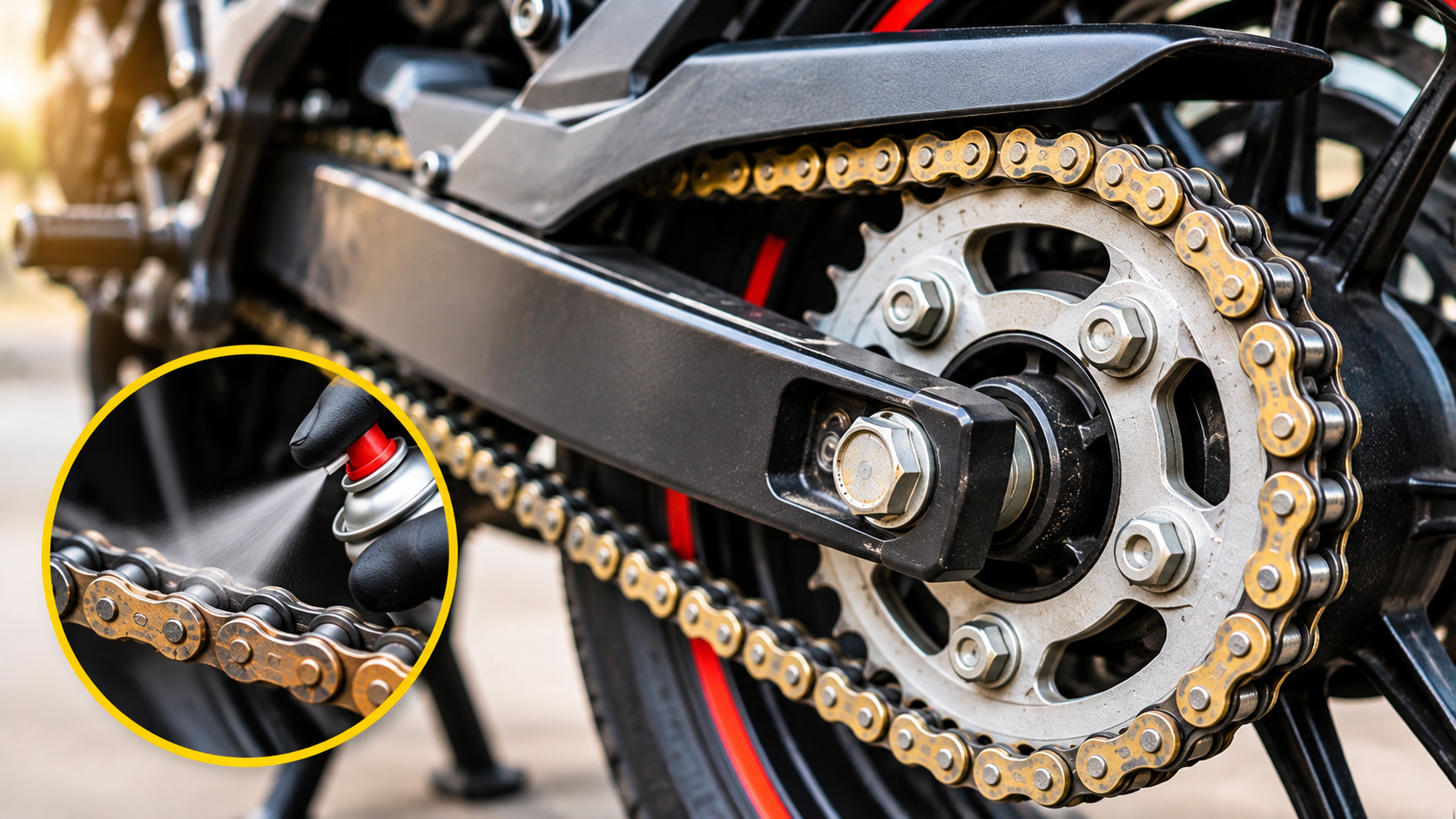
A motorcycle's chain is one of the most important components of its drivetrain. It transfers power from the engine to the rear wheel, helping the motorcycle accelerate smoothly and maintain consistent performance. However, the chain is constantly exposed to dust, water, road dirt, heat and friction, which can gradually affect its condition.
Unlike some other motorcycle components, the chain requires regular cleaning, lubrication and inspection. Ignoring basic chain maintenance can lead to excessive noise, uneven power delivery, poor riding performance and premature wear of the chain and sprockets. In severe cases, a damaged or broken chain can create a serious riding hazard.
Many riders only pay attention to the chain when they hear unusual sounds or notice that it has become loose. However, there are several early warning signs that indicate when a motorcycle chain needs attention.
Company-Fitted vs Aftermarket Accessories: Which Is Better?
1. Why Motorcycle Chain Maintenance Is Important
A motorcycle chain operates under considerable mechanical stress. Every time the rider accelerates, the chain transfers engine power to the rear wheel. During this process, its links, rollers and pins experience continuous movement and friction.
Over time, dirt and inadequate lubrication can increase friction between these components. This gradually affects the chain's flexibility and accelerates wear.
Regular chain maintenance is important for several reasons:
-
Smooth power delivery: A properly maintained chain helps transfer engine power consistently to the rear wheel.
-
Reduced friction: Correct lubrication reduces friction between moving chain components.
-
Longer component life: Cleaning and lubrication help reduce premature chain and sprocket wear.
-
Better riding experience: Correct chain tension helps prevent excessive noise and jerky power delivery.
-
Improved safety: Identifying damaged links or excessive slack can help prevent potentially dangerous drivetrain failures.
Motorcycle chain maintenance does not require complicated equipment. However, it should be performed regularly and according to the motorcycle manufacturer's recommendations.
2. Unusual Chain Noise Can Be an Early Warning Sign
One of the easiest ways to identify a motorcycle chain problem is by listening carefully while riding.
A properly maintained chain generally operates with relatively little noise. If the chain starts producing unusual sounds, it may indicate that lubrication, adjustment or inspection is required.
Some common warning sounds include:
Metallic clicking: Repeated clicking sounds can indicate worn chain components, stiff links or sprocket problems.
Grinding noise: A grinding sound may suggest excessive friction, damaged rollers or poor lubrication.
Chain rattling: Excessive chain slack can cause the chain to move more than intended, producing rattling noises.
Uneven mechanical noise: If the sound changes as the rear wheel rotates, there could be a stiff link, damaged sprocket tooth or uneven chain wear.
However, not every unusual sound comes directly from the chain. Wheel bearings, brakes and other drivetrain components can also produce similar noises.
If the sound continues after proper cleaning and lubrication, the chain and sprockets should be inspected by a qualified technician.
3. Check Motorcycle Chain Slack Regularly
Chain slack refers to the amount of free vertical movement in the motorcycle chain. Every motorcycle requires a specific amount of slack because the suspension and swingarm geometry affect chain tension as the rear suspension moves.
Both excessive slack and excessive tightness can create problems.
A loose chain may:
-
Produce rattling and knocking sounds.
-
Move excessively during acceleration.
-
Increase the possibility of chain contact with surrounding components.
-
Wear unevenly.
-
Potentially derail from the sprocket.
An overly tight chain can also be harmful. It places additional stress on the chain, sprockets, gearbox output shaft and rear wheel bearings. It may also restrict suspension movement.
A Wider Rear Tyre Improves Every Motorcycle’s Handling: Myth or Fact?
How to Check Chain Slack
The basic process generally involves the following steps:
-
Park the motorcycle on a stable, level surface.
-
Switch off the engine and allow hot components to cool.
-
Follow the owner's manual regarding the correct motorcycle position for checking chain slack.
-
Locate the specified chain measurement point.
-
Move the chain gently up and down to measure its free movement.
-
Compare the measurement with the manufacturer's recommended specification.
-
If adjustment is required, follow the correct adjustment procedure or visit a service centre.
The recommended chain slack varies between motorcycle models. Some manufacturers specify different measurements depending on whether the motorcycle is positioned on its side stand, centre stand or another specified support.

4. Look for Rust and Dry Chain Links
Rust is another visible indication that a motorcycle chain may need attention.
Motorcycle chains are regularly exposed to rainwater, moisture, mud and road contaminants. If water remains on the chain without proper cleaning and lubrication, corrosion can develop.
A dry chain may also produce increased friction between moving components.
Some visible signs to look for include:
-
Orange or brown rust on chain plates.
-
Dry-looking rollers and link joints.
-
Surface corrosion around chain pins.
-
Uneven lubrication across the chain.
-
Rust developing around individual links.
A small amount of superficial surface rust does not automatically mean that the entire chain needs replacement. However, significant corrosion, pitting, seized links or damaged components require professional inspection.
If rust has affected the chain's movement or structural condition, lubrication alone may not solve the problem.
Manual vs Automatic Car: Pros and Cons Explained
5. Stiff Links Can Affect Chain Movement
A motorcycle chain consists of several interconnected links that must move freely around the front and rear sprockets.
When one or more links become stiff, the chain may not move smoothly. This can happen because of corrosion, contamination, inadequate lubrication or internal wear.
Stiff links can create several problems:
One way to identify stiff links is to inspect the chain while slowly rotating the rear wheel by hand, with the engine switched off and the motorcycle securely supported according to the manufacturer's instructions.
Watch for links that do not bend smoothly as they move around the sprockets.
Never place fingers between the chain and sprockets while rotating the wheel. Keep hands, clothing and tools away from pinch points.
If a chain has seized or damaged links, it should be inspected by a professional. A chain with significant internal damage should not be considered safe simply because it has been lubricated.
6. Check the Chain for Uneven Stretch and Wear
Motorcycle chains gradually wear as their internal pins and bushings or other joint components develop clearance.
This process is commonly described as chain stretch. However, the chain plates themselves generally do not stretch like elastic. The apparent increase in chain length mainly results from wear at the internal joints.
As wear develops, the chain may become longer than its original specification.
Signs of excessive chain wear include:
-
The chain requiring frequent tension adjustments.
-
Excessive slack despite previous adjustments.
-
Uneven tension at different points of the chain.
-
The chain no longer sitting properly against the sprocket teeth.
-
Measurements exceeding the manufacturer's wear limit.
Riders should check chain slack at several positions while rotating the rear wheel slowly, using the correct inspection procedure.
If the chain becomes noticeably tighter and looser at different points, it may have uneven wear or damaged links.
A qualified technician can measure chain wear and determine whether replacement is necessary.

7. Why Chain and Sprockets Should Be Inspected Together
One common motorcycle maintenance mistake is replacing only the chain without checking the sprockets.
The chain and sprockets work together as a single drivetrain system. As the chain wears, the sprocket teeth also experience wear from repeated contact with the chain rollers.
A worn sprocket can accelerate the wear of a new chain.
Some common sprocket warning signs include:
-
Hook-shaped or pointed teeth.
-
Uneven tooth profiles.
-
Missing or damaged teeth.
-
Visible cracks.
-
Excessive wear on individual sections.
A healthy sprocket generally has a consistent tooth profile. When the teeth become noticeably hooked or uneven, replacement may be necessary.
In many cases, replacing the chain and both sprockets together is recommended because the components wear as a set. The final decision should depend on the manufacturer's guidance and the actual condition of the components.
Using Only the Rear Brake Is the Safest Way to Stop a Motorcycle: Myth or Fact?
8. How Often Should a Motorcycle Chain Be Cleaned and Lubricated?
There is no single maintenance interval that applies to every motorcycle. The recommended cleaning and lubrication frequency depends on the motorcycle, chain type, riding conditions and lubricant manufacturer's instructions.
Riders who frequently travel through dusty areas, rain or muddy roads may need to clean and lubricate their chains more frequently than those who mostly ride on clean urban roads.
A typical chain maintenance routine includes:
-
Cleaning away accumulated dirt and old lubricant.
-
Checking for rust and damaged links.
-
Inspecting the sprocket teeth.
-
Applying motorcycle-compatible chain lubricant.
-
Checking chain slack according to the owner's manual.
Always use cleaning products compatible with the motorcycle's chain type. Many modern motorcycles use sealed O-ring, X-ring or similar chains that require suitable cleaning products.
Avoid aggressive solvents or high-pressure water jets that may damage seals or force contaminants into chain joints.
After cleaning, allow the chain to dry as directed by the product manufacturer before applying the recommended lubricant.
9. Common Motorcycle Chain Maintenance Mistakes
Even experienced riders can make mistakes while maintaining their motorcycle chains. Some practices that appear convenient can actually increase component wear.
Using unsuitable lubricants: Household oils and inappropriate lubricants may not provide the protection required by motorcycle chains. Use a product recommended for the chain type.
Ignoring chain slack: Cleaning and lubrication alone cannot correct excessive chain slack or an incorrectly adjusted chain.
Over-lubricating the chain: Applying too much lubricant can attract dust and dirt, creating an abrasive layer around the chain.
Ignoring sprocket wear: Installing a new chain on severely worn sprockets can reduce the life of the replacement chain.
Cleaning with the engine running: Never run the motorcycle in gear to clean or lubricate the chain. This creates a serious risk of hand and finger injuries.
Using excessive pressure: High-pressure cleaning can damage sealed chain components and force contaminants into sensitive areas.
Ignoring stiff links: A chain that has become stiff or damaged should not be treated as a normal lubrication issue.

10. When Should a Motorcycle Chain Be Replaced?
Not every chain problem requires immediate replacement. Some issues, such as minor dryness or dirt accumulation, can be addressed through appropriate cleaning and lubrication.
However, certain conditions indicate that replacement may be necessary.
A motorcycle chain should be professionally inspected for replacement if it has:
-
Excessive wear beyond the manufacturer's specified limit.
-
Seized or severely stiff links.
-
Cracked, broken or damaged plates.
-
Significant corrosion or pitting.
-
Damaged rollers or internal components.
-
Uneven wear that cannot be corrected through adjustment.
-
A tendency to jump or climb over sprocket teeth.
If the chain is severely damaged, riders should stop using the motorcycle until it has been inspected and repaired.
A broken chain can damage surrounding components and potentially interfere with the rear wheel or other parts of the motorcycle.
The chain and sprockets should be evaluated together before fitting replacement parts.
11. Simple Motorcycle Chain Maintenance Checklist
Following a regular inspection routine can help riders identify problems before they become expensive repairs.
|
Inspection Point
|
What to Check
|
Warning Signs
|
|
Chain slack
|
Free vertical movement
|
Excessive looseness or tightness
|
|
Chain lubrication
|
Proper lubrication across links
|
Dry or rusty links
|
|
Chain condition
|
Plates, rollers and pins
|
Cracks, corrosion or damage
|
|
Chain movement
|
Smooth movement around sprockets
|
Stiff or seized links
|
|
Chain wear
|
Length and wear measurements
|
Beyond manufacturer limits
|
|
Front sprocket
|
Tooth condition
|
Hooked or damaged teeth
|
|
Rear sprocket
|
Tooth profile and alignment
|
Uneven or missing teeth
|
|
Chain noise
|
Unusual mechanical sounds
|
Grinding, clicking or rattling
|
This checklist is useful for routine inspections, but it does not replace the motorcycle manufacturer's maintenance schedule or professional servicing.
Conclusion
Motorcycle chain care is an important part of keeping a bike reliable, smooth and safe to ride. Unusual noises, excessive slack, rust, stiff links and worn sprocket teeth are all warning signs that should not be ignored.
Regular cleaning, correct lubrication and proper chain tension can help reduce unnecessary wear and improve drivetrain performance. Riders should also remember that the chain and sprockets need to be inspected together, as wear in one component can affect the other.
The best approach is to follow the manufacturer's maintenance recommendations and arrange professional inspection whenever the chain shows signs of significant damage or excessive wear. A few minutes of routine attention can help prevent expensive repairs and reduce the risk of unexpected drivetrain problems.

 Khyati Sharma 2026-11-16