
2026-11-11
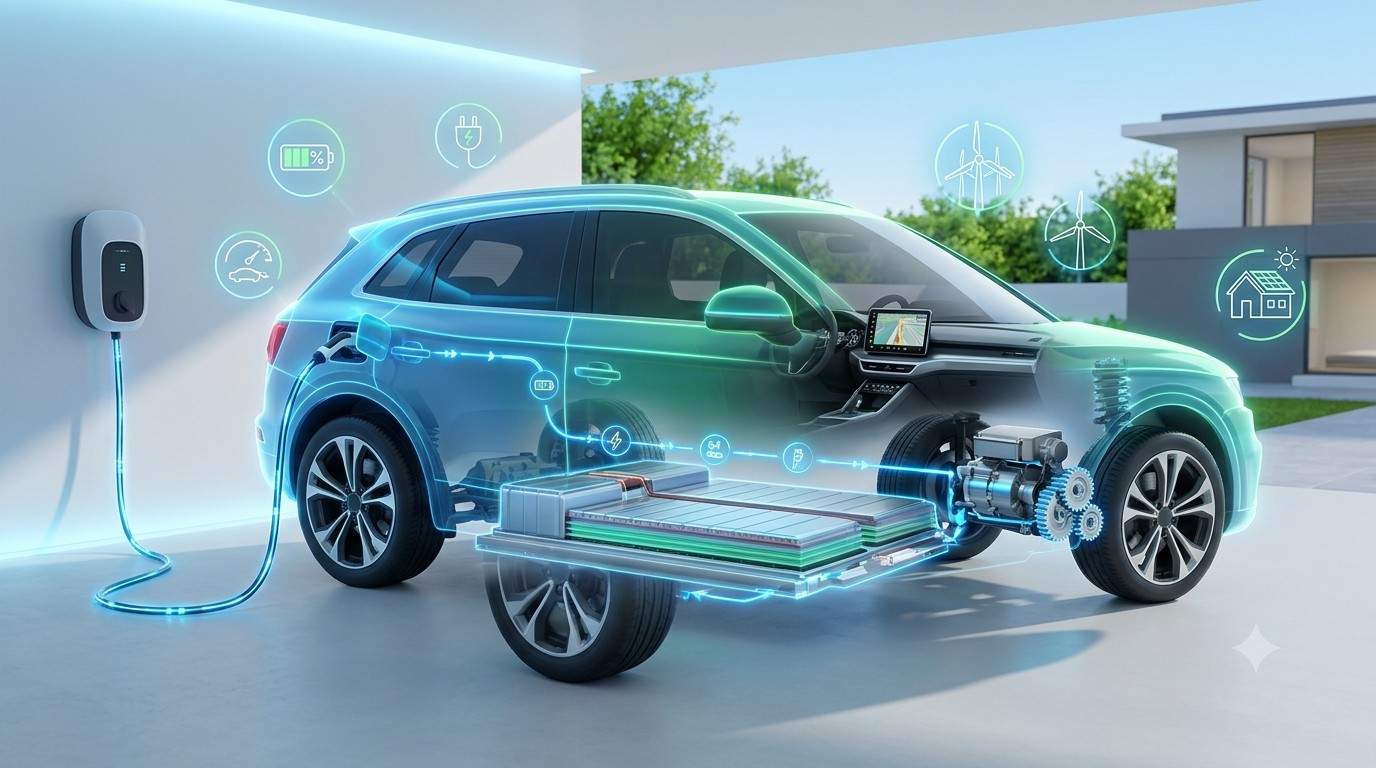
An electric car works in a simple chain. A battery pack stores energy, an inverter turns it into the form the motor needs, and the motor turns the wheels. When you slow down, the motor runs backwards as a generator and sends a little energy back to the battery. It matters to you as a buyer because five spec-sheet numbers decide your real range, charging time and running cost. Read them wrong, and a bigger battery can cost you more without taking you any farther.
| Question | Short answer |
|---|---|
| What turns the wheels? | An electric motor, fed by the battery through an inverter |
| Is there a gearbox? | Usually one fixed reduction gear, so no gear changes |
| What is kWh? | The size of the battery, like a fuel tank |
| What is kW? | Power, or how fast energy flows, like a tap |
| What recovers energy when I brake? | Regenerative braking |
| What runs the lights and screen? | A separate 12V battery, topped up from the main pack |
Energy moves from the plug to the wheels, and back again when you brake. Follow it once, and the spec sheet stops looking like code.
| Part | What it does | Why a buyer cares |
|---|---|---|
| Traction battery pack | Stores energy for driving | Sets range, price and much of the car’s long-term value |
| Battery management system | Monitors cells and controls charging | Affects battery life and warranty |
| Inverter | Turns DC into AC for the motor | Influences efficiency and performance |
| Electric motor | Turns electricity into motion | Sets power (kW) and torque |
| Reduction gear | Passes motion to the wheels | Smooth drive, fewer parts to service |
| Onboard charger | Converts AC to DC for home charging | Caps your home charging speed |
| DC-DC converter | Steps high voltage down to 12V | Keeps lights and electronics running |
| 12V battery | Powers accessories and wakes the system | Can fail on its own |
| Thermal system | Cools or warms the battery and electronics | Affects fast charging and range in heat |
| Charge port | Accepts Type 2 or CCS2 plugs | Must match the chargers you’ll use |
The battery is the costliest part of the car, so it’s the one worth understanding first.
Hundreds or thousands of small cells, grouped into modules inside a sealed, cooled case. Each cell stores a little energy. Together they give the pack’s capacity, measured in kilowatt-hours (kWh).
Here’s the catch. The brochure may quote the gross capacity, but the car lets you use only part of it to protect the cells. That part is the usable capacity, and it’s the number that decides your range.
| Unit | What it measures | Everyday comparison |
|---|---|---|
| kWh | Energy stored | Size of the fuel tank |
| kW | Rate of power | How fast fuel flows |
| kWh per 100 km | Energy use | How thirsty the car is |
Don’t mix them up, because one confusion costs real money. Range is roughly usable kWh divided by energy use per km. A 38 kWh battery in a car that uses 14 kWh per 100 km (0.14 kWh per km) gives about 270 km.
Two types are common: NMC (nickel-based) and LFP (lithium iron phosphate). LFP packs usually cost less and often tolerate full daily charges well. NMC packs hold more energy for their weight, and owners are often advised to keep daily charging nearer 80% to 90%. The right habit depends on the chemistry, so ask the dealer which one your car has, and follow the maker’s advice.
It’s the battery’s brain. It balances the cells, limits power in extreme temperatures, tracks the pack’s health, and keeps a hidden buffer at the top and bottom of the range. That buffer is why 0% on the dash isn’t truly empty, and why you shouldn’t treat the bottom of the gauge as a target. It also records the data a service centre reads when a warranty claim comes up.
Electric motors make strong torque from a standstill and work efficiently across a wide speed range. So most EVs use one fixed reduction gear instead of a multi-speed gearbox. A few performance models use two speeds.
For you, that means smooth acceleration with no shifts, no clutch to service, and a simple drive selector. And it explains why a small EV can feel quick off the line.
When you lift off the accelerator, the motor resists the wheels and generates electricity. Many cars let you pick the regen strength, and some allow one-pedal driving.
Try each level on your test drive. Comfort with it varies a lot from person to person.
On AC, the car’s onboard charger does the conversion, and its kW rating caps your home charging speed. A 7.2 kW wall box feeding a car with a 3.3 kW onboard charger still charges at 3.3 kW. So check the car’s rating, not just the wall box’s.
The socket and wiring set limits too. A standard 15A socket is the slowest option, and the wiring behind it has to carry a steady load for hours, which is a harder job than running a kettle for two minutes. Read whether any household socket suits any EV before you plug into one.
At a DC fast charger, the heavy conversion hardware sits in the charger, so power goes straight toward the battery through the CCS2 port. The car’s own limit still applies. A 150 kW charger can’t push 150 kW into a car that accepts 60 kW.
Charging is fastest in the middle of the battery and slows after about 80%, so trip plans use 10% to 80%. Heat is the enemy here, which is why the thermal system matters. Occasional fast charging on trips is normal, while constant high-power sessions add wear over the years. Whether fast charging always damages an EV battery looks at what the evidence says.
Divide the energy you need by the charger’s kW, then add about 10% for losses.
| Charging scenario | Working | Time |
|---|---|---|
| 20 kWh on a 3.3 kW onboard charger | 20 ÷ 3.3, plus losses | About 6.7 hours |
| 20 kWh on a 7.2 kW onboard charger | 20 ÷ 7.2, plus losses | About 3.1 hours |
| 10% to 80% on a 38 kWh usable pack, at an assumed average of 70 kW | 26.6 kWh ÷ 70 | About 23 minutes |
Real times vary with temperature, battery level and the charger itself.
The battery works best in a narrow temperature band, so most EVs use a liquid cooling loop. Some also use a heat pump to warm the cabin more efficiently.
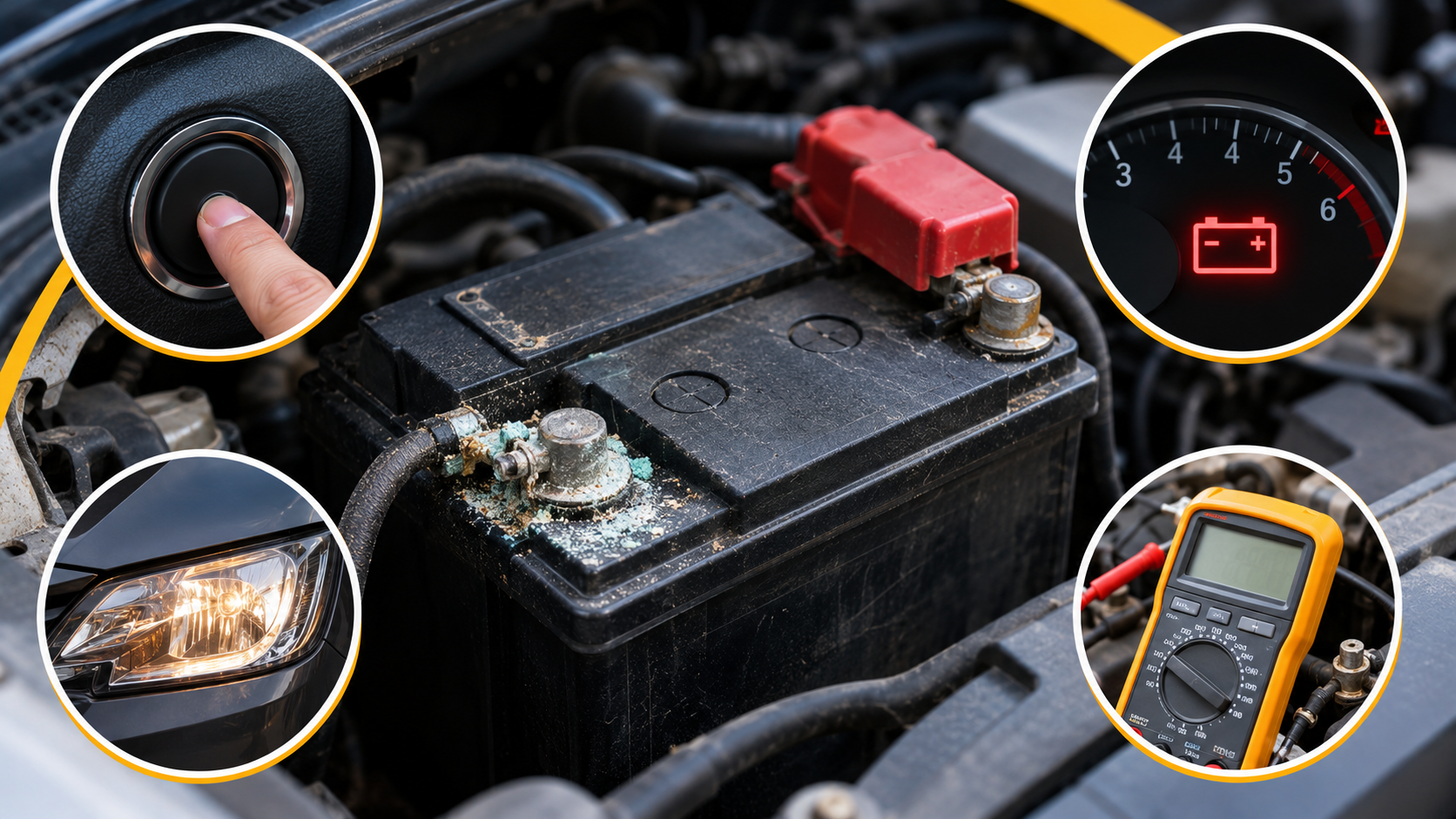
It powers the lights, screen and locks, and it wakes the high-voltage system. The DC-DC converter normally keeps it topped up. But it ages like any 12V battery, and if it fails, the car may not start even with a full main battery.
The traction battery is a separate, high-voltage system, not a starter battery. That’s why a flat EV traction battery can’t be jump-started like a petrol car’s. It needs a tow or a mobile charging service. Some cars allow jump-starting the 12V battery, and your manual says how.
The brochure range comes from a lab test cycle. Real roads add air conditioning, speed, load, tyre pressure, hills and heat. Whether an EV’s advertised range is what every owner will achieve is the myth to check before you trust a brochure.
Use this instead: real-world range is about usable kWh divided by real-world energy use per km. Two cars with very different battery sizes can end up with nearly the same range, as the case study below shows.
Because every confusing line on a spec sheet maps to a buying decision. Know the map, and you can’t be sold the wrong car.
| Spec-sheet number | What it tells you | Buying decision |
|---|---|---|
| Usable battery capacity (kWh) | Tank size | Range and price |
| Energy use (kWh per 100 km) | How thirsty the car is | Real range and running cost |
| Onboard charger (kW) | Fastest home AC speed | Whether it recharges overnight |
| Peak DC rate (kW) and 10 to 80% time | Length of a trip stop | Highway comfort |
| Motor power (kW) and torque (Nm) | Performance | Overtaking and hills |
| Warranty years, km and minimum capacity | Battery protection | Risk and resale |
| Cooling and heat pump | Heat handling | Summer range and repeat fast charging |
Questions to ask the dealer:
These questions sit inside the complete EV buying guide for India, which adds charging access, cost, insurance and resale.
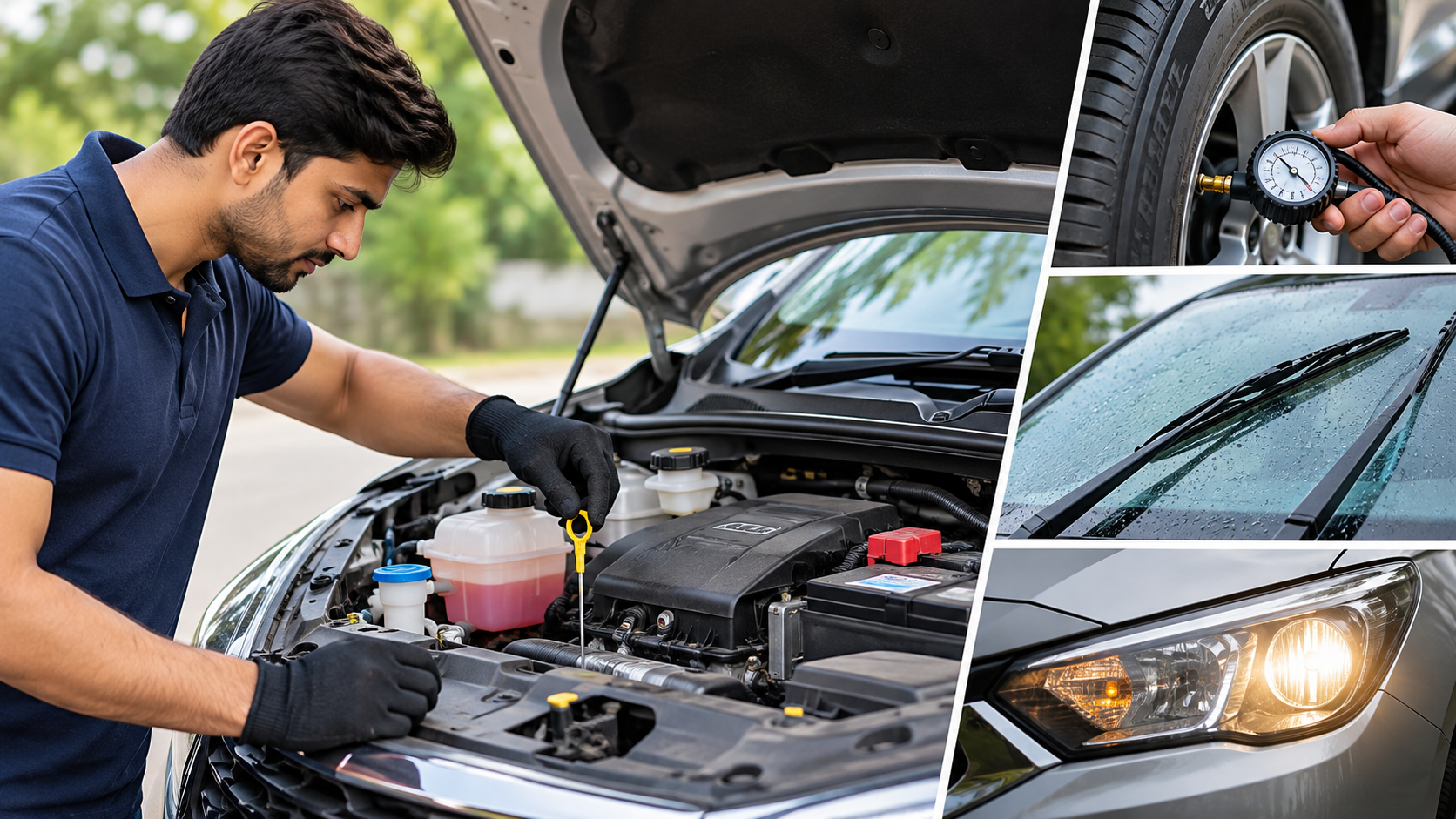
An EV has no engine oil, spark plugs or clutch. But it isn’t maintenance-free.
Vikram is a hypothetical buyer, not a real customer. He drives 60 km a day, charges at home overnight, and takes a 300 km trip once a month. He assumed the bigger battery was the better buy. Then he lined up the five numbers.
| Car A (compact) | Car B (larger) | |
|---|---|---|
| Price (illustrative on-road) | ₹16 lakh | ₹18 lakh |
| Usable battery | 38 kWh | 47 kWh |
| Real-world energy use | 14 kWh per 100 km | 17 kWh per 100 km |
| Real-world range | About 270 km | About 275 km |
| Onboard charger | 7.2 kW | 3.3 kW |
| Peak DC rate | 100 kW | 60 kW |
| 10 to 80% fast charge (assumed average 70 kW and 45 kW) | About 23 minutes | About 44 minutes |
| Home recharge for a 60 km day | About 1.3 hours | About 3.4 hours |
| Running cost at ₹8 per unit | About ₹1.12 per km | About ₹1.36 per km |
Car B’s battery is about 24% bigger, yet its range is almost the same. It’s heavier and less efficient, so it uses more energy per km. It also charges slower at home and on the road, and costs ₹2 lakh more.
So Vikram picked Car A. He confirmed the usable capacity, onboard charger rating and 10% to 80% time in writing, and he checked the energy use on a test drive. His monthly trip now needs one short stop. The lesson is that no single number decides anything. The five together do. These figures are illustrative.
The BMS slows the current to protect the cells as they fill, much as you slow down when a glass is nearly full. The last 20% can take about as long as the whole stretch from 10% to 80%. Heat or cold slows it further. So plan trip stops from 10% to 80%, and leave when you have enough to reach the next charger with a buffer.
No. Regen means the brake pads wear much more slowly, but the discs can rust from lack of use, and brake fluid still ages. Regen also drops when the battery is full or cold, so the friction brakes still do real work. Use them firmly now and then, and keep to the service schedule.
Treat a red warning as a stop signal until a workshop says otherwise. Amber usually means get it checked soon, and red usually means stop safely and call roadside assistance. Battery, high-voltage and brake warnings are the serious ones. Check your manual for what each symbol means in your model. And don’t open the bonnet cables or try to fix anything high-voltage yourself.
In slow traffic, the AC’s share of energy use per kilometre rises, because the car covers so little distance for the energy it burns. Hot weather also makes the battery use energy to cool itself. Pre-cool the cabin while the car is still plugged in, so the grid pays for it. Park in shade, set a moderate temperature, use recirculation and keep the tyres at the right pressure.
Yes. Updates can adjust charging behaviour, regen, battery management and how the range estimate is calculated. Read the release notes, install updates while the car is plugged in with a healthy charge, and don’t panic if the range estimate shifts afterwards. Ask the dealer about the update policy and whether updates cost anything.










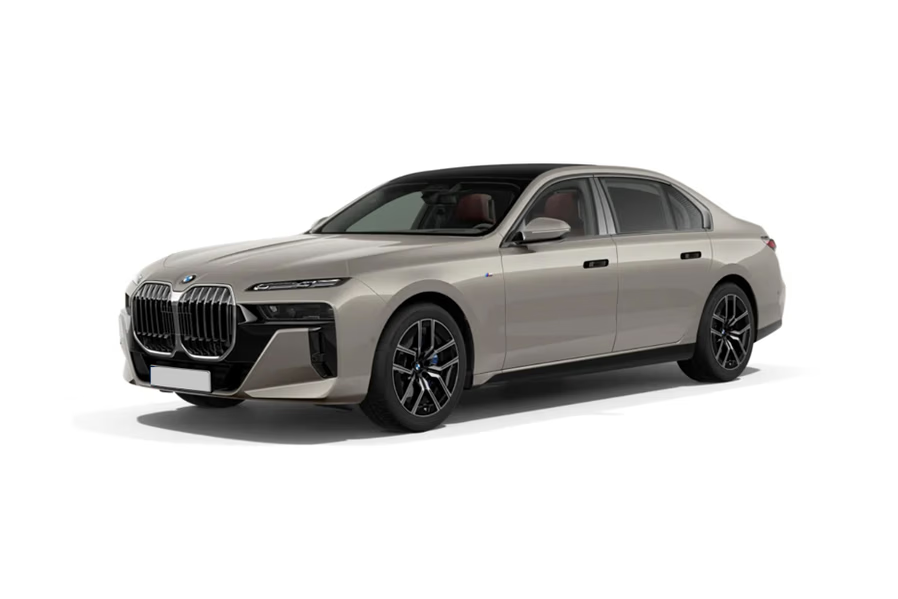
BMW
₹183.00 - 215.73 Lakh