
 Khyati Sharma 2026-08-25
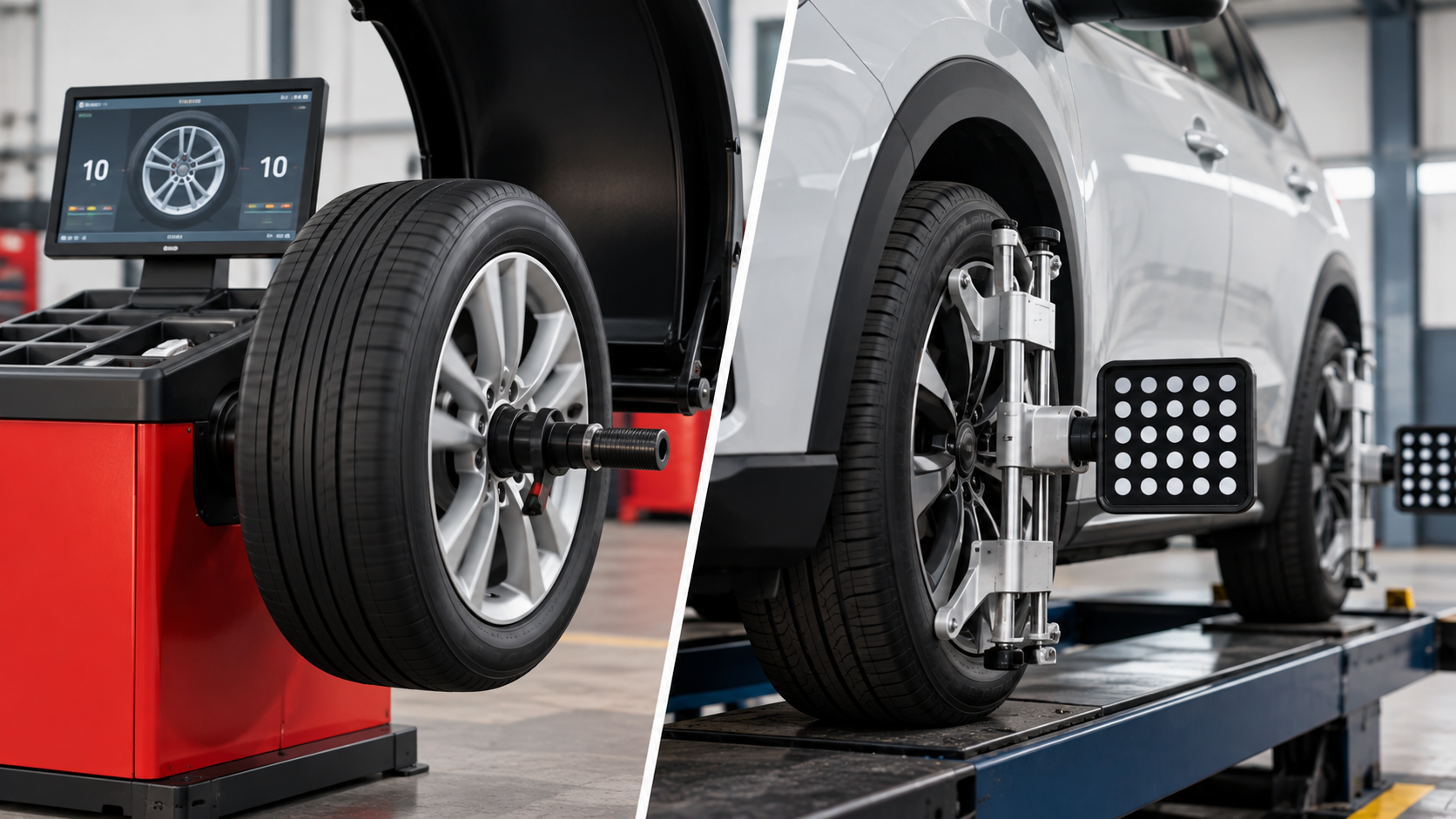
Myth or Fact? MYTH. Wheel balancing and wheel alignment are two different vehicle maintenance services. Both help improve driving comfort, tyre life and vehicle stability, but they address different problems. Wheel balancing corrects uneven weight distribution in a wheel-and-tyre assembly, while wheel alignment adjusts the angles of the wheels so they sit correctly in relation to the road and the vehicle.
Many car owners confuse these services because both are often recommended when a vehicle develops vibrations, uneven tyre wear or handling issues. However, getting wheel balancing done will not correct incorrect alignment, and an alignment adjustment cannot fix an unbalanced wheel.
Understanding the difference can help drivers identify the right service, avoid unnecessary expenses and maintain better control of their vehicles.
Louder Exhausts Automatically Make a Motorcycle More Powerful: Myth or Fact?
Wheel balancing is a process used to ensure that the weight of a wheel-and-tyre assembly is distributed evenly around its rotational axis. Even a small difference in weight distribution can cause a wheel to vibrate when it rotates at higher speeds.
During wheel balancing, a technician removes the wheel from the vehicle and mounts it on a specialised wheel-balancing machine. The machine spins the assembly and identifies areas where weight distribution is uneven.
Small balancing weights are then attached to the wheel rim to compensate for these differences. These weights may be fitted to the inner or outer side of the rim, depending on the wheel design and balancing requirements.
The objective is to make the wheel rotate smoothly without creating unnecessary vibration.

Why Is Wheel Balancing Important?
An unbalanced wheel can create noticeable vibrations, particularly as the vehicle reaches higher speeds. These vibrations can affect driving comfort and place additional stress on certain suspension and steering components.
Proper wheel balancing offers several benefits:
Reduces steering vibrations: Correct balancing helps minimise shaking felt through the steering wheel, seat or floor.
Improves driving comfort: Smoothly rotating wheels make highway journeys more comfortable.
Supports even tyre wear: It helps prevent certain irregular wear patterns associated with wheel imbalance.
Reduces unnecessary stress: Balanced wheels help minimise vibration-related stress on suspension and steering components.
Improves high-speed stability: It reduces vibration caused by uneven weight distribution in the rotating wheel assembly.
Wheel balancing is especially important after installing new tyres, repairing a puncture that requires tyre removal, or changing a wheel.
Wheel alignment is a different maintenance procedure that focuses on the direction and angles of the vehicle's wheels.
A vehicle's wheels are designed to sit at specific angles recommended by the manufacturer. These angles influence how the tyres contact the road, how the vehicle travels in a straight line and how it responds when turning.
Over time, wheel alignment can change because of potholes, rough roads, accidental impacts, worn suspension components or other mechanical issues.
During an alignment check, a technician uses specialised equipment and sensors to measure the wheel angles. If the measurements fall outside the manufacturer's specifications, adjustments are made wherever the vehicle's design allows.
Three Important Wheel Alignment Angles
Wheel alignment mainly involves three important measurements: camber, caster and toe.
1. Camber
Camber refers to the inward or outward tilt of a wheel when viewed from the front of the vehicle.
Positive camber means the top of the wheel tilts outward.
Negative camber means the top of the wheel tilts inward.
Incorrect camber can contribute to uneven tyre wear and affect handling.
2. Caster
Caster is the angle of the steering axis when viewed from the side of the vehicle.
It plays an important role in steering stability and the steering wheel's ability to return towards the centre after a turn.
Incorrect caster can affect steering feel, directional stability and vehicle handling.
3. Toe
Toe describes whether the front edges of the wheels point slightly towards or away from each other when viewed from above.
Toe-in means the front edges of the wheels point towards each other.
Toe-out means the front edges point away from each other.
Incorrect toe settings can cause rapid tyre wear and affect how the vehicle tracks on the road.
A Bike’s Seat Height Alone Decides Whether a Rider Can Manage It: Myth or Fact?
Correct wheel alignment helps the vehicle maintain its intended driving characteristics.
Some important benefits include:
Better straight-line stability.
More predictable steering response.
Reduced risk of alignment-related uneven tyre wear.
Improved cornering behaviour.
Better use of the tyre tread.
Reduced tendency for the vehicle to pull towards one side.
Proper alignment is particularly important for vehicles that regularly travel on highways, uneven roads or routes with frequent potholes.
|
Comparison |
Wheel Balancing |
Wheel Alignment |
|
Main purpose |
Corrects uneven weight distribution |
Corrects wheel angles |
|
Main problem addressed |
Wheel and tyre vibration |
Incorrect wheel direction or geometry |
|
Equipment used |
Wheel-balancing machine |
Computerised alignment equipment |
|
Main adjustment |
Small weights added to the rim |
Adjustable suspension or steering settings, depending on vehicle design |
|
Common symptom |
Steering wheel or vehicle vibration at certain speeds |
Vehicle pulling to one side or uneven tyre wear |
|
Effect on tyres |
Helps reduce imbalance-related vibration and wear |
Helps prevent alignment-related uneven tyre wear |
|
When required |
After tyre installation, wheel removal or suspected imbalance |
After impacts, suspension work or signs of incorrect alignment |
|
Can one replace the other? |
No |
No |
An unbalanced wheel often produces symptoms that become more noticeable as vehicle speed increases.
Look out for these warning signs:
1. Steering Wheel Vibrations
If the steering wheel shakes while driving, particularly at certain speeds, an imbalance in the front wheel assemblies could be responsible.
However, steering vibrations can also result from tyre damage, bent rims, brake problems or worn suspension components. A proper inspection is necessary before deciding that balancing is the solution.
2. Vibrations at Highway Speeds
Some vehicles feel perfectly smooth at lower speeds but develop noticeable vibrations on highways.
This can be a sign of wheel imbalance, although tyre defects and other mechanical problems can create similar symptoms.
3. Vibrations Through the Seat or Floor
An imbalance in the rear wheels may sometimes be felt more through the seat or floor than through the steering wheel.
The exact symptoms depend on the vehicle and the location of the affected wheel.
4. After Installing New Tyres
New tyres should generally be balanced when installed. Even new tyres and rims can have small weight variations that need correction.
Ignoring balancing after tyre replacement may lead to vibrations and an uncomfortable driving experience.
Incorrect alignment usually affects the direction in which the vehicle travels and the way its tyres contact the road.
1. Car Pulls Towards One Side
If the vehicle consistently moves towards the left or right when you are driving on a reasonably level road, incorrect alignment could be one possible cause.
However, tyre pressure differences, road slope, brake drag and tyre-related issues can also cause pulling.
2. Steering Wheel Is Off-Centre
If the steering wheel is not centred while the vehicle travels straight, an alignment inspection may be required.
This can happen after suspension repairs, steering component replacement or an impact with a pothole or kerb.
3. Uneven Tyre Wear
Incorrect alignment can cause excessive wear on the inner or outer edges of tyres.
For example, incorrect camber or toe settings may result in irregular tread wear. Regular tyre inspections can help identify these problems early.
4. Unusual Steering Behaviour
If the steering feels less predictable, the vehicle does not track properly or the steering wheel does not return as expected after a turn, alignment and suspension components should be checked.

There is no single fixed schedule that applies to every vehicle. The correct maintenance interval depends on the manufacturer's recommendations, driving conditions, tyre condition and vehicle usage.
However, certain situations make these services particularly important.
Get wheel balancing checked when:
You install new tyres.
A tyre is removed from the rim and refitted.
You notice vibration at particular speeds.
A wheel or tyre has been repaired.
Balancing weights have fallen off.
You replace or change a wheel assembly.
Get wheel alignment checked when:
Your vehicle pulls towards one side.
The steering wheel is off-centre.
You notice unusual or uneven tyre wear.
Suspension or steering components have been replaced.
Your vehicle experiences a significant pothole or kerb impact.
The handling feels different from normal.
Some workshops recommend checking both services periodically. This can be useful, but drivers should follow the vehicle manufacturer's maintenance guidance and get adjustments based on inspection results rather than paying for unnecessary work.
Company-Fitted vs Aftermarket Accessories: Which Is Better?
Yes. Both services can be performed during the same workshop visit.
In fact, checking both can be useful when a vehicle has multiple symptoms, such as steering vibration, uneven tyre wear and poor directional stability.
For example, suppose your car develops steering vibration at highway speeds and its front tyres show irregular wear. The technician may check wheel balancing, alignment, tyre condition, rim condition and suspension components.
If the wheel assembly is unbalanced, balancing weights can correct the weight distribution. If the alignment angles are outside the recommended specifications, the technician can adjust them separately.
Getting both services checked does not mean both will always need adjustment. The technician should explain the inspection results and recommend only the work required.
Correct wheel alignment can help avoid unnecessary tyre scrub and rolling resistance caused by incorrect wheel angles. In some cases, this may support better fuel efficiency.
However, wheel alignment is not a guaranteed mileage-improvement service.
Fuel consumption depends on several factors, including driving style, tyre pressure, vehicle load, engine condition, traffic and road conditions.
Similarly, wheel balancing does not directly improve fuel economy. Its main purpose is to reduce vibration caused by uneven weight distribution.
Maintaining correct tyre pressure and keeping tyres, wheels and suspension components in good condition are all important for efficient driving.
Ignoring wheel balancing and alignment problems can affect comfort, tyre life and vehicle handling.
If an unbalanced wheel continues to rotate, it may produce persistent vibration and place additional stress on related components.
Incorrect wheel alignment can lead to uneven tyre wear, poor directional stability and reduced tyre life. In severe cases, the vehicle may become more difficult to control.
The biggest concern is not simply the cost of maintenance. Poor tyre condition and unpredictable handling can also affect driving safety.
Drivers should not ignore persistent vibrations, steering problems or visible tyre damage. If the vehicle suddenly pulls strongly to one side or develops severe vibration, have it inspected promptly rather than continuing to drive at high speed.