Khyati Sharma 2026-10-24
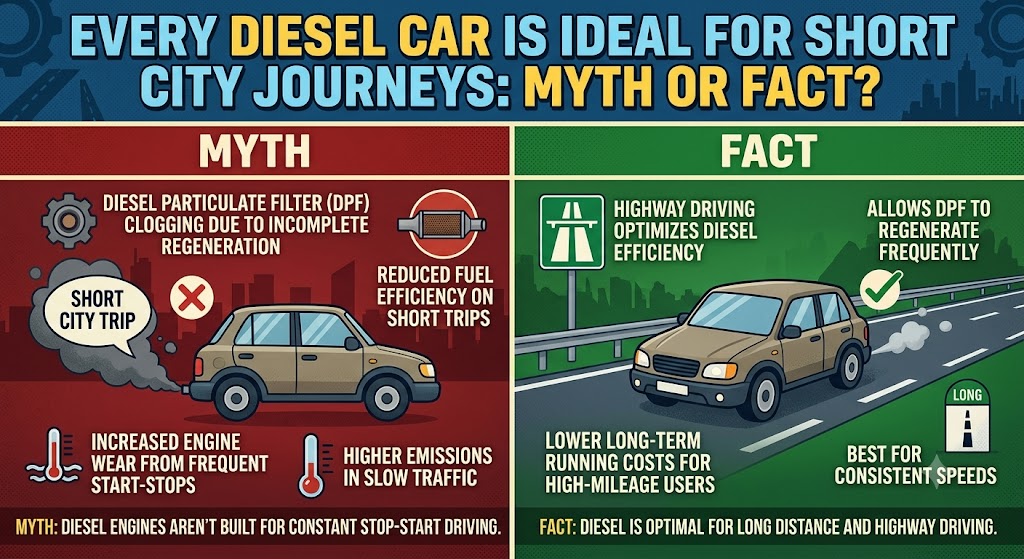
Diesel cars can deliver excellent fuel efficiency and strong low-speed torque, but that does not automatically make them the best choice for short city journeys. Frequent cold starts, stop-and-go traffic and repeated trips over short distances can prevent a diesel engine and its emissions-control systems from reaching their ideal operating conditions.
For drivers who mainly travel a few kilometres at a time, a petrol car, hybrid or electric cars and other vehicle may be more suitable, depending on the purchase budget, charging access and daily driving requirements. However, diesel cars can still work well in urban environments when they are driven regularly over longer distances and maintained correctly.
Documents Required to Buy a New Car in India (Complete Checklist)
Diesel cars have traditionally been associated with high fuel efficiency, strong pulling power and long-distance driving. Diesel fuel generally contains more energy per litre than petrol, and diesel engines can convert a greater proportion of that energy into useful work under many operating conditions.
These characteristics make diesel vehicles attractive to people who cover substantial distances every day. Taxi operators, highway commuters and drivers who frequently travel between cities may benefit from their efficiency and torque.
Diesel engines also tend to produce strong torque at relatively low engine speeds. This can make a vehicle feel relaxed when accelerating, climbing hills or carrying passengers and luggage.
However, fuel economy is only one part of vehicle ownership. The suitability of a diesel car also depends on the length of individual trips, engine temperature, emissions-control technology, maintenance expenses and local driving conditions.
A vehicle that performs efficiently on a highway may not deliver the same advantages when it is used primarily for short trips through congested streets.
A short journey often ends before the engine reaches its normal operating temperature. When an engine is cold, it requires different operating conditions than when it is fully warmed up.
New Car Delivery Day: What to Check Before You Drive Off
Repeated short trips can create several challenges.
1. The Engine May Not Reach Its Ideal Temperature
After a cold start, engine oil and other components need time to warm up. During this period, friction, fuel consumption and emissions can differ from those during normal operating conditions.
If the driver repeatedly travels only two or three kilometres before switching off the engine, the vehicle may spend a large proportion of its operating time warming up.
This is not exclusive to diesel engines, but the effect can be particularly relevant to modern diesel vehicles that have complex emissions-control systems.
2. Diesel Particulate Filter Problems
Many modern diesel cars use a diesel particulate filter (DPF) to capture soot from exhaust gases. The filter periodically needs to regenerate, a process that burns off accumulated soot at elevated temperatures.
Longer drives at suitable operating conditions can help the vehicle complete this process. However, frequent short journeys may interrupt regeneration or prevent the exhaust system from reaching the required temperature.
If regeneration is repeatedly unsuccessful, the vehicle may display a warning light or require a specific driving procedure or professional assistance, depending on the model.
Not every diesel car uses the same DPF technology, and regeneration requirements vary. Drivers should follow the instructions in their vehicle's owner's manual rather than attempting an arbitrary high-speed drive.
3. Increased Risk of Soot Accumulation
Diesel engines produce soot as part of combustion, and modern emissions systems are designed to control it. Under repeated low-temperature operating conditions, soot-related issues can become more likely in some vehicles.
A DPF warning should not be ignored. Continuing to drive with a serious emissions-system fault can lead to reduced performance, additional repair costs or a restricted operating mode.
Short journeys do not guarantee a DPF problem, but a driving pattern dominated by short trips can make it more difficult for certain systems to operate as intended.
4. Battery and Starting-System Strain
Frequent starts place repeated demands on the vehicle's battery. Cold weather, a weak battery, electrical accessories and insufficient driving time to replenish the charge can make starting problems more likely.
Diesel engines also use glow plugs or other cold-start assistance systems, depending on their design. A well-maintained vehicle should cope with normal starts, but repeated short trips can expose an ageing battery or an existing fault sooner.
5. Maintenance Costs Can Offset Fuel Savings
Diesel cars can be economical when used appropriately, but their ownership costs may include expensive components such as high-pressure fuel injectors, turbochargers, DPFs and other emissions-control equipment.
These parts do not necessarily fail because a car is driven in the city. Nevertheless, if a vehicle's normal usage is poorly matched to its engine and emissions system, the risk of inconvenient maintenance and repair expenses may increase.
For a person who drives very little each day, any fuel savings from choosing diesel may be too small to justify a higher purchase price or potential maintenance costs.
Are Diesel Cars Always Bad for City Driving?
No. It is equally incorrect to claim that diesel cars should never be used in cities.
A diesel vehicle can be suitable for urban driving if the owner regularly makes longer trips, the vehicle is maintained according to the manufacturer's recommendations and the emissions-control system gets the operating conditions it needs.
For example, someone who drives 25 kilometres to work each day, with a mixture of city roads and open stretches, may find a diesel car practical. In contrast, someone who drives one kilometre to a local shop, parks the vehicle and repeats the same pattern several times a day may be better served by another powertrain.
The distinction is not simply between city driving and highway driving. The length, frequency and conditions of individual journeys matter more than the location alone.
A diesel car used in a city with occasional longer trips may experience fewer short-trip-related issues than a diesel car used exclusively for repeated cold starts and very short journeys.
Petrol vs Diesel vs CNG vs Electric Cars: How to Choose the Right Fuel Type
|
Factor |
Diesel car |
Petrol car |
Hybrid car |
Electric car |
|
Very short journeys |
Often less suitable |
Generally suitable |
Generally suitable |
Generally suitable |
|
Fuel or energy efficiency |
Strong on longer trips |
Can be lower in heavy traffic |
Often very good in city traffic |
Efficient for local travel |
|
Cold-start concerns |
Relevant, especially for emissions systems |
Relevant, usually simpler emissions concerns |
Depends on engine and hybrid design |
No engine cold start |
|
DPF maintenance |
Applicable if fitted |
Not applicable to most petrol cars |
Depends on whether it has a diesel engine and DPF |
No DPF |
|
Routine maintenance |
Can be more complex |
Often simpler |
Depends on system |
Usually fewer powertrain service items |
|
Long-distance driving |
Often a strong choice |
Suitable |
Suitable |
Depends on range and charging access |
|
Home charging needed |
No |
No |
No |
Helpful, but public charging is possible |
|
Best use case |
Frequent longer journeys |
Everyday mixed driving |
Stop-and-go and mixed driving |
Regular local travel with practical charging |
For drivers who mostly make short journeys, a petrol car can be a sensible alternative. Petrol engines generally warm up relatively quickly, and petrol cars do not have the diesel particulate filter regeneration requirements found in many modern diesel vehicles.
This does not mean petrol engines are immune to short-trip wear. Repeated cold starts, poor maintenance and frequent stop-and-go driving can affect any combustion-engine vehicle.
However, for a person who drives only a few kilometres each day, a petrol car may offer a simpler ownership experience. The initial purchase price may also be lower than that of a comparable diesel model, although this varies by manufacturer and vehicle.
Buyers should compare the total cost of ownership rather than assuming that the lower price of petrol or the higher efficiency of diesel will automatically determine the cheapest option.
Company-Fitted vs Aftermarket Accessories: Which Is Better?
Hybrid vehicles can be particularly effective in congested urban environments because their electric motors assist the engine during acceleration and low-speed driving.
A full hybrid can often move at low speeds using electric power under suitable conditions. It also recovers some energy through regenerative braking, helping improve overall efficiency in stop-and-go traffic.
However, a conventional hybrid still has a combustion engine, and repeated short trips can affect that engine's operating conditions. A plug-in hybrid may offer electric-only driving for short journeys when its battery is sufficiently charged, but its petrol or diesel engine still needs appropriate use and maintenance.
For buyers who want the convenience of a combustion engine without relying entirely on it for urban efficiency, a hybrid may be worth considering.
An electric vehicle can be an excellent option for people whose driving consists mainly of short city journeys. It has no conventional engine oil, exhaust system, diesel particulate filter or engine cold-start cycle.
Electric motors also deliver immediate torque, which can make frequent urban acceleration smooth and responsive. Regenerative braking can recover some energy that would otherwise be lost as heat during deceleration.
Nevertheless, electric cars are not automatically the right choice for every buyer. Purchase price, battery warranty, driving range, charging access and the availability of public charging stations should all be considered.
For someone with reliable home charging and a predictable daily commute, an EV may be especially convenient. For a driver who depends on frequent long-distance travel in areas with limited charging infrastructure, a petrol, diesel or hybrid vehicle may be more practical.
Manual vs Automatic Car: Pros and Cons Explained
If you already own a diesel car, you do not necessarily need to replace it simply because you drive in urban areas. Instead, follow the manufacturer's maintenance guidance and pay attention to the vehicle's warning indicators.
Here are some practical recommendations:
Follow the service schedule. Change engine oil and filters at the recommended intervals, taking account of severe-use conditions if specified in the owner's manual.
Avoid repeatedly interrupting regeneration. If the vehicle indicates that DPF regeneration is required, follow the specific instructions provided by the manufacturer.
Take occasional longer journeys when practical. A sustained drive can help some diesel emissions systems reach the conditions needed for normal operation, but it is not a substitute for diagnosing a fault.
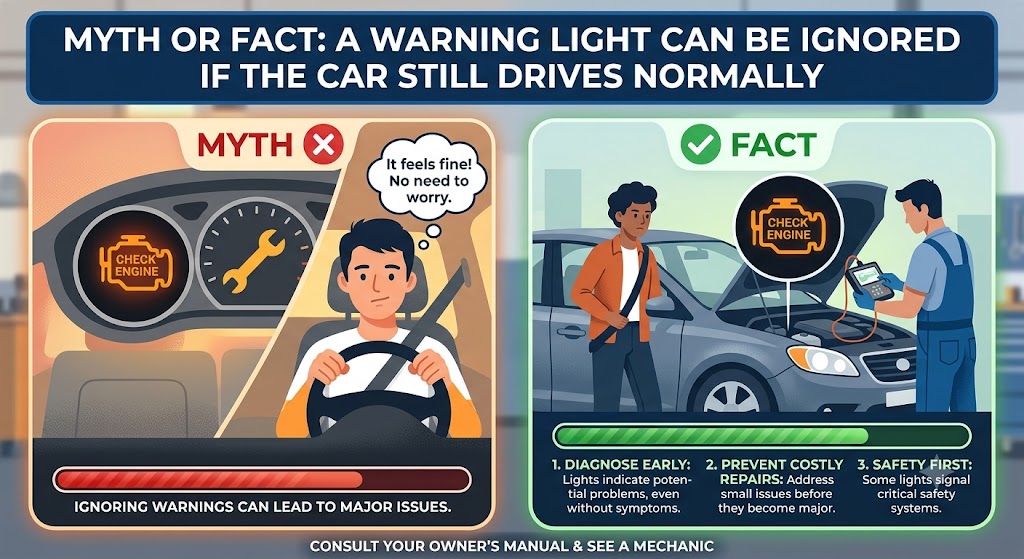
Check warning lights promptly. DPF, engine or emissions-system warnings should be handled according to the vehicle manual. Seek professional help if the warning persists.
Maintain the battery. Ask a technician to check battery health and the charging system if starting becomes slow or unreliable.
Use the correct engine oil and fuel. Follow the manufacturer's specifications rather than choosing products solely on price.
Avoid unnecessary idling. Extended idling wastes fuel and may not help the engine or emissions system reach its desired operating conditions.
A key point is that owners should not attempt to force regeneration by driving at excessive speeds or ignoring warning lights. The correct procedure depends on the specific vehicle.
A diesel car that is used almost exclusively for very short trips may show signs that its operating conditions are not ideal. Look out for the following:
Frequent DPF or emissions-system warnings.
Repeated requests for regeneration.
Poor fuel economy compared with the vehicle's normal performance.
Slow starting or recurring battery problems.
An engine warning light or reduced-power mode.
Increasing maintenance expenses without an obvious change in mileage.
These symptoms do not automatically mean short journeys are the cause. Faulty sensors, poor-quality fuel, worn components and other mechanical problems can produce similar signs. A qualified technician should diagnose recurring problems rather than assuming the vehicle simply needs a longer drive.
Before purchasing a diesel vehicle, evaluate how you will actually use it. A buyer who drives 1,000 kilometres every month on highways has different needs from someone who drives 200 kilometres a month on short urban errands.
Consider these questions:
How far do you normally drive in a single trip?
Will the car regularly complete longer journeys?
How much more does the diesel version cost compared with the petrol version?
What are the servicing costs and warranty conditions?
Does the vehicle have a DPF or other emissions equipment that requires specific operating conditions?
Are there local restrictions affecting diesel vehicles in your city?
Would a hybrid or electric vehicle be more economical for your daily routine?
Also check the latest local regulations before buying. Diesel vehicle age limits, registration rules and access restrictions can vary by city and jurisdiction, particularly in parts of India.
The best decision comes from matching the vehicle to your daily routine rather than choosing a fuel type based on reputation alone.
Myth: Every diesel car is ideal for short city journeys.
Diesel cars can offer excellent efficiency, strong torque and good long-distance performance, but they are not automatically the best option for frequent short trips. Repeated cold starts and insufficient opportunities for emissions-system regeneration can create challenges for some modern diesel vehicles.
Petrol cars may suit drivers looking for straightforward urban use, hybrids can perform efficiently in stop-and-go traffic, and electric vehicles can be attractive for predictable local journeys with convenient charging.
Ultimately, the right car depends on your daily distance, ownership budget, maintenance expectations and driving conditions. Choose a diesel car because its strengths match your requirements—not simply because diesel engines are known for fuel efficiency.








Toyota
₹7.43 - 14.93 Lakh