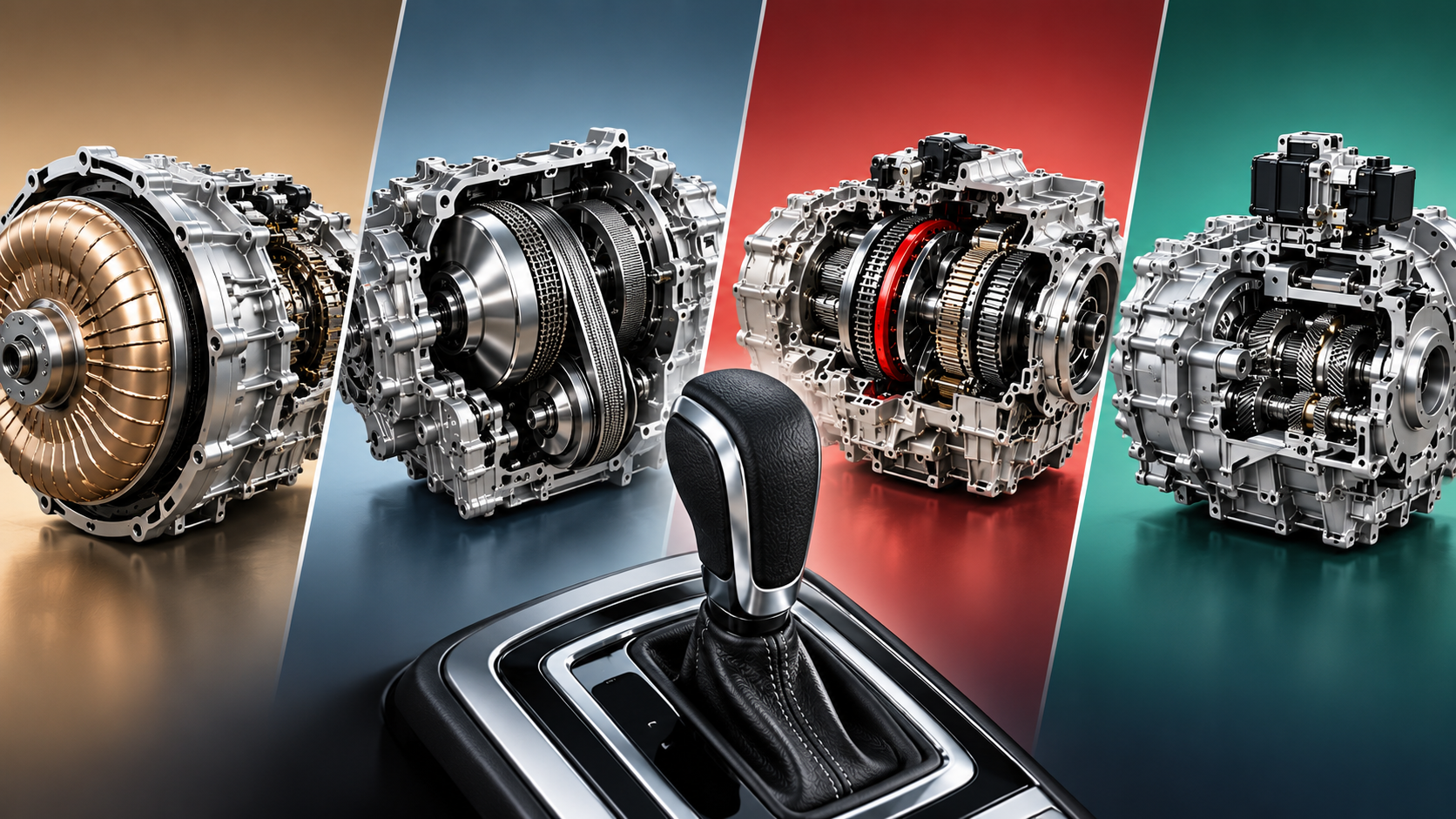
Modern cars use several types of automatic transmissions, including torque-converter automatics, continuously variable transmissions (CVTs), dual-clutch transmissions (DCTs) and automated manual transmissions (AMTs). Although these systems can offer a clutch-pedal-free driving experience, their construction, performance, fuel efficiency, maintenance requirements and driving characteristics can differ significantly.
Understanding these differences is useful for anyone buying a new car or a used vehicle in India. A small hatchback with an AMT, a family sedan with a CVT and a performance car with a DCT may all be advertised as automatic cars, but the technologies inside them are quite different.
Manual vs Automatic Car: Pros and Cons Explained
What Is an Automatic Gearbox?
An automatic gearbox is a transmission system that changes the gear ratio without requiring the driver to manually operate a conventional clutch pedal and shift gears in the usual way.
In a manual car, the driver generally presses the clutch pedal, selects a gear and releases the clutch to transfer engine power to the wheels. An automatic car handles these operations through a transmission system controlled by hydraulic, electronic or electromechanical components.
Depending on the design, an automatic gearbox may use planetary gearsets, belts and pulleys, multiple clutches or a conventional manual gearbox with automated controls.
The purpose remains similar across these systems: to deliver suitable engine power and torque to the wheels under different driving conditions.
However, the way each transmission achieves this result is where the differences begin.
1. Torque-Converter Automatic: A Traditional Automatic Transmission

The torque-converter automatic is one of the most established automatic transmission technologies. It is commonly found in family cars, SUVs and premium vehicles.
Instead of relying on a conventional friction clutch to connect the engine to the transmission, this system uses a torque converter, which transfers engine power through fluid. Inside the transmission, planetary gearsets and clutch packs help produce different gear ratios.
When the driver selects Drive, the system manages gear changes automatically according to factors such as vehicle speed, engine load and throttle input.
How Many Airbags Do You Really Need? A Safety Primer
Advantages of a torque-converter automatic
-
Smooth acceleration and gear changes.
-
Convenient driving in stop-and-go traffic.
-
Good low-speed drivability in many applications.
-
Suitable for a wide range of vehicle sizes and engine outputs.
Disadvantages
Traditional designs can experience some energy loss through the fluid coupling, although modern systems often use lock-up clutches to improve efficiency. Depending on the vehicle and transmission calibration, gear changes may also feel less immediate than those of some dual-clutch systems.
Torque-converter automatics are often a good choice for drivers who prioritise smoothness and everyday comfort.
2. CVT: Continuously Variable Transmission

A continuously variable transmission, commonly called a CVT, works differently from a conventional geared automatic. Rather than selecting from a fixed set of gear ratios, a typical belt-and-pulley CVT varies its ratio continuously within a designed range.
The system usually contains two variable-diameter pulleys connected by a belt or chain. By changing the effective diameter of these pulleys, the transmission can adjust how engine speed relates to vehicle speed.
This allows the engine to operate near an efficient or useful speed for a particular driving situation.
Advantages of a CVT
-
Smooth acceleration without conventional stepped gear changes.
-
Potentially good fuel efficiency when properly engineered.
-
Comfortable performance in urban traffic.
-
A relatively seamless driving experience.
Disadvantages
Some CVTs can produce a noticeable rise in engine speed during hard acceleration while road speed increases more gradually. Drivers accustomed to conventional gear changes may find this behaviour unusual.
CVTs also have specific fluid and maintenance requirements, and their durability depends on the design, servicing and driving conditions.
CVTs are used in a number of compact cars and other vehicles where smoothness and efficiency are important priorities.
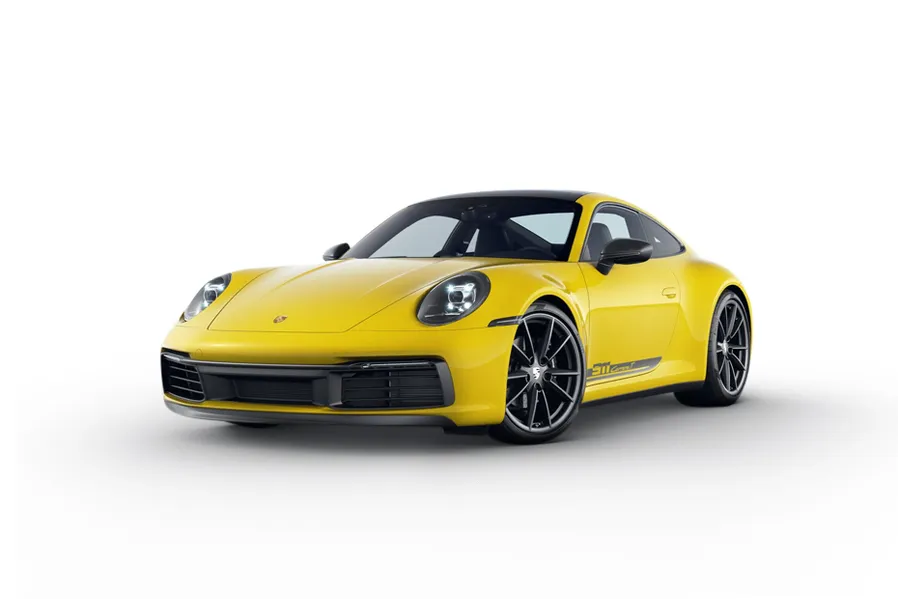
3. DCT: Dual-Clutch Transmission

A dual-clutch transmission, or DCT, uses two clutches to manage different sets of gears. In a typical arrangement, one clutch handles odd-numbered gears while the other handles even-numbered gears.
While the vehicle is moving in one gear, the transmission can prepare the next likely gear. The control system then coordinates the clutches to make the shift quickly.
This arrangement can deliver rapid gear changes, which is one reason DCTs are popular in performance-oriented cars and some mainstream vehicles.
How to Choose Between Two Similar Car Models: A Decision Framework
Advantages of a DCT
-
Quick gear changes in many driving situations.
-
Direct power delivery and a sporty driving character.
-
Potentially high efficiency compared with some traditional automatic designs.
-
Useful performance for vehicles that need rapid shifts.
Disadvantages
Some DCTs may feel hesitant or less smooth during crawling traffic, parking manoeuvres and repeated low-speed clutch engagement. Dry-clutch and wet-clutch designs also have different operating characteristics and cooling requirements.
Frequent stop-start driving, heat and poor maintenance can affect some DCT applications. Repair costs may also be higher in certain models.
A DCT can be an excellent choice for drivers who value responsiveness, but its low-speed behaviour and servicing costs should be considered before buying.
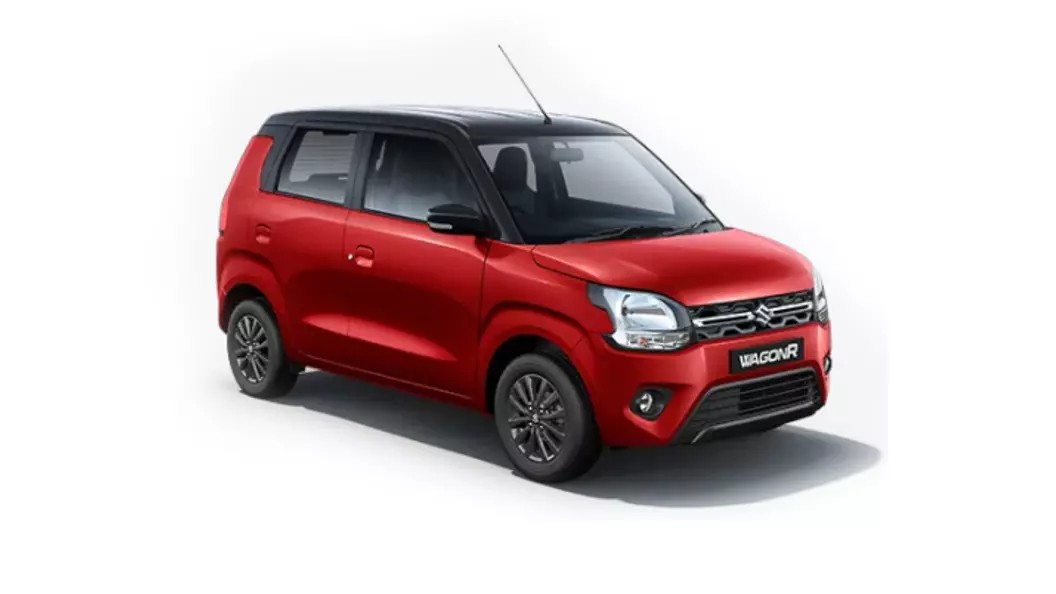
4. AMT: Automated Manual Transmission

An automated manual transmission, or AMT, is based on a conventional manual gearbox. Instead of asking the driver to operate the clutch and shift gears, the system uses actuators and electronic controls to perform those operations.
AMTs are common in budget-friendly cars in India because they can offer automatic operation without requiring a completely different transmission architecture.
Best Time of the Year to Buy a New Car in India
Advantages of an AMT
-
Often more affordable than other automatic options.
-
Familiar mechanical layout based on a manual gearbox.
-
Convenient for everyday commuting.
-
Can offer fuel economy comparable to the equivalent manual model, depending on the vehicle and conditions.
Disadvantages
AMTs may produce a noticeable pause or head movement during gear changes because the system must disengage the clutch, change gear and re-engage the clutch. Their behaviour can therefore feel less seamless than a well-calibrated torque-converter automatic or CVT.
Despite these differences, an AMT can be a practical option for buyers who want to reduce driving effort while keeping purchase costs under control.
Different Automatic Gearboxes Compared
|
Feature
|
Torque Converter
|
CVT
|
DCT
|
AMT
|
|
Basic mechanism
|
Fluid coupling and planetary gears
|
Variable pulleys and belt or chain in typical designs
|
Two clutches and gearsets
|
Manual gearbox with automated clutch and shifting
|
|
Gear ratios
|
Fixed, stepped ratios
|
Continuously variable range
|
Fixed, stepped ratios
|
Fixed, stepped ratios
|
|
Driving feel
|
Usually smooth
|
Seamless, sometimes with engine-speed rise
|
Fast shifts; behaviour varies at low speeds
|
Shifts may be noticeable
|
|
Main strength
|
Comfort and versatility
|
Smoothness and efficiency potential
|
Quick gear changes
|
Lower-cost automatic operation
|
|
Potential drawback
|
Efficiency varies by design
|
Some drivers dislike the acceleration feel
|
Low-speed smoothness can vary
|
Noticeable shift pauses
|
|
Typical use
|
Family cars and SUVs
|
Compact cars and efficiency-focused vehicles
|
Performance and mainstream cars
|
Budget-focused cars
|
5. Why Do All Automatic Cars Feel Different?
Even when two cars use the same type of automatic gearbox, their driving experiences may differ. Transmission design is only one part of the equation.
Several factors influence how an automatic car behaves:
Engine characteristics: An engine that produces strong low-speed torque may feel different from one that needs higher revs to deliver its power.
Transmission calibration: Manufacturers programme gearboxes to prioritise comfort, efficiency, performance or a balance of these qualities.
Number and spacing of gears: Conventional automatic transmissions have different gear ratios. Their spacing affects acceleration, cruising engine speed and responsiveness.
Vehicle weight: A heavier vehicle may require different shift strategies from a lighter car, even when the engine and transmission are similar.
Driving modes: Eco, Normal and Sport modes can change throttle response, shift timing and the way the transmission responds to driver inputs.
Maintenance condition: Worn components, incorrect transmission fluid or neglected servicing can affect shift quality and reliability.
Consequently, buyers should not judge an automatic car solely by its transmission label. A test drive can reveal important differences that specifications alone may not explain.
Car Loan vs Cash Purchase: Which Makes More Financial Sense?
6. Which Automatic Gearbox Is Best for Indian Driving Conditions?
There is no single automatic transmission that is best for every driver. The right choice depends on budget, traffic conditions, driving style and long-term ownership priorities.
-
For city commuting: A CVT or a smooth torque-converter automatic can be appealing because of its comfortable low-speed operation.
-
For budget-conscious buyers: An AMT can provide clutch-pedal-free driving at a relatively accessible price.
-
For enthusiastic drivers: A well-calibrated DCT can offer rapid gear changes and a responsive driving experience.
-
For family use: A torque-converter automatic can be a good option for buyers who value smoothness, particularly in traffic and during parking manoeuvres.
Before purchasing a vehicle, check the manufacturer's recommended service schedule, transmission warranty, fluid replacement requirements and availability of qualified repair facilities. These considerations are especially important for used cars, where the previous owner's driving and maintenance habits may affect the condition of the gearbox.
New Car Dealer Negotiation Tips That Actually Work
7. Common Myths About Automatic Gearboxes
Myth 1: Every automatic car changes gears in the same way.
Fact: Different transmission types use different mechanisms, including fluid couplings, variable pulleys, dual clutches and automated manual gear systems.
Myth 2: Every automatic gearbox is more fuel-efficient than a manual.
Fact: Fuel economy depends on the transmission design, engine, vehicle weight, calibration, road conditions and driving habits. Some automatics are highly efficient, but others may consume more fuel than their manual counterparts.
Myth 3: Automatic gearboxes never need maintenance.
Fact: Automatic transmissions may require fluid checks or replacements and other servicing according to the manufacturer's instructions. Ignoring maintenance requirements can increase the risk of problems.
Myth 4: A DCT is always better than a torque-converter automatic.
Fact: A DCT may offer faster shifts, while a torque-converter automatic may provide better low-speed smoothness in a particular vehicle. The better choice depends on the application and the driver's priorities.
Conclusion: Myth or Fact?
The claim that all automatic gearboxes work in the same way is a myth. Although these transmissions share the purpose of changing gear ratios without requiring the driver to operate a conventional clutch pedal, they use different technologies to achieve that goal.
Torque-converter automatics focus on versatile, smooth operation; CVTs adjust ratios continuously; DCTs use two clutches for rapid shifts; and AMTs automate the operation of a manual gearbox.
For Indian car buyers, understanding these differences can help make a more informed purchase decision. Rather than choosing a car simply because it is automatic, consider how its gearbox behaves in traffic, how it performs on highways, what maintenance it requires and whether it suits your budget.
Ultimately, the best automatic gearbox is the one that matches your driving needs, comfort expectations and ownership costs.

 Khyati Sharma 2026-10-23