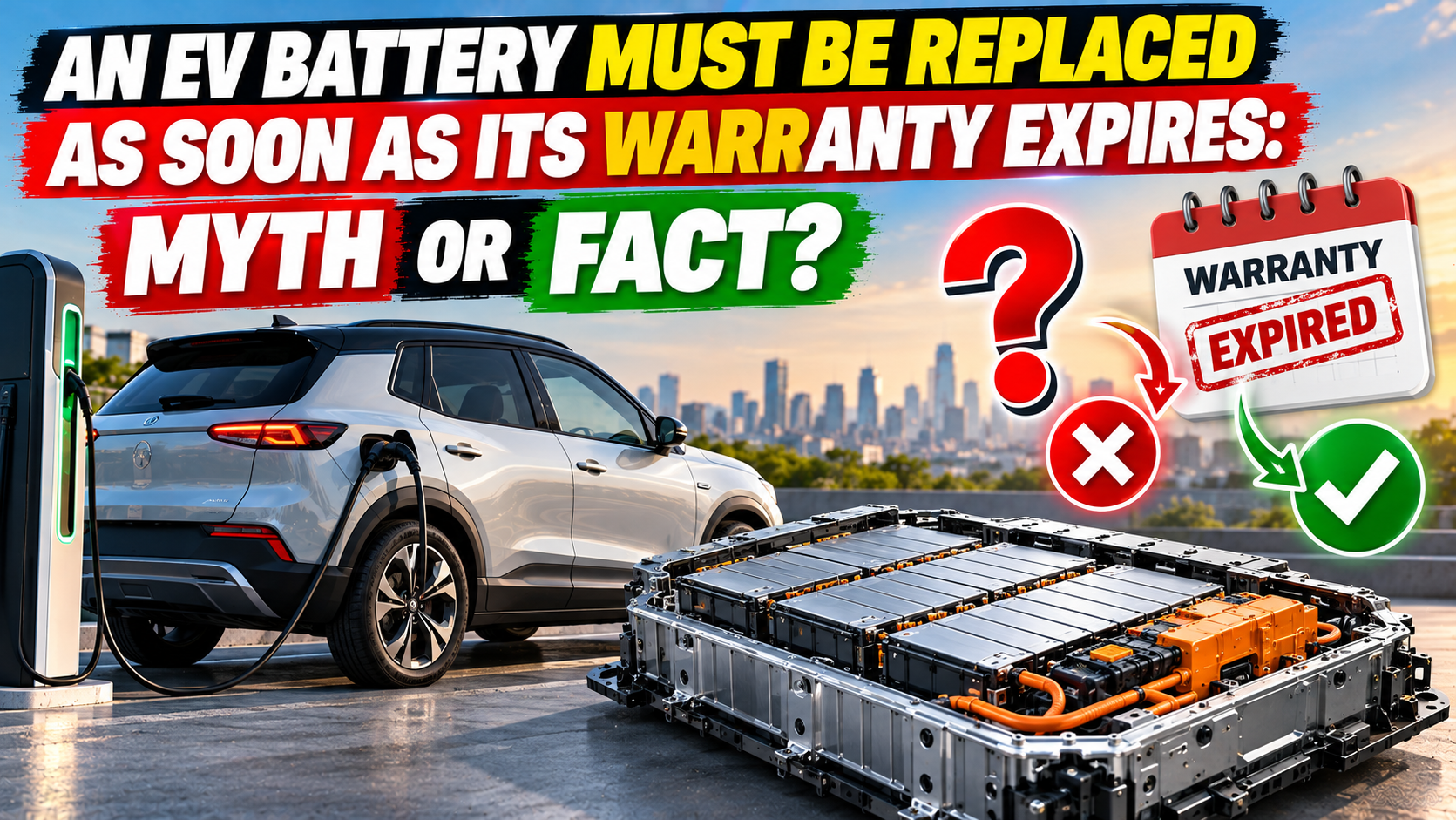
An electric vehicle (EV) battery does not need to be replaced automatically when its warranty expires. The end of a warranty simply means that the manufacturer's coverage period has finished. It does not mean the battery has reached the end of its useful life.
Modern electric vehicle batteries are designed to operate for many years under normal conditions. Although battery capacity gradually decreases with use, many EV batteries continue to deliver satisfactory performance long after their warranty periods end.
Battery replacement depends on several factors, including battery health, driving range, charging behaviour, temperature exposure and the cost of repairs. In many cases, owners can continue using their vehicles without replacing the battery.
Documents Required to Buy a New Car in India (Complete Checklist)
Is EV Battery Replacement Necessary After the Warranty Expires?
No. An EV battery does not require immediate replacement after its warranty expires. A warranty establishes the period during which the manufacturer covers certain battery-related defects or degradation conditions, subject to the warranty terms.
For example, a manufacturer may offer an eight-year or 160,000-kilometre battery warranty, whichever comes first. Once that period ends, the battery can continue working normally if its condition remains satisfactory.
The battery's actual lifespan depends on its chemistry, design, operating conditions and usage. Some batteries may experience noticeable degradation earlier, while others can retain useful capacity for many years.
Owners should focus on battery health rather than the warranty expiry date alone. If the vehicle still provides sufficient driving range, charges normally and shows no battery-related warnings, immediate replacement is generally unnecessary.

Why Do EV Batteries Lose Capacity Over Time?
Electric vehicle batteries gradually lose some of their ability to store energy. This process is known as battery degradation.
Lithium-ion batteries experience chemical changes during charging, discharging and ageing. Over time, these changes reduce the amount of energy the battery can store and deliver.
However, degradation does not usually mean that the battery suddenly stops functioning. It often develops gradually, reducing the vehicle's maximum driving range.
Several factors influence battery degradation:
-
Charging habits: Frequently keeping a battery at 100% charge for extended periods may increase degradation, depending on battery chemistry.
-
Temperature: Excessive heat can accelerate ageing, while very cold temperatures can temporarily reduce performance and charging speed.
-
Fast charging: Frequent high-power DC charging can increase battery stress under some conditions, although modern battery management systems help control this.
-
Driving patterns: High energy use, repeated deep discharges and demanding operating conditions can affect long-term battery health.
-
Age: Batteries gradually age even when a vehicle is not driven frequently.
The impact of these factors varies between vehicles. Battery chemistry, thermal management and the manufacturer's charging recommendations all matter.
Petrol vs Diesel vs CNG vs Electric Cars: How to Choose the Right Fuel Type
EV Battery Warranty vs Battery Lifespan
One of the biggest reasons for confusion is that drivers often assume a battery warranty represents its expected lifespan. In reality, these are two different things.
A warranty protects the owner against specified problems for a defined period. Battery lifespan describes how long the battery remains useful for the owner's driving requirements.
Consider an EV with an eight-year battery warranty. The battery may continue operating beyond eight years, although its capacity may have declined. If the remaining range is sufficient for the owner's daily travel, replacement may not be necessary.
Warranty coverage also differs between manufacturers and models. Some warranties specify a minimum battery-capacity threshold, while others focus on manufacturing defects or particular battery failures.
|
Factor
|
What It Means
|
|
Battery warranty
|
Period and conditions under which the manufacturer provides coverage
|
|
Battery lifespan
|
How long the battery remains useful for driving
|
|
Battery degradation
|
Gradual reduction in energy-storage capacity
|
|
State of health (SOH)
|
An estimate of the battery's condition compared with its original state
|
|
Remaining driving range
|
Distance the EV can travel under current conditions
|
|
Replacement requirement
|
Determined by battery condition, safety, performance and repair economics
|
How Can You Check Your EV Battery Health?
Before considering an expensive battery replacement, owners should determine the battery's actual condition.
1. Check the Vehicle's Battery Health Report
Some electric vehicles provide battery-health information through the dashboard, a companion app or a service report. Depending on the manufacturer, this may include estimated battery capacity, state of health or other diagnostic information.
If the vehicle does not display a clear battery-health figure, an authorised service centre may be able to perform a diagnostic assessment.
2. Monitor Real-World Driving Range
Compare your vehicle's current driving range with its earlier performance under similar conditions.
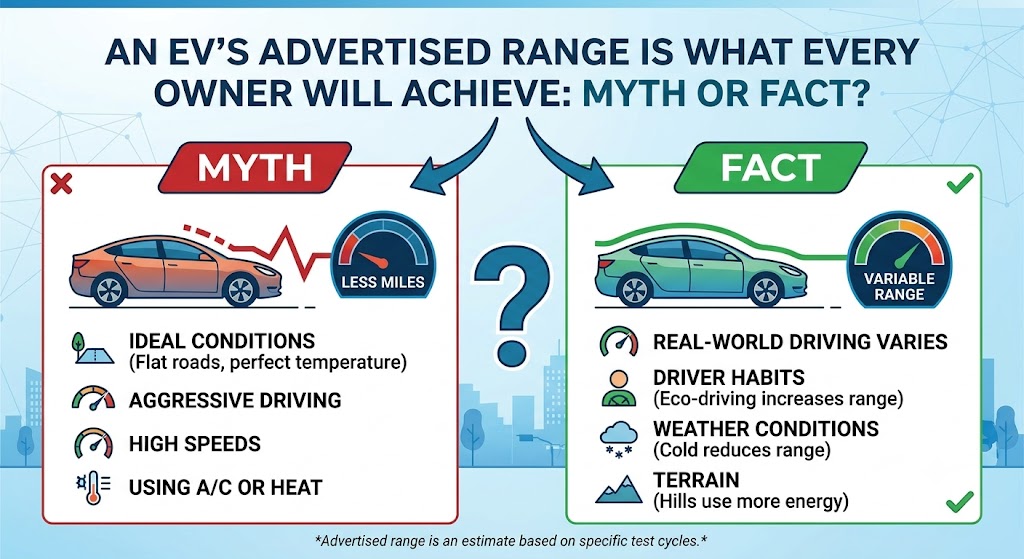
For example, if an EV previously covered 300 kilometres under a particular driving pattern but now covers 270 kilometres, the difference could reflect battery degradation. However, weather, air-conditioning use, traffic, tyre pressure, driving speed and terrain can also affect range.
A single trip is not enough to establish battery deterioration. Monitor performance over time under comparable conditions.
3. Watch for Charging Problems
A noticeable change in charging behaviour may justify professional inspection. Possible symptoms include repeated charging interruptions, unusually slow charging under comparable conditions or charging-related warning messages.
These symptoms do not automatically mean the battery needs replacement. The charging equipment, software, temperature-control system or other components could be responsible.
4. Get a Professional Battery Diagnostic
If you suspect substantial degradation, ask the manufacturer or a qualified EV technician to assess the battery.
A diagnostic check can help identify abnormal cell behaviour, battery-management-system faults and other problems. It can also help determine whether the issue affects the entire battery pack or only a particular component.

When Does an EV Battery Actually Need Replacement?
Although immediate replacement after warranty expiry is unnecessary, there are circumstances in which battery repair or replacement may be appropriate.
Significant loss of usable capacity: If the battery can no longer provide enough range for your regular journeys, professional assessment can help determine the available options.
Serious battery faults: Internal cell damage, certain electrical faults or other significant defects may require specialised repair or pack replacement.
Safety concerns: A damaged battery, particularly after a serious collision, must be inspected by qualified professionals. Smoke, unusual heat, swelling or a strong chemical smell can indicate a serious problem. Stop using the vehicle when safe to do so and follow emergency guidance from the manufacturer or local emergency services.
Uneconomical repairs: If repair costs approach or exceed the practical value of the vehicle, replacement or changing vehicles may become a more sensible financial decision.
Not every battery problem requires a complete pack replacement. Depending on the design and manufacturer's repair policy, a technician may be able to repair the system or replace an individual module or component.
Car Loan Eligibility: How to Check Before You Apply
How Much Does EV Battery Replacement Cost?
Battery replacement can be one of the most expensive repairs on an electric vehicle. However, there is no single price that applies to all EVs.
The final cost depends on battery capacity, vehicle model, replacement-part availability, labour charges, local taxes and whether a new, remanufactured or otherwise approved replacement pack is used.
Larger batteries generally contain more materials and can cost more to replace. Some vehicles also use integrated battery-pack designs that can affect repair options.
|
Cost Factor
|
How It Affects the Bill
|
|
Battery capacity
|
Larger packs may cost more
|
|
Vehicle model
|
Design and parts availability vary
|
|
Type of repair
|
A component repair may cost less than a complete pack
|
|
New or remanufactured pack
|
Pricing and warranty terms can differ
|
|
Labour and diagnostics
|
Depend on the vehicle and service provider
|
|
Warranty coverage
|
Eligible repairs may be covered under the applicable terms
|
Before approving a full replacement, request a written diagnosis and quotation. Ask whether a module-level repair or another approved solution is available and what warranty applies to the replacement part.
Owners should also check whether the battery problem qualifies for any remaining coverage, goodwill assistance or applicable service campaign.
How Many Airbags Do You Really Need? A Safety Primer
Tips to Extend Your EV Battery's Life
Good charging and maintenance habits can help preserve battery performance. However, no routine can prevent all battery ageing.
1. Follow the Manufacturer's Charging Recommendations
Different battery chemistries have different charging requirements. Some vehicles with lithium iron phosphate (LFP) batteries may have different recommended charging practices from vehicles using nickel-rich lithium-ion chemistries.
Follow the charging guidance provided for your specific vehicle instead of applying one rule to every EV.

2. Avoid Leaving the Battery at a Very High or Very Low Charge for Long Periods
For many lithium-ion batteries, prolonged storage at a very high or very low state of charge can be undesirable. If the vehicle will remain parked for an extended period, follow the manufacturer's recommended storage charge level.
Do not assume that every EV must always be charged to 80%. Some vehicles recommend different limits for routine use or periodic full charging.
3. Use Fast Charging When Appropriate
DC fast charging is useful for long journeys and situations where time matters. Frequent high-power charging can increase battery stress in some conditions, but its impact depends on the battery design, temperature and thermal-management system.
Use the charging method recommended by the manufacturer and avoid unnecessary charging sessions when the battery is extremely hot or cold.
4. Protect the Vehicle From Extreme Heat Where Possible
Parking in shade or a covered area can reduce heat exposure. Modern EVs may use active battery cooling, but the system cannot eliminate every effect of high ambient temperatures.
Follow the manufacturer's advice on battery conditioning and long-term parking.
5. Keep Software and Maintenance Up to Date
Battery-management software monitors important battery parameters and helps control charging and operation. Follow the manufacturer's recommendations for software updates, inspections and scheduled maintenance.
Also maintain correct tyre pressure and drive smoothly where practical. These steps primarily help efficiency and range rather than reversing chemical battery ageing.
EV Battery Replacement: Myth vs Fact
|
Common Belief
|
Reality
|
|
The battery must be replaced after the warranty expires
|
Warranty expiry alone does not require replacement
|
|
Every EV battery fails after eight years
|
Battery life varies by chemistry, design and usage
|
|
Reduced range always means a damaged battery
|
Weather, driving style and other factors also affect range
|
|
Fast charging always destroys the battery
|
Its impact depends on charging conditions and battery management
|
|
The entire battery pack must always be replaced
|
Some faults may be repairable, depending on the design
|
|
A battery warranty guarantees the original range forever
|
Warranty protection is subject to specified conditions and limits
|
Should You Buy a Used EV With an Expired Battery Warranty?
An expired battery warranty does not automatically make a used electric vehicle a bad purchase. However, buyers should investigate the battery's condition before committing.
Request available battery-health records, service history and information about previous repairs. If possible, arrange an independent inspection by a qualified EV technician.
Check the actual driving range, charging operation, dashboard warnings and the condition of the underbody battery enclosure. A vehicle that has suffered a serious collision or underbody impact deserves particular attention.
Also compare the vehicle's price with the potential cost of battery repairs. A well-maintained EV with an expired warranty may still be a practical purchase, while a vehicle showing serious battery faults could involve substantial expenses.

 Khyati Sharma 2026-10-28