

2026-10-29

A bigger down payment means a smaller loan, a lower EMI, and less interest over the full term. Every rupee you pay upfront is a rupee you don’t borrow. But don’t empty your savings to make it bigger. Pick the largest down payment that still leaves you a safety cushion and an EMI you can live with.
| Your down payment | What changes | What stays the same |
| Higher | Loan amount, EMI and total interest all drop | Car price, tenure and rate, if the lender keeps them |
| Lower | Loan amount, EMI and total interest all rise | Same car, same tenure, same rate |
| Much higher, with no savings left | Lower EMI, but no buffer for emergencies | The risk of a job loss or medical bill |
A down payment is the part of the car’s on-road price that you pay from your own money. The lender then funds the rest, subject to its own policy. So if the on-road price is ₹10 lakh and you pay ₹2 lakh upfront, you borrow ₹8 lakh.
Think of it as the first slice of ownership. The more you pay upfront, the less the lender holds against the car.
The loan amount is the number that drives everything else. The EMI is calculated from it, and so is the total interest you’ll pay. A smaller number at the start cuts every line below it.
That’s why small changes early in the process can move the whole bill. Once the amount is signed, the EMI formula takes over, and you can only change the result by repaying early.
Each lender sets its own limit, and the limit depends on the car, your profile and its funding policy. Lenders often fund a share of the on-road price, but that share isn’t fixed by law. Ask for the eligible loan amount in writing before you plan your down payment, because the number on a dealer’s brochure isn’t the same thing.
The ratio of loan to car value is called the loan-to-value (LTV) ratio. A lower LTV usually means the lender is holding less of the car’s value, which can help with approval. Still, the lender’s own limit decides.
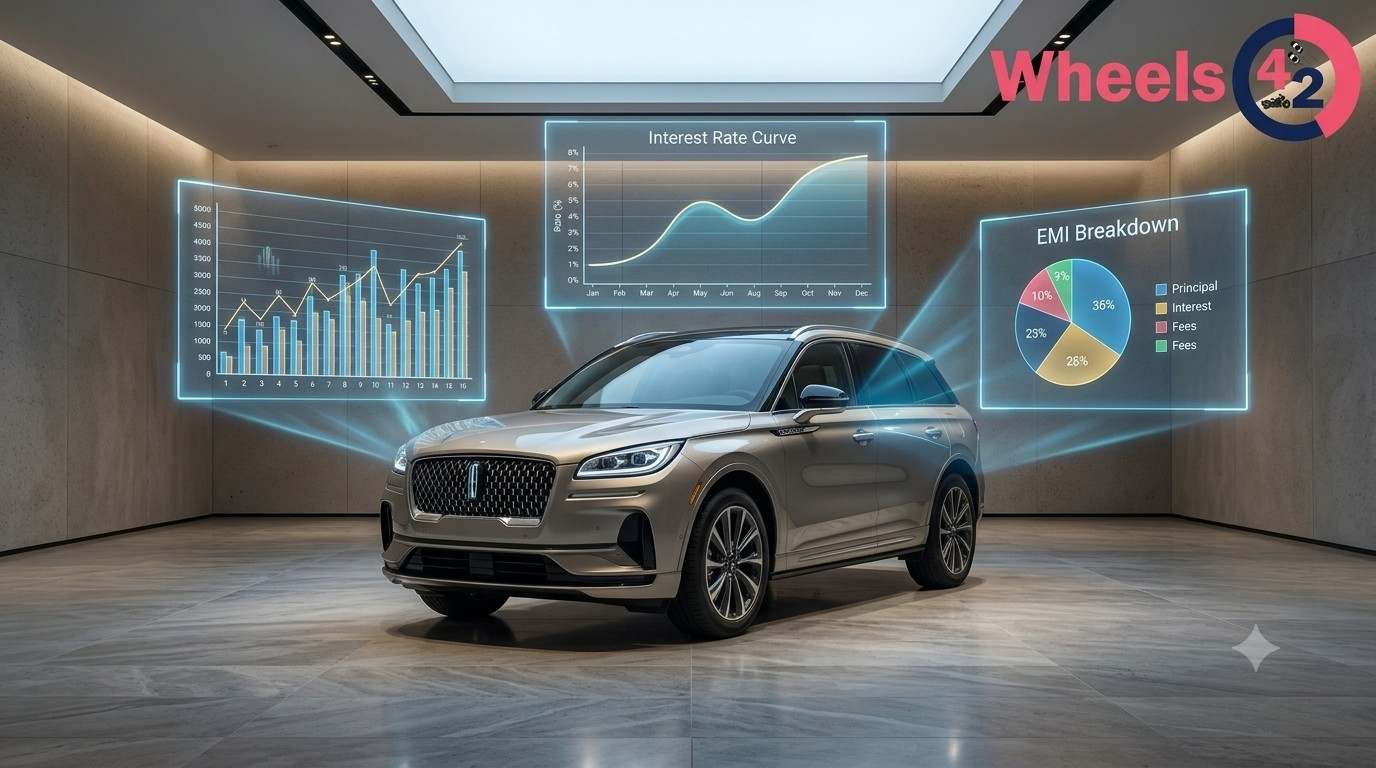
Roughly in line with the loan amount. On a five-year loan at 9.5%, every ₹1 lakh borrowed costs about ₹2,100 a month. So each extra ₹1 lakh you put down cuts your EMI by about ₹2,100, and that’s a reduction you’ll feel every single month.
Why does this matter? Because the EMI is the bill you live with, while the down payment is a one-time number. Seeing the monthly effect helps you judge whether an extra ₹50,000 upfront is worth it.
Use the standard EMI formula with the loan amount after your down payment. Then check the result against your cap, which is the most you’d pay each month without touching savings. Here’s the method in plain steps.
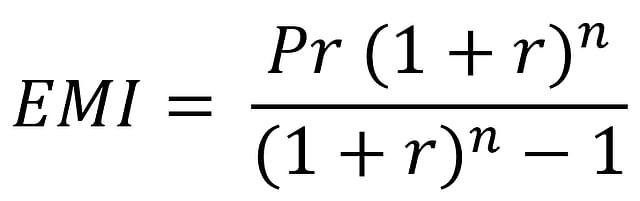
Here, P is the loan amount, r is the monthly rate, and n is the number of monthly instalments. Our walk through how car loan interest works month by month shows what happens inside each EMI, if you want to see the split between interest and principal.
Less than the EMI drop suggests, if you only look at the first year, and more than you’d think if you look at the full tenure. Interest is charged on the outstanding balance, so a smaller loan means less interest every single month. Over five years, that stacks up.
Think about it this way. The down payment doesn’t shave off a flat amount of interest. It removes a slice of the balance, and that slice would have attracted interest for every month of the loan.
Karan is a hypothetical buyer, not a real customer. He wants a car with an on-road price of ₹10 lakh. He takes home ₹1,00,000 a month, and he has ₹3 lakh in savings. He’s trying to decide how much to put down.
He compares three options on the same car, at the same rate of 9.5% over five years. The figures are rounded and ignore fees, insurance and running costs.
| Option A: ₹1 lakh down | Option B: ₹3 lakh down | Option C: ₹5 lakh down | |
| Loan amount | ₹9,00,000 | ₹7,00,000 | ₹5,00,000 |
| Monthly EMI | ₹18,900 | ₹14,700 | ₹10,500 |
| Total repayment | ₹11,34,000 | ₹8,82,000 | ₹6,30,000 |
| Total interest | ₹2,34,000 | ₹1,82,000 | ₹1,30,000 |
| Savings left | ₹2,00,000 | ₹0 | ₹0 |
Option A keeps Karan’s savings intact but costs ₹2,34,000 in interest. Option C looks the cheapest, but it wipes out every rupee he has. Option B sits in the middle, though it also leaves him with nothing in the bank.
Here’s where Karan lands. He tests each option against three questions: can he afford the EMI, does the savings cushion stay intact, and what’s the total interest? Option A passes the first two and costs the most. Option C fails the cushion test. Option B fails the cushion test too.
So Karan picks a version of Option A with a middle path. He puts down ₹2 lakh, borrows ₹8 lakh, and keeps ₹1 lakh as a cushion. His EMI comes to about ₹16,800, which is close to 17% of his take-home pay, and his total interest lands near ₹2,08,000.
Notice what that choice does. He gives up ₹26,000 in savings compared with Option A, and he saves about ₹26,000 in interest. And he keeps a buffer for the first few months of a job gap or a surprise repair bill.
Here’s the lesson. The biggest down payment isn’t always the right one. The right one leaves you with a cushion and an EMI that fits your budget, and any extra beyond that only pays off if you’d otherwise leave the money idle.
Pick the largest amount that still keeps a cushion and an EMI under your cap. The cushion is the part people forget. Most planners suggest keeping several months of living costs in reserve before you spend on anything.
Start with the cap. Work out the EMI you can carry comfortably, then back into the down payment that gets you there. The steps in our guide on setting a realistic car buying budget show how to size the on-road cost and the monthly spend, so the number you land on is built from your actual income.
No. The 20% figure is a common rule of thumb in many financial discussions, but it’s not a universal requirement. Lenders set their own rules, and some fund a larger share of the price. Don’t let a rule of thumb replace your own cap.
There’s no single minimum. It depends on the lender, the car and your profile. Some offers ask for a fixed share upfront, while others let you pay less if the file is strong. Ask the lender for the exact figure in writing rather than relying on an online average.
It depends on which problem you’re solving. A bigger down payment cuts total interest without adding any new obligation. A longer tenure lowers the EMI, but it raises total interest and keeps you in debt for longer. If you need the lowest possible EMI, the longer tenure helps. If you want the lowest total cost, the bigger down payment wins.
Remember that the two can work together. You can pay a bigger down payment and still choose a shorter tenure, which keeps total interest low while the EMI stays manageable.
Often, yes. A trade-in can reduce the amount you need to pay in cash, because the dealer credits the value of your old car against the price. The trade-in value and the loan terms are separate questions, though. Ask for the trade-in value in writing, and check whether the dealer’s offer comes with finance-linked terms.
Before you use a trade-in, check the old car’s loan too. If you still owe money on it, the payoff amount changes the math.
It doesn’t change your credit history directly. Your CIBIL score is built from repayment behaviour, credit use and enquiries, and the size of your down payment isn’t one of those inputs. But a smaller loan means a smaller EMI, which often makes on-time repayment easier. So the indirect effect can help.
Yes, and that’s a common surprise. The on-road price covers registration, road tax and insurance, but some costs can still come in addition, depending on the dealer and state. Check whether your down payment covers the full on-road price or just the car. If it’s the car only, you’ll need extra cash for the rest.
Ask the dealer for an itemised quotation. It shows which charges are included and which are not, and it saves an unpleasant discovery at the counter.
Not directly, but the registration paperwork follows the loan. If a lender is financing the car, its name goes on the registration certificate (RC) as the hypothecation holder until the loan is repaid. Your down payment doesn’t change that. The loan does.
It doesn’t change the tenure you pick, but it changes how quickly the balance falls. A bigger down payment starts the loan at a lower balance, so the loan reaches zero sooner if you keep the same EMI. That’s useful if you want to close early.
This article gives general information, not personal financial advice. Your savings, tax position and goals decide what’s right for you. For a purchase this size, speak with a chartered accountant or a qualified financial planner before you commit.
Sources: RBI guidance on loan-to-value limits for vehicle loans; TransUnion CIBIL guidance on credit scores; the car loan rate ranges and EMI figures used in our earlier guides.