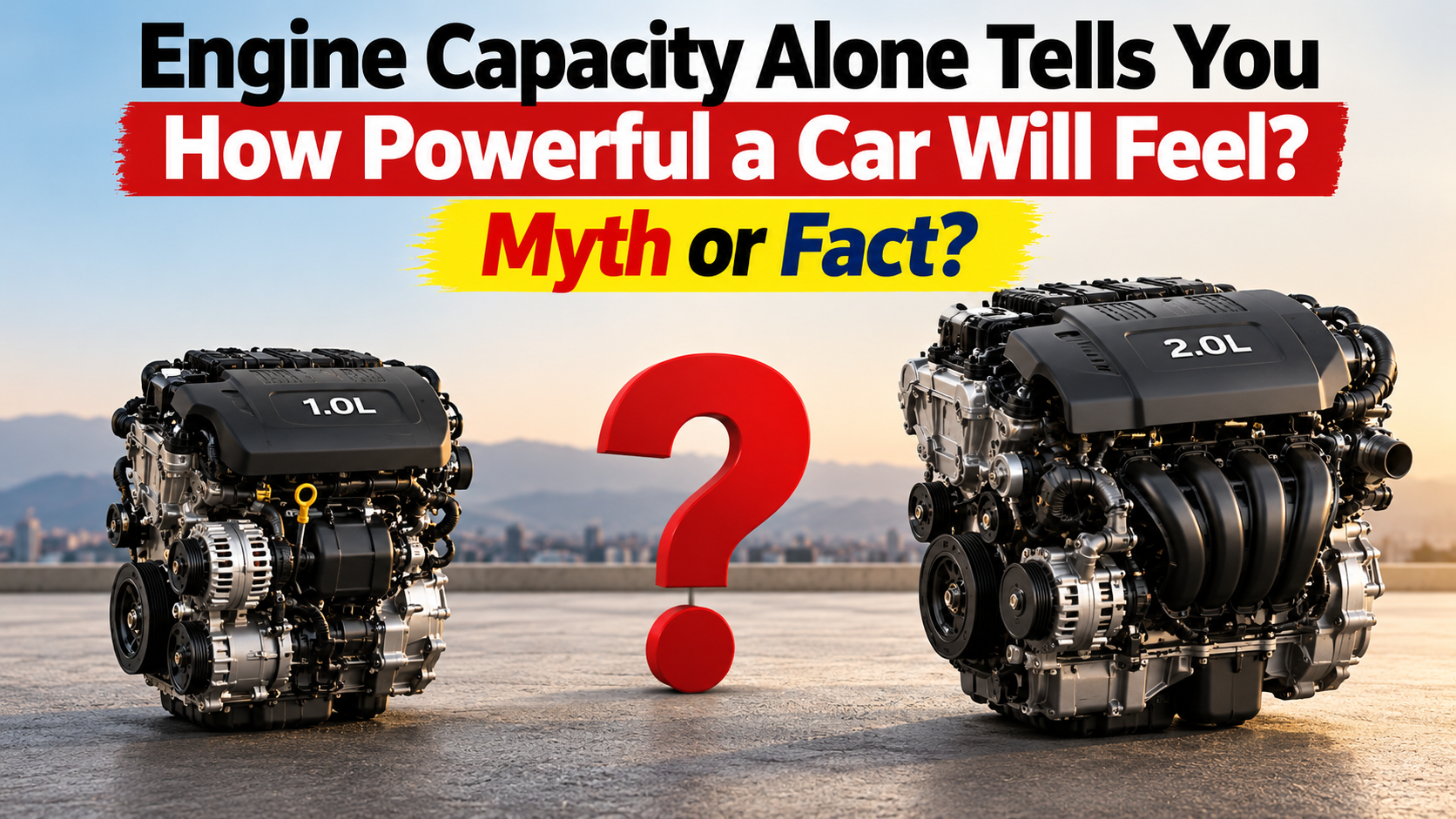
Engine capacity is one of the most commonly discussed specifications when buying a car. Many buyers believe that a vehicle with a larger engine will always feel more powerful than one with a smaller engine. For example, someone might assume that a 2.0-litre car will automatically accelerate faster, overtake more easily and deliver better performance than a 1.0-litre car.
However, this assumption is not always correct. Engine capacity, usually measured in cubic centimetres (cc) or litres, tells you the approximate volume swept by an engine's pistons during their movement. It does not directly tell you how much power the engine produces, how much torque it delivers, or how quickly the vehicle accelerates.
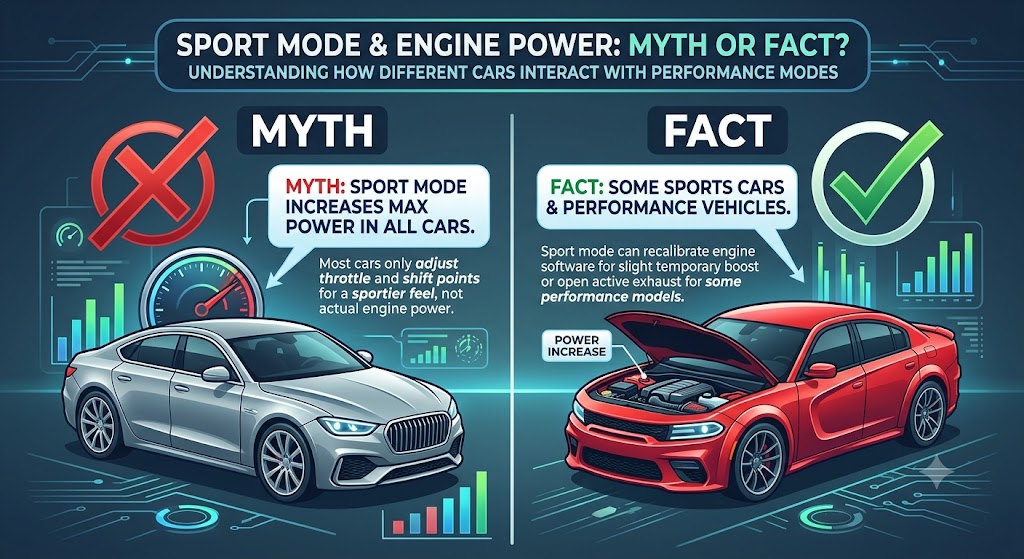
Modern automotive technology has made this distinction even more important. Turbocharging, hybrid systems, engine tuning, transmission technology and vehicle weight can significantly influence how powerful a car feels in everyday driving.
So, is engine capacity alone enough to judge a car's performance? The answer is no. It is a myth that engine capacity by itself determines how powerful a car will feel. Let's understand the reasons behind this common misconception.
Documents Required to Buy a New Car in India (Complete Checklist)
What Does Engine Capacity Actually Mean?
Engine capacity, also called engine displacement, refers to the combined volume swept by all the pistons inside an engine's cylinders as they move between their upper and lower positions.
It is commonly expressed in cubic centimetres or litres. For example:
-
998 cc is approximately a 1.0-litre engine.
-
1,498 cc is approximately a 1.5-litre engine.
-
1,998 cc is approximately a 2.0-litre engine.
In general, a larger engine can draw in more air and fuel during each operating cycle, potentially allowing it to produce more power and torque. This is one reason larger engines have traditionally been associated with stronger performance.
However, the actual output depends on how efficiently the engine burns fuel, how much air it receives, its operating speed and the technology used to develop its power.
A naturally aspirated 2.0-litre engine and a turbocharged 1.0-litre engine can have very different performance characteristics. Depending on their design and tuning, the smaller turbocharged engine may produce comparable power or stronger low-speed torque than the larger engine.
Therefore, engine displacement is only one part of the performance equation.

Engine Capacity vs Power vs Torque
To understand how powerful a car feels, it is important to distinguish between three related terms: engine capacity, power and torque.
Engine capacity describes the size of the engine's swept volume. It does not directly measure performance.
Power, usually measured in horsepower (HP), brake horsepower (bhp) or kilowatts (kW), describes how quickly an engine can perform work. Higher power can help a vehicle maintain acceleration at higher speeds, provided the transmission, gearing and other conditions allow it.
Torque, usually measured in Newton-metres (Nm), describes rotational force. Strong torque at low engine speeds can make a car feel responsive when pulling away from a traffic light or accelerating without frequent downshifts.
Although power and torque are related, they are not interchangeable. An engine's power depends on both torque and engine speed. A car's real-world acceleration also depends on gearing, traction, weight and power losses through the drivetrain.
This is why checking only the engine's displacement can give an incomplete picture of how it will perform.
Company-Fitted vs Aftermarket Accessories: Which Is Better?
Why a Smaller Engine Can Feel More Powerful
Modern small-capacity engines can deliver impressive performance because manufacturers use technology to improve their efficiency and output.
1. Turbocharging Can Increase Performance
A turbocharger uses exhaust gases to drive a turbine, which helps force more air into the engine. With more air available, the engine can burn more fuel and generate greater power than a comparable naturally aspirated engine of similar displacement, subject to its design and limits.
For example, a turbocharged 1.0-litre petrol engine may produce power figures that were once associated with larger naturally aspirated engines. Some small turbocharged engines also deliver useful torque at relatively low engine speeds.
This can make a lightweight hatchback feel lively during city driving and highway acceleration.
However, turbocharging does not guarantee superior performance in every situation. Turbo response, engine calibration, transmission behaviour and the vehicle's weight all influence the driving experience.
2. Hybrid Technology Adds Electric Assistance
Hybrid vehicles can combine a combustion engine with an electric motor. Depending on the system, the motor may provide additional torque during acceleration, help the engine operate more efficiently or move the car using electric power in certain conditions.
Electric motors can deliver substantial torque from very low speeds. This can make a hybrid car feel responsive when moving away from a stop, even if its petrol engine has relatively modest displacement.
The combined performance depends on the hybrid system's design, battery charge, motor output and control software. Engine capacity alone cannot explain the full performance of a hybrid vehicle.
3. Modern Engine Tuning Makes a Difference
Two engines with the same displacement can produce different power and torque figures because of differences in cylinder-head design, fuel delivery, compression ratio, turbocharging, cooling and electronic engine management.
Manufacturers may also tune the same basic engine differently for different models.
One version may prioritise fuel economy, while another may focus on stronger acceleration. As a result, equal engine capacity does not mean equal performance.

How Vehicle Weight Changes the Driving Experience
Vehicle weight is one of the most important factors affecting how powerful a car feels.
Imagine two cars with the same engine output. One is a lightweight hatchback, while the other is a heavier SUV. The lighter car will generally have less mass to accelerate, so it may feel more responsive, assuming their gearing, tyres and other characteristics are comparable.
A useful way to compare performance is power-to-weight ratio. This measures how much power is available for each unit of vehicle weight.
A car with a higher power-to-weight ratio will often have an advantage in acceleration, although the actual result also depends on traction, transmission ratios, torque delivery and aerodynamic resistance.
Weight also affects braking, cornering and the effort required when driving uphill. Therefore, a larger engine does not automatically make a heavier vehicle feel quicker than a lighter car with a smaller engine.
The Role of the Transmission
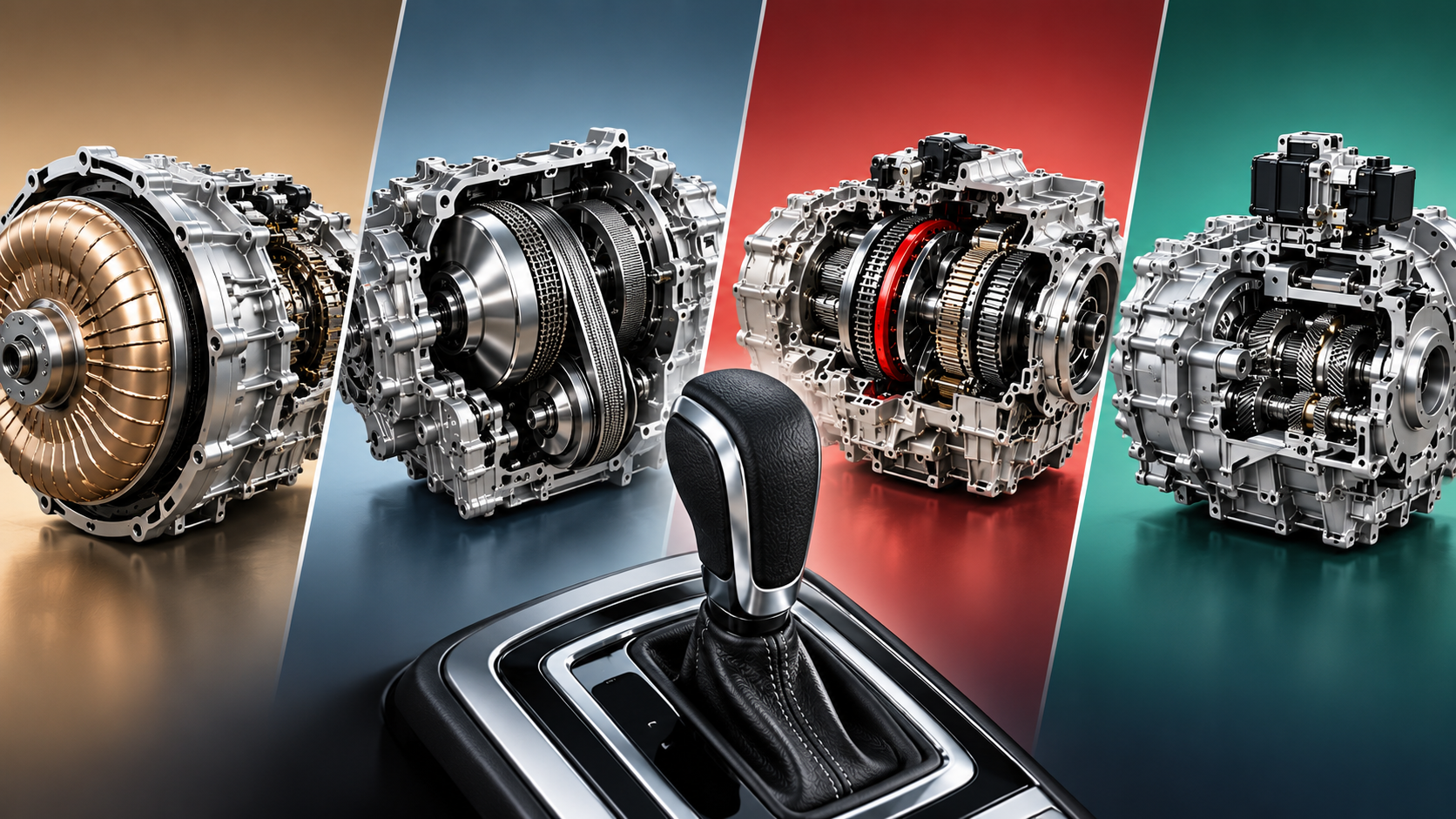
The gearbox plays a major role in how engine power reaches the wheels. Even an engine with strong power and torque can feel sluggish if its transmission does not keep it in the appropriate operating range.
Manual, automatic, continuously variable transmission (CVT) and dual-clutch transmission (DCT) systems can deliver different driving experiences.
A well-calibrated automatic gearbox may downshift quickly when the driver presses the accelerator, helping the engine access its stronger power range. A different transmission may prioritise smoothness or fuel economy and respond less urgently.
Gear ratios also affect acceleration. Shorter gearing can help a vehicle accelerate strongly at lower speeds, while taller gearing may reduce engine speed during highway cruising.
In electric and hybrid vehicles, motor control and power delivery add further complexity. This is another reason engine capacity alone cannot predict how a vehicle will respond on the road.
Does a Larger Engine Always Deliver Better Highway Performance?
Not necessarily. Highway performance depends on more than engine displacement.
A car's ability to accelerate during an overtake depends on its available power and torque, current speed, selected gear, vehicle weight and the time the engine or motor takes to respond.
A larger naturally aspirated engine may deliver smooth, predictable acceleration. A smaller turbocharged engine may offer strong mid-range torque, while a hybrid may use electric assistance to provide immediate response at lower speeds.
Aerodynamics also become increasingly important as speed rises. A vehicle with poor aerodynamic efficiency may require more power to maintain high speeds than a more aerodynamic vehicle.
Consequently, buyers should look at measured acceleration figures, in-gear performance where available and real-world reviews rather than assuming that a larger engine will always be faster.
Drivers should also remember that overtaking requires a safe gap, good visibility and compliance with speed limits, regardless of the vehicle's performance.
How to Compare Car Variants: Base vs Mid vs Top Trim
Can a Smaller Engine Be Better for Fuel Economy?
A smaller engine can offer better fuel economy, especially in a lightweight vehicle used for regular city commuting. It may consume less fuel when producing modest amounts of power because it has less displacement and can be designed for efficient operation.
However, the relationship is not automatic.
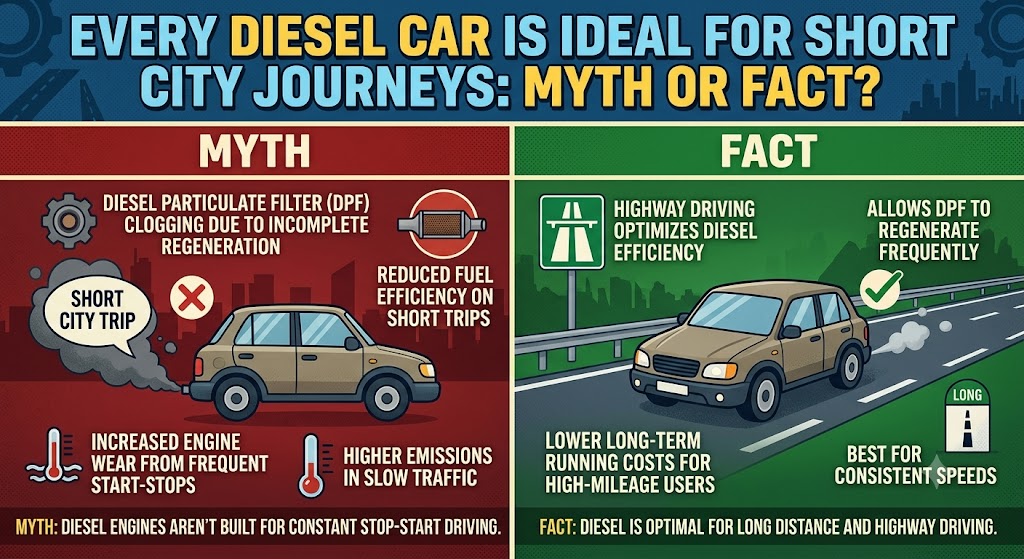
A small turbocharged engine working hard to move a heavy vehicle may use considerably more fuel than expected. Similarly, frequent acceleration, high speeds, steep inclines, heavy loads and traffic congestion can reduce fuel efficiency.
A larger engine may sometimes operate comfortably at lower relative loads, depending on its design and gearing. Hybrid systems can also improve efficiency by recovering braking energy and optimising how the combustion engine operates.
Fuel economy should therefore be assessed using certified figures and realistic driving conditions, not engine capacity alone.
Comparison: What Really Determines How Powerful a Car Feels?
|
Factor
|
What it tells you
|
How it affects performance
|
|
Engine capacity
|
Swept volume of the cylinders
|
Provides context but does not determine output by itself
|
|
Maximum power
|
Rate at which the engine can perform work
|
Helps indicate acceleration potential, particularly as speed increases
|
|
Torque
|
Rotational force produced by the engine or motor
|
Influences pulling power and responsiveness
|
|
Turbocharging
|
Technology that increases intake air pressure
|
Can help a smaller engine produce higher power and torque
|
|
Vehicle weight
|
Mass the powertrain must move
|
Lower weight can improve acceleration when other factors are comparable
|
|
Power-to-weight ratio
|
Power relative to vehicle mass
|
Helps compare the performance potential of different vehicles
|
|
Transmission
|
How power is delivered to the wheels
|
Influences acceleration, responsiveness and engine operating speed
|
|
Hybrid assistance
|
Contribution from an electric motor and battery
|
Can improve low-speed response and overall efficiency
|
|
Aerodynamics
|
How easily the vehicle moves through the air
|
Becomes increasingly important at higher speeds
|
|
Engine tuning
|
How the engine is calibrated
|
Affects power delivery, response and efficiency
|
How to Judge a Car's Performance Before Buying
If you are comparing cars, do not make your decision based solely on the engine's litre rating. Consider these factors together.
Check the Power and Torque Figures
Look at the maximum power output and peak torque figures. Also check the engine speeds at which these outputs are available. Torque delivered at lower engine speeds can be useful for everyday driving, although the complete torque curve is more informative than a single peak figure.
Compare Acceleration Figures
Where reliable manufacturer or independent test figures are available, compare the 0–100 km/h acceleration time. This gives you a more direct indication of acceleration than displacement alone.
Remember that test conditions, tyres, road surface, weather and vehicle load can influence the results.
Consider the Vehicle's Weight
Compare the kerb weights of the cars you are considering. A higher power output does not always translate into better acceleration if the vehicle is significantly heavier.
Understand the Gearbox
Take note of the transmission type and how it behaves during a test drive. Pay attention to throttle response, downshifts, smoothness and how easily the car accelerates from typical city speeds.
Take a Test Drive
A test drive is one of the best ways to assess whether a car feels powerful enough for your needs. Try ordinary acceleration, low-speed driving and safe, legal highway driving where possible.
Consider whether the engine responds smoothly, whether the gearbox changes gears at suitable times and whether the vehicle has enough performance when carrying passengers.
Manual vs Automatic Car: Pros and Cons Explained
Match the Engine to Your Driving Needs
A city commuter may prioritise smooth low-speed response and fuel economy. Someone who regularly travels on highways may value effortless overtaking and sustained performance. Buyers who frequently carry heavy loads or drive in hilly areas may need to pay particular attention to torque delivery, gearing and the vehicle's load capacity.
The best engine is the one that suits your real driving conditions, rather than simply the one with the largest displacement.
Common Myths About Engine Capacity
Myth 1: A 2.0-litre engine is always more powerful than a 1.0-litre engine.
Fact: Engine capacity does not determine maximum power by itself. Turbocharging, hybrid assistance, engine design and tuning can allow smaller engines to deliver competitive output.
Myth 2: A larger engine always accelerates faster.
Fact: Acceleration also depends on vehicle weight, power-to-weight ratio, transmission, traction and power delivery.
Myth 3: A smaller engine is always more fuel-efficient.
Fact: Fuel consumption depends on engine efficiency, vehicle weight, driving conditions, gearing and how hard the engine must work.
Myth 4: More torque always means a faster car.
Fact: Torque matters, but the power available across the engine's operating range, gearing and vehicle weight also determine acceleration.
Myth 5: Engine capacity is irrelevant when choosing a car.
Fact: Displacement remains useful for understanding the engine's basic size and comparing similar powertrains. It simply should not be used as the only measure of performance.
Final Verdict: Myth or Fact?
Verdict: Myth. Engine capacity alone does not tell you how powerful a car will feel.
A larger engine can offer advantages, including strong power delivery and substantial torque, but its displacement does not guarantee better acceleration or a more responsive driving experience. Turbocharging, hybrid technology, engine tuning, vehicle weight, transmission and aerodynamics all influence performance.
For buyers, the smartest approach is to compare power, torque, power-to-weight ratio, acceleration figures and transmission behaviour together. A test drive can then help establish whether the car feels comfortable and responsive in the conditions in which it will actually be used.
Ultimately, the best car is not necessarily the one with the biggest engine. It is the one that provides the right balance of performance, fuel economy, comfort and practicality for your needs.

 Khyati Sharma 2026-10-26