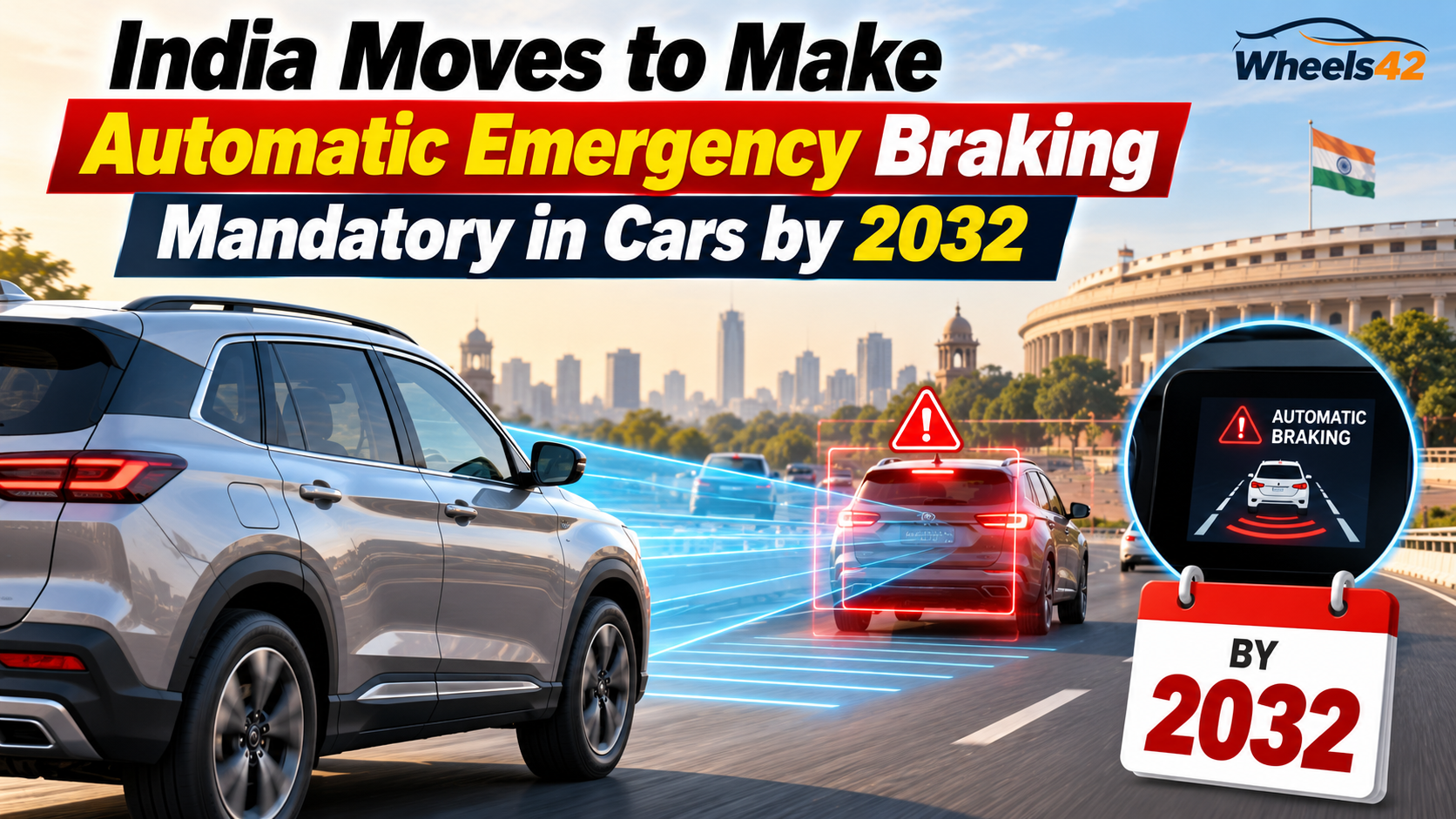
India is preparing for a major change in vehicle safety regulations, with the Ministry of Road Transport and Highways (MoRTH) proposing to make Advanced Emergency Braking Systems (AEBS) mandatory in passenger cars in a phased manner. Under the proposal, newly introduced car models would need to feature the technology from October 1, 2030, while all passenger-car models would have to comply from October 1, 2032.
The proposed regulation is part of the government's efforts to improve road safety and reduce accidents by encouraging the use of advanced vehicle safety technologies. Automatic emergency braking can detect potential collisions and apply the brakes when the driver fails to respond in time, helping prevent certain accidents or reduce their severity.
The draft amendment to the Central Motor Vehicles Rules, 1989, was notified on October 19, 2026. It remains subject to the government's regulatory process, including consideration of objections and suggestions submitted during the public consultation period.
If implemented as proposed, the new requirement could significantly influence how cars are designed, equipped and priced in India over the coming years.
Automatic Emergency Braking in India: Key Highlights
-
October 1, 2030: AEBS proposed to become mandatory for newly introduced passenger-car models.
-
October 1, 2032: The requirement proposed to extend to all passenger-car models.
-
October 1, 2028: Vehicles in the M1 and N1 categories already equipped with AEBS would need to comply with AIS-185.
-
Regulatory authority: Ministry of Road Transport and Highways.
-
Main objective: Reduce collision risks and improve vehicle safety.
-
Current status: Draft notification under public consultation, not yet a final mandate.
What Is Automatic Emergency Braking?
Automatic Emergency Braking, commonly referred to as AEB, is a vehicle safety technology designed to identify potential collisions and automatically apply the brakes when necessary.
The system generally uses cameras, radar sensors or a combination of sensors to monitor the road ahead. When it detects a potential collision with a vehicle or another recognised obstacle, it may first warn the driver through audible or visual alerts.
If the driver does not react and the collision risk continues to increase, the system can apply the brakes automatically. Depending on the vehicle's speed, the available stopping distance and system capabilities, it may help avoid the collision or reduce the impact speed.
For example, if a car approaches another vehicle that suddenly slows down, the driver may not always have sufficient time to react. Automatic emergency braking can provide an additional layer of protection by intervening when the system determines that braking is necessary.
However, AEB cannot guarantee that every collision will be avoided. Its performance depends on factors such as weather, visibility, road conditions, sensor capability and the type of obstacle detected.
Which Cars Will Need AEBS Under the Proposed Rules?
The draft notification focuses on vehicles in the M1 category. This category generally includes passenger vehicles with no more than eight passenger seats in addition to the driver's seat.
The proposed implementation will take place in stages, giving manufacturers time to incorporate the technology into new vehicles and update existing models.
Proposed implementation timeline
|
Deadline
|
Proposed requirement
|
|
1-Oct-28
|
M1 and N1 vehicles fitted with AEBS must comply with AIS-185
|
|
1-Oct-30
|
All newly introduced M1 passenger-car models must be fitted with AEBS
|
|
1-Oct-32
|
All M1 passenger-car models must be fitted with AEBS, including existing models still in production
|
The N1 category generally covers light goods vehicles with a gross vehicle weight of up to 3.5 tonnes. The October 2030 and October 2032 AEBS fitment deadlines specifically concern M1 passenger vehicles.
The October 2028 date relates to compliance with the applicable technical standard for vehicles already equipped with AEBS. It should not be interpreted as a requirement for every car to have the technology by that date.
These deadlines remain proposed requirements until the government finalises the rules.
What Is AIS-185?
AIS-185 is the Automotive Industry Standard referenced in the draft notification for Advanced Emergency Braking Systems.
The standard establishes technical requirements that vehicles equipped with AEBS must meet. These requirements are important because an automatic braking system must be able to identify collision risks and respond appropriately under defined testing conditions.
A properly developed system must balance effective collision prevention with reliable operation. Unnecessary braking can create risks of its own, so testing and compliance requirements are essential.
Under the draft rules, vehicles equipped with AEBS from October 1, 2028, would need to comply with AIS-185, as amended from time to time. The proposed mandatory fitment deadlines would subsequently extend the requirement to new and existing passenger-car models.
Why Is the Government Proposing Mandatory Emergency Braking?
India experiences significant road safety challenges involving urban congestion, highway traffic, sudden braking and collisions between vehicles. Driver distraction, delayed reactions and limited stopping distances can contribute to accidents.
Automatic emergency braking is intended to address some of these situations by providing an additional safety layer when a driver fails to respond to a developing collision.
The technology could be especially useful in stop-and-go traffic, where vehicles frequently slow down or stop unexpectedly. On highways, it may help in situations involving a rapidly closing gap between vehicles.
The proposed mandate also reflects a broader shift towards active safety technology. Traditional safety equipment, such as seat belts and airbags, primarily protects occupants during a crash. AEB aims to help prevent a crash from occurring in the first place.
Nevertheless, the technology should complement safe driving practices rather than replace them. Drivers must continue to maintain safe distances, observe speed limits and remain attentive.
How Will the Proposed Rules Affect Car Manufacturers?
If the proposal becomes law, manufacturers will need to ensure that their passenger-car models meet the applicable AEBS requirements by the relevant deadlines.
Depending on the existing vehicle platform, this could require changes to sensors, electronic control units, braking systems, software and vehicle validation procedures.
Manufacturers that already offer compatible systems may need fewer changes than those developing the technology for the first time. However, compliance will depend on whether the installed system meets the required standard, not merely whether the vehicle advertises an AEB or ADAS feature.
The phased rollout is intended to provide automakers with time to plan product updates, integrate the necessary hardware and conduct the required testing.
The proposal could also encourage greater standardisation of advanced safety technology across the Indian passenger-car market, rather than limiting such features to premium vehicles.
Will Car Prices Increase After AEBS Becomes Mandatory?
The proposed regulation could affect manufacturing costs, particularly for vehicles that do not currently have compatible emergency braking technology.
Manufacturers may need to install cameras, radar sensors, control electronics and additional software. The final cost will depend on the vehicle's existing architecture, production volumes and the system selected.
However, there is currently no confirmed official estimate of how much car prices might increase because of the proposed requirement.
Some vehicles already offer automatic emergency braking as part of their advanced driver assistance systems. For these models, the main task may involve ensuring compliance with the applicable technical standard.
For buyers, wider availability of the technology could improve access to active safety features. Any potential increase in purchase cost would need to be considered alongside the benefits of improved collision prevention.
Other Vehicle Safety Rules Also Proposed
The draft notification covers additional vehicle safety measures beyond emergency braking. These include requirements related to steering systems, emergency lane-keeping technology, driver drowsiness and attention warning systems, and child-restraint and luggage-retention provisions.
Some of these measures have different implementation dates and apply to specific vehicle categories or vehicles fitted with particular technologies.
For example, the draft includes technical requirements for Emergency Lane Keeping Systems (ELKS) and Automatic Command Steering Functionalities (ACSF). It also proposes requirements for driver drowsiness and attention warning systems in certain passenger transport vehicles.
These provisions should be distinguished from the proposed AEBS fitment deadlines for passenger cars. Each technology has its own purpose, technical standard and implementation timeline.
Taken together, the proposals indicate a wider regulatory push towards improving vehicle safety through active assistance systems and stronger technical requirements.
What Does This Mean for Indian Car Buyers?
For people planning to buy a new car in the next few years, the proposed mandate is worth watching. Automatic emergency braking may become more widely available as manufacturers prepare their products for the future regulations.
Buyers should still compare individual vehicles carefully. The presence of an ADAS package does not automatically mean that every advanced safety feature is included or that the system meets the future mandatory standard.
When evaluating a vehicle, customers should check the safety equipment offered in their chosen variant, the operating limitations of the braking system and the manufacturer's documentation.
Drivers should also understand that AEB is an assistance feature, not a replacement for responsible driving.
Conclusion
India's proposal to make Automatic Emergency Braking mandatory in passenger cars by 2032 could represent a major development in vehicle safety regulations. The draft rules propose requiring the system in new passenger-car models from October 1, 2030, followed by all passenger-car models from October 1, 2032.
By helping drivers respond to potential collisions, AEBS could contribute to reducing accident risks and limiting the severity of certain crashes. The proposal would also require automakers to prepare their vehicle platforms for more comprehensive active safety technology.
For now, the deadlines remain part of a draft regulatory proposal. The final implementation schedule and requirements will depend on the government's decision following the consultation process.

 Khyati Sharma 2026-10-23