BMW i5 LWB
79.6 Lakh*

 Khyati Sharma 2026-09-28

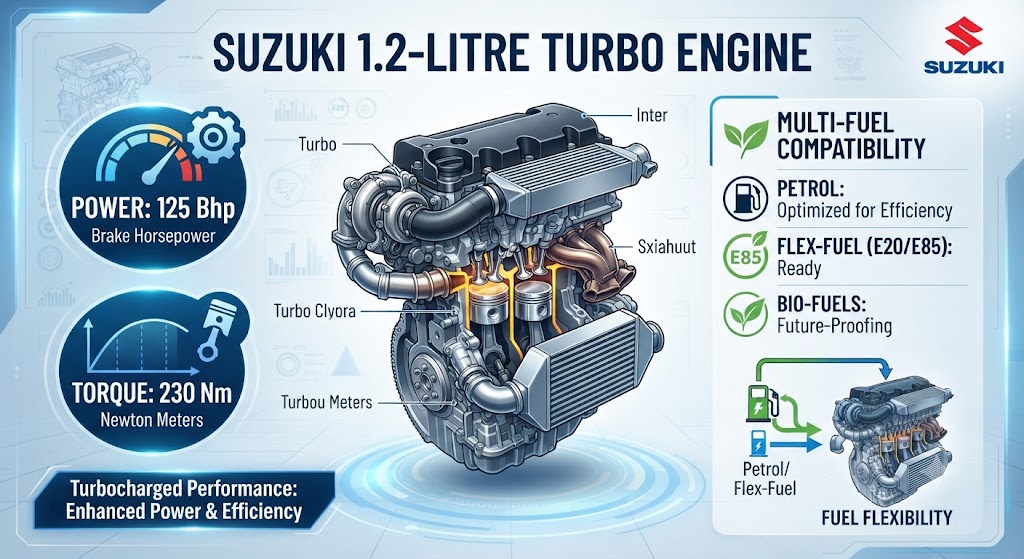
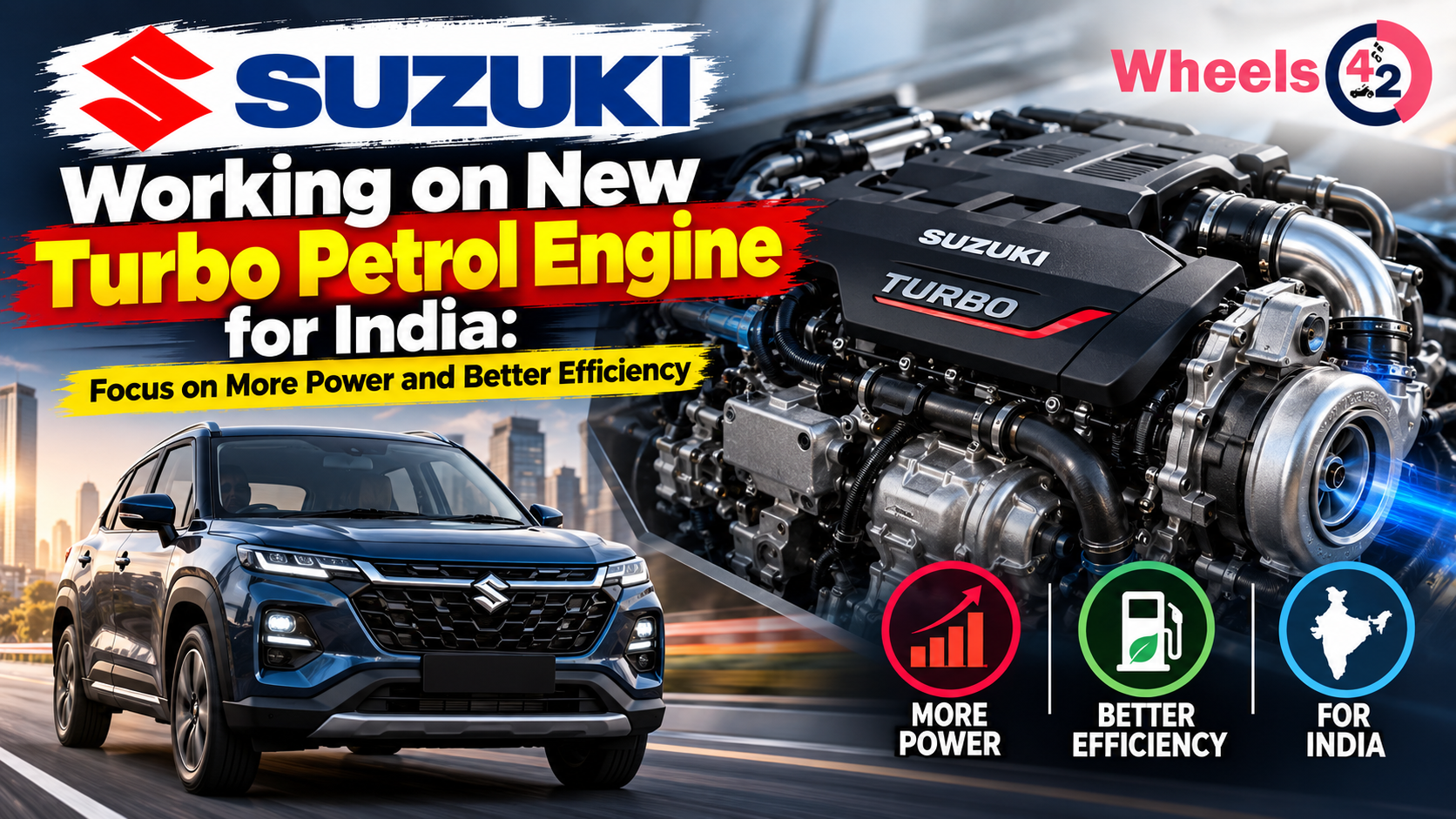
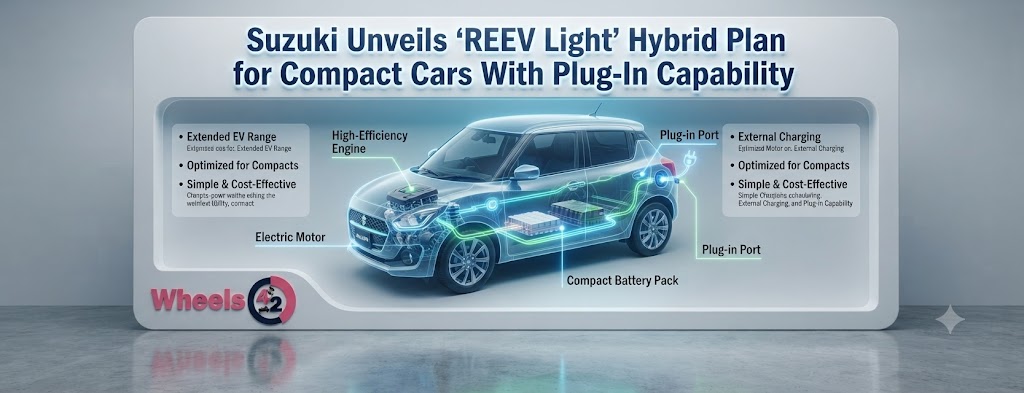
Suzuki is exploring a new-generation 1.2-litre turbocharged petrol engine as part of its broader powertrain development strategy. The engine has been reported with a potential output of around 125 bhp and 230 Nm of torque,while its development direction is also linked to compatibility with alternative fuels such as E100,CNG and CBG.
The reported specifications would place the engine among the more performance-focused powertrains in the compact-engine segment. However,the 125 bhp and 230 Nm figures should be treated as reported/development targets rather than confirmed production specifications until Suzuki announces the engine officially.
Suzuki's broader technology strategy confirms that it is working on high-efficiency internal-combustion engines alongside alternative-fuel technologies. The company has specifically highlighted high-speed combustion,high compression ratios,Miller-cycle technology and compatibility with carbon-neutral fuels.
|
Parameter |
Reported/Expected Details |
|
Engine |
1.2-litre turbocharged petrol |
|
Displacement |
Approximately 1.2 litres |
|
Maximum Power |
Around 125 bhp |
|
Maximum Torque |
Around 230 Nm |
|
Petrol |
Expected |
|
E100 |
Development focus/compatibility target |
|
CNG |
Alternative-fuel compatibility under development |
|
CBG |
Alternative-fuel compatibility under development |
|
Technology Focus |
High efficiency and multi-fuel capability |
|
Status |
Development/reported specifications |
A turbocharger allows an engine to produce stronger performance from a relatively small displacement. For a compact 1.2-litre unit,targeting around 125 bhp and 230 Nm would give the engine a combination of power and torque that could suit hatchbacks,compact SUVs and other passenger vehicles.
The higher torque figure could also make the engine more flexible in everyday driving. Stronger low- and mid-range torque can reduce the need for frequent downshifts and make overtaking easier.
At the same time,Suzuki's focus appears to be on improving thermal and combustion efficiency,rather than relying only on turbocharging for performance.
One of the most interesting aspects of the reported engine is its potential ability to operate with different fuel technologies.
Suzuki's 2025 technology strategy presentation identifies FFV,bioethanol,CNG/CBG and e-fuels as part of its future internal-combustion-engine development direction. The company has also said it is developing high-efficiency ICE technology while advancing compatibility with carbon-neutral fuels.
|
Fuel |
Potential Role |
|
Petrol |
Primary conventional fuel |
|
E100 |
High-ethanol/flex-fuel application |
|
CNG |
Lower-carbon gaseous fuel option |
|
CBG |
Renewable gaseous fuel option |
|
E20 |
Existing compatibility direction in Suzuki's India portfolio |
|
Bioethanol |
Future carbon-reduction strategy |
It is important to distinguish between Suzuki's confirmed fuel-development strategy and the specific claim that this particular 1.2-litre turbo engine will support every fuel listed above. The latter remains subject to official product confirmation.
E100 refers to fuel containing essentially 100 percent ethanol. India's regulatory and technical ecosystem is increasingly preparing for higher ethanol blends. The Automotive Research Association of India lists E100 among the alternative fuels used in engine and vehicle development.
Suzuki has already been moving toward higher ethanol compatibility. Its technology strategy states that it introduced E20-compatible engines in India and planned flex-fuel vehicles capable of supporting up to E85.
If a future Suzuki engine is engineered for E100 capability,it could provide greater flexibility as India's alternative-fuel infrastructure develops.
Suzuki has also been investing in gaseous-fuel technology. The company currently has a significant CNG vehicle portfolio and has been working on CBG production and usage.
Suzuki's technology strategy specifically mentions adapting its CNG vehicles to carbon-neutral fuels and developing CBG production facilities.
CBG,or compressed biogas,can be processed to meet the required specifications for use as a vehicle fuel. Indian regulations also provide for bio-CNG as an alternative composition of CNG,subject to applicable standards.
Suzuki has additionally opened CBG plants in Gujarat as part of its efforts to produce and supply biogas for CNG vehicles.
If the reported figures are achieved in production,the engine would offer a useful balance between displacement and output.
|
Specification |
Reported Figure |
|
Displacement |
1,200 cc approx. |
|
Power |
125 bhp |
|
Torque |
230 Nm |
|
Induction |
Turbocharged |
|
Engine Type |
Petrol-based ICE |
|
Intended Focus |
Performance + efficiency |
|
Alternative Fuel Direction |
E100/CNG/CBG |
The 230 Nm torque figure could be particularly useful for SUVs and larger compact vehicles,where additional pulling power is valuable during city driving,highway cruising and overtaking.
A compact turbocharged engine with alternative-fuel capability could give Suzuki greater flexibility in developing future models.
A single underlying engine architecture could potentially be adapted for different fuel strategies depending on the vehicle,market and infrastructure.
The possible benefits include:
Suzuki's approach suggests that internal-combustion engines will continue to play a role alongside hybrids and battery-electric vehicles.
The company's technology roadmap combines high-efficiency ICEs,alternative fuels,hybrid systems and battery-electric technology,rather than relying on a single powertrain solution.
For the Indian market,this could be particularly relevant because petrol,CNG,hybrid,electric and ethanol-based technologies are developing simultaneously.
|
Technology |
Suzuki's Direction |
|
Turbo petrol |
Higher performance from smaller engines |
|
E100/Flex Fuel |
Higher ethanol compatibility |
|
CNG |
Continued gaseous-fuel development |
|
CBG |
Renewable alternative to conventional CNG |
|
Hybrid |
Improved ICE-electric integration |
|
EV |
Battery-electric technology development |
|
Lightweighting |
Lower vehicle energy consumption |
Suzuki's reported 1.2-litre turbo engine with around 125 bhp and 230 Nm could represent an interesting step in the company's next-generation petrol-engine strategy. The potential for compatibility with E100,CNG and CBG would make the engine particularly notable if those capabilities reach production.
Suzuki's official technology roadmap confirms that the company is working on high-efficiency internal-combustion engines and alternative fuels,including bioethanol,CNG and CBG.