
 Khyati Sharma 2026-11-06
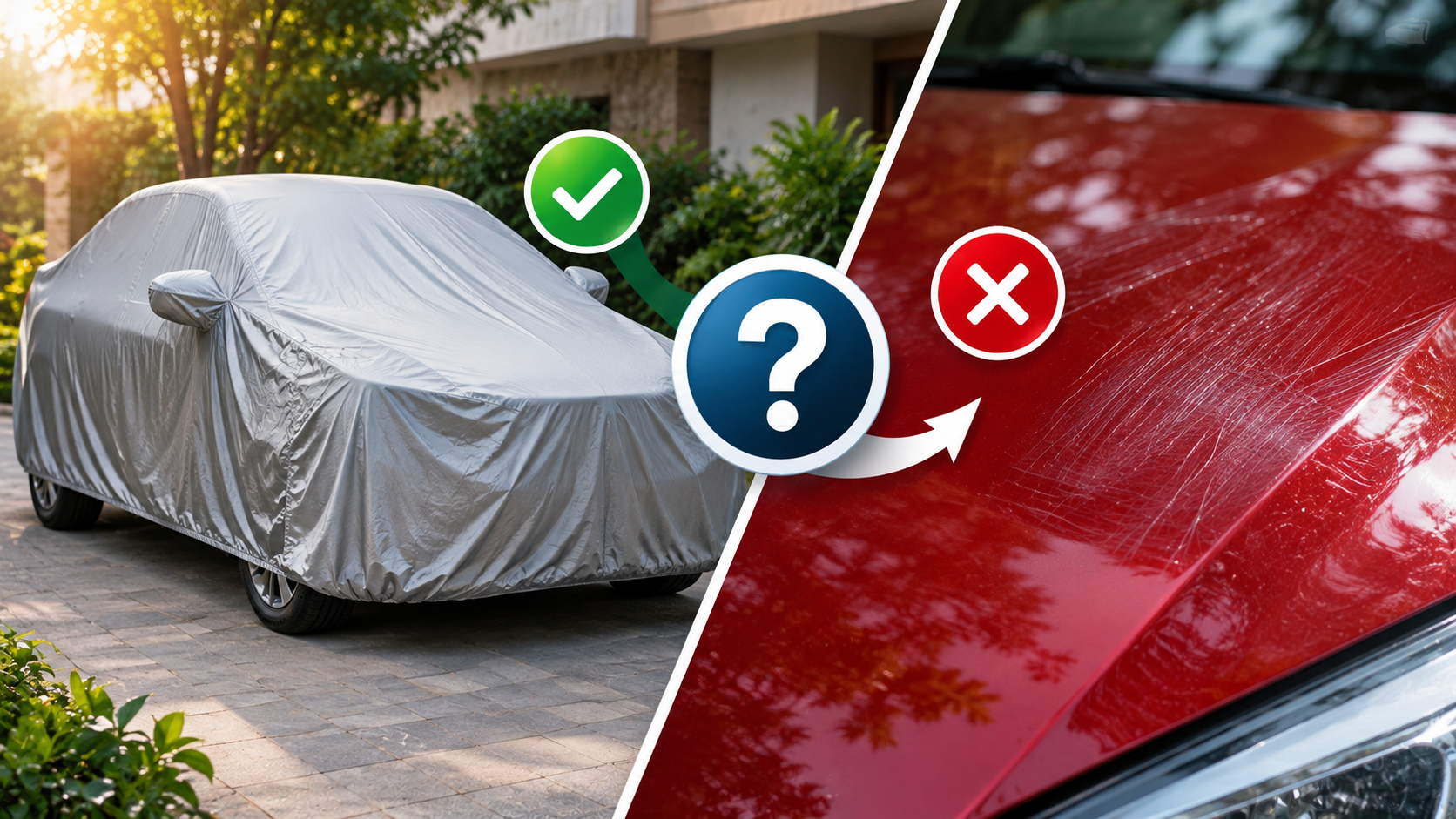
A car cover is commonly considered one of the easiest ways to protect a vehicle's exterior from dust, sunlight, rain, bird droppings and other environmental elements. Many car owners invest in a good-quality cover believing that keeping their vehicle covered whenever it is parked will automatically preserve its paint and maintain its showroom-like appearance.
However, this belief is not entirely correct. A car cover does not always protect your vehicle's paint. In fact, using the wrong cover or fitting it incorrectly can cause scratches, swirl marks, moisture-related damage and even paint deterioration.
The level of protection depends on several factors, including the quality of the material, the cleanliness of the car, weather conditions, fitting, ventilation and how frequently the cover is used.
A properly selected and maintained car cover can be beneficial, particularly for vehicles parked outdoors for extended periods. On the other hand, an unsuitable cover can create problems that may cost considerably more to repair than the cover itself.
Company-Fitted vs Aftermarket Accessories: Which Is Better?
The primary purpose of a car cover is to create a protective barrier between the vehicle's painted surface and the surrounding environment. It can reduce direct exposure to sunlight, dust, tree sap, bird droppings and other contaminants.
However, the cover itself can become a source of paint damage if it is not used correctly.
For example, placing a cover over a dusty or muddy vehicle can trap dirt particles between the fabric and the paint. When the cover moves because of wind, these particles may rub against the clear coat.
This repeated friction can create fine scratches and swirl marks, particularly on darker-coloured vehicles.
Therefore, covering a car without considering its condition and the surrounding environment does not guarantee paint protection.
One of the most common mistakes car owners make is covering their vehicles without cleaning them first.
Dust, sand, mud and small particles settle on vehicle surfaces during everyday use. Even when a car appears reasonably clean, its bodywork may contain fine abrasive particles.
When a cover is placed over such a surface, these particles can become trapped between the fabric and the paint.
Wind movement, removing the cover and putting it back repeatedly can cause the particles to rub against the clear coat.
Over time, this can result in:
Fine surface scratches.
Circular swirl marks.
Reduced paint gloss.
Visible marks under direct sunlight.
Additional polishing requirements.
The safest approach is to cover a clean and dry vehicle. If the car is dusty, remove loose dirt carefully before fitting the cover.
Avoid dragging a cover across the bodywork because this can increase the possibility of scratches.

Not all car covers are manufactured using the same materials or construction methods.
Some inexpensive covers use rough fabrics, poor stitching and unsuitable inner surfaces. These materials may create unnecessary friction against the vehicle's paint.
A good car cover should have a soft inner lining that minimises direct contact with the painted surface.
It should also have a suitable outer layer that provides protection against environmental conditions.
When purchasing a cover, consider the following features:
Soft inner lining: A smooth inner surface helps reduce friction and the possibility of scratches.
Breathable material: Proper airflow helps moisture escape and reduces condensation.
Water resistance: The material should resist rain without trapping excessive moisture.
UV protection: A suitable outer layer can reduce exposure to harmful ultraviolet radiation.
Proper fitting: The cover should match the vehicle's dimensions and remain reasonably secure without excessive movement.
Choosing a cover based only on its price can lead to unnecessary paint-related problems.
Thicker Seat Covers Do Not Always Mean Better Back Support: What Drivers Should Know
The size and fitting of a car cover are just as important as its material.
A cover that is too loose may move continuously when exposed to wind. This movement can cause friction against the bonnet, roof, doors and other painted panels.
If the cover repeatedly rubs against the same areas, it may gradually produce visible scratches.
A cover that is excessively tight can also create problems. It may place unnecessary pressure on certain areas, stretch the fabric and increase friction during installation or removal.
A properly fitted cover should:
Match the vehicle's body dimensions.
Remain secure during normal weather conditions.
Avoid excessive movement.
Cover the required exterior sections.
Have suitable fastening arrangements.
For outdoor parking, look for covers with elastic hems and appropriate securing straps.
Many car owners assume that a waterproof cover is always the best option. However, completely preventing moisture from escaping can create problems.
When a vehicle is covered while wet, moisture may become trapped between the cover and the bodywork.
Condensation can also develop when temperatures change between day and night.
If moisture remains trapped for extended periods, it may contribute to:
Water spots on the paint.
Corrosion in existing damaged areas.
Mould or unpleasant odours in certain damp areas.
Moisture accumulation around rubber seals and trim.
Deterioration of already compromised paint surfaces.
A breathable or appropriately ventilated cover is generally preferable for regular use.
If the vehicle gets wet due to rain or washing, allow it to dry before covering it whenever possible.
A waterproof exterior combined with a breathable construction can offer a useful balance between rain protection and moisture management.

The requirements of a car parked inside a garage are different from those of a vehicle exposed to outdoor weather conditions.
An indoor cover mainly needs to protect against dust, accidental contact and minor surface contamination.
An outdoor cover must deal with several additional challenges, including sunlight, rain, wind, bird droppings and falling debris.
Therefore, car owners should select a cover according to their parking environment.
For outdoor parking, UV resistance, water resistance, secure fastening and breathable construction are important considerations.
For indoor parking, a lightweight, soft and dust-resistant cover may be sufficient.
Using a heavy outdoor cover inside a garage may be unnecessary, while a basic indoor cover may not provide adequate protection outdoors.
Best Time of the Year to Buy a New Car in India
Continuous exposure to sunlight can gradually affect a vehicle's exterior.
Ultraviolet radiation contributes to paint oxidation, fading and deterioration of certain exterior materials over time.
A suitable car cover can reduce direct sunlight exposure and help maintain the appearance of the paint.
This is particularly useful for vehicles parked in open areas without access to shaded parking.
However, not every cover offers the same level of UV protection.
Car owners should check the product specifications before purchasing a cover. A lightweight fabric without suitable UV protection may offer limited benefits in areas with intense sunlight.
It is also important to remember that a car cover cannot completely prevent paint ageing. Regular washing, waxing or suitable paint protection treatments remain useful parts of vehicle maintenance.
Wind is another important factor that affects how safely a car cover protects vehicle paint.
When a vehicle is parked outdoors, strong wind can cause the cover to flap against the bodywork.
If the inner surface is rough or dust has accumulated underneath, repeated movement can create scratches.
Loose covers may also shift from their original position, exposing certain areas while rubbing against others.
To minimise these risks:
Choose a properly fitted cover.
Use the provided straps and fasteners.
Avoid covering a dirty vehicle.
Check the cover regularly during windy conditions.
Remove or secure a damaged cover if it cannot remain stable.
A cover that is constantly moving should not be considered reliable paint protection.
Using a car cover correctly can significantly reduce the risk of paint damage.
Follow these practices to get better results:
Clean the vehicle first: Remove loose dirt, dust and mud before covering the car.
Allow the paint to dry: Avoid covering a freshly washed or rain-soaked vehicle while it is still wet.
Check the inner surface: Inspect the cover for dust, sand, rough patches and damaged stitching.
Fit the cover gently: Avoid dragging it across the bonnet, roof or other painted panels.
Secure it properly: Use straps and elastic sections to minimise movement.
Wash the cover regularly: A dirty cover can transfer contaminants back onto the vehicle.
Store it properly: Keep the cover in a clean and dry storage bag when not in use.
Inspect the vehicle regularly: Remove the cover occasionally to check for moisture, dirt accumulation and possible paint damage.
These simple precautions can help make a car cover a useful part of exterior maintenance.
Manual vs Automatic Car: Pros and Cons Explained
Many paint-related problems associated with car covers are caused by incorrect usage rather than the concept of covering a vehicle itself.
Here are some common mistakes:
Covering a dusty vehicle without removing loose dirt.
Using a rough or low-quality cover.
Leaving a wet vehicle covered for extended periods.
Ignoring loose fabric during windy weather.
Using an indoor cover in heavy outdoor weather.
Washing the cover infrequently.
Dragging the cover across the paint.
Purchasing an incorrectly sized cover.
Assuming that a waterproof cover is always the safest option.
Avoiding these mistakes can help reduce unnecessary wear on the vehicle's clear coat and exterior finish.
|
Car Cover Type |
Main Benefit |
Potential Risk |
Best Use |
|
Indoor fabric cover |
Protects against dust |
Can scratch if dirty |
Covered parking |
|
Outdoor waterproof cover |
Helps protect against rain |
Moisture may get trapped |
Outdoor parking |
|
UV-resistant cover |
Reduces direct sunlight exposure |
Quality varies by material |
Open parking areas |
|
Breathable car cover |
Allows moisture to escape |
May offer limited rain protection depending on construction |
Regular parking |
|
Multi-layer car cover |
Offers multiple protective layers |
Can be bulky and difficult to handle |
Extended outdoor parking |
|
Custom-fit car cover |
Better fit and reduced movement |
Incorrect installation can still cause damage |
Regular vehicle protection |
Not necessarily.
Leaving a vehicle uncovered in an outdoor parking area can expose its paint to sunlight, rain, bird droppings, tree sap, dust and other contaminants.
However, using an unsuitable or dirty cover can also damage the paint.
The right decision depends on the parking environment.
If a vehicle is parked in a clean, enclosed garage, a soft indoor cover can help prevent dust accumulation and accidental contact.
If it is parked outdoors, a good-quality, breathable and properly secured outdoor cover can provide additional protection.
For vehicles parked under trees, owners should also consider the risk of falling branches, sap and bird droppings.
A covered parking space or carport is often a useful alternative because it reduces direct exposure without requiring constant contact between a fabric cover and the vehicle's paint.

No, a car cover does not always protect vehicle paint, regardless of how it is used.
Its effectiveness depends on the quality of the material, the cleanliness of the vehicle, the weather, fitting and maintenance.
A clean, dry car covered with a soft, breathable and properly fitted cover can benefit from reduced exposure to dust, sunlight, rain and other environmental contaminants.
However, a dirty, wet or poorly fitted cover can cause scratches, moisture-related issues and unnecessary wear on the paint.
The most important lesson is that buying an expensive car cover is not enough. Owners must also understand how to use and maintain it correctly.
A car cover should be treated as a protective accessory, not a guarantee against paint damage. Choosing the right product and following proper usage practices will help preserve the vehicle's exterior for longer.