
 Khyati Sharma 2026-11-15
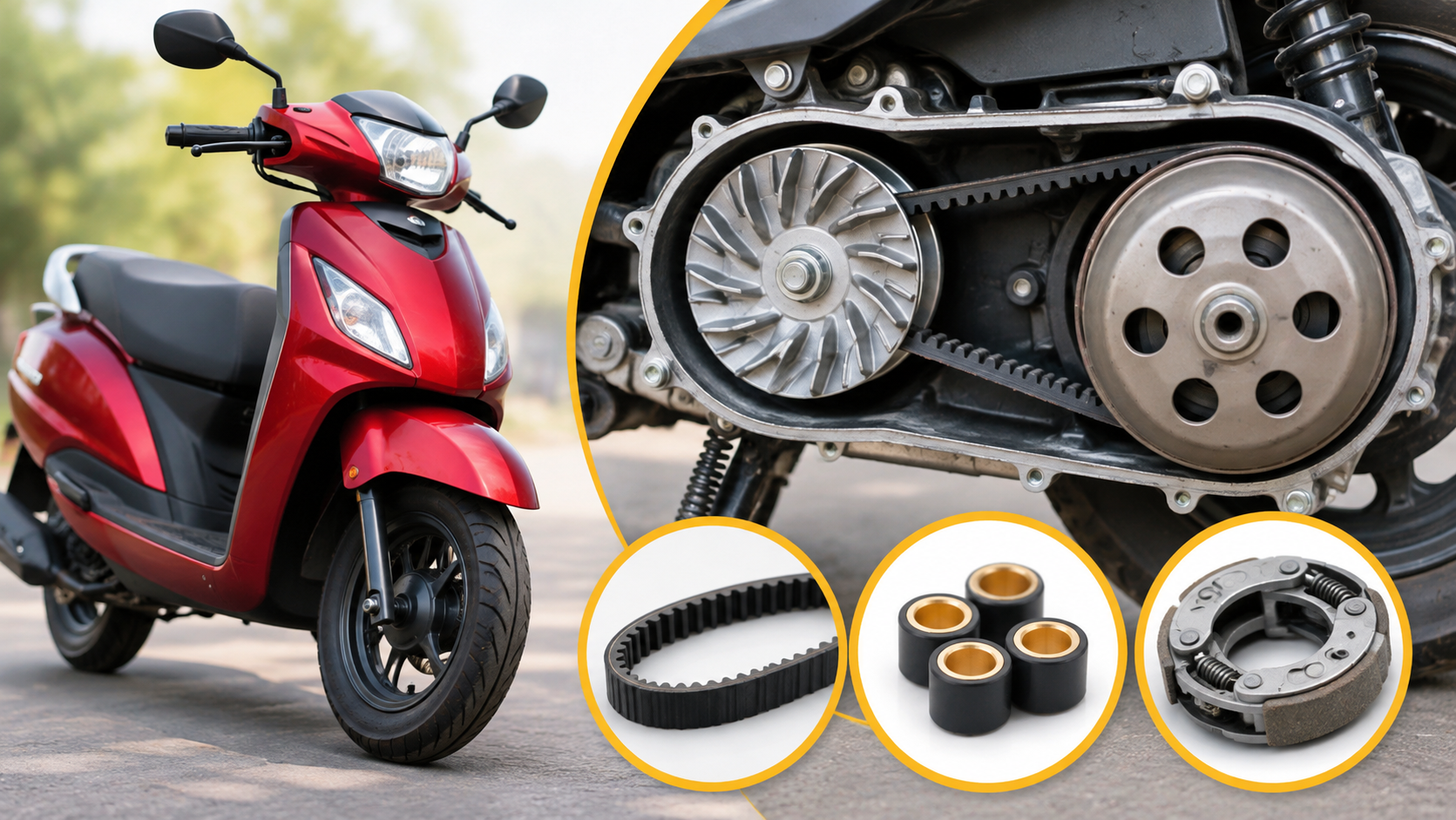
A scooter that once offered quick acceleration but now feels slow, struggles to pick up speed or vibrates while moving may be experiencing a problem with its Continuously Variable Transmission (CVT). While engine-related issues can also affect performance, the CVT system is one of the important components to inspect when a scooter develops sluggish acceleration.
Most modern automatic scooters use a CVT system to transfer engine power to the rear wheel without requiring manual gear changes. It uses components such as a drive belt, variator rollers, pulleys and a centrifugal clutch to adjust the transmission ratio according to engine speed and riding conditions.
Over time, these components experience friction and wear. A worn drive belt, damaged rollers or an unevenly engaging clutch can affect acceleration and make the scooter feel less responsive.
However, sluggish performance does not automatically mean the CVT needs replacement. Air filter restrictions, spark plug problems, fuel delivery issues, low tyre pressure and brake drag can also reduce acceleration.
A Bike’s Seat Height Alone Decides Whether a Rider Can Manage It: Myth or Fact?
CVT stands for Continuously Variable Transmission. Unlike a conventional manual gearbox, which uses fixed gear ratios, a CVT continuously changes its transmission ratio depending on engine speed and load.
Most automatic scooters use a belt-driven CVT system consisting of two main pulley assemblies connected by a special drive belt.
The front pulley, commonly known as the variator, is connected to the engine. The rear pulley assembly works with the centrifugal clutch to transfer power to the rear wheel.
As engine speed increases, the variator rollers move outward under centrifugal force. This changes the effective diameter of the front pulley, while the rear pulley adjusts accordingly.
This allows the scooter to accelerate smoothly without the rider manually shifting gears.
The CVT system generally includes:
Drive belt
Variator assembly
Roller weights
Clutch shoes
Clutch bell
Driven pulley
Contra spring
Since these components work together, a problem with even one part can affect overall performance.

One of the most noticeable symptoms of CVT trouble is slow acceleration.
If the scooter takes longer than usual to move forward after twisting the throttle, the transmission system may not be transferring engine power efficiently.
For example, a scooter that previously accelerated smoothly from a traffic signal may now feel heavy or unresponsive.
Possible CVT-related reasons include:
Worn or slipping drive belt.
Incorrectly functioning variator rollers.
Damaged or uneven roller weights.
Clutch engagement problems.
Contamination inside the CVT housing.
A worn belt may not maintain the correct contact with the pulley surfaces, affecting the transmission ratio.
Similarly, flat-spotted variator rollers may prevent the variator from moving smoothly, resulting in inconsistent acceleration.
However, slow pickup can also result from engine-related problems. Therefore, technicians should inspect the complete scooter rather than immediately replacing CVT components.
Does a Higher Engine Capacity Mean a Faster Bike? Understanding CC, Power and Speed
Another common warning sign is shuddering when accelerating from a stationary position.
The scooter may vibrate, jerk or feel as though it is struggling to move during the first few seconds of acceleration.
This can happen when the centrifugal clutch does not engage smoothly.
The clutch uses friction shoes that move outward as engine speed increases. These shoes make contact with the clutch bell, allowing engine power to reach the rear wheel.
If the clutch shoes or clutch bell develop uneven wear, glazing or contamination, engagement may become inconsistent.
Some common symptoms include:
Vibration when starting from a standstill.
Jerky movement at low speeds.
Repeated shuddering during acceleration.
Unusual noises from the transmission housing.
Delayed movement after opening the throttle.
Dust accumulation inside the CVT housing can also contribute to clutch engagement problems.
If the vibration continues, a technician should inspect the clutch shoes, bell surface and surrounding components.
Motorcycle Chains Need Lubrication Only When They Become Noisy: Myth or Fact?
The drive belt is one of the most important parts of a scooter's CVT system.
It transfers power between the front and rear pulleys. Unlike an ordinary rubber belt, a scooter CVT belt is specially designed to withstand continuous bending, friction and mechanical stress.
Over time, the belt can become worn, narrow or damaged.
Some warning signs include:
Reduced acceleration: A worn belt may not maintain the intended transmission ratio, affecting the scooter's pickup.
Unusual transmission noise: A damaged or excessively worn belt may produce abnormal sounds from the CVT housing.
Inconsistent performance: The scooter may accelerate differently under similar riding conditions.
Visible cracks or damage: During inspection, technicians may find cracks, missing material, fraying or other signs of deterioration.
A belt should be inspected for width, condition and damage. The manufacturer specifies a minimum permissible belt width and replacement interval for each scooter model.
It is important not to wait for the belt to break before replacing it. A broken belt can leave the scooter unable to move and may cause additional damage inside the transmission housing.
Variator rollers are small components that play a major role in how a scooter accelerates.
They move outward as engine speed increases, helping the variator pulley change its effective diameter.
When the rollers are in good condition, they move smoothly along their designated tracks.
However, repeated use can cause them to develop flat spots or uneven wear.
This can affect the movement of the variator and prevent the CVT from changing ratios smoothly.
Some common symptoms include:
Sluggish acceleration.
Uneven engine response.
Unusual buzzing or mechanical noises.
Reduced smoothness during acceleration.
Inconsistent performance at different speeds.
Damaged rollers may need replacement according to the manufacturer's specifications.
Simply cleaning the variator may not solve the issue if the rollers have already developed significant wear.
The centrifugal clutch controls how engine power is transferred to the rear wheel when the scooter starts moving.
At low engine speeds, the clutch remains disengaged. As engine speed increases, centrifugal force moves the clutch shoes outward until they contact the clutch bell.
If the clutch components become worn or contaminated, engagement may become uneven.
This can cause:
Shuddering during initial acceleration.
Delayed movement after opening the throttle.
Vibration at low speeds.
Burning smells in severe cases.
Unusual sounds from the CVT housing.
The clutch bell should also be inspected for excessive scoring, heat-related discolouration and an uneven contact surface.
Cleaning may help if the problem is caused by removable dust or contamination. However, severely worn clutch shoes or a damaged bell may require replacement.

A scooter's transmission system generally operates without excessive mechanical noise.
If a new rattling, whining, grinding or buzzing sound develops around the transmission housing, it deserves attention.
Different sounds can indicate different issues.
Rattling: Loose components or excessive wear may be responsible.
Whining: Belt or pulley-related issues may need inspection.
Grinding: Damaged or incorrectly functioning components could be involved.
Repeated clicking: Roller or variator-related problems may require attention.
The sound alone cannot confirm which component has failed. Other parts, including wheel bearings and the final-drive assembly, can also create similar noises.
If the noise becomes louder or is accompanied by vibration or loss of power, arrange an inspection rather than continuing to ride normally.
All Scooters Are Easier to Handle Than All Motorcycles: Myth or Fact?
Not every sluggish scooter has a CVT problem. Several engine and mechanical issues can produce similar symptoms.
Before replacing transmission components, the service technician should also consider:
Dirty air filter: A clogged air filter can restrict airflow and affect engine performance.
Worn spark plug: An old or damaged spark plug may cause poor combustion, hesitation and reduced acceleration.
Fuel delivery problems: A blocked injector, restricted fuel supply or other fuel-system issue can affect engine response.
Low tyre pressure: Underinflated tyres increase rolling resistance and can make the scooter feel heavier.
Brake drag: A brake that does not release properly can create additional resistance and reduce acceleration.
Engine maintenance issues: Incorrect engine oil, overdue servicing or mechanical engine problems may also affect performance.
A proper diagnosis helps avoid replacing expensive CVT components when the actual problem is elsewhere.

When taking a sluggish scooter for servicing, explaining the symptoms clearly can help the technician identify the problem more efficiently.
Instead of simply asking for a general CVT cleaning, request an inspection of the important components.
Ask the technician to check:
Drive belt condition: Check for cracks, fraying, damage and belt width against the manufacturer's limit.
Variator rollers: Look for flat spots, uneven wear and restricted movement.
Clutch shoes: Inspect friction material, contamination and uneven wear.
Clutch bell: Check for scoring, overheating and surface damage.
Pulley surfaces: Inspect for unusual wear and damage.
CVT housing: Check for excessive dust, contamination and loose components.
Also ask whether the belt and rollers have reached their recommended replacement intervals.
Do not automatically approve replacement of every CVT component. Ask the service centre to explain the condition of each part and show you any visibly damaged components.
There is no universal CVT inspection or replacement interval for every scooter.
The recommended schedule depends on the manufacturer, engine capacity, scooter design, riding conditions and the type of transmission components used.
However, riders should consider an inspection when they notice:
A sudden reduction in pickup.
Shuddering while starting.
Unusual noise from the CVT housing.
Inconsistent acceleration.
Burning smells near the transmission area.
Visible belt damage during servicing.
Repeated performance problems despite regular maintenance.
Scooters used frequently in heavy traffic, dusty environments or demanding riding conditions may require closer attention.
If the scooter suddenly loses drive, develops severe mechanical noise or shows signs of a damaged belt, stop riding and arrange professional assistance.
How to Choose Between Two Similar Car Models: A Decision Framework
Basic maintenance can help reduce unnecessary wear and keep the transmission operating correctly.
Some useful practices include:
Follow the manufacturer's CVT inspection schedule.
Replace the drive belt at the specified interval or when it reaches its wear limit.
Use manufacturer-approved replacement belts and rollers.
Keep the CVT housing and components free from excessive contamination.
Avoid using inappropriate lubricants on dry belt and pulley contact surfaces.
Ask for clutch and variator inspections if shuddering develops.
Avoid ignoring unusual noises or changes in acceleration.
The CVT housing should be serviced using the procedure specified by the manufacturer. Some components require specialised tools and correct torque settings, so opening and repairing the transmission at home is not advisable without the required knowledge and equipment.
|
CVT Component |
Warning Signs |
What to Inspect |
|
Drive belt |
Slow pickup, slipping or unusual noise |
Cracks, width and physical damage |
|
Variator rollers |
Uneven acceleration |
Flat spots and roller movement |
|
Clutch shoes |
Shuddering at low speeds |
Wear, glazing and contamination |
|
Clutch bell |
Vibration and unusual noise |
Scoring and overheating |
|
Pulley assembly |
Inconsistent performance |
Surface condition and movement |
|
CVT housing |
Excessive noise |
Dust, contamination and loose parts |
A scooter that feels sluggish, vibrates during acceleration or takes longer to pick up speed may need a CVT inspection. Components such as the drive belt, variator rollers and centrifugal clutch gradually wear with regular use, potentially affecting the smooth transfer of engine power.
However, these symptoms do not always indicate transmission trouble. Engine condition, air filtration, fuel delivery, tyre pressure and brake performance should also be considered during diagnosis.
The best approach is to identify the symptoms early and ask the service centre to inspect the complete CVT assembly. Checking the belt, rollers, clutch shoes and pulley surfaces together can help identify the actual cause and prevent unnecessary part replacements.
Regular servicing and timely replacement of worn components can help maintain smooth acceleration, consistent performance and dependable scooter operation.
















Toyota
₹18.70 - 37.71 Lakh