
 Khyati Sharma 2026-08-24
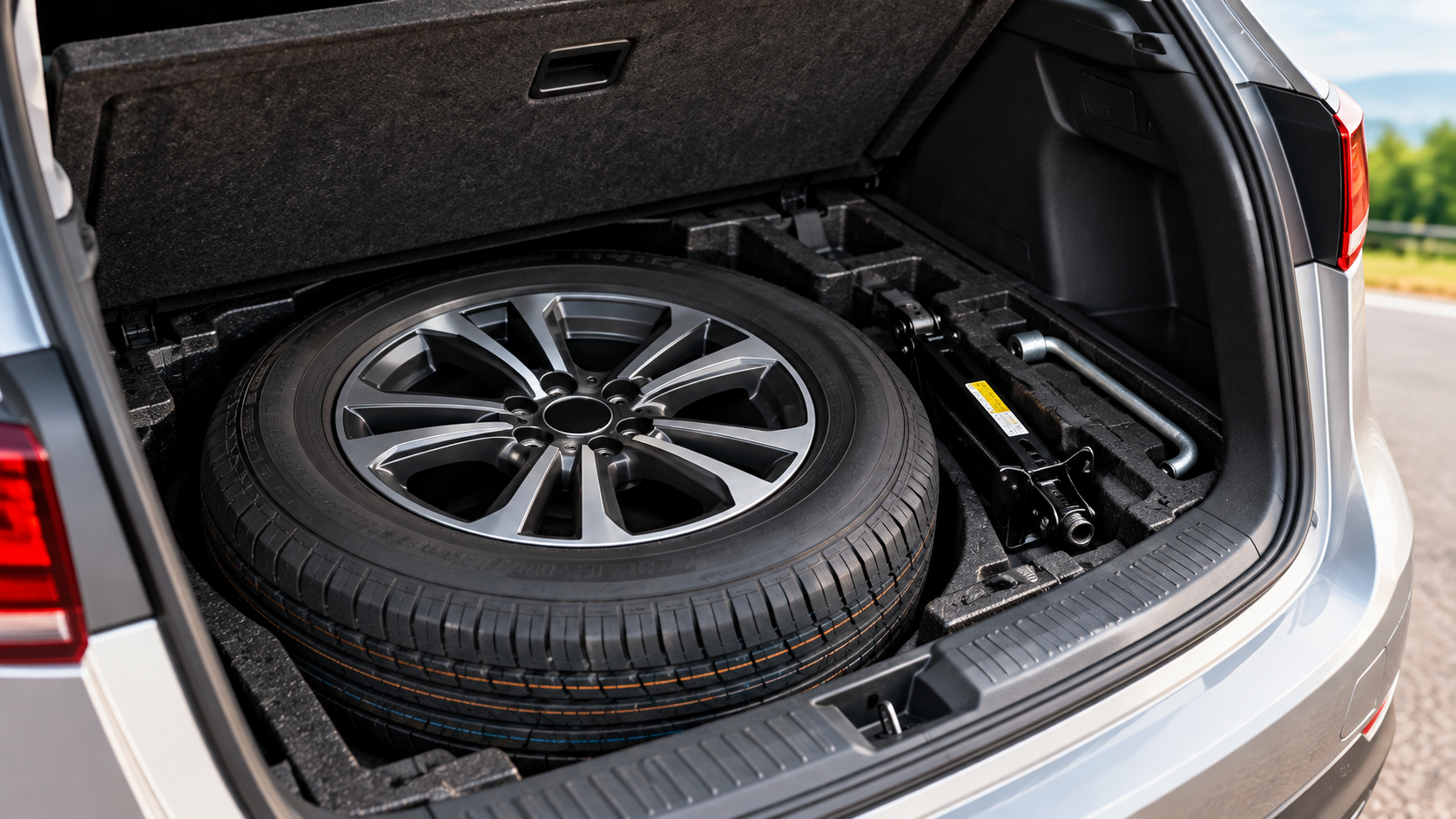
Many car owners believe that a full-size spare tyre stored in the boot is always ready for use whenever a flat tyre occurs. However, this is a common vehicle maintenance myth. Even a full-size spare tyre can lose air pressure, develop cracks, suffer rubber ageing or become damaged while sitting unused for months or years. Before installing it, drivers should inspect its condition, check tyre pressure and confirm that it meets the vehicle manufacturer's specifications. Regular spare tyre inspections are essential for avoiding unexpected problems during emergencies and ensuring safe driving.
A flat tyre can happen at any time, whether a vehicle is travelling through city traffic, driving on a highway or covering a long-distance journey. In such situations, a spare tyre provides an important backup that allows drivers to continue their journey without waiting for roadside assistance.
Many cars, particularly SUV cars and some premium vehicles, come with a full-size spare tyre. Unlike a space-saver spare, a full-size spare is generally similar in dimensions to the tyres fitted to the vehicle. This makes it a convenient replacement when one of the regular tyres gets damaged.
However, there is a common misunderstanding among vehicle owners that a full-size spare tyre does not require inspection because it is rarely used.
This assumption can create serious problems. A spare tyre may remain inside the boot for several months without being checked. During this time, its air pressure can gradually decrease, rubber can deteriorate and its overall condition can change.
Even if the tyre looks new from the outside, it may not be suitable for immediate use.
The important thing to understand is that a spare tyre is not automatically road-ready simply because it has never been used. Like all other tyres on a vehicle, it requires regular maintenance and inspection.
Wheel Balancing and Wheel Alignment Are the Same Service: Myth or Fact?
A full-size spare tyre is designed to provide a replacement for a damaged road tyre. However, its unused condition does not guarantee that it is safe.
Tyres are manufactured using rubber compounds, reinforcing materials and other components that can deteriorate over time. Exposure to heat, sunlight, moisture and changing temperatures can affect their condition.
Even when stored inside a vehicle's boot, a spare tyre can experience temperature variations. These changes can gradually affect tyre pressure and contribute to rubber ageing.
Another important factor is natural air loss. Tyres slowly lose pressure over time, even when there is no visible puncture.
If a spare tyre has not been inspected for several months, it may have significantly lower pressure than recommended.
Installing an underinflated spare tyre can affect vehicle handling, braking and stability. It may also generate excessive heat during driving.
Therefore, checking a full-size spare tyre before use is an important part of vehicle maintenance.

One of the most common problems with unused spare tyres is pressure loss.
Many drivers assume that because a spare tyre is not touching the road, its air pressure will remain unchanged. However, this is incorrect.
Air naturally escapes through microscopic gaps in the tyre material and around the valve system. Temperature changes can also affect the pressure reading.
A spare tyre that was correctly inflated when the vehicle was purchased may become underinflated after several months.
This becomes particularly important when the spare tyre is needed during an emergency.
For example, imagine driving on a highway and discovering that your main tyre has a puncture. You open the boot, remove the spare and install it, only to discover that the replacement tyre has insufficient pressure.
This situation can create additional inconvenience and safety concerns.
Drivers should check spare tyre pressure regularly and maintain it according to the vehicle manufacturer's recommendation. Some vehicles specify a different pressure for the spare compared with the regular road tyres.
The recommended value should be checked in the owner's manual or on the vehicle's tyre information label.
Car Waiting Period: How to Get Your New Car Faster
Another important reason to inspect a full-size spare tyre is rubber ageing.
Tyres are not permanent products. Their rubber compounds gradually change as they age, even if they are not regularly used.
Over time, rubber can lose some of its flexibility and develop visible cracks. This process may be accelerated by exposure to heat, sunlight, ozone and unsuitable storage conditions.
An old spare tyre may therefore appear to have plenty of tread but still have reduced structural reliability.
This is particularly important for vehicles that are several years old.
Some owners keep the original spare tyre in the boot for the entire life of the vehicle without checking its manufacturing date.
However, the manufacturing date provides useful information about the tyre's age.
Drivers can identify the manufacturing week and year using the four-digit date code in the DOT identification marking, where applicable. For example, a code ending in 2523 indicates that the tyre was manufactured during the 25th week of 2023.
A tyre's age alone does not automatically determine whether it must be replaced. Its condition, manufacturer's recommendations, storage history and inspection results should all be considered.

Before using a spare tyre, drivers should carefully inspect its tread and sidewalls.
The tread area should be checked for embedded nails, screws, sharp stones, cuts and other visible damage.
Even if the spare tyre has never been installed on the vehicle, it may have been damaged during storage or while other items were placed around it.
The sidewall requires particular attention because it supports the tyre's structure and flexes during driving.
Look for the following warning signs:
Visible cracks in the rubber.
Bulges or bubbles on the sidewall.
Deep cuts or damaged sections.
Exposed reinforcing cords.
Signs of deformation.
Embedded sharp objects.
Unusual wear or damage.
A tyre with bulges, exposed cords or significant structural damage should not be used.
If there is any doubt about its condition, have it inspected by a professional tyre technician before installation.
New Car Dealer Negotiation Tips That Actually Work
Not necessarily.
Although a full-size spare tyre is generally similar in dimensions to the vehicle's regular tyres, it is not always identical in every specification.
Some manufacturers provide a spare tyre with a different brand, tread pattern or specification.
For example, the vehicle may use premium touring tyres on all four wheels while the spare has a different tread design.
Drivers should check whether the spare tyre matches the required:
Tyre size.
Load index.
Speed rating.
Construction type.
Overall diameter.
Wheel compatibility.
These specifications matter because tyres are designed to work within particular vehicle requirements.
An incorrectly sized or unsuitable tyre can affect handling, ground clearance, braking and vehicle stability.
The owner's manual should always be consulted before using a replacement tyre.
A properly maintained full-size spare tyre that meets the vehicle manufacturer's specifications can generally be used as a replacement for a damaged road tyre.
However, drivers should not automatically assume that every full-size spare is suitable for unlimited use.
The tyre's age, condition, pressure, construction and compatibility must be considered.
If the spare is identical to the other road tyres and is in good condition, it may be suitable for normal driving according to the manufacturer's guidance.
However, if it differs from the regular tyres, the manufacturer may recommend restrictions on speed, distance or use.
After installing a spare tyre, drivers should also pay attention to vehicle handling, unusual vibration and tyre pressure warnings.
If the replacement tyre behaves differently or the vehicle shows unusual symptoms, stop safely and arrange a professional inspection.
Not all spare tyres are designed for the same purpose.
A full-size spare tyre is generally similar in dimensions to the vehicle's regular tyres. A space-saver spare, on the other hand, is smaller and lighter and is designed primarily for temporary emergency use.
Understanding the difference helps drivers know what to expect when replacing a damaged tyre.
|
Feature |
Full-Size Spare Tyre |
Space-Saver Spare Tyre |
|
Size |
Usually similar to regular tyres |
Smaller and narrower |
|
Weight |
Generally heavier |
Generally lighter |
|
Boot Space |
Requires more storage space |
Requires less storage space |
|
Driving Restrictions |
Depends on specifications and manufacturer guidance |
Usually has strict speed and distance restrictions |
|
Handling |
More similar to regular tyre handling when compatible |
Can change vehicle handling |
|
Air Pressure |
Requires regular pressure checks |
Often requires a higher specified pressure |
|
Long-Distance Use |
Possible if approved and compatible |
Generally not intended for extended use |
|
Main Purpose |
Replacement for a damaged road tyre |
Temporary emergency mobility |
A full-size spare offers greater convenience, but it still requires regular maintenance. A space-saver spare requires even more attention to its specific pressure and usage restrictions.
CIBIL Score for Car Loan in India: What You Need to Know
A spare tyre should be included in the vehicle's regular maintenance routine.
Many drivers check the four tyres fitted to their vehicle but forget the one stored in the boot.
A practical approach is to inspect the spare tyre at least once a month, preferably when checking the pressure of the regular tyres.
Drivers should also inspect it before long-distance trips.
The following checks are useful:
Check tyre pressure: Use a reliable pressure gauge and compare the reading with the manufacturer's recommended spare tyre pressure.
Inspect the sidewall: Look for cracks, cuts, bulges and other visible damage.
Check the tread: Ensure there are no embedded objects or signs of deterioration.
Verify the manufacturing date: Check the tyre's age and follow the manufacturer's recommendations.
Inspect the valve: Look for damage, leakage or a missing valve cap.
Check the storage area: Ensure the tyre is securely stored and protected from unnecessary damage.
Inspect the wheel: Check for visible corrosion, cracks or damage that could affect installation.
These simple steps can help ensure that the spare tyre is ready when an emergency occurs.

Several common mistakes can reduce the reliability of a spare tyre.
Ignoring Tyre Pressure: Many owners assume that an unused tyre does not lose pressure. This can leave the spare underinflated when it is needed.
Never Checking Manufacturing Date: An old tyre may develop rubber deterioration even when it has plenty of unused tread.
Assuming Full-Size Means Identical: A spare tyre may have different specifications from the regular road tyres.
Ignoring Sidewall Cracks: Small-looking cracks can indicate rubber deterioration and should not be ignored.
Storing Heavy Objects Incorrectly: Poor storage can cause physical damage to the spare tyre or its wheel.
Not Checking the Spare Before a Long Journey: A spare that has not been inspected may fail to provide the expected backup during an emergency.
Avoiding these mistakes can improve emergency preparedness and reduce unexpected problems on the road.
How to Set a Realistic Car Buying Budget (On-Road Price Explained)
Maintaining a spare tyre does not require complicated procedures. A few simple habits can make a significant difference.
First, include the spare tyre in your monthly vehicle inspection routine. Check its air pressure and overall condition.
Second, ensure that the spare is secured properly in the boot or under the vehicle. Loose storage can create unnecessary movement and potential damage.
Third, keep the necessary replacement equipment available, including a jack, wheel spanner and any vehicle-specific locking wheel nut key.
Fourth, understand how to access the spare tyre. Some vehicles have spare wheels mounted underneath the rear section, while others store them inside the boot.
Finally, make sure that the spare wheel is compatible with your vehicle and that you understand any restrictions mentioned in the owner's manual.
If the spare tyre is damaged, significantly aged or unsuitable for use, replace it rather than waiting for an emergency.
The statement that a full-size spare tyre is always ready to use without inspection is a myth. Although a full-size spare is generally more convenient than a space-saver tyre, it is not maintenance-free.
It can lose air pressure, develop cracks, experience rubber ageing and suffer damage while remaining unused in the vehicle.
Before installing a spare tyre, drivers should check its pressure, tread, sidewalls, manufacturing date and compatibility with the vehicle. Regular inspections are particularly important before long-distance journeys.
A spare tyre is an important safety backup, but it can only perform its job when it is in suitable condition.
The best approach is simple: never assume your spare tyre is ready just because it has never been used. Inspect it regularly and make sure it is safe before relying on it during an emergency.