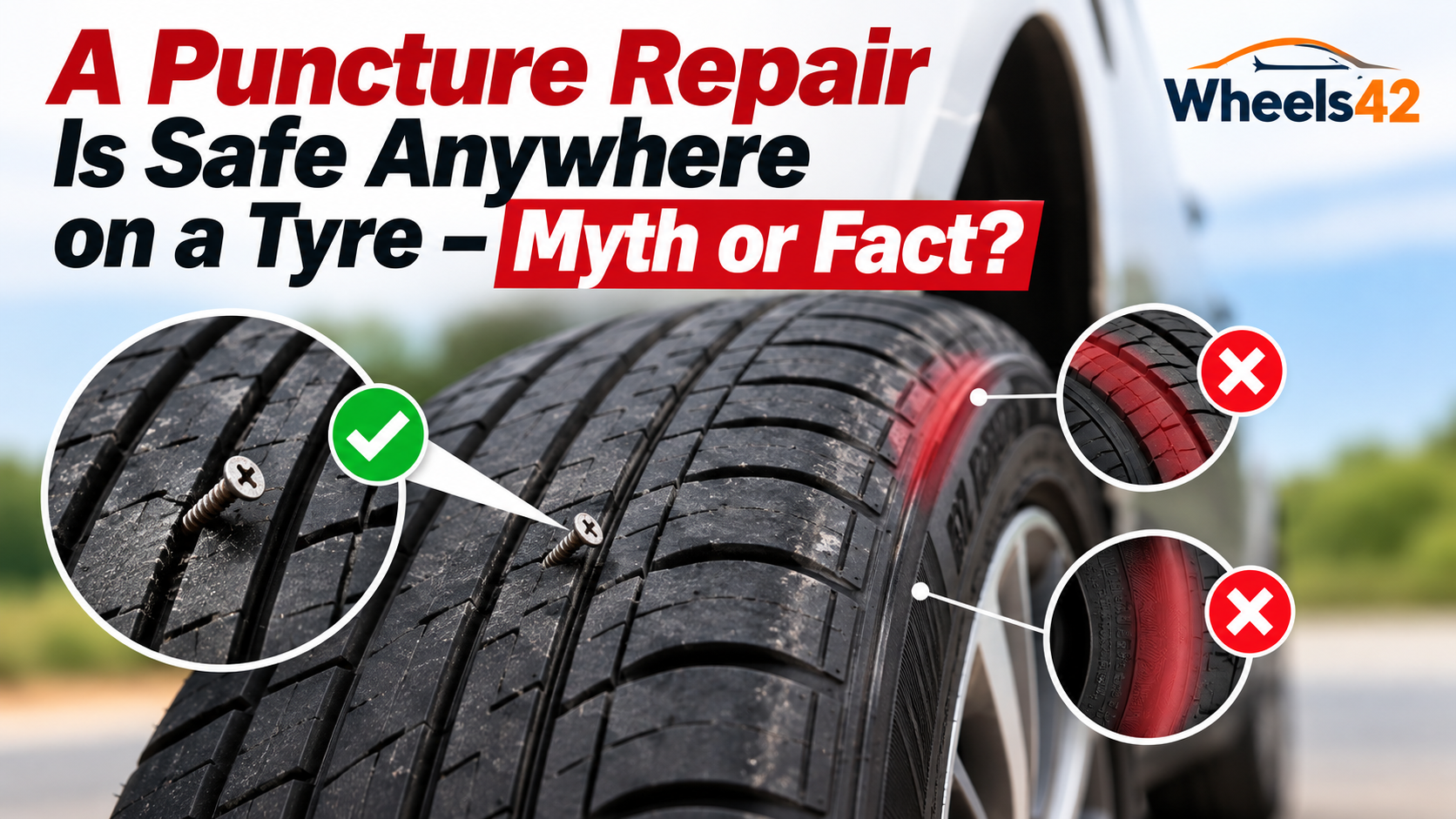
Many drivers believe that a puncture can be repaired safely anywhere on a tyre, whether it occurs in the tread, shoulder or sidewall. However, this is a common tyre safety myth. While small punctures in certain areas can be repaired professionally, damage near the shoulder or sidewall often requires complete tyre replacement. Understanding where a tyre can and cannot be repaired is essential for maintaining road safety, preventing sudden tyre failure and avoiding unnecessary expenses.
A tyre puncture is one of the most common problems faced by car and motorcycle owners. Sharp objects such as nails, screws, glass pieces and metal fragments can damage a tyre while driving. In many situations, drivers simply visit a nearby puncture repair shop and expect the technician to fix the damaged area.
However, not every puncture can be repaired safely. The location, size and type of damage play an important role in determining whether a tyre can be reused. A small nail in the central tread area may be repairable, but a similar puncture near the sidewall could make the entire tyre unsafe.
The belief that a puncture repair is safe anywhere on a tyre is therefore incorrect. Tyres are engineered with different structural sections, and each section performs a specific function. Repairing the wrong area can weaken the tyre structure and increase the possibility of air leakage, overheating or sudden tyre failure.
Company-Fitted vs Aftermarket Accessories: Which Is Better?
1. Why Is a Puncture Not Safe to Repair Anywhere?
A modern vehicle tyre is made using several layers of rubber, steel belts, fabric and other reinforcing materials. These components work together to support the vehicle's weight, maintain road contact and absorb impacts from uneven surfaces.
Different sections of a tyre experience different types of pressure and movement.
The tread area is designed to provide grip and withstand continuous contact with the road. The sidewall, on the other hand, flexes repeatedly while the vehicle is moving. It also helps absorb road shocks and maintain the tyre's overall shape.
When a sharp object penetrates the tyre, it can damage one or more internal layers. A repair that is suitable for the tread area may not restore the structural strength of a damaged sidewall.
This is why professional tyre repair standards restrict repairs to specific areas. Simply inserting a rubber plug into a hole does not guarantee that the tyre is structurally safe.

2. Understanding the Different Areas of a Tyre
Before deciding whether a puncture can be repaired, it is important to understand the main sections of a tyre.
Tread Area
The tread is the outer surface of the tyre that comes into direct contact with the road. It contains grooves and patterns designed to provide traction, improve braking performance and remove water from the contact patch.
Small punctures caused by nails or screws in the central tread area are often repairable, provided the damage meets the applicable size and location requirements.
Professional technicians generally use an approved internal patch-plug or combination repair method after inspecting the tyre.
Shoulder Area
The shoulder is the curved section connecting the tread to the sidewall. It experiences significant flexing and heat during driving.
Punctures near this area are generally considered non-repairable under standard passenger tyre repair guidelines. Even if the visible hole appears small, the internal damage may compromise the tyre's structure.
Attempting to repair a shoulder puncture can create a serious safety risk.
Sidewall Area
The sidewall is the vertical section between the tread and the wheel rim. It carries the tyre's identification information, size markings, load rating and other specifications.
Unlike the central tread, the sidewall continuously bends and flexes as the tyre rotates. This movement makes it difficult for a conventional puncture repair to remain secure.
A puncture, cut or bulge in the sidewall generally means the tyre needs replacement rather than a conventional repair.
New Car Booking Process Explained Step by Step
3. Which Tyre Punctures Can Be Repaired Safely?
Not all punctures require a new tyre. Many small tread-area punctures can be repaired when the tyre is otherwise in good condition.
However, the technician must remove the tyre from the wheel and inspect its internal condition before approving a repair.
The following table explains the general repair suitability of different tyre damage locations.
|
Tyre Damage Location
|
Repair Possibility
|
Recommended Action
|
|
Centre tread area
|
Often repairable
|
Professional internal inspection and approved repair
|
|
Outer tread area
|
Depends on location
|
Check manufacturer and repair guidelines
|
|
Shoulder area
|
Generally not repairable
|
Replace the tyre
|
|
Sidewall
|
Not suitable for conventional puncture repair
|
Replace the tyre
|
|
Large or irregular hole
|
Generally not repairable
|
Replace the tyre
|
|
Multiple nearby punctures
|
Depends on damage and spacing
|
Professional assessment
|
|
Internal structural damage
|
Not repairable
|
Replace the tyre
|
4. Why Sidewall Punctures Are Dangerous
Sidewall damage is one of the most serious types of tyre damage because this section plays an important role in supporting the vehicle.
Unlike the tread, which is reinforced with steel belts in many modern radial tyres, the sidewall is designed to remain flexible.
When a tyre rotates, the sidewall repeatedly compresses and expands. A puncture can damage the reinforcing cords inside this section.
If a technician simply inserts a plug or applies a patch over the damaged area, it may not restore the original structural strength.
The repair could fail under pressure, especially during high-speed driving, heavy loading or when the tyre becomes hot.
Sidewall damage can also cause air leakage, abnormal bulging and sudden tyre failure.
For this reason, drivers should avoid using tyres with sidewall punctures, cuts or visible structural damage. Replacing the damaged tyre is generally the safest option.

5. What Happens If You Repair a Puncture in the Wrong Area?
An incorrect tyre repair may appear successful initially. The tyre might hold air for several days or even weeks. However, this does not mean the repair is safe.
There are several potential consequences of repairing an unsuitable area.
Air Leakage: An improperly repaired puncture may gradually lose air pressure, affecting vehicle stability and tyre performance.
Tyre Overheating: Incorrect repairs can allow air and moisture to enter damaged areas. Continued driving may increase internal damage and heat buildup.
Structural Weakness: Damage to the internal reinforcing cords may remain even after the visible hole has been sealed.
Reduced Handling Performance: Incorrect tyre pressure and structural damage can affect steering response, cornering stability and braking performance.
Sudden Tyre Failure: In severe cases, a damaged tyre can fail while driving, creating a risk of losing vehicle control.
These problems demonstrate why tyre repairs should never be judged only by whether the hole has stopped leaking air.
Manual vs Automatic Car: Pros and Cons Explained
6. Plug Repair vs Patch Repair: What Is the Difference?
Drivers may come across different puncture repair methods at local tyre shops. Two commonly discussed options are plug repairs and patch repairs.
A plug is inserted into the puncture channel to stop air from escaping. It is often used as a quick external repair, but a plug-only repair may not provide the required internal sealing and inspection.
A patch is applied to the inside of the tyre to seal the damaged area. However, simply applying an internal patch may not adequately seal the puncture channel.
For many repairable passenger tyre punctures, a properly installed combination repair unit is preferred. It seals the puncture channel and the inner liner together.
The tyre should be removed from the wheel, inspected internally and repaired using an approved method. The repair must also follow the tyre manufacturer's requirements.
Drivers should remember that even the best repair method cannot make an unsuitable sidewall or shoulder puncture safe.
7. Can You Drive Immediately After a Puncture Repair?
A professionally repaired tyre can generally return to normal use once the repair has been completed correctly and the technician has confirmed that it is safe.
However, drivers should take a few precautions.
-
Check the recommended tyre pressure before driving.
-
Make sure the technician has inspected the tyre internally.
-
Confirm that the repair is suitable for the damage location.
-
Avoid excessive speed immediately after discovering a tyre problem.
-
Check tyre pressure regularly after the repair.
-
Pay attention to vibration, unusual noise or repeated air loss.
If the tyre continues losing pressure after repair, it should be inspected again rather than repeatedly inflated.
For vehicles with a Tyre Pressure Monitoring System (TPMS), drivers should also check whether the warning has disappeared after the tyre pressure has been corrected.

8. What Should You Do When Your Tyre Gets a Puncture?
A puncture does not always mean that you need to replace the tyre. However, driving on a damaged or underinflated tyre can make the situation worse.
Follow these steps when you notice a puncture.
Step 1: Reduce Speed Safely
If you notice a sudden loss of tyre pressure, avoid aggressive braking or steering. Reduce speed gradually and move to a safe location.
Step 2: Avoid Driving on a Flat Tyre
Driving with insufficient tyre pressure can damage the sidewall and internal structure. Even a repairable tread puncture may become non-repairable after being driven on while flat.
Step 3: Inspect the Visible Damage
Look for nails, screws, cuts, bulges or other visible damage. Do not remove an embedded object yourself if doing so could cause rapid air loss.
Step 4: Visit a Professional Tyre Technician
Ask the technician to remove the tyre from the wheel and inspect its internal condition. A simple external inspection may not reveal hidden damage.
Step 5: Choose Repair or Replacement
If the puncture is within the permitted repair area and meets the required conditions, an approved repair may be possible. Otherwise, replace the tyre with a suitable new one.
Car Loan in India 2026: EMI, Rates, Eligibility and Steps
9. How to Prevent Frequent Tyre Punctures
Although punctures cannot always be avoided, proper tyre maintenance can reduce the chances of tyre-related problems.
-
Maintain correct tyre pressure: Check pressure regularly according to the vehicle manufacturer's recommendations.
-
Inspect tyres regularly: Look for nails, screws, cuts, cracks and unusual bulges.
-
Avoid damaged roads: Slow down when travelling over roads with sharp debris, potholes or construction material.
-
Check tread condition: Replace tyres when tread wear reaches the manufacturer's or applicable legal limit.
-
Avoid overloading: Excessive vehicle weight increases tyre stress and heat generation.
-
Choose quality tyres: Use tyres that meet the vehicle's recommended size, load and speed specifications.
-
Get professional inspections: Have tyres checked if you notice vibration, repeated pressure loss or uneven wear.
Regular inspection is particularly important before long-distance journeys because tyre damage can become more serious at sustained highway speeds.
10. When Should You Replace a Tyre Instead of Repairing It?
A tyre should be replaced when the damage affects its structural integrity or falls outside the manufacturer's approved repair limits.
Common reasons for replacement include sidewall punctures, shoulder damage, large cuts, exposed reinforcing cords and internal damage caused by driving with insufficient pressure.
Tyres that have severe cracks, bulges or excessive tread wear should also be replaced.
Age is another factor. Even if a tyre has sufficient tread remaining, ageing rubber can develop cracks and lose its original performance characteristics.
Drivers should not take risks simply to save money on a new tyre. The cost of replacement is generally much lower than the potential consequences of a tyre failure while driving.
Conclusion
The statement that a puncture repair is safe anywhere on a tyre is a myth. While small punctures in the permitted tread repair area can often be fixed professionally, damage near the shoulder and sidewall generally requires tyre replacement.
The location, size and condition of the tyre determine whether a repair is possible. A proper inspection, an approved repair method and correct tyre pressure are essential for maintaining safety.
Vehicle owners should avoid relying on temporary plugs or quick roadside fixes as permanent solutions without professional inspection. When it comes to tyre safety, choosing the correct repair or replacement is always more important than saving a small amount of money.

 Khyati Sharma 2026-10-31