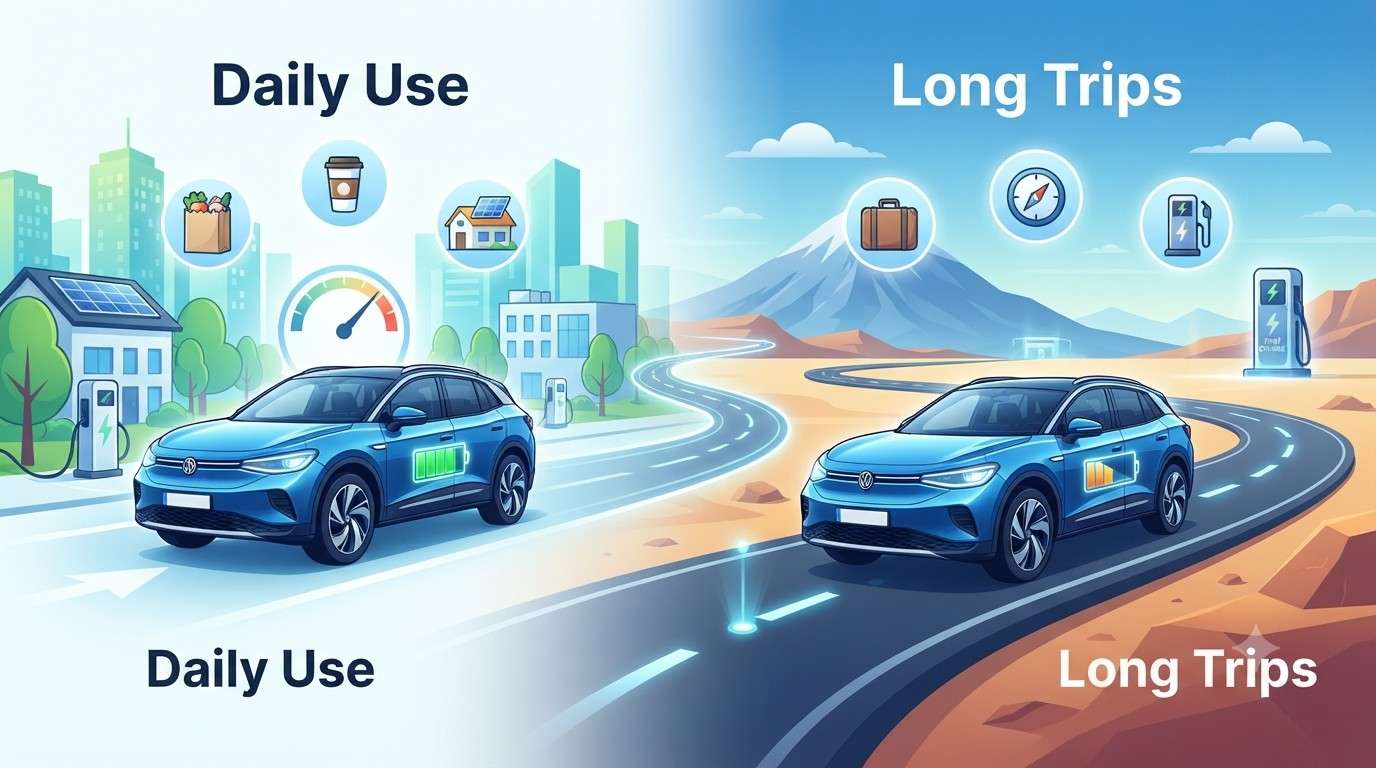
Electric vehicles are becoming increasingly popular among Indian buyers, but choosing an EV as the only car in a household is still a major decision. Unlike families with a petrol or diesel car as a backup, one-car households need their vehicle to handle everything, including daily office commutes, grocery shopping, school runs, unexpected journeys and weekend highway trips.
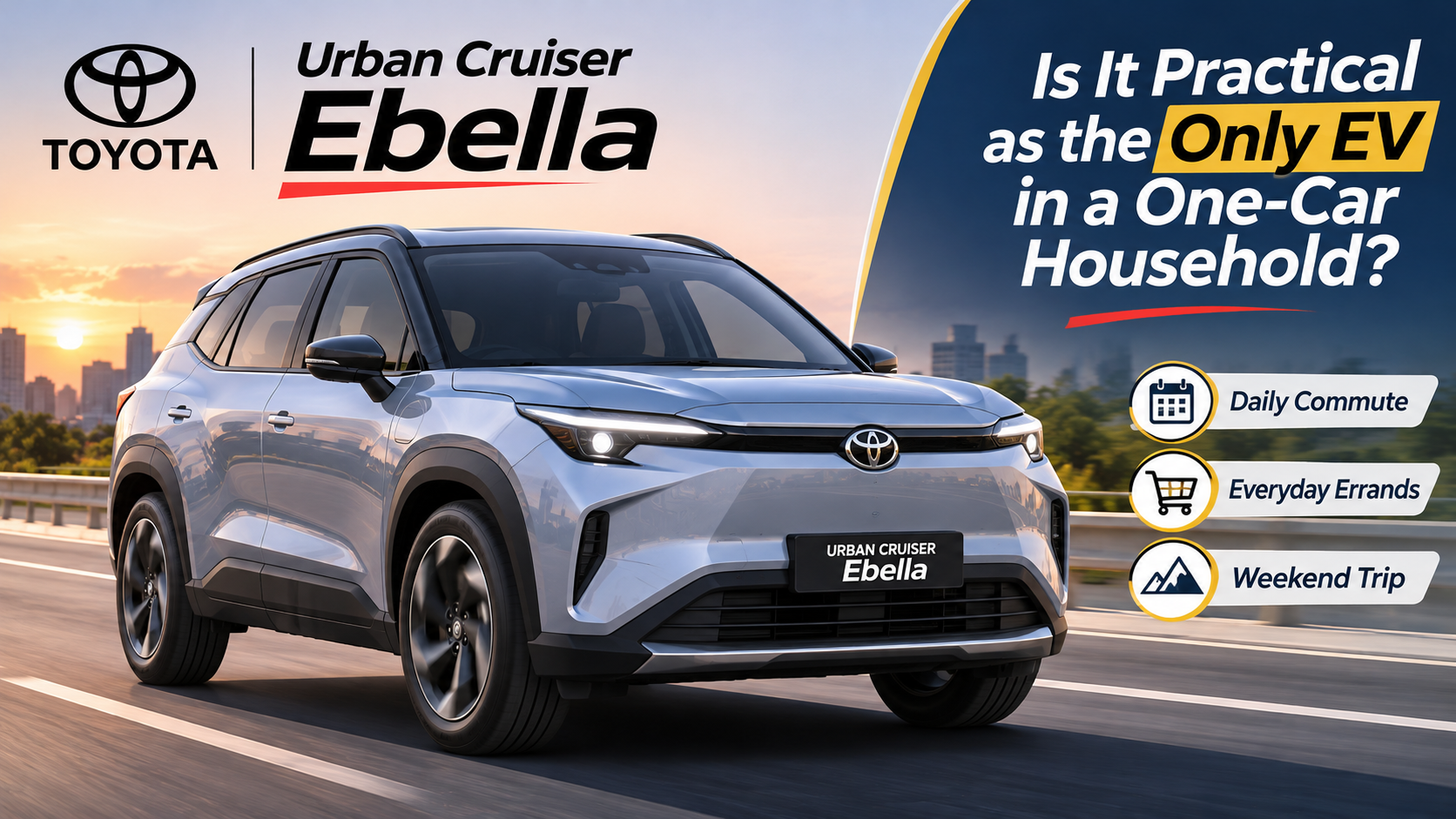
The Toyota Urban Cruiser Ebella is Toyota's first all-electric SUV for the Indian market. Developed alongside the Maruti Suzuki e Vitara, the electric SUV combines a practical five-seat layout, two battery options, modern features and a claimed driving range of up to 543km.
But is it genuinely practical as the only car in a household? Can it manage an entire week of commuting, errands and a weekend road trip without creating charging anxiety?
Does a Five-Star Safety Rating Mean You Cannot Get Seriously Injured? The Truth Explained
Toyota Urban Cruiser Ebella: Battery and Range
The Toyota Urban Cruiser Ebella is available with two lithium iron phosphate (LFP) battery options: 49kWh and 61kWh.
The smaller battery version produces 144hp, while the larger battery version generates 174hp. Both versions deliver 189Nm of torque and send power to the front wheels.
Toyota cars claims a driving range of up to 440km for the 49kWh version and 543km for the 61kWh version under the applicable testing cycle.
However, claimed range figures do not always represent what drivers experience in everyday conditions. Traffic, air-conditioning usage, driving speed, road conditions and passenger load can influence actual efficiency.
For a household planning to use the Ebella as its only car, the larger battery version offers greater flexibility, particularly when weekend journeys are part of the regular routine.
One Week With the Toyota Urban Cruiser Ebella
To understand its practicality, let's consider a typical Indian family using the Ebella as its primary and only vehicle. The weekly routine includes office commuting, shopping, family activities and a weekend highway journey.
For this scenario, we will use the 61kWh battery version and assume the vehicle starts Monday with a fully charged battery. The following distances are illustrative rather than actual test results.
Monday: Daily Office Commute
Monday usually marks the beginning of a regular working week. The car may be used for travelling to the office, dropping children at school and returning home in the evening.
Assume the family covers approximately 40km throughout the day.
The Ebella's electric motor provides smooth and quiet acceleration, making it suitable for urban traffic. Its front-wheel-drive configuration and light steering also help during everyday driving.
The SUV cars compact-enough dimensions and 5.2-metre minimum turning radius make it easier to manoeuvre through crowded streets and parking areas.
At the end of Monday, approximately 40km of the estimated driving range would have been consumed. The remaining battery capacity should be sufficient for several more days of regular commuting.

Tuesday: Office, School Runs and Grocery Shopping
Tuesday brings a slightly busier schedule. Apart from regular commuting, the vehicle may need to handle school pickups, grocery shopping and other household errands.
Let's assume a total driving distance of 50km.
The Ebella's five-seat cabin provides space for family members, while its elevated SUV seating position offers good visibility in city traffic.
The vehicle also gets a sliding and reclining rear seat, allowing occupants to adjust the available passenger and luggage space according to their requirements.
Its 306-litre boot is adequate for everyday shopping bags and smaller luggage, although it is not particularly large compared with some family SUVs.
After two days of driving, the household would have covered approximately 90km. This remains comfortably within the battery's usable range.
Wednesday: Midweek Activities and Unexpected Journeys
Wednesday can involve additional responsibilities such as medical appointments, meetings, visiting relatives or travelling across different parts of the city.
For this example, assume the household covers another 45km.
One advantage of using an EV for these journeys is its smooth power delivery and quiet cabin operation. The Ebella does not require conventional petrol refuelling, and regenerative braking helps recover some energy during deceleration.
It offers three regenerative braking levels, allowing drivers to adjust energy recovery according to their preferences. However, it does not offer a proper single-pedal driving mode, which some competing electric vehicles provide.
At this stage, the household would have covered approximately 135km during the week.
Myth or Fact: Does Every Car Need an Oil Change After Exactly the Same Distance?
Thursday: Family Errands and Local Travel
Thursday is another regular-use day, with journeys involving shopping centres, supermarkets, family visits and other local activities.
Assuming a total distance of 35km, the Ebella would continue to handle these activities without requiring a public charging stop.
The electric SUV also offers useful convenience features, including wireless smartphone connectivity, a digital instrument display, a touchscreen infotainment system and connected-car technology.
Higher-specification equipment includes ventilated front seats, a powered driver's seat, a panoramic glass roof and a JBL audio system.
These features help make the vehicle more comfortable for everyday family use.
By Thursday evening, the illustrative weekly driving distance would reach approximately 170km.
Friday: Office Commute and Weekend Preparation
Friday often involves a combination of office travel and preparations for the weekend.
For this scenario, assume another 40km of driving, including commuting and shopping for the upcoming trip.
After covering approximately 210km during the week, the family would still have a reasonable amount of estimated driving range available in the 61kWh version.
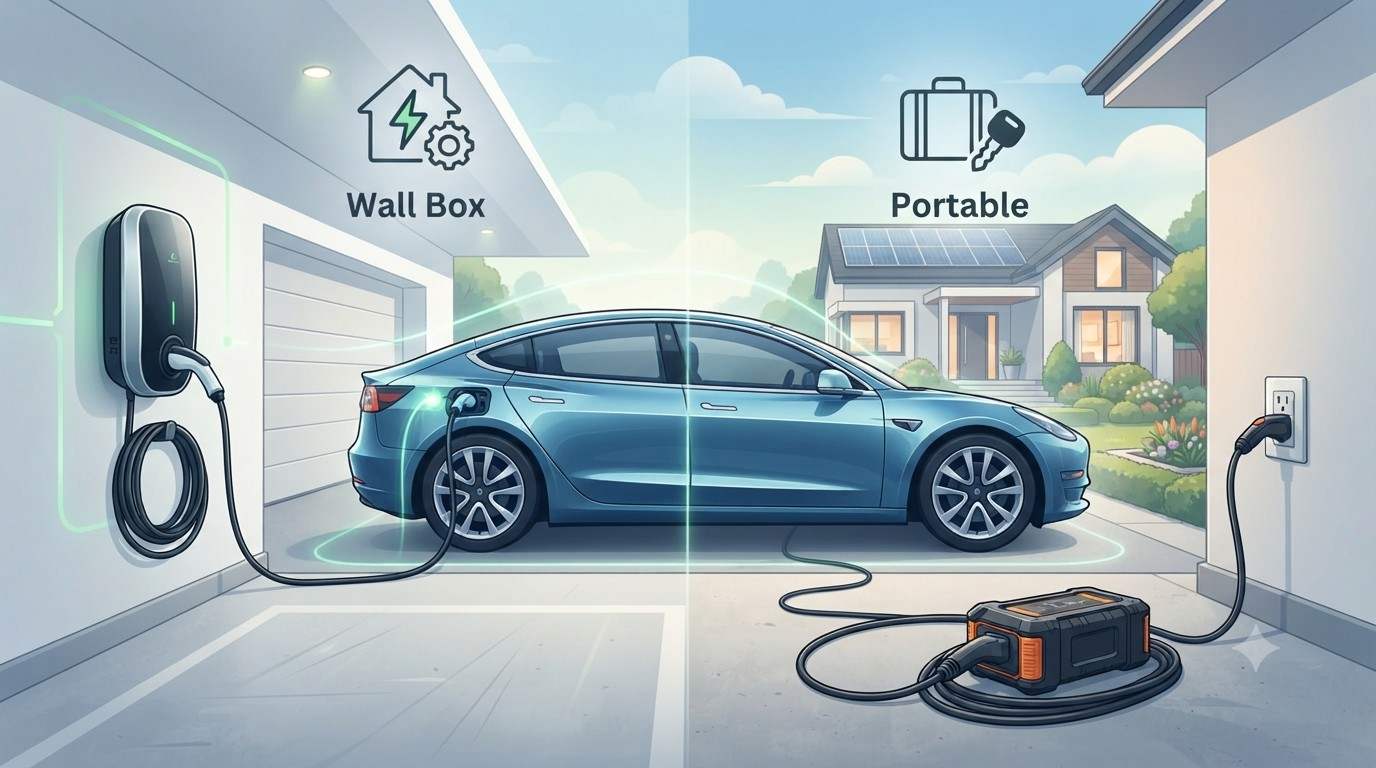
This is where home charging becomes particularly important. If the family has a dedicated parking space with an AC charging point, the vehicle can be charged overnight rather than requiring a separate visit to a public charging station.
However, households without private parking or convenient charging access may need to plan their charging schedule more carefully.
Saturday: Weekend Highway Trip
Saturday is the biggest test for an EV being used as the only family car.
Let's consider a weekend journey covering approximately 150km, including travelling to a nearby tourist destination, visiting local attractions and returning home.
The Ebella's 61kWh battery has a claimed range of 543km, but its independently tested real-world combined range is approximately 402km.
Based on this test figure, a 150km journey should be manageable with sufficient starting charge, although actual consumption will depend on speed, traffic, weather, road gradients and passengers.
The SUV's 174hp electric motor provides smooth acceleration for highway driving. Its 2,700mm wheelbase also contributes to a spacious cabin.
However, buyers should remember that highway driving at higher speeds can increase energy consumption. It is sensible to identify charging stations along unfamiliar routes rather than depending entirely on the claimed range.
How Many Airbags Do You Really Need? A Safety Primer
Sunday: Family Outing and Return to Routine
Sunday usually involves shorter journeys, such as visiting relatives, going to restaurants or taking the family shopping.
Assuming another 30km of driving, the household's total weekly distance would reach approximately 390km.
This illustrates how the Ebella could manage a combination of daily commuting, errands and a weekend outing without necessarily requiring a midweek public charging stop.
The family could then recharge the vehicle at home overnight and begin the following week with a higher battery level.
Toyota Urban Cruiser Ebella: Seven-Day Driving Plan
|
Day
|
Main Activities
|
Distance
|
|
Monday
|
Office and school commute
|
40 km
|
|
Tuesday
|
Office, school and groceries
|
50 km
|
|
Wednesday
|
Meetings and family activities
|
45 km
|
|
Thursday
|
Shopping and local travel
|
35 km
|
|
Friday
|
Office and weekend preparation
|
40 km
|
|
Saturday
|
Weekend highway trip
|
150 km
|
|
Sunday
|
Family outing and local travel
|
30 km
|
|
Total
|
Complete weekly usage
|
390 km
|
Charging Convenience: Can It Handle Everyday Requirements?
Charging infrastructure is one of the most important considerations when purchasing an electric vehicle as the only family car.
The Toyota Urban Cruiser Ebella supports AC home charging and DC fast charging. Its charging options allow owners to choose between overnight charging and faster charging during longer journeys.
For the 61kWh battery version, a 20–80 per cent charge took approximately 35 minutes in Autocar India's test using a 90kW DC fast charger. The test recorded a peak charging speed of approximately 68.2kW.
For daily ownership, home charging is the more convenient solution.
A household with a dedicated parking space can connect the vehicle after returning from work and recharge it overnight. This reduces the need to visit public charging stations regularly.
However, apartment residents should check whether their housing society permits EV charger installation and whether the electrical infrastructure supports it.
Public charging availability should also be checked along frequently travelled routes, especially when the vehicle is expected to handle longer journeys.
Cabin Space and Family Practicality
The Toyota Urban Cruiser Ebella is a five-seat electric SUV designed for family usage.
Its 2,700mm wheelbase helps create a spacious cabin, while the sliding and reclining rear seats offer additional flexibility for passengers.
The SUV's 306-litre boot capacity is suitable for regular grocery shopping, office bags and smaller weekend luggage. However, families travelling with several large suitcases may find the luggage capacity restrictive.
Another consideration is rear-seat comfort. The raised floor associated with the battery packaging creates a slightly knees-up seating position. Families should test the rear seats with all regular passengers before making a purchase decision.
The cabin's overall fit and finish, storage solutions and available comfort features make it a practical option for everyday family use.
Does Cruise Control Always Give the Best Fuel Economy? The Truth Explained
Safety and Technology for Everyday Driving
Safety is especially important when one vehicle handles all household transportation requirements.
The Toyota Urban Cruiser Ebella offers seven airbags, ABS with EBD, electronic stability control, a 360-degree camera and Level 2 ADAS features in its higher-specification equipment.
Its driver assistance systems include features such as adaptive cruise control, lane-keeping assistance, blind-spot monitoring and pre-collision braking.
The SUV also features a digital instrument display, touchscreen infotainment system, wireless smartphone connectivity and connected-car technology.
These features can make daily driving more convenient, particularly for families who frequently travel through busy urban environments. Equipment availability should be checked against the specific variant being purchased.

Toyota Urban Cruiser Ebella Price and Ownership Considerations
The Toyota Urban Cruiser Ebella's top-specification E3 variant was introduced at an ex-showroom price of Rs 23.60 lakh in India.
Toyota has also highlighted ownership benefits such as an eight-year battery warranty, battery subscription options and an assured buyback programme, subject to applicable terms and conditions.
However, the purchase price is only one part of EV ownership.
Before buying the Ebella as the household's only car, buyers should consider:
-
Home charging installation costs.
-
Availability of public charging stations.
-
Electricity tariffs and charging expenses.
-
Insurance and maintenance costs.
-
Battery warranty conditions.
-
Long-distance travel requirements.
-
Resale value and buyback conditions.
The actual ownership cost will depend on driving distance, electricity rates, charging habits and the applicable ownership programme.
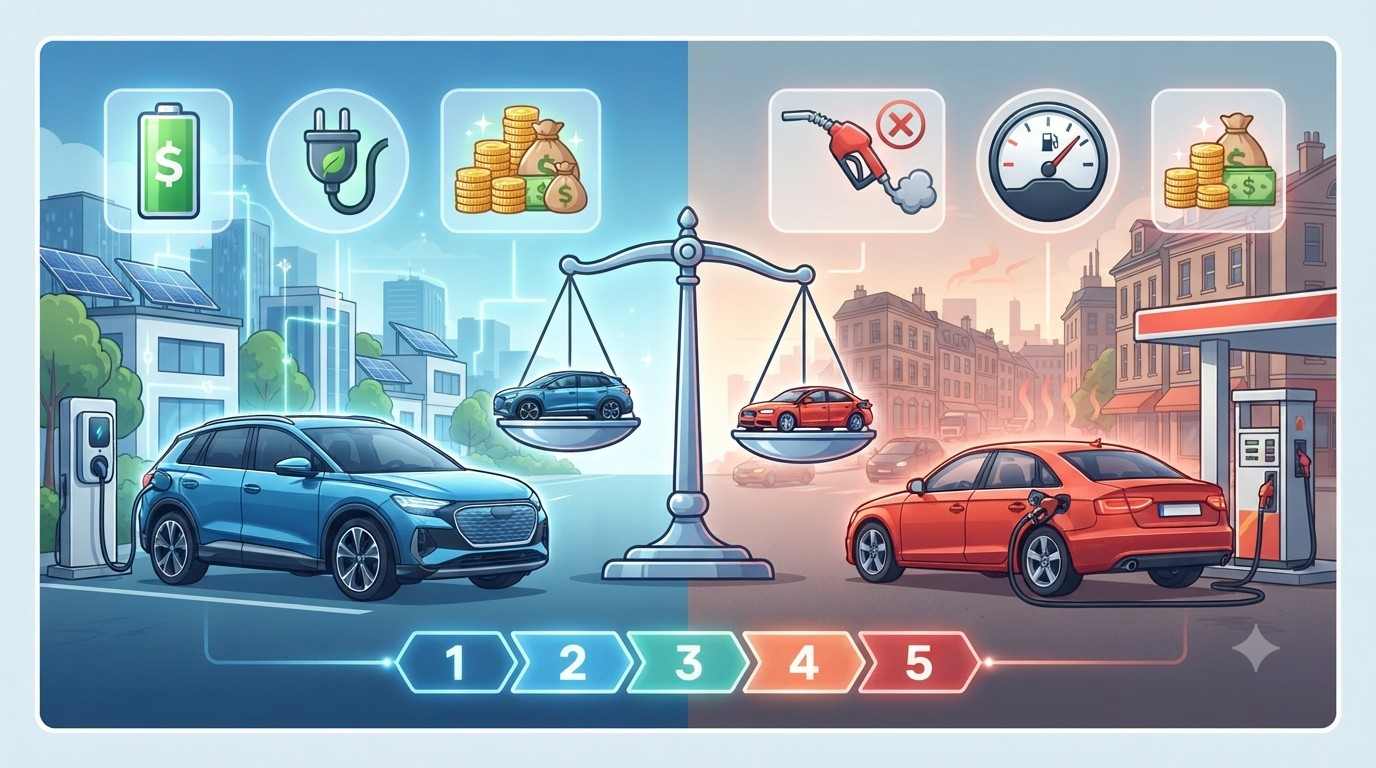
EV vs Petrol Car: 5-Year Cost Comparison in India
Is the Toyota Urban Cruiser Ebella Practical as the Only EV in a One-Car Household?
The Toyota Urban Cruiser Ebella can be a practical primary family vehicle, particularly for households with predictable daily travel patterns and access to home charging.
Its 61kWh battery offers a claimed range of up to 543km, while independent testing indicates a combined real-world range of approximately 402km. This provides a useful indication of what owners might expect under comparable driving conditions.
For a household covering around 30–50km daily, the Ebella should comfortably handle regular commuting and local activities. Weekend highway journeys are also possible with sensible route and charging planning.
However, the vehicle is not without limitations. Its boot space is relatively modest, rear-seat ergonomics may not suit everyone, and public charging access becomes important for frequent long-distance travel.
Households without dedicated parking or convenient charging facilities should carefully evaluate their charging arrangements before choosing an EV as their only car.
Final Verdict
The Toyota Urban Cruiser Ebella makes a convincing case as an everyday electric family SUV. Its smooth performance, practical five-seat layout, modern features and independently tested range make it suitable for many Indian households.
For buyers who primarily drive within the city, have access to home charging and occasionally take weekend trips, the larger 61kWh version could be a sensible choice.
However, families that frequently undertake long highway journeys, travel through areas with limited charging infrastructure or need a larger luggage compartment should evaluate their requirements carefully.
Overall, the Toyota Urban Cruiser Ebella can work as the only EV in a one-car household, provided charging access and weekly travel distances are planned realistically.

 Khyati Sharma 2026-11-28