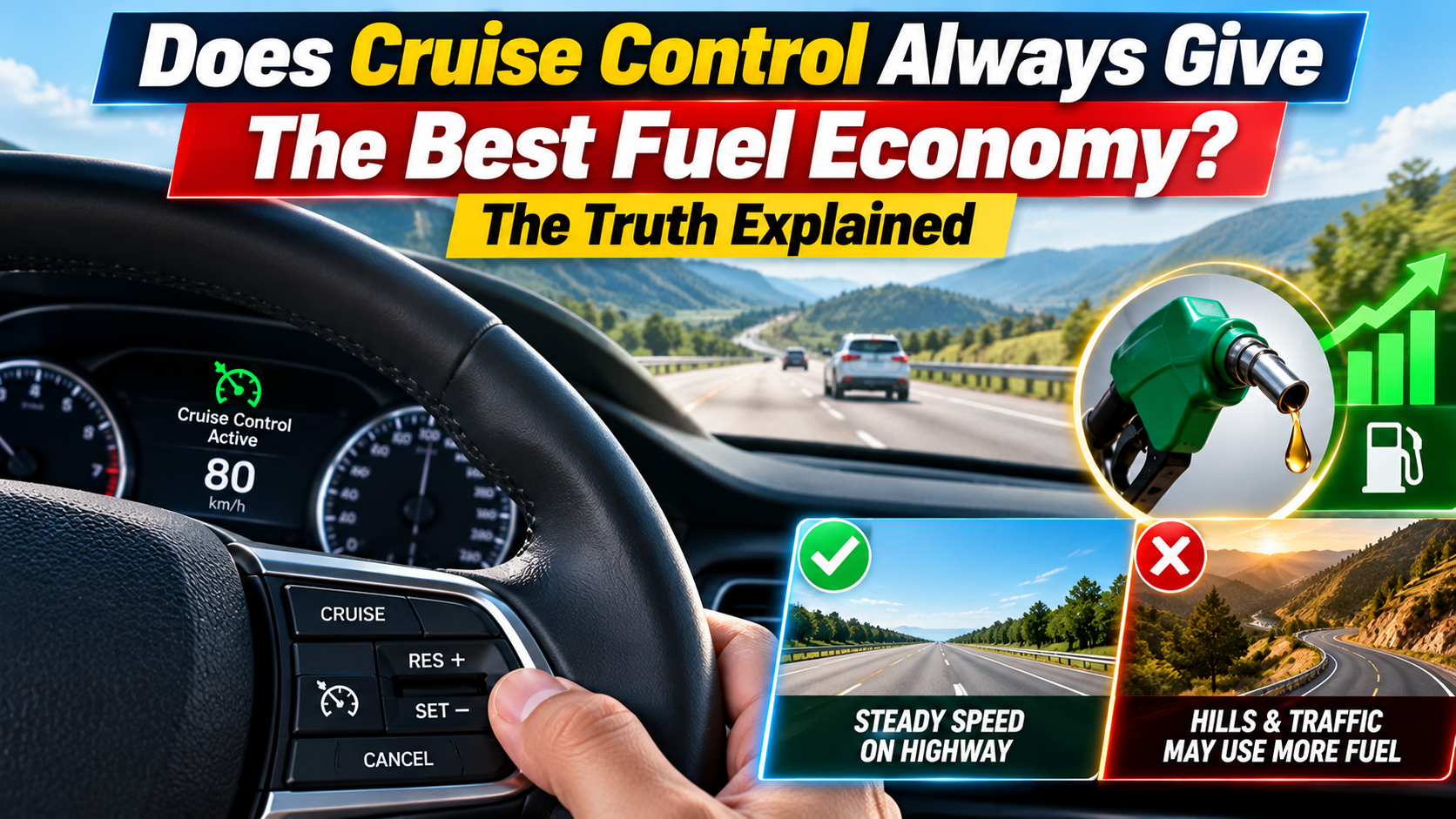
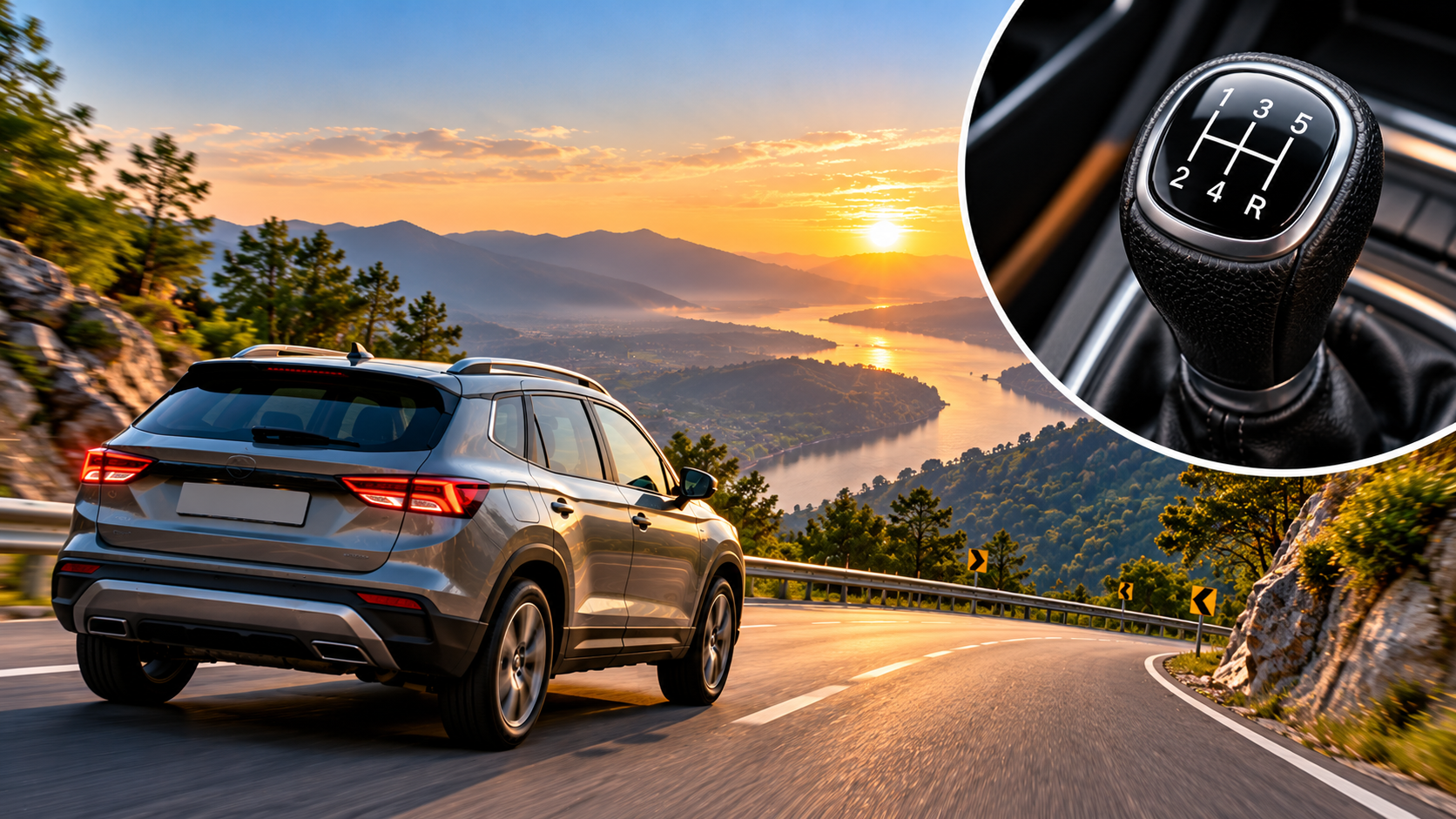
Cruise control is one of the most useful features in modern cars. It allows drivers to maintain a selected speed without continuously pressing the accelerator, making long journeys more comfortable and potentially helping reduce fuel consumption. Many drivers believe that using cruise control always delivers the best mileage. However, this is not entirely true.
Cruise control can improve fuel efficiency in certain driving conditions, especially on highways with relatively flat roads and light traffic. However, it may not be the most economical option when driving through hilly areas, heavy traffic, winding roads or changing weather conditions.
The actual fuel economy depends on several factors, including road conditions, vehicle type, driving speed, engine performance and how the cruise control system responds to changes in the road.
In this article, we explain how cruise control works, when it can help improve mileage, when it may increase fuel consumption, and how drivers can use it more effectively.
Pre-Delivery Inspection (PDI): A Checklist Before You Take Delivery
What Is Cruise Control and How Does It Work?
Cruise control is a vehicle feature that maintains a speed selected by the driver. Once activated, the system automatically adjusts the throttle to keep the vehicle moving at the chosen speed without requiring constant pressure on the accelerator pedal.
For example, if a driver sets cruise control at 80 km/h, the vehicle attempts to maintain that speed until the driver changes the setting, applies the brakes or switches the system off.
Traditional cruise control mainly focuses on maintaining a constant speed. More advanced vehicles may offer adaptive cruise control, which uses radar, cameras or other sensors to monitor the vehicle ahead and adjust speed to maintain a safe following distance.
Both systems can make highway driving more comfortable, but their effect on fuel economy depends on how and where they are used.
Does Cruise Control Always Improve Fuel Economy?
No, cruise control does not always deliver the best fuel economy.
Its biggest advantage is that it helps maintain a relatively steady speed. Frequent acceleration and unnecessary speed changes can increase fuel consumption, particularly when drivers repeatedly accelerate after slowing down.
On a flat highway, cruise control can reduce these unnecessary variations. It may also help drivers avoid gradually increasing their speed without noticing.
However, maintaining the same speed at all times is not necessarily the most fuel-efficient strategy. A vehicle needs more power to climb a hill, overcome air resistance at higher speeds and accelerate against its own weight. If cruise control aggressively maintains the selected speed under these conditions, fuel consumption may increase.
The key point is that cruise control can help improve mileage, but the road and driving conditions determine whether it is beneficial.

When Does Cruise Control Help Save Fuel?
1. Driving on Flat Highways
Flat highways are among the best environments for cruise control. Once a vehicle reaches a suitable cruising speed, it generally requires relatively little adjustment to maintain that speed.
Cruise control helps keep acceleration and deceleration to a minimum, allowing the engine to operate more consistently.
For example, a driver travelling on a relatively empty, flat expressway may benefit from setting a legal, steady cruising speed rather than repeatedly accelerating and slowing down.
The benefit depends on the vehicle and driving style. A driver who already maintains a smooth, consistent speed manually may see little additional improvement.
2. Maintaining a Moderate Speed
Cruise control does not automatically make a vehicle fuel-efficient if the selected speed is too high.
At higher speeds, aerodynamic drag increases significantly. The engine must work harder to push the vehicle through the air, which can increase fuel consumption.
For many cars, a moderate and consistent highway speed is more economical than travelling at very high speeds. The ideal speed varies according to the vehicle, engine, transmission, road conditions and manufacturer recommendations.
Using cruise control at a sensible speed can therefore be more effective than setting it close to the maximum permitted speed.
3. Reducing Unnecessary Acceleration
Some drivers unintentionally accelerate beyond their intended speed and then slow down after noticing the speedometer. This repeated cycle can waste fuel.
Cruise control helps prevent these fluctuations by maintaining the selected speed.
It is particularly useful on long, open roads where traffic conditions remain relatively predictable. However, it offers less benefit when a driver already uses smooth accelerator inputs and anticipates road conditions well.
4. Reducing Driver Fatigue
Cruise control reduces the need to keep the accelerator pressed during long journeys. This can make driving more comfortable and help the driver maintain a consistent pace.
Although reduced fatigue is not the same as improved fuel economy, comfortable driving may help some motorists avoid unnecessary speed changes.
Drivers must still remain alert, monitor traffic and be prepared to brake or take control whenever required.
Company-Fitted vs Aftermarket Accessories: Which Is Better?
When Can Cruise Control Increase Fuel Consumption?
1. Driving Through Hilly Areas
Hilly roads can make conventional cruise control less economical.
When a vehicle climbs a slope, it needs additional power to overcome gravity. A cruise control system may increase throttle input to maintain the selected speed, causing the engine to consume more fuel.
A driver who allows the vehicle to slow down slightly while climbing a hill, where safe and appropriate, may avoid some of this extra fuel consumption.
On downhill sections, the vehicle may gain speed naturally. Some systems apply the brakes or adjust engine output to maintain the set speed, potentially using energy that could otherwise have been preserved through careful speed management.
This does not mean drivers should allow excessive speed on descents. Maintaining control and staying within speed limits are more important than trying to save fuel.
2. Driving in Heavy Traffic
Cruise control is generally less useful in congested traffic, where vehicles frequently brake, accelerate and change lanes.
In these conditions, maintaining a fixed speed may be impossible. Drivers need to anticipate traffic flow and respond smoothly to other vehicles.
Adaptive cruise control can manage speed and following distance in some traffic conditions, but it does not guarantee the lowest possible fuel consumption. Frequent stopping and restarting can still use substantial fuel.
On busy urban roads, attentive driving and smooth acceleration are generally more useful than conventional cruise control.
3. Driving on Winding Roads
Curved roads require drivers to adjust their speed according to visibility, road design and traffic conditions.
A fixed-speed system may not respond as naturally as an attentive driver who anticipates bends and changes in road elevation. Repeated speed adjustments can also reduce any potential fuel-saving advantage.
Cruise control should be avoided whenever it makes it harder to maintain appropriate control of the vehicle.
4. Driving in Rain or on Slippery Roads
Wet roads, standing water, snow, ice and other slippery conditions can reduce tyre grip. Cruise control may be unsuitable because the vehicle needs careful speed management and immediate driver responses.
Some vehicles have systems that can react to certain traction problems, but these features do not remove the risks associated with slippery surfaces.
Switching off cruise control in unsuitable weather and adjusting speed manually can be the safer choice. Safety should always take priority over fuel economy.
Cruise Control vs Manual Driving: Which Is More Fuel-Efficient?
|
Driving condition
|
Cruise control
|
Manual speed control
|
|
Flat, open highway
|
Can help maintain a steady, economical speed
|
Can be equally efficient with smooth driving
|
|
Long-distance cruising
|
Reduces accelerator effort and speed fluctuations
|
Requires continuous speed management
|
|
Hilly roads
|
May use extra fuel to maintain the selected speed
|
Can allow more flexible speed management where safe
|
|
Heavy traffic
|
Conventional cruise control is usually unsuitable
|
Better suited to anticipating traffic and slowing smoothly
|
|
Winding roads
|
May be unsuitable because speed needs to change
|
Allows the driver to adjust speed before bends
|
|
Wet or slippery roads
|
May be inappropriate or unsafe
|
Gives the driver more direct control over speed
|
|
Very high highway speeds
|
Cannot overcome the fuel penalty of high speed
|
Slowing down smoothly may reduce fuel consumption
|
Does Adaptive Cruise Control Save More Fuel?
Adaptive cruise control is more advanced than traditional cruise control. It monitors traffic ahead and can automatically slow down or accelerate to maintain a selected following distance.
This can make driving more convenient, particularly on highways with moderate traffic. Some systems can also reduce abrupt acceleration and braking when traffic moves smoothly.
However, adaptive cruise control may accelerate to regain the set speed after a slower vehicle moves away. Depending on the system's programming and traffic conditions, this behaviour may increase fuel consumption.
Some systems offer eco-oriented driving settings or smoother acceleration profiles. Their effectiveness varies by vehicle, so drivers should consult the owner's manual for details.
Adaptive cruise control is a driver-assistance feature, not an autonomous driving system. Drivers must continue watching the road and be ready to intervene.
New Car Dealer Negotiation Tips That Actually Work
How to Use Cruise Control for Better Mileage
Drivers can follow these practical tips to make the most of cruise control:
1. Choose a sensible speed: Use a moderate cruising speed that suits the road, traffic and legal speed limit. Higher speeds generally require more energy.
2. Use it on suitable roads: Activate cruise control on open, relatively flat highways where traffic is predictable.
3. Avoid unnecessary speed changes: Do not repeatedly increase and decrease the set speed without a reason.
4. Be careful on hills: If maintaining the selected speed causes aggressive acceleration, consider switching to manual control where safe.
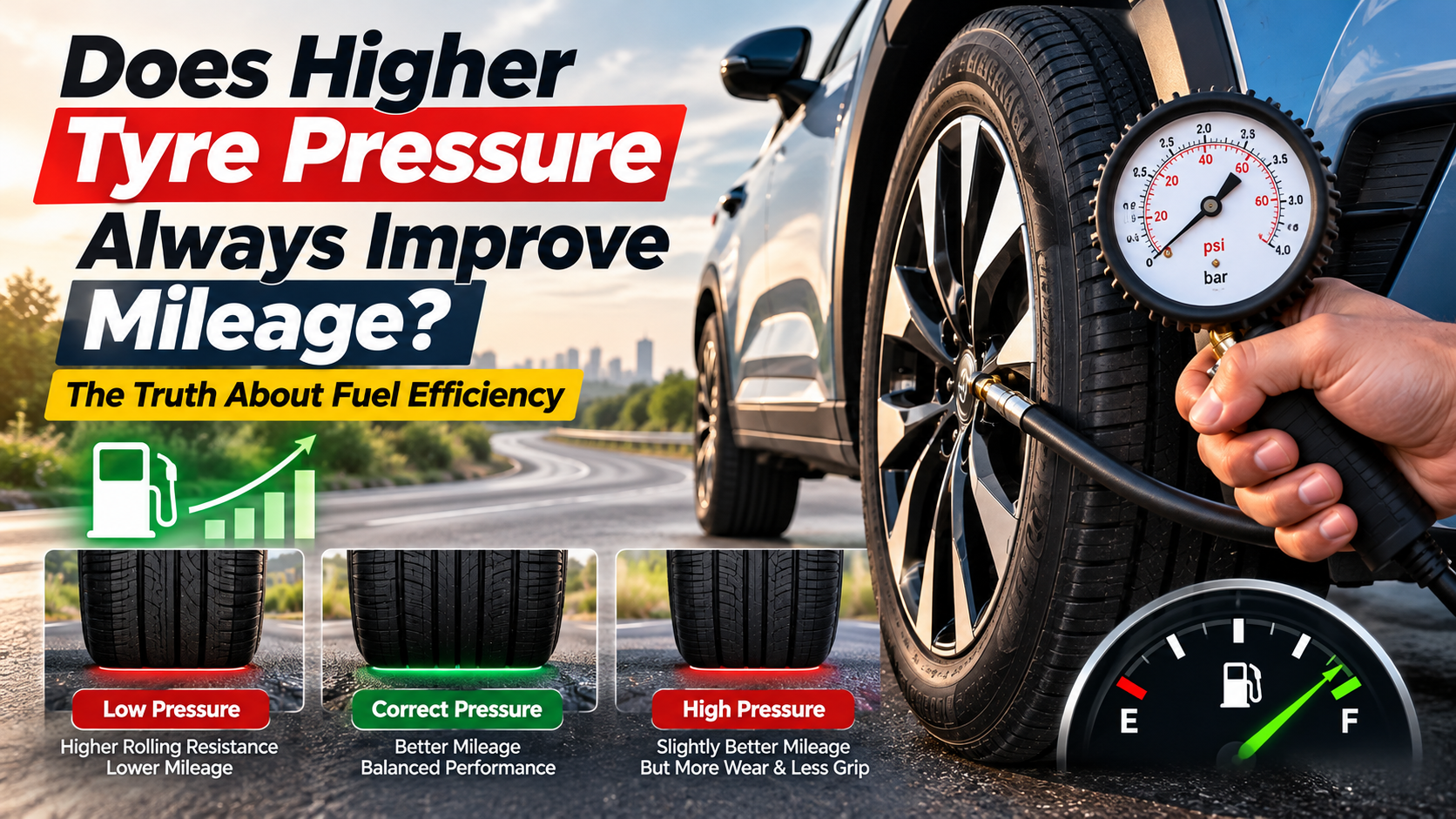
5. Keep tyres properly inflated: Follow the manufacturer's recommended tyre pressures. Incorrect pressure can affect rolling resistance, handling and tyre wear.
6. Maintain your vehicle: Regular servicing, clean air filters where applicable, appropriate engine oil and correct wheel alignment can help keep the vehicle operating efficiently.
7. Remove unnecessary weight: Carrying heavy items that are not needed can increase energy consumption, particularly during acceleration.
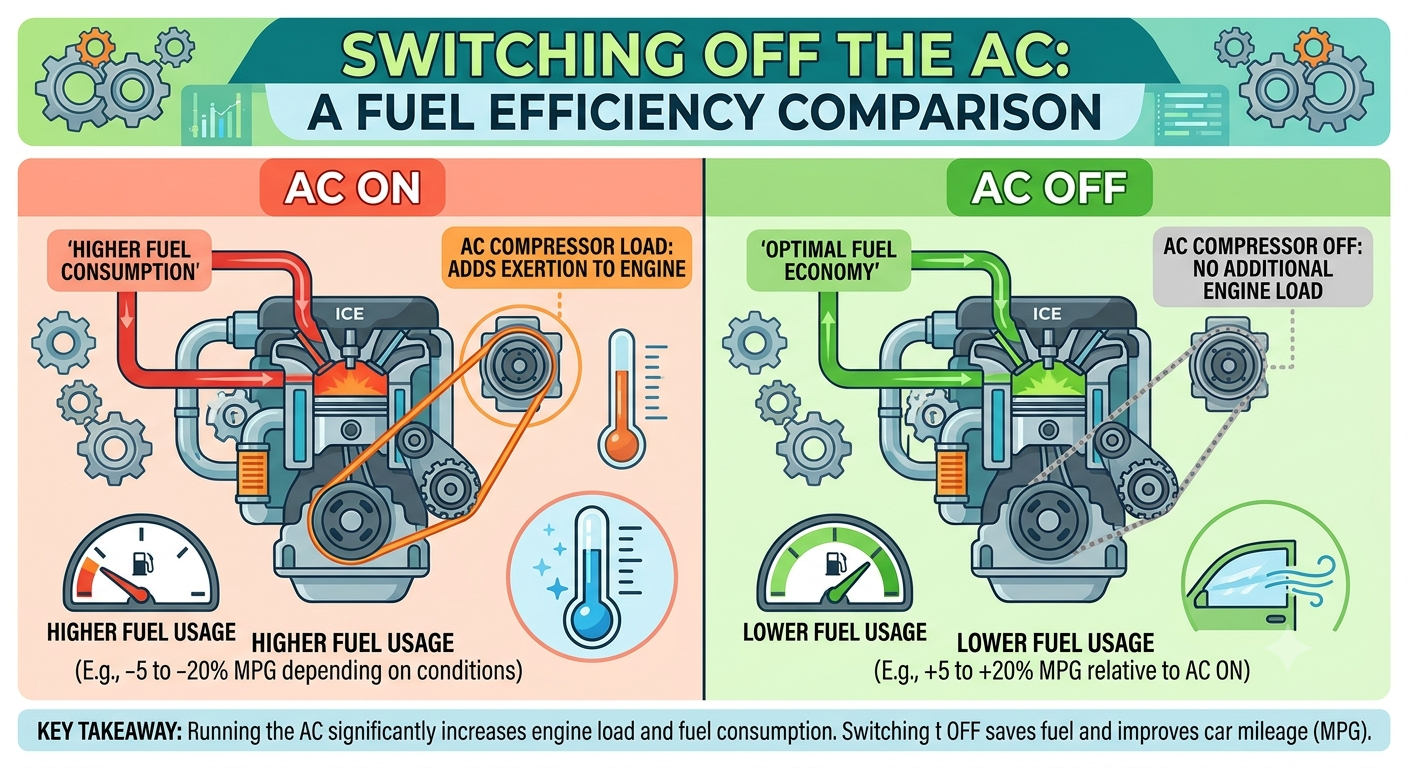
8. Use air conditioning sensibly: Air conditioning can increase fuel consumption, depending on the vehicle and conditions. Use it at a comfortable setting rather than assuming cruise control will offset its energy use.
9. Anticipate traffic: Even with adaptive cruise control, remain alert and avoid relying on the system to predict every traffic situation.
10. Prioritise safety: Switch off cruise control when road, weather or traffic conditions make it unsuitable.
Does Cruise Control Work Differently in Petrol, Diesel and Hybrid Cars?
Yes, the results can differ between vehicles.
Petrol and diesel cars have different engine characteristics and transmission strategies. Their fuel consumption also changes according to engine load, speed and gear selection.
Hybrid vehicles introduce another factor: their control systems may combine engine power, electric motor assistance and regenerative braking. Depending on the model and driving conditions, these systems may manage energy differently when cruise control is active.
Electric vehicles do not consume petrol or diesel, but cruise control can still affect energy use and driving range. Maintaining a high speed or repeatedly accelerating to preserve a set speed can increase electricity consumption.
There is no universal rule that cruise control works best in one fuel type. The vehicle's engineering and the conditions in which it is driven matter more than the fuel category alone.

Final Verdict: Is Cruise Control the Best Way to Save Fuel?
Cruise control can be a useful tool for improving fuel economy, but it is not a guaranteed mileage-saving feature.
It works particularly well on flat, open highways where traffic is light and a steady speed is appropriate. It can help reduce unnecessary acceleration and make long-distance driving more comfortable.
However, hilly terrain, heavy traffic, winding roads and slippery conditions may reduce its benefits or make it unsuitable. In these situations, careful manual speed management can be more effective and safer.
The best approach is to combine sensible cruise control use with smooth acceleration, moderate speeds, regular maintenance and good awareness of road conditions.
The bottom line: Cruise control does not automatically deliver the best mileage. A steady, appropriate speed and the ability to respond to changing road conditions are what really matter.

 Khyati Sharma 2026-10-05