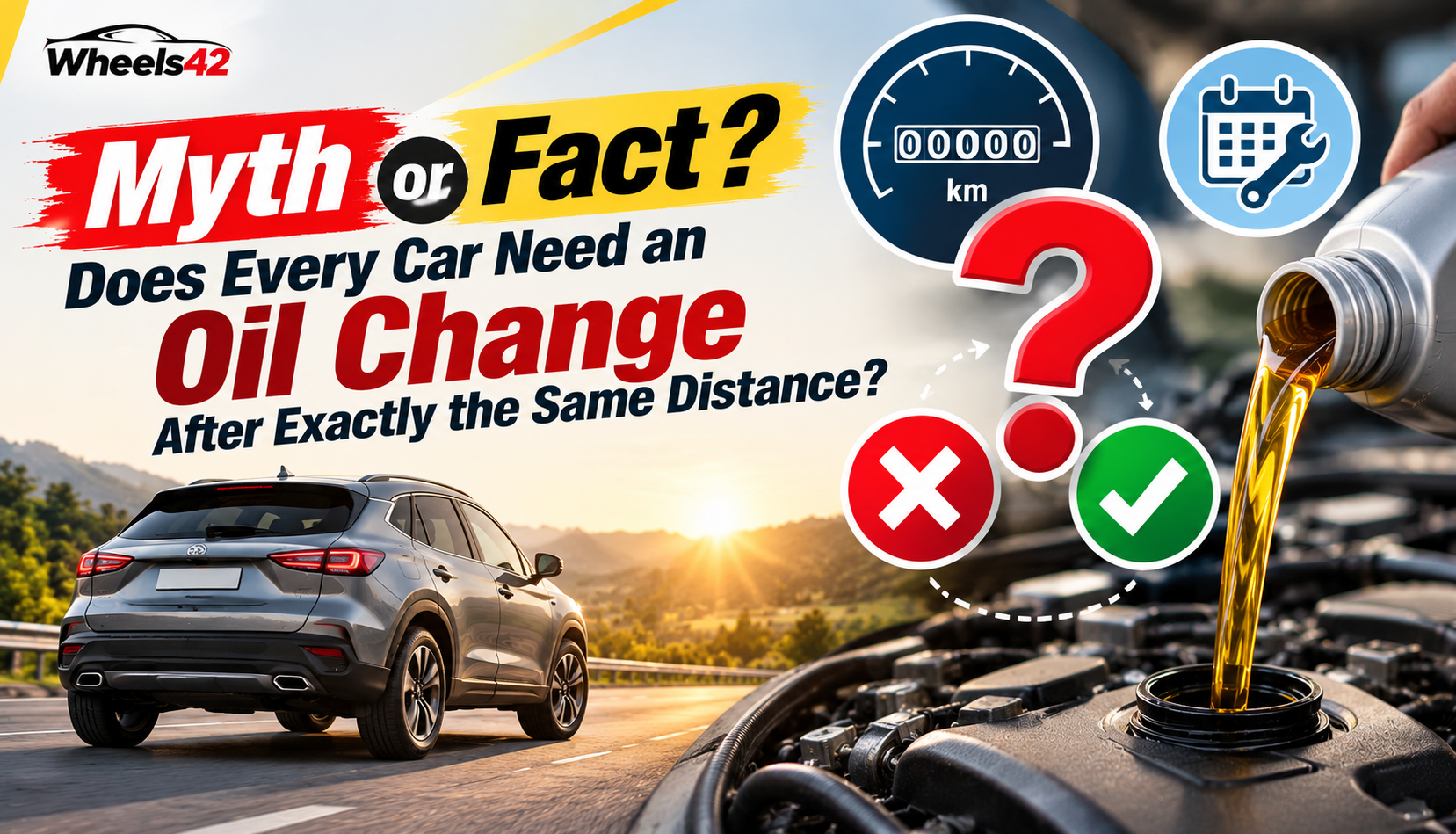
Every car does not require an engine oil change at the same mileage. The correct oil change interval depends on the vehicle manufacturer's recommendations, engine design, oil type, driving conditions, vehicle age and maintenance requirements. Some cars can go longer between oil changes, while others need more frequent servicing, particularly when driven in heavy traffic or under demanding conditions.
Engine oil is one of the most important fluids in a vehicle. It lubricates moving engine components, helps control heat, reduces friction, carries away contaminants and protects internal parts from premature wear. However, engine oil gradually loses its effectiveness as it ages and becomes contaminated.
Understanding when to change engine oil can help drivers protect their engines, avoid unnecessary maintenance expenses and improve long-term vehicle reliability.
How to Choose Between Two Similar Car Models: A Decision Framework
Why Do Cars Need Regular Engine Oil Changes?
An internal combustion engine contains numerous moving components, including pistons, crankshafts, camshafts, bearings and valves. These components operate under considerable heat and mechanical stress.
Engine oil forms a protective lubricating film between moving metal surfaces. Without adequate lubrication, friction increases, temperatures can rise and engine components may wear more quickly.
Fresh engine oil also helps remove microscopic particles and other contaminants generated during normal engine operation. The oil filter captures many of these particles, but the oil itself gradually degrades as it experiences repeated heating, cooling and exposure to combustion by-products.
Over time, oil can lose some of its protective properties. Deposits may accumulate, and contaminants can affect lubrication performance.
An oil change removes the used oil and replaces it with fresh oil that meets the manufacturer's specifications. Replacing the oil filter at the recommended interval is also important because a clogged or deteriorated filter can compromise effective filtration.

Why Is the Same Oil Change Distance Not Suitable for Every Car?
Different vehicles are designed with different engines, lubrication systems and maintenance requirements. Consequently, a single mileage figure cannot be applied universally.
For example, a modern petrol hatchback, a diesel SUV, a turbocharged performance car and an older high-mileage vehicle may all have different recommended oil change schedules.
Several factors explain these differences.
Car Loan vs Cash Purchase: Which Makes More Financial Sense?
1. Engine Design and Technology
Engine design influences how oil behaves and how quickly it deteriorates. Modern engines may use advanced lubrication systems, tighter engineering tolerances and specific oil formulations.
Turbocharged engines can expose oil to additional thermal stress because the turbocharger operates at very high temperatures and relies on proper lubrication.
Some engines are designed for longer service intervals when the correct oil is used. Others require more frequent changes because of their design or operating conditions.
Diesel engines can also introduce soot and other combustion-related contaminants into the oil, depending on the engine design and emissions system.
This is why owners should follow the maintenance schedule specified for their exact engine rather than copying the interval used by another car owner.
2. Type and Quality of Engine Oil
Engine oil is available in different formulations, including mineral, semi-synthetic and fully synthetic oils. These formulations differ in their base oils, additives and performance characteristics.
Fully synthetic oils can provide strong resistance to oxidation and high-temperature breakdown when appropriately formulated. However, this does not mean every synthetic oil can be used for an extended interval in every vehicle.
Viscosity grades, such as 0W-20, 5W-30 and 5W-40, describe important flow characteristics under specified temperature conditions. Manufacturers may also require particular performance standards or approvals.
Using the wrong oil can affect lubrication, fuel efficiency and engine protection. Always choose an oil that meets the viscosity grade and specifications listed in the owner's manual.
3. Driving Conditions and Traffic
Driving conditions can have a significant effect on engine oil life.
A car that regularly travels long distances on open highways may operate under relatively stable conditions. In contrast, a vehicle used for short trips through congested city streets may experience repeated cold starts, frequent acceleration and extended idling.
During short journeys, the engine may not reach its ideal operating temperature for long enough to evaporate accumulated moisture and fuel-related contaminants effectively.
Heavy traffic can also increase the amount of time the engine runs without covering much distance. As a result, mileage alone may not accurately represent the engine's total operating stress.
Drivers who frequently encounter severe conditions should check whether their manufacturer recommends a shorter service interval.
4. Vehicle Age and Engine Condition
An older vehicle may have different maintenance needs from a new car. Depending on its condition, an ageing engine may consume more oil, develop leaks or accumulate deposits.
However, age alone does not automatically mean that the oil must be changed at an unusually short interval. The correct schedule still depends on the manufacturer's guidance and the engine's actual condition.
High-mileage vehicles should be checked regularly for oil consumption, leaks and warning lights. If the oil level falls repeatedly between services, the underlying cause should be investigated rather than relying only on more frequent oil changes.
5. Climate and Environmental Conditions
Temperature and environmental conditions can also affect engine oil performance.
In very hot weather, oil experiences high operating temperatures, especially when a vehicle is heavily loaded or driven in demanding conditions. In cold weather, oil must flow effectively during engine start-up.
Dusty environments may increase the burden on the air filtration system, while repeated stop-start driving can create additional operating stress.
Drivers in India may encounter several of these conditions, including summer heat, congested roads, dusty routes and long periods of idling. The maintenance schedule should account for the conditions identified by the vehicle manufacturer.
Recommended Oil Change Intervals: What Should Drivers Follow?
|
Vehicle or usage condition
|
Oil change guidance
|
Important consideration
|
|
Modern petrol car
|
Follow the manufacturer's scheduled interval
|
Engine and oil specifications determine the correct schedule
|
|
Diesel car
|
Follow the engine-specific maintenance plan
|
Soot levels and emissions equipment can influence requirements
|
|
Turbocharged engine
|
Use the specified oil and service interval
|
Heat and turbocharger lubrication requirements matter
|
|
Frequent short trips and heavy traffic
|
Check whether severe-use servicing applies
|
Low mileage does not necessarily mean low engine stress
|
|
Regular highway driving
|
Follow the normal service schedule if applicable
|
Stable driving conditions may be less demanding than repeated short trips
|
|
Older or high-mileage car
|
Follow the schedule and monitor oil condition and level
|
Oil consumption and leaks may require additional attention
|
|
Vehicle with an oil-life monitoring system
|
Follow the manufacturer's instructions and dashboard alerts
|
The system's recommendations are vehicle-specific
|
Petrol vs Diesel vs CNG vs Electric Cars: How to Choose the Right Fuel Type
Does Fully Synthetic Oil Last Longer?
Fully synthetic engine oil can offer advantages in oxidation resistance, temperature performance and protection under demanding operating conditions. Some vehicles designed for synthetic oil also have longer scheduled oil change intervals.
Nevertheless, the oil's formulation is only one part of the equation. Engine design, driving conditions, oil capacity, filtration and manufacturer requirements also matter.
For example, two vehicles using fully synthetic 5W-30 oil may have different service schedules because their engines and operating requirements differ.
Drivers should not extend an oil change interval simply because the bottle says synthetic. The oil must meet the required specifications, and the interval must be approved for the particular vehicle and usage conditions.

What Happens If You Delay an Oil Change?
Delaying an oil change beyond the recommended interval can increase the risk of engine problems, especially if the oil is severely degraded or the oil level becomes too low.
Potential consequences include:
-
Increased friction: Reduced lubrication effectiveness can accelerate wear on moving components.
-
Sludge and deposits: Contaminated or degraded oil can contribute to deposit formation.
-
Higher operating temperatures: Poor lubrication can increase friction and place additional stress on engine components.
-
Turbocharger damage: Engines with turbochargers depend on proper lubrication to protect high-speed rotating parts.
-
Reduced engine reliability: Prolonged neglect can increase the likelihood of costly repairs.
-
Potential engine failure: Severe oil starvation or lubrication breakdown can cause extensive damage.
Not every overdue oil change will immediately damage an engine. However, repeatedly ignoring the manufacturer's schedule increases avoidable risks.
Drivers should also respond promptly to an oil pressure warning. If the red oil pressure warning light comes on while driving, stop safely and switch off the engine as soon as it is safe to do so. Check the owner's manual and seek professional assistance. Continuing to drive with low oil pressure can cause serious damage.
How Can You Know When Your Car Needs an Oil Change?
The most reliable starting point is the owner's manual or the manufacturer's official service schedule.
Here are five practical steps drivers can follow.
1. Check the recommended service interval. Find the oil change schedule for your exact engine, model year and market. Check both the mileage limit and the time limit.
2. Understand normal and severe-use schedules. If you frequently drive in heavy traffic, make short journeys, tow loads or operate in other demanding conditions, check whether the manufacturer specifies a shorter interval.
3. Monitor the oil level. Use the dipstick or electronic oil-level system as instructed by the manufacturer. Check the level on the recommended surface and under the specified conditions.
4. Pay attention to dashboard alerts. Some cars calculate oil life and display a service reminder. Follow the system's instructions rather than assuming that all vehicles use the same algorithm.
5. Keep service records. Record the date, odometer reading, oil specification and filter replacement details after each service. This makes it easier to follow the correct schedule and identify unusual oil consumption.
Oil colour alone is not a reliable way to determine whether an oil change is due. Oil can darken during normal use, particularly in diesel engines, while oil that appears clean is not necessarily still within its effective service life.
Car Loan vs Cash Purchase: Which Makes More Financial Sense?
Should You Change Engine Oil More Frequently for Better Protection?
Changing oil more frequently than required is not always beneficial. While timely oil changes are essential, unnecessarily shortening the interval can increase maintenance costs and generate additional used oil without providing a meaningful advantage.
The best approach is to use the correct oil, replace the filter as recommended, monitor the level and follow the manufacturer's schedule.
If a vehicle operates under severe conditions, a shorter interval may be appropriate when specified by the manufacturer. If the vehicle develops unusual oil consumption, leaks, overheating or other engine symptoms, it should be inspected rather than relying on more frequent oil changes alone.
Drivers should also avoid mixing incompatible oils or using additives unless the manufacturer or a qualified professional confirms that they are appropriate.
Conclusion: Every Car Does Not Need an Oil Change at the Same Distance
The claim that every car needs an oil change after exactly the same distance is a myth. Different engines, oil formulations, vehicle ages and driving conditions result in different maintenance requirements.
A modern petrol hatchback may have a different service interval from a diesel SUV or a turbocharged performance car. Similarly, a vehicle driven mostly on highways may have different oil maintenance needs from one that spends hours in congested city traffic.
For the best balance of engine protection, reliability and maintenance cost, follow the manufacturer's recommendations for your specific vehicle. Use the correct oil specification, check the oil level regularly, observe time-based service limits and respond promptly to warning lights.
Wheels42 Verdict: There is no one-size-fits-all oil change distance. Your car's owner's manual, service reminders and operating conditions—not another driver's mileage figure—should determine when its engine oil needs replacing.

 Khyati Sharma 2026-10-22