
 Khyati Sharma 2026-10-04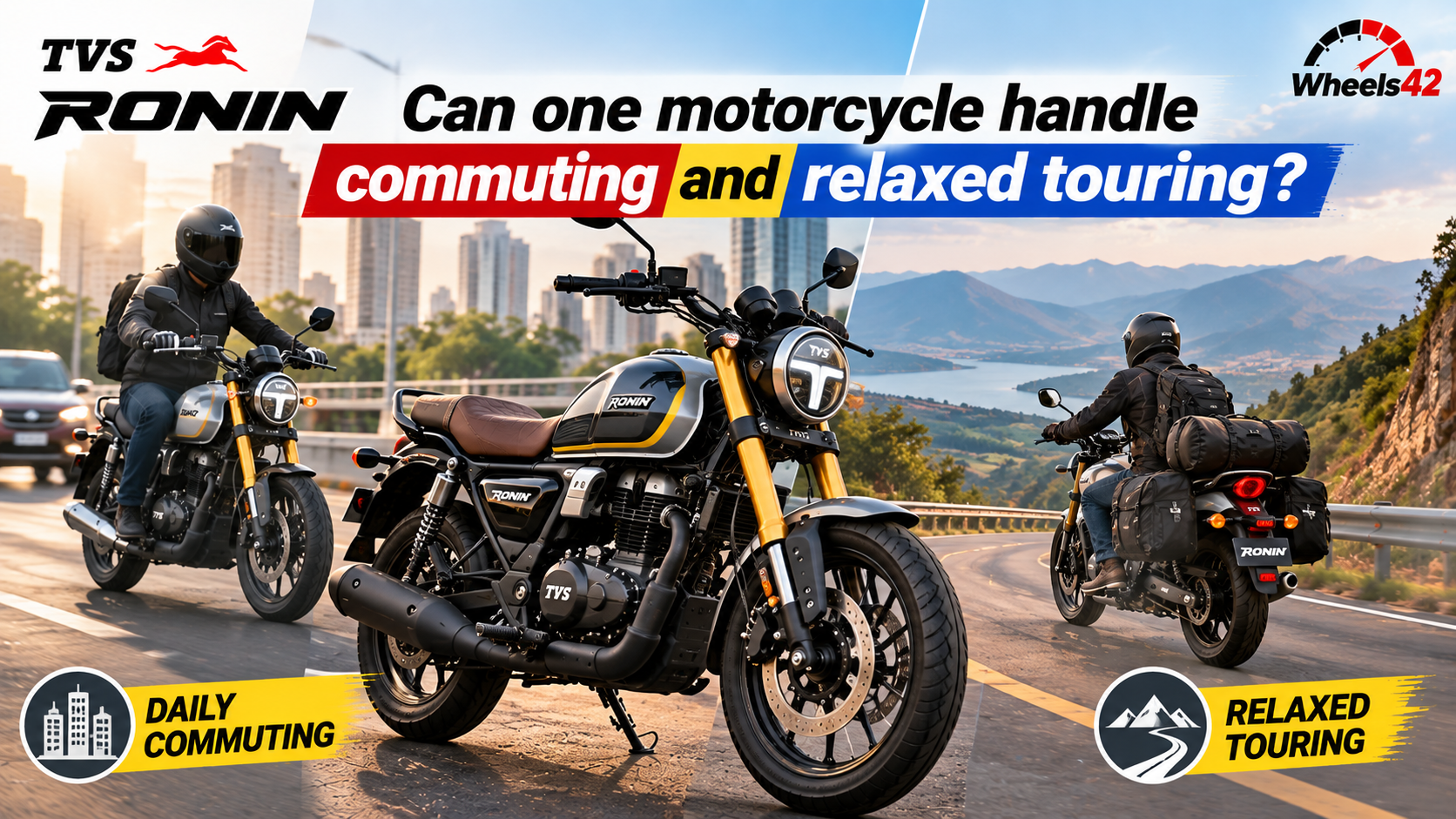
The TVS bikes Ronin is designed for riders who want a motorcycle that feels comfortable in everyday traffic while remaining capable of weekend rides and relaxed highway journeys. With its modern-retro styling, upright riding position and torque-focused engine, the Ronin offers an alternative to conventional commuters bikes and more aggressive sporty motorcycles.
But can one motorcycle genuinely handle both daily commuting and touring? The answer depends on your riding distance, highway speeds, luggage requirements and expectations from a touring bike.
The TVS Ronin is powered by a 225.9cc, single-cylinder, oil-cooled engine that produces 20.4 PS at 7,750 rpm and 19.93 Nm of torque at 3,750 rpm. It is paired with a five-speed gearbox and an assist-and-slipper clutch.
For daily commuting, the engine's accessible torque can make acceleration from traffic lights and low-speed riding manageable. The Glide Through Technology (GTT) feature also helps the motorcycle move at low speeds in the first three gears with reduced throttle input, which can be useful in congested urban conditions.
On highways, the Ronin is better suited to relaxed cruising than sustained high-speed riding. Riders who prefer moderate speeds and occasional overtaking should find its performance more appropriate than those expecting strong acceleration at high speeds for extended periods.
The Ronin's upright riding posture, wide handlebar and relatively low 795mm seat height help make it accessible to a broad range of riders. Its suspension setup is designed to provide a comfortable ride over ordinary road imperfections.
The motorcycle weighs approximately 159–160kg, depending on the variant. This is manageable for many riders, although its weight and turning radius may become noticeable when navigating very tight gaps, making U-turns or manoeuvring in crowded parking areas.
Its everyday strengths include:
An upright posture that reduces the need to lean forward.
GTT support for slow-moving traffic.
A five-speed gearbox and assist-and-slipper clutch.
LED lighting and a digital instrument cluster.
A 14-litre fuel tank that reduces the need for frequent refuelling stops.
However, buyers who travel long distances through heavy traffic every day should still take a test ride. Handlebar reach, clutch feel, engine heat and low-speed manoeuvrability can affect daily comfort.

The TVS Ronin can work well for weekend trips, particularly when the plan involves scenic highways, smaller towns and moderate riding speeds. Its relaxed ergonomics and engine character suit riders who prefer enjoying the journey instead of covering long distances as quickly as possible.
The motorcycle also offers connected features through TVS SmartXonnect on applicable variants, including navigation-related functions and ride information. Depending on the variant and accessories, owners can make the bike more touring-friendly with luggage solutions and additional wind protection.
Before planning longer rides, consider the following:
Seat comfort: Test the seat over an extended ride, not just a short showroom loop.
Wind protection: The upright riding position can expose you to wind at highway speeds.
Luggage capacity: Saddlebags or a tail bag may be needed for overnight trips.
Pillion comfort: Check rear-seat space and comfort if travelling with a passenger.
Fuel stops: Plan refuelling according to actual fuel economy and the route.
For occasional weekend touring, these considerations are manageable. For frequent long-distance travel with a pillion and substantial luggage, a larger touring-oriented motorcycle may be more suitable.
The Ronin uses a 41mm upside-down front fork and a rear monoshock with adjustable preload. Its suspension setup aims to balance comfort and control on everyday roads. The motorcycle also features disc brakes, with single-channel or dual-channel ABS depending on the variant.
The available Urban and Rain ABS modes help riders adapt braking assistance to different conditions. Nevertheless, ABS is a safety aid rather than a substitute for sensible speed, safe following distances and appropriate tyres.
For riders who commute during the week and take occasional weekend trips, this combination of suspension and braking equipment provides a useful balance. Those who regularly ride on broken roads or carry luggage should assess suspension comfort and stability under their typical load.
|
Specification |
Details |
|
Engine |
225.9cc, single-cylinder |
|
Cooling |
Oil-cooled |
|
Maximum power |
20.4 PS at 7,750 rpm |
|
Maximum torque |
19.93 Nm at 3,750 rpm |
|
Gearbox |
5-speed |
|
Clutch |
Assist and slipper clutch |
|
Seat height |
795mm |
|
Fuel tank |
14 litres |
|
Kerb weight |
Approximately 159–160kg |
|
Front suspension |
41mm USD fork |
|
Rear suspension |
Monoshock with adjustable preload |
|
Braking |
Disc brakes; ABS depends on variant |
The TVS Ronin is worth considering if you want one motorcycle for several purposes without moving to a larger or more expensive touring machine.
It may suit:
Office commuters who want more performance than a typical 100–125cc motorcycle.
Riders who prefer an upright, relaxed riding posture.
Weekend travellers who enjoy moderate-speed highway rides.
Buyers who value modern-retro styling and useful technology.
Riders who occasionally travel with light luggage.
It may be less suitable for riders who need maximum fuel efficiency, frequently filter through extremely congested traffic, regularly tour with a passenger and heavy luggage, or prefer sustained high-speed highway performance.
Verdict: Can One Motorcycle Do Both?
Yes, the TVS Ronin can handle daily commuting and relaxed weekend touring reasonably well. Its comfortable ergonomics, accessible engine performance, practical features and touring-friendly accessory options make it a versatile choice for riders who want one motorcycle for everyday use and occasional escapes.
Its limitations become more relevant when touring involves long days at high speeds, heavy luggage or frequent two-up travel. For most buyers considering a mixed city-and-weekend riding routine, the best approach is to test the Ronin on both slow urban roads and an open stretch of highway before making a decision.