Khyati Sharma 2026-08-27
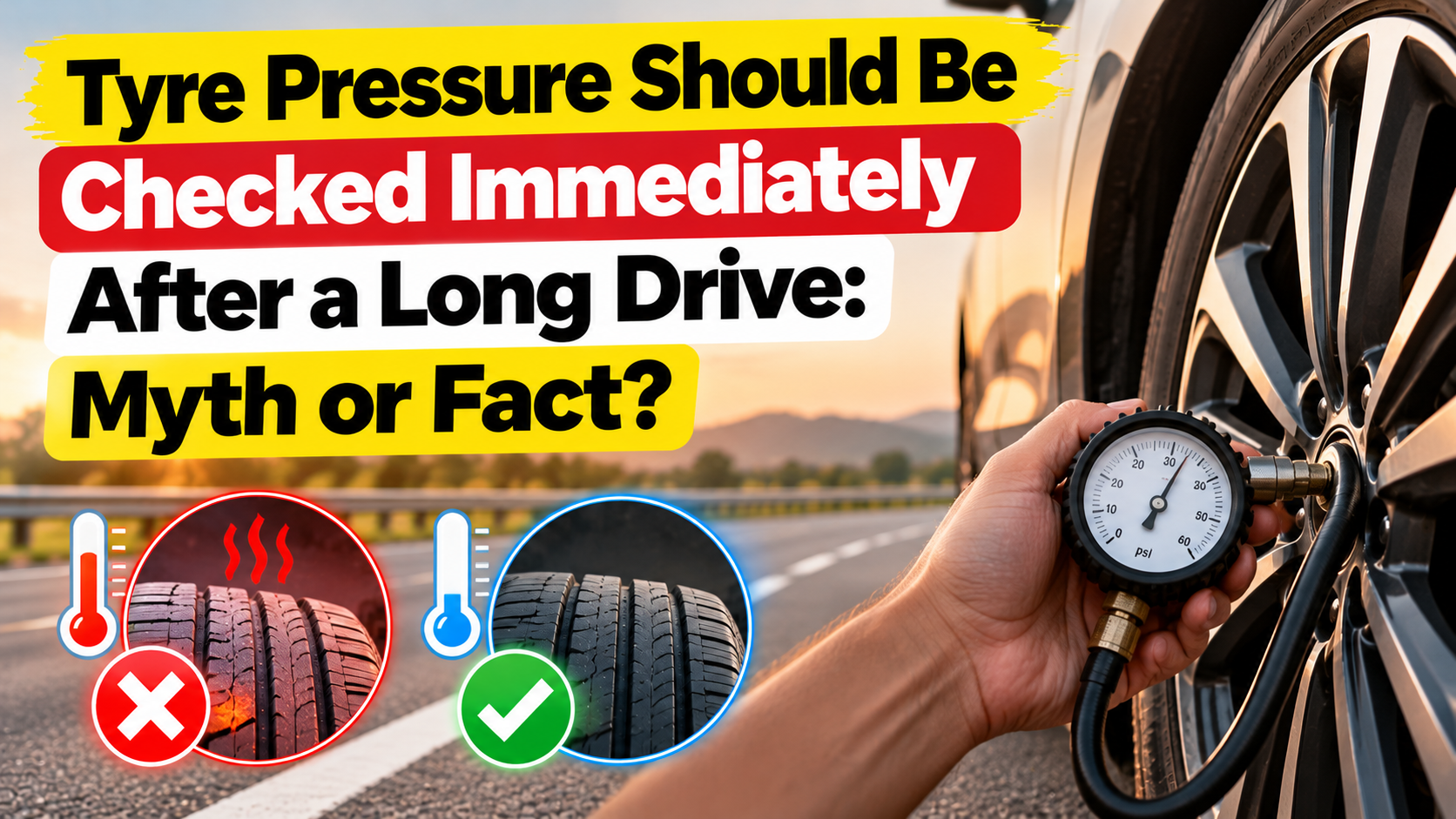
The correct time to check tyre pressure is when the tyres are cold, not immediately after a long highway journey. Driving generates heat through tyre flexing and friction, which naturally increases the air pressure inside the tyres. Checking pressure immediately after a long drive can therefore give a higher reading than the actual cold pressure.
For car and motorcycle owners, understanding this difference is important. Incorrect pressure adjustments can affect tyre life, fuel efficiency, braking performance and overall road safety. Many drivers make the mistake of releasing air when they see a higher pressure reading after travelling a long distance. However, this can leave the tyres underinflated once they cool down.
Let's understand why tyre pressure changes during driving, when it should be checked and what drivers should do after a long journey.
Tyre pressure is one of the most important aspects of vehicle maintenance, but it is also one of the most commonly misunderstood. Many car and motorcycle owners believe that checking tyre pressure immediately after a long drive is the best way to understand whether their tyres are properly inflated.
However, this belief is incorrect.
Tyre pressure should ideally be checked when the tyres are cold. After a long drive, the tyres become warmer because of continuous movement, road friction and repeated flexing of the tyre structure. As the temperature increases, the air inside the tyre expands, resulting in a higher pressure reading.
This means the pressure displayed by a gauge immediately after a highway journey may not represent the tyre's actual cold pressure.
Understanding this difference can help drivers avoid unnecessary air adjustments and maintain the recommended tyre pressure. It is particularly important for people who regularly travel long distances, drive on highways or carry passengers and luggage.
How Many Airbags Do You Really Need? A Safety Primer
Verdict: Myth.
Checking tyre pressure after a long journey is not ideal for routine pressure maintenance because the tyres are likely to be hot. A hot tyre generally shows a higher pressure reading than the same tyre would show when cold.
Vehicle manufacturers specify recommended tyre pressure values for cold tyres. These figures are usually mentioned on a sticker inside the driver's door area, in the owner's manual or near the fuel-filler flap, depending on the vehicle.
Therefore, drivers should check and adjust tyre pressure according to the manufacturer's cold-pressure recommendation.
If a driver checks the tyres immediately after a long journey and notices a higher reading, releasing air to bring the pressure down to the recommended cold figure can result in underinflation once the tyres cool.

Tyres are constantly working while a vehicle is moving. They support the vehicle's weight, absorb road irregularities, maintain contact with the road and generate the grip required for acceleration, braking and cornering.
During this process, heat is produced inside the tyre.
There are several reasons for this temperature increase.
Down Payment and Car Loan EMI: How Much Should You Pay?
1. Continuous Tyre Flexing
Every time a tyre rotates, its sidewall and tread area flex as they come into contact with the road. This repeated deformation generates heat within the tyre structure.
During a short city journey, the temperature increase may be relatively limited. However, during a long highway drive, tyres continue flexing for an extended period, which can increase their temperature considerably.
As the air inside the tyre becomes warmer, its pressure rises.
2. Road Surface Temperature
The temperature of the road also influences tyre temperature. During hot weather, asphalt surfaces can become significantly warmer than the surrounding air.
When a vehicle travels on a hot road for an extended period, the tyres absorb additional heat. This is one reason why tyre temperatures can rise more quickly during summer highway journeys.
3. Vehicle Load
A vehicle carrying several passengers and heavy luggage places more load on its tyres.
The tyres must work harder to support the additional weight. This can increase tyre deformation and heat generation, particularly during long journeys.
Drivers should always follow the vehicle manufacturer's recommended pressure for the relevant loading condition. Some vehicles provide separate pressure recommendations for normal and fully loaded driving.
4. Driving Speed
Driving continuously at higher speeds can increase tyre temperature because of repeated flexing and heat generation.
This does not mean that every tyre becomes unsafe simply because it gets warm during highway travel. Tyres are designed to operate within specified conditions, but maintaining the correct pressure and observing the manufacturer's speed and load ratings are essential.
The difference between cold and hot tyre pressure is important for understanding tyre maintenance.
Cold tyre pressure refers to the pressure measured when the tyres have not been significantly heated by driving. Manufacturers use this condition when specifying recommended pressure figures.
Hot tyre pressure is the pressure measured after the tyres have warmed up through driving.
|
Parameter |
Cold Tyre Pressure |
Hot Tyre Pressure |
|
Measurement condition |
Before significant driving |
After driving |
|
Tyre temperature |
Near ambient temperature |
Higher due to heat generation |
|
Pressure reading |
Suitable for routine maintenance |
Usually higher than the cold reading |
|
Manufacturer recommendation |
Normally specified for cold tyres |
Not generally the routine adjustment target |
|
Best use |
Checking and adjusting tyre pressure |
Monitoring an already hot tyre when necessary |
One of the biggest mistakes drivers make is releasing air from warm tyres because the pressure gauge shows a reading above the recommended figure.
For example, imagine a vehicle has a recommended cold tyre pressure of 32 PSI. After a long journey, the gauge displays 36 PSI.
A driver who does not understand the effect of heat may release air until the gauge shows 32 PSI.
However, when the tyres cool down, their pressure will decrease. The resulting cold pressure may then be lower than the manufacturer's recommendation.
This can create several problems.
1. Increased Tyre Wear
Underinflated tyres tend to wear more heavily along their shoulder areas. Uneven wear can reduce tyre life and force owners to replace tyres earlier than expected.
2. Reduced Fuel Efficiency
When tyre pressure is too low, rolling resistance increases. The engine must work harder to move the vehicle, which can negatively affect fuel efficiency.
For vehicles that regularly cover long distances, maintaining the recommended tyre pressure can help avoid unnecessary fuel consumption.
3. Poor Handling and Stability
Tyres play a major role in maintaining vehicle stability. Incorrect pressure can affect steering response, cornering behaviour and the vehicle's ability to maintain consistent road contact.
This can become particularly noticeable during sudden manoeuvres or emergency situations.
4. Increased Heat Generation
Underinflated tyres can flex more than intended. This additional flexing generates more heat and can increase the risk of tyre damage, particularly during high-speed driving or when carrying heavy loads.

The best time to check tyre pressure is before starting a journey, when the tyres are cold.
A commonly used guideline is to check pressure when the vehicle has been parked for at least three hours or has travelled less than approximately 2 km at moderate speed.
Here are some useful tyre-pressure checking practices:
Check tyre pressure in the morning before driving.
Use a reliable digital or manual pressure gauge.
Follow the pressure recommended by the vehicle manufacturer.
Check all four tyres, including the spare tyre where applicable.
Inspect tyres for cuts, cracks, punctures and visible damage.
Check pressure more frequently before long journeys.
Recheck pressure after repairs or tyre replacement.
Drivers should not depend entirely on visual inspection. A tyre can be underinflated even when it does not look noticeably flat.
Car Waiting Period: How to Get Your New Car Faster
Sometimes drivers do not have the opportunity to check tyre pressure before leaving home. They may need to visit a fuel station or tyre shop after completing a highway journey.
In such situations, it is important to understand how to handle the reading.
1. Do Not Immediately Release Air
If the tyres are hot and the pressure reading is higher than the recommended cold pressure, do not automatically release air.
The higher reading may simply be the result of increased tyre temperature.
2. Follow Manufacturer Guidance
If you need to inflate a tyre while it is hot, consult the vehicle manufacturer's instructions. Some manufacturers provide guidance for adjusting pressure when cold tyres are unavailable.
Do not simply treat the recommended cold pressure as the target for a hot tyre.
3. Check Again After Cooling
If possible, allow the vehicle to remain parked for several hours and check the tyres again.
This will provide a more useful reading for routine pressure maintenance.
4. Pay Attention to Low Pressure Warnings
If the tyre pressure monitoring system (TPMS) displays a warning, do not ignore it simply because the vehicle has been driven for a long time.
A tyre that is significantly underinflated may have a puncture or leak. If the vehicle shows a warning, inspect the tyre and seek assistance when necessary.
If a tyre appears damaged, is losing pressure rapidly or the vehicle becomes difficult to control, stop safely and arrange professional assistance.
Yes. Ambient temperature can influence tyre pressure.
During summer, tyres may become hotter because of a combination of high outside temperatures, warm road surfaces and driving conditions. This can increase the pressure reading.
Similarly, colder weather can cause tyre pressure to decrease.
This is why drivers should not assume that a pressure reading taken several weeks earlier will remain correct throughout the year.
For Indian motorists, seasonal temperature changes are particularly relevant. Vehicles travelling through hot plains, cooler hill regions and areas with large day-to-night temperature differences may experience changes in tyre pressure.
The best approach is to check pressure regularly when tyres are cold and adjust according to the manufacturer's recommended figures.
Hatchback vs Sedan vs SUV: Which Car Type Suits You Best?
There is no need to wait until a tyre looks visibly low before checking its pressure.
For most drivers, checking tyre pressure at least once every month is a sensible maintenance habit. It is also advisable to check it before a long highway journey and after any situation in which a tyre may have been damaged.
Drivers who frequently travel with heavy luggage, use their vehicles for commercial purposes or regularly drive on rough roads may benefit from more frequent inspections.
The spare tyre should also be checked because it may remain unused for months and lose pressure over time.
A Tyre Pressure Monitoring System, commonly known as TPMS, helps drivers monitor tyre pressure and receive warnings when pressure becomes too low.
There are two common types:
Direct TPMS: Uses pressure sensors installed in the wheels to measure tyre pressure.
Indirect TPMS: Uses wheel-speed information from the vehicle's ABS system to identify differences that may indicate low tyre pressure.
TPMS is a useful safety feature, but it does not eliminate the need for regular manual checks. Some systems may not immediately identify gradual pressure loss, and indirect systems may not display the actual PSI value.