Buying your first car is rarely just about choosing a model with a good-looking design or a long features list. For a first-time buyer, the car needs to be easy to drive, manageable in traffic, practical enough for everyday life and predictable to own.
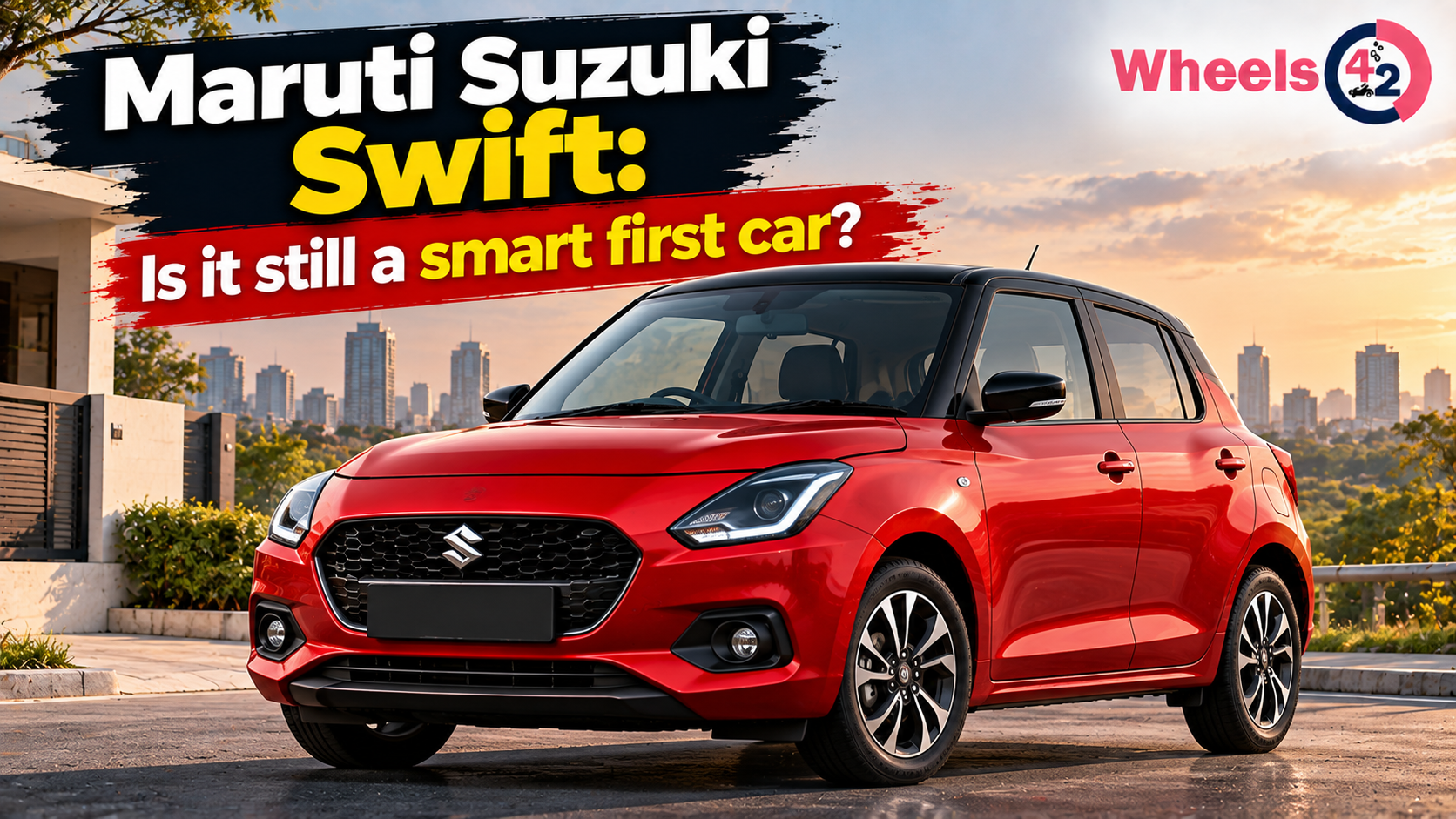
That is where the Maruti Suzuki Swift continues to attract attention.
The Swift has been a familiar name in India's hatchback market for years, but the question for today's first-time buyer is different: does the Swift still make sense as a first car when buyers have so many compact SUVs and other hatchbacks to choose from?
Instead of treating it like a conventional car review, let's look at the Swift through the situations a first-time owner is most likely to experience.
The First-Car Test
Imagine this is your first week with a new car.
Monday morning means traffic.
Tuesday means a tight parking space.
Wednesday brings a trip to the office with a colleague.
Friday means grocery shopping.
The weekend brings a longer highway drive with family.
A good first car needs to handle all of these without making the owner feel overwhelmed.
The Swift's compact dimensions and familiar hatchback layout make it particularly relevant to this kind of usage.
1. First Question: Can You Drive It Without Feeling Intimidated?
For someone moving from a two-wheeler to a car, size can be a major concern.
A large SUV can provide road presence, but its width and length can initially make narrow roads and parking more stressful.
The Swift offers a more compact footprint.
That can help a new driver when:
- Entering narrow lanes
- Making U-turns
- Parking at shopping areas
- Driving through crowded markets
- Navigating apartment parking
- Judging the car's corners
This doesn't mean every new driver will immediately feel comfortable. A proper test drive is still essential.
But the hatchback format can be less intimidating for someone making the transition to four wheels.
2. The Parking Test
Here's a simple test every first-time buyer should perform.
Find a parking space similar to the one you use at home.
Then try to:
Enter → position the car → straighten it → reverse → exit.
Don't rely entirely on the salesperson's guidance.
Do it yourself.
Pay attention to how easily you can judge the car's front and rear corners.
For a first car, confidence during parking can be more valuable than having a long list of premium features.
3. What Happens in Traffic?
Most new owners don't spend their entire week on empty roads.
They deal with:
- Traffic lights
- Bumper-to-bumper traffic
- Motorcycles filtering through gaps
- Sudden stops
- Narrow roads
- Speed breakers
The Swift's compact hatchback format can be useful here.
The car is easier to place on the road than a larger vehicle, while its small footprint can make tight urban manoeuvres less stressful.
For a first-time owner, predictable controls and an easy-to-understand driving experience matter.
4. Is the Engine Friendly for a New Driver?
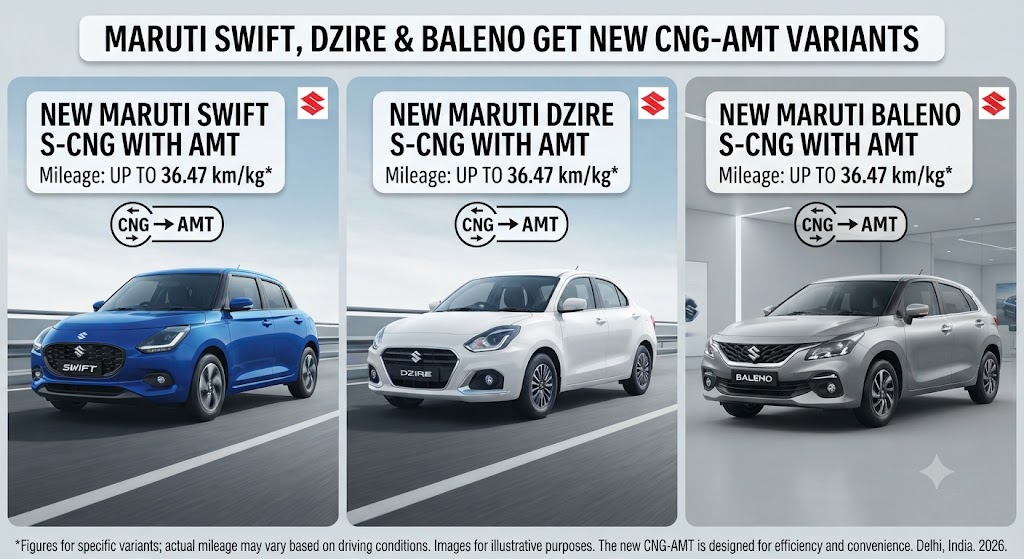
The current Swift uses a 1.2-litre three-cylinder petrol engine paired with manual and automated manual transmission options, depending on the variant.
For a first car, the important question isn't simply "How much power does it make?"
Ask:
Does the car respond predictably when I press the accelerator?
A first-time driver needs to become comfortable with:
- Starting from a stop
- Joining traffic
- Climbing inclines
- Overtaking safely
- Maintaining speed
- Using the gearbox
The Swift's petrol powertrain is aimed at everyday driving rather than delivering a performance-car experience.
That can actually work well for a beginner who is still developing driving confidence.
5. Manual or AMT: Which Makes More Sense?
This is one area where your daily route should influence your choice.
Manual
A manual Swift can be useful for someone who wants direct control over gear selection and is comfortable operating a clutch.
However, heavy city traffic means more clutch and gear changes.
AMT
The automated manual transmission removes the need for regular clutch operation, which can make stop-and-go traffic less tiring.
However, AMTs can behave differently from conventional automatic transmissions, so a test drive is important.
|
Driving Situation
|
What to Consider
|
|
Heavy traffic
|
AMT can reduce clutch work
|
|
Open roads
|
Both can work well
|
|
New manual driver
|
Requires practice
|
|
Frequent hills
|
Test the exact transmission
|
|
Stop-and-go commuting
|
Compare both personally
|
|
Highway trips
|
Test overtaking response
|
6. Your First Car Will Probably Carry More Than You Expect
A first car often becomes the family's weekend transport.
Initially, you might use it for yourself.
Then come:
Parents → friends → shopping → luggage → family trips.
This is where you should examine the Swift's rear-seat and boot practicality.
Before booking, put your usual passengers inside.
Check:
- Rear legroom
- Headroom
- Seat comfort
- Door opening
- Ease of entry
- Visibility
Then put your normal luggage in the boot.
A specification sheet can't tell you whether your family's bags will fit comfortably.
7. Don't Ignore Highway Driving
A first car should not be judged only by city performance.
Many new owners eventually take their first car on:
- Family road trips
- Inter-city journeys
- Weekend getaways
- Highways
- Expressways
During your test drive, check how comfortable you feel at normal highway speeds.
Look at:
|
Highway Area
|
What to Check
|
|
Stability
|
Does the car feel predictable?
|
|
Steering
|
Is it easy to maintain direction?
|
|
Engine
|
Is acceleration sufficient for your needs?
|
|
Braking
|
Is pedal response easy to judge?
|
|
Seats
|
Can you remain comfortable for longer?
|
|
Noise
|
How quiet is the cabin at cruising speed?
|
8. First-Car Ownership Is More Than the Purchase Price
This is where many first-time buyers should look beyond the showroom.
Consider the complete ownership picture.
Before Buying, Ask About:
-
Insurance cost
- Scheduled service requirements
- Warranty
- Extended warranty
- Accessories
- Tyres
- Financing
- Resale considerations
- Variant-wise equipment
A first car should fit your monthly budget not just on the day you purchase it, but throughout your ownership period.
9. Features: Which Ones Actually Matter?
Modern cars can come with a long list of technology.
But first-time buyers should separate useful features from showroom attractions.
For everyday driving, features such as:
- Rear parking assistance
- Camera
- Smartphone connectivity
- Automatic climate control, where available
- Steering-mounted controls
- Useful safety equipment
- Convenient charging options
can have more practical value than features you rarely use.
Before choosing a higher variant, ask yourself:
Would I actually use these additional features every week?
10. Safety Should Be Part of the First-Car Checklist
A first car is also a learning environment.
That makes safety equipment particularly important.
When comparing Swift variants, check the exact safety equipment offered on the version you intend to buy.
Don't assume that every feature is available across the entire range.
Ask the dealer to demonstrate or explain:
- Airbags
- ABS and EBD
- Electronic stability-related systems
- Parking sensors
- Camera
- ISOFIX mounts
- Tyre-pressure monitoring, where equipped
Also check the latest safety information applicable to the exact model and variant.
11. What If You Live in a Small City?
The Swift can make particular sense for buyers who regularly deal with smaller roads and busy local markets.
A compact hatchback can be easier to position when:
- Roads become narrow
- Parking spaces are limited
- Traffic moves unpredictably
- U-turns are frequent
- You need to visit crowded commercial areas
But don't assume the Swift will automatically be easier than every SUV.
Take the cars you are considering and drive them on the same route.
That's a much fairer comparison.
12. What If Your Family Wants an SUV?
This is probably the biggest question facing first-time buyers today.
SUVs offer a higher seating position and stronger road presence.
But that doesn't automatically make them better first cars.
Ask yourself:
Do I need the additional size, ground clearance and cabin space?
If your driving is mainly urban and your family doesn't regularly need a large cabin, a hatchback can remain a practical format.
If you frequently travel with five adults, carry significant luggage or drive on poor roads, you may want to compare the Swift with compact SUVs before making a decision.
Swift First-Car Scorecard
|
First-Car Requirement
|
What You Should Check
|
|
Easy to drive
|
Steering, pedals and visibility
|
|
Easy to park
|
Front/rear visibility
|
|
City usability
|
Low-speed response
|
|
Highway use
|
Stability and acceleration
|
|
Family comfort
|
Rear-seat space
|
|
Luggage
|
Boot practicality
|
|
Transmission
|
Manual vs AMT feel
|
|
Safety
|
Exact variant equipment
|
|
Technology
|
Features you will actually use
|
|
Ownership
|
Service, insurance and warranty
|
The 30-Minute Swift Test
If you're seriously considering the Swift as your first car, don't simply drive around the dealership.
Try this sequence:
10 minutes — City traffic
Check steering, braking and low-speed response.
5 minutes — Parking
Try forward and reverse parking yourself.
5 minutes — Uneven roads
Check ride comfort and cabin noise.
10 minutes — Open road
Understand acceleration, steering and highway behaviour.
Then switch seats with a family member and ask what they noticed.
This gives you a much clearer picture of the car than simply sitting inside it at the showroom.

 Khyati Sharma 2026-09-26