 Khyati Sharma 2026-09-26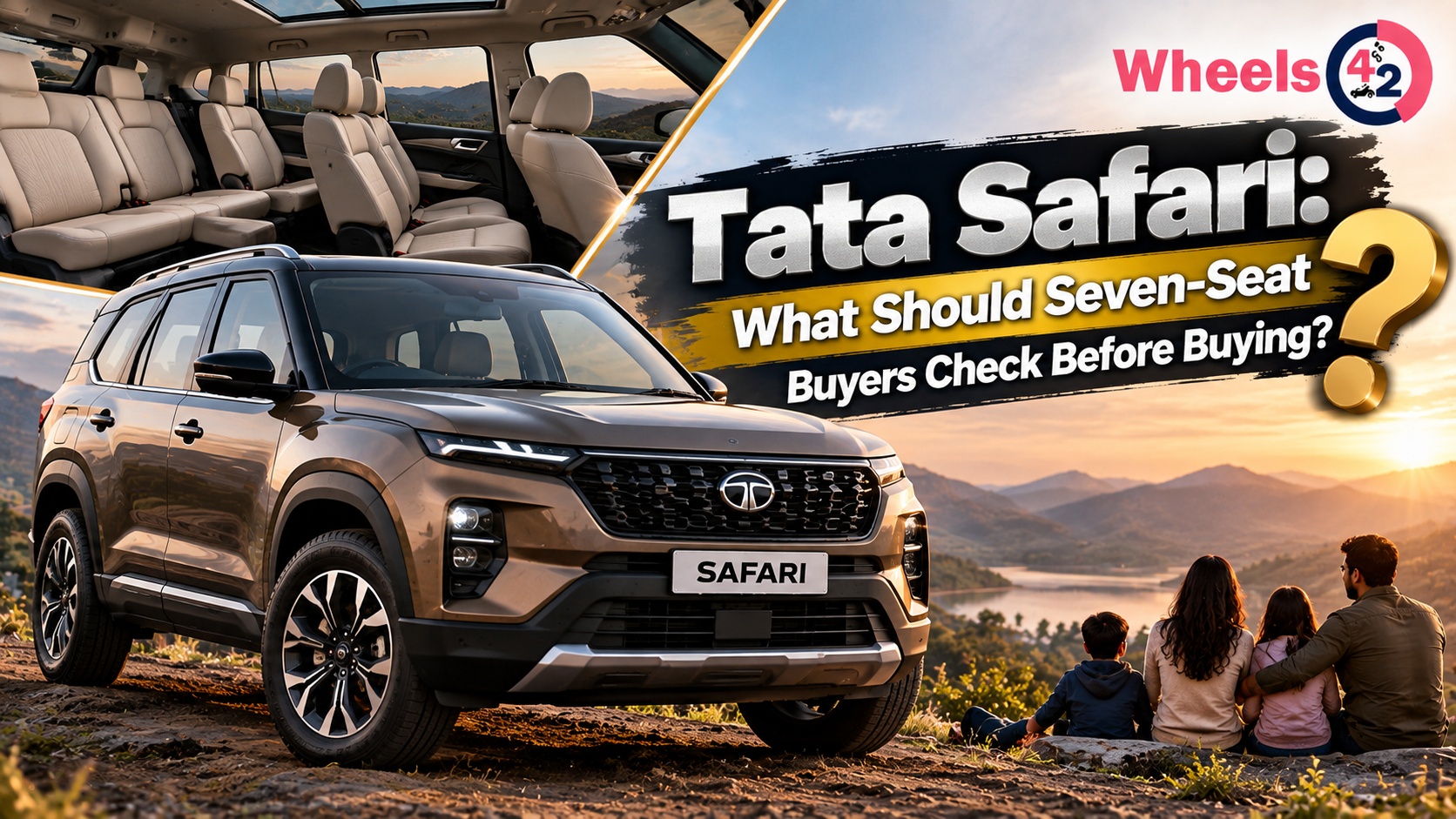
The Tata Safari continues to attract buyers who want a spacious SUV with three-row seating, a strong road presence and enough flexibility for family travel. But choosing a seven-seat SUV is about more than simply counting the number of seats.
For families considering the Tata Safari, the important questions are practical ones: How comfortable is the third row? Is there enough luggage space when all seats are occupied? How easy is it to get into the rear seats? And does the SUV make sense for everyday driving as well as long journeys?
Before booking a Safari, here are the key areas seven-seat buyers should examine.
A three-row SUV can look spacious from the outside, but the real test is inside.
Buyers should sit in the third row rather than judging it from photographs or specifications. Check the available legroom, knee room, headroom and shoulder space. Taller passengers should spend a few minutes in the rear seats to understand whether they can sit comfortably for an extended journey.
For families with children, the third row may be more than adequate. However, adults who regularly use the rear seats should pay particular attention to seating posture and available space.
Getting into the third row should be reasonably easy, particularly if children or older family members will use it.
Check how the second-row seats fold or slide and whether the opening is wide enough for comfortable entry. It is also worth trying the process several times because a system that feels simple once can become frustrating when used regularly.
A family SUV should be judged not only by how many people it carries, but also by how easily those people can reach their seats.
This is one of the most important checks for any seven-seat vehicle.
When all three rows are occupied, luggage space can become limited compared with a five-seat SUV. Buyers should therefore inspect the Safari's boot with the third row in its normal seating position.
If your family regularly travels with multiple suitcases, backpacks, shopping bags or children's equipment, take some representative luggage to the dealership and see how it fits.
This simple test can reveal more about everyday practicality than a brochure figure.
The Safari's three-row layout can be useful because families don't always need all seven seats.
Check how easily the second and third rows can be folded or adjusted. Think about the situations you normally encounter:
The best seating configuration for your family may be different from another buyer's needs.
The middle row is likely to be used more frequently than the third row, so don't concentrate only on the rear-most seats.
Three adults should ideally sit across the second row during the test drive. Check shoulder room, legroom, seat cushioning and the overall seating position.
If children will use the second row, also consider how easily child seats can be installed and how much usable space remains around them.
A short drive around a dealership is not enough to understand a large family SUV.
Try the Safari on different types of roads if possible. Pay attention to:
A seven-seat SUV can feel very different from a smaller family car, especially when navigating narrow streets or crowded parking areas.
The Safari's substantial dimensions contribute to its road presence and cabin space, but buyers should also consider whether its size fits their lifestyle.
If the SUV will primarily be used in the city, check whether it can comfortably fit inside your home parking area. Also consider typical office, shopping-centre and apartment parking spaces.
A vehicle that is excellent on a highway but difficult to manoeuvre around your regular routes may not be the most convenient family choice.
Modern SUVs can offer a long list of equipment, but buyers should separate useful features from features they may rarely use.
For a family vehicle, features that improve everyday convenience can be particularly valuable. Depending on the variant, buyers should examine the available infotainment system, climate-control arrangements, charging options, camera systems, connectivity features and other cabin conveniences.
Instead of choosing a variant solely because it has the longest equipment list, identify the features your family will actually use.
Safety should be considered alongside comfort when choosing a family SUV.
Buyers should review the safety equipment offered on the specific Safari variant they intend to purchase and understand which features are standard and which are variant-dependent.
It is also worth checking the visibility from all three rows and making sure passengers can comfortably use the available seat belts.
Don't assume that every feature shown in promotional material is available on every variant.
The Safari is likely to appeal strongly to buyers who plan regular highway trips, so the test drive should reflect that use case.
Consider whether passengers can remain comfortable for several hours, whether the seating arrangement works with luggage, and whether the cabin provides enough storage for smaller items such as bottles, phones and travel accessories.
A seven-seat SUV can be especially useful for road trips, but only if the passenger and luggage arrangement works for your family.
One common buying mistake is comparing the Safari's headline price with competing SUVs without checking the exact variant and equipment level.
Before booking, make a simple list of the features you consider essential. Then compare the actual Safari variant offering those features with other vehicles in the same price range.
This gives a more realistic picture of the value rather than relying on the entry-level price alone.
The purchase price is only one part of owning a large SUV.
Before signing the booking form, consider insurance, servicing, tyres, fuel costs, accessories and financing expenses. If you plan to keep the vehicle for several years, these running costs can have a significant impact on the overall ownership experience.
Also ask the dealer about service intervals and the estimated cost of routine maintenance


Volkswagen
₹49.00 - 56.57 Lakh