 Khyati Sharma 2026-08-10
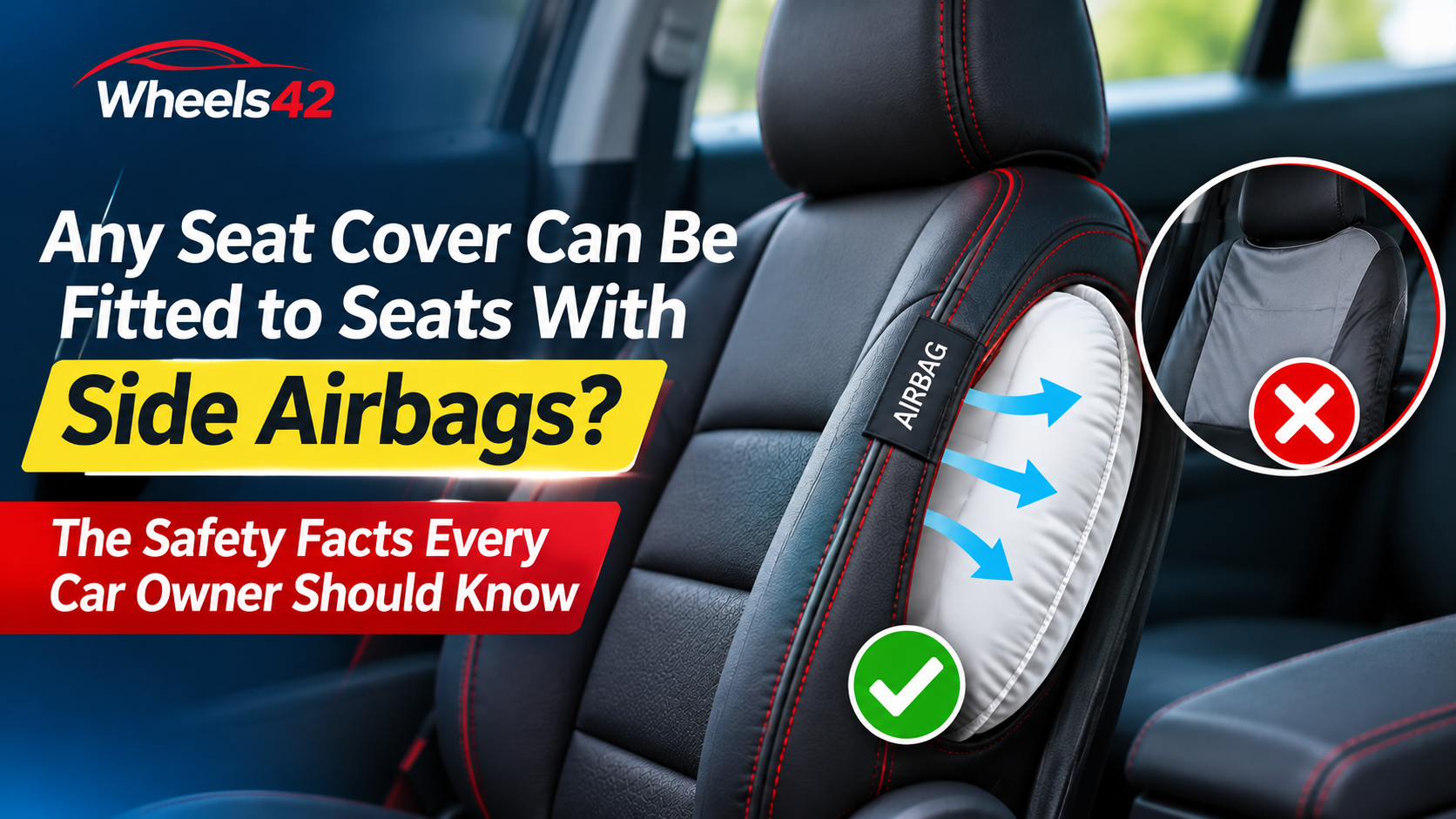
Car seat covers are among the most popular accessories for protecting vehicle interiors. They help prevent stains, scratches, dust and everyday wear while giving the cabin a refreshed appearance. However, not every seat cover is suitable for every car seat, especially when the vehicle is equipped with side airbags.
A common misconception is that any seat cover can be installed as long as it fits the seat properly. This is incorrect. Modern vehicles often have airbags integrated into the outer sides of the front seatbacks. These airbags are designed to deploy rapidly during certain collisions, creating a protective cushion between the occupant and the vehicle's door or side structure.
If an unsuitable seat cover blocks or restricts the airbag deployment area, it may interfere with the airbag's intended operation. This is why choosing a seat cover that is specifically designed and approved for seats with side airbags is essential.
How Many Airbags Do You Really Need? A Safety Primer
Side airbags are an important part of a vehicle's occupant protection system. Unlike front airbags, which are generally installed in the steering wheel and dashboard, seat-mounted side airbags are commonly positioned inside the outer section of the front seatbacks.
Their purpose is to provide additional protection during certain side-impact collisions. Depending on the vehicle, side airbags may help protect the chest, torso or pelvis.
When the vehicle's airbag control system detects a qualifying collision, the airbag inflates rapidly. It then creates a cushioning barrier between the occupant and nearby interior structures.
The airbag needs a clear and properly designed deployment path to work as intended. In seats with integrated side airbags, the upholstery and stitching are designed to accommodate this deployment.
This is why adding an ordinary aftermarket seat cover without checking its compatibility can create a potential safety concern.

Not all seat covers are manufactured with side-airbag compatibility in mind. Some covers use thick padding, reinforced stitching, tight wrapping or additional material around the seatback. These features may interfere with the area where the airbag is designed to emerge.
A cover that looks perfectly fitted from the outside is not necessarily safe for an airbag-equipped seat.
Here are the main reasons why choosing the correct cover matters.
1. Seat Covers Can Block the Airbag Deployment Area
Seat-mounted side airbags generally deploy through a designated area in the outer side of the seatback. An ordinary cover may cover this area with material that has not been designed to release during deployment.
If the cover restricts the opening, the airbag may not emerge as intended. This can affect the timing, direction or effectiveness of its deployment.
2. Ordinary Stitching May Be Too Strong
Some seat covers use heavy-duty stitching to improve durability. While strong stitching is useful for normal upholstery, it may not be appropriate around an airbag deployment seam.
Airbag-compatible seat covers use specifically designed construction in the relevant area. Their seams are intended to allow the airbag to deploy according to the vehicle's safety design.
This does not mean that a cover with weak stitching is automatically safe. The complete cover must be designed and tested for compatibility with the relevant seat and airbag arrangement.
3. Extra Padding Can Affect Deployment
Thick foam, additional cushions and bulky side panels may change how the airbag interacts with the seat cover.
A cover that adds excessive material around the outer seatback could interfere with the intended deployment path. Therefore, buyers should not assume that extra padding provides better comfort without any safety implications.
4. Universal Seat Covers May Not Match the Original Seat Design
Universal seat covers are designed to fit multiple vehicle models. However, different cars have different seat shapes, airbag positions, adjustment mechanisms and upholstery construction.
A universal cover may fit the seat's overall dimensions but still cover an important airbag area.
Vehicle-specific covers that are explicitly approved for the particular airbag-equipped seat are a more appropriate choice.
5. Incorrect Installation Can Create Additional Risks
Even a compatible seat cover may become unsuitable if it is installed incorrectly.
For example, the cover may be rotated, pulled too tightly, stitched in the wrong location or secured with straps across a restricted area. This can affect the cover's intended release construction.
Always follow the vehicle and seat-cover manufacturer's installation instructions.
Banks vs NBFCs for a Car Loan: How to Choose in India
Before purchasing a new seat cover, car owners should check more than its appearance, price and material. The following features can help identify whether a product is intended for seats equipped with side airbags.
Airbag compatibility information: Check the packaging, product description and manufacturer documentation. The cover should explicitly state that it is suitable for the relevant seat-mounted side-airbag configuration.
Approved stitching design: Look for information confirming that the cover uses an appropriate airbag-compatible seam or release construction. Do not try to create or modify this seam yourself.
Vehicle compatibility: Check whether the product is designed for your exact vehicle model, variant and seat configuration.
Installation instructions: The manufacturer should provide clear instructions showing how the cover is fitted and which areas must remain unobstructed.
Manufacturer confirmation: If the compatibility information is unclear, contact the vehicle manufacturer or an authorised seat-cover supplier before installation.
|
Feature |
Suitable seat-cover requirement |
Why it matters |
|
Airbag compatibility |
Explicitly approved for the vehicle's seat-mounted side airbags |
Helps preserve the intended deployment function |
|
Stitching |
Manufacturer-designed airbag release seam |
Allows the cover to open as designed |
|
Fitment |
Correct fit for the vehicle and seat configuration |
Reduces the risk of material bunching or obstruction |
|
Side panels |
Must follow the approved airbag deployment design |
Keeps the deployment area unobstructed |
|
Padding |
Must not interfere with the airbag area |
Avoids adding unsuitable material around the seatback |
|
Installation |
Follow the vehicle and cover manufacturer's instructions |
Helps maintain the intended fit and safety features |
Choosing the right seat cover requires a little more attention when your car has seat-mounted airbags. These steps can help you make a safer purchase.
1. Check the owner's manual
Start by reading the vehicle owner's manual. Look for the section covering airbags, seat covers and interior accessories. Some manufacturers permit only approved covers, while others may advise against aftermarket covers altogether.
2. Identify the airbag location
Look for an AIRBAG marking or label on the outer side of the front seatback. This can help you identify where a seat-mounted airbag is located. Do not assume that every vehicle has the same airbag position.
3. Ask for vehicle-specific compatibility
When buying seat covers, provide the supplier with the exact car model, variant and model year. Ask whether the product is specifically designed for the vehicle's seat-mounted side airbags.
4. Prefer manufacturer-approved accessories
Genuine accessories or products recommended by the vehicle manufacturer are a sensible starting point. If choosing an aftermarket product, check its documentation and obtain confirmation of compatibility.
5. Avoid DIY modifications
Never cut, puncture, stitch or alter a seat cover yourself to create an opening for an airbag. The correct release construction requires proper design and validation. An improvised cut or seam does not guarantee safe deployment.
6. Use a qualified installer
If the cover requires professional fitting, choose an installer familiar with airbag-compatible seat covers. Make sure the installer follows the product's instructions and does not modify the original seat upholstery or airbag components.
Universal seat covers are designed to fit a range of vehicles, but that does not mean they are compatible with every seat-mounted airbag system.
Different vehicles use different seat structures and airbag deployment arrangements. A universal cover may fit the headrest and seat cushion but still obstruct the side of the seatback.
Some universal products are specifically designed and documented for airbag-equipped seats. However, buyers should verify this rather than relying on the word universal or a general claim that the cover fits most cars.
For vehicles with side airbags, compatibility with the exact seat design is more important than a loose or tight visual fit.

Car owners sometimes make installation decisions based only on appearance. This can create problems when the seats contain safety equipment.
Buying only on price: A cheap cover may not provide adequate information about airbag compatibility.
Ignoring the owner's manual: Vehicle manufacturers may have specific restrictions on aftermarket seat covers.
Covering the airbag area: Never assume that a thick or tightly fitted cover is safe around the seatback.
Using ordinary stitching: Regular upholstery stitching is not automatically suitable for an airbag release seam.
Altering the cover: Cutting or stitching an opening yourself does not make an incompatible cover safe.
Ignoring installation instructions: Incorrect fitting can compromise even a properly designed product.
Assuming all cars are the same: Airbag locations and seat designs vary across models and manufacturers.
Manual vs Automatic Car: Pros and Cons Explained
If your car has seat-mounted side airbags and you have already installed an ordinary aftermarket cover, do not assume it is safe simply because it fits well.
Check the owner's manual and contact an authorised dealership or the vehicle manufacturer to confirm whether that particular cover is permitted. If its compatibility cannot be verified, ask a qualified professional about removing it and selecting an appropriate alternative.
Do not attempt to inspect or modify the airbag mechanism yourself. If the seat, upholstery or airbag area has been altered or damaged, have it checked by an authorised service centre.
Also remember that some vehicles use passenger occupancy sensors or other seat-related safety systems. Certain covers or accessories may affect these systems too, so compatibility should be checked for the complete seat, not just the side-airbag opening.

Myth 1: If a seat cover fits tightly, it is safe.
Fact: A tight fit does not prove airbag compatibility. The cover must be designed for the seat's airbag deployment system.
Myth 2: Any cover with an opening on the side is suitable.
Fact: A simple opening is not enough. The seam construction, material and placement must be appropriate for the vehicle.
Myth 3: Only thick seat covers can block airbags.
Fact: Thickness is not the only concern. Material, stitching, fitment and installation can all affect deployment.
Myth 4: Universal seat covers are compatible with every car.
Fact: Universal fitment does not guarantee compatibility with every side-airbag design.
Myth 5: Seat covers are only decorative accessories.
Fact: Seat covers can interact with important safety equipment, including seat-mounted airbags and, in some vehicles, occupant-detection systems.
New Car Delivery Day: What to Check Before You Drive Off
A well-maintained cabin can improve the appearance and ownership experience of a car, but accessories should never compromise the safety systems built into the vehicle.
Side airbags are designed to work together with seat belts and other restraint systems. Their effectiveness depends on the correct functioning of the airbag, its deployment area and the occupant's seating position.
Vehicle manufacturers such as Volkswagen, Renault, Kia and Mahindra provide specific warnings in their manuals about using unapproved covers or accessories around side airbags. Some models have stricter instructions, so the owner's manual for the exact vehicle should always take priority.
The safest approach is to select only a compatible product, follow the installation instructions and consult an authorised dealer whenever there is uncertainty.
No, any seat cover cannot be safely fitted to a seat equipped with side airbags. Ordinary seat covers may interfere with the airbag's deployment path, while unsuitable stitching, bulky padding and incorrect installation can create additional risks.
Car owners should select seat covers specifically designed and approved for their vehicle's side-airbag configuration. They should also read the owner's manual, verify compatibility with the manufacturer and avoid DIY alterations.








Volkswagen
₹46.99 - 54.26 Lakh