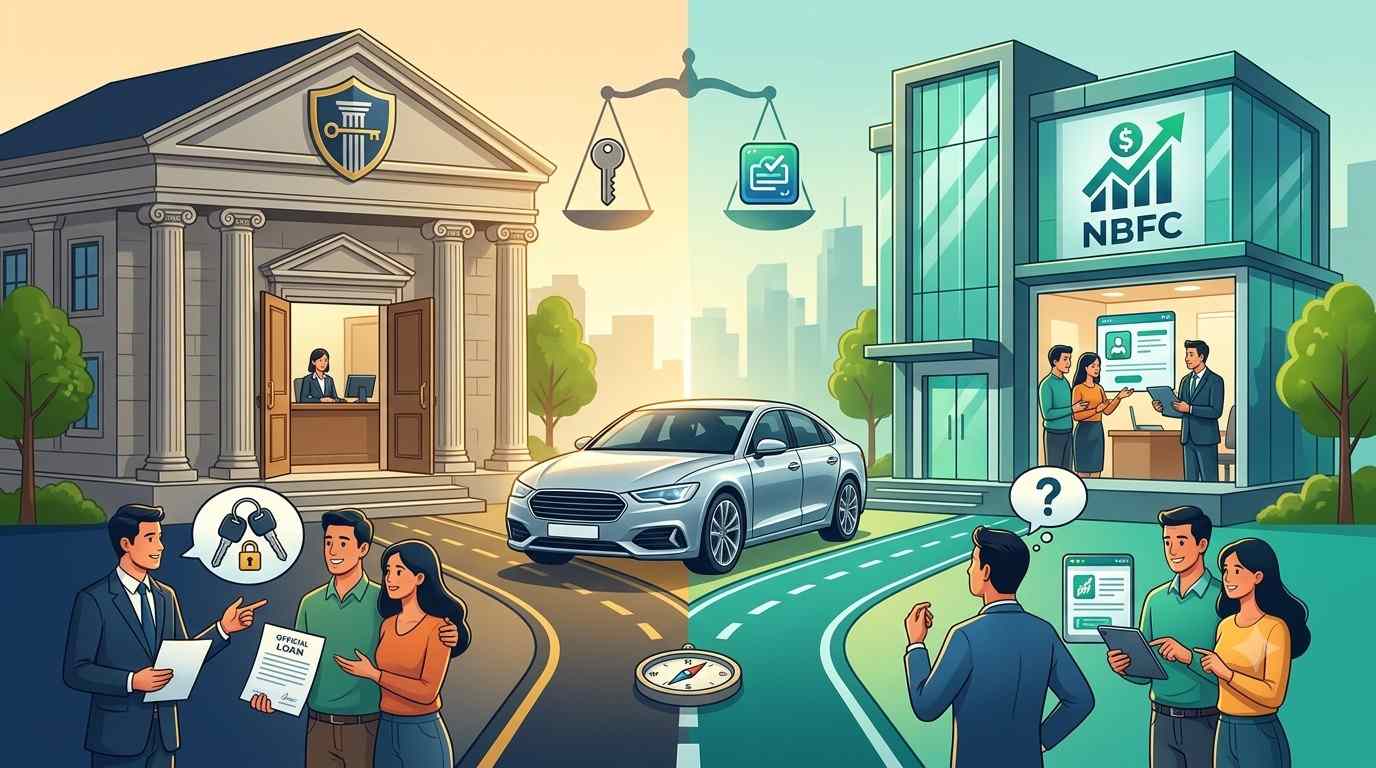
Choose a bank if you qualify and can wait a few days. It’s often the cheaper route. Choose an NBFC when a bank says no, when your income is hard to prove on paper, or when speed matters more than a lower rate. Both are regulated by the RBI, so this isn’t safe versus risky. It’s cost versus fit. And whichever you pick, compare the total repayment on the same loan amount and tenure, not the headline rate.
| Factor |
Banks (typical) |
NBFCs (typical) |
| Interest rate |
Often lower for strong profiles |
Often higher, but it varies by lender and offer |
| Approval |
Stricter on score and income proof |
Often more flexible on thin files and variable income |
| Speed |
Can take several days |
Often faster |
| Paperwork |
Formal, detailed |
Often lighter, but it varies |
| Fees |
Vary, often negotiable |
Vary, so check processing and foreclosure terms |
| Regulator |
RBI |
RBI |
These are tendencies, not rules. Individual lenders break them all the time.
What is the real difference between a bank and an NBFC?
Banks take deposits and run savings and current accounts. NBFCs (non-banking financial companies) lend, but they don’t run those accounts. That one difference explains much of what you notice. Banks fund loans from deposits, which is why their rates often sit lower. NBFCs raise money in other ways and often price higher, but many accept profiles that banks turn away.
Both follow RBI rules, including the Key Facts Statement (KFS) for covered retail loans. So you can compare offers from either on the same sheet.
Are NBFC car loans safe?
Yes, when the lender is a genuine RBI-registered NBFC. Check three things before you sign:
- Look up the NBFC on the list of registered NBFCs that RBI publishes.
- Match the lender’s name on your sanction letter with the name on that list. Dealers and apps often route loans through partner lenders.
- If you applied through a dealer or an app, ask in writing which regulated lender actually funds the loan.
Skip this check and you can end up with a lender you can’t hold to RBI’s rules.
Is a bank loan always cheaper?
No. Banks often advertise lower starting rates, and for strong profiles they frequently win. As one dated example, SBI’s official rate page, updated on 15 October 2026, lists new-car loan rates from 8.55% to 9.50%. That’s one bank’s range, not a market average and not the rate you’ll get.
Your profile, the car and the tenure move the final offer, and fees can erase a rate gap. NBFC pricing is lender-specific too, so check each lender’s own page and its date.
What if something goes wrong later?
Start with the lender’s grievance officer and keep every reply in writing. If the issue stays unresolved, RBI’s Integrated Ombudsman Scheme is the next step. It covers banks and many NBFCs, so check that your lender falls under it.
When does a bank make more sense?
- Your score and income proof are strong.
- You hold a salary account or have a loan history with the bank, which can bring a pre-approved offer.
- You can wait a few days for sanction.
- You want the lowest rate and room to negotiate the fee.
When does an NBFC make more sense?
- A bank has said no, or offered less than you need.
- Your income is hard to document, as with variable pay or a self-employed profile.
- The car has a tight booking slot and speed has a real price.
- You’re buying a used or older car that a bank’s policy limits.
- A carmaker’s finance arm is running a scheme worth comparing.
Why does an NBFC say yes more often? Many price risk differently and accept a wider range of profiles. You pay for that through the rate or the fees, so check the total.
If a low score is what stopped you at a bank, read how your CIBIL score changes car loan offers first. Fixing the report can save more than a higher rate costs you.
How do the costs really compare?
Compare the cost of borrowing, not the rate. Multiply the EMI by the number of months, add the upfront fees, then subtract the loan amount. The result is what the loan costs you. Do the same sum for each offer on the same loan amount and tenure.
| What to compare |
Why it matters |
How to check |
| Interest rate and type |
Sets the monthly cost and the risk |
Sanction letter and KFS |
| Processing fee |
Can erase a rate gap |
Ask for the amount and refund terms |
| Total repayment |
Shows the real cost |
EMI × months |
| Foreclosure and part-prepayment terms |
Decide how cheaply you can exit |
Loan agreement |
| Insurance and add-ons |
Can be financed and earn interest |
Itemised quote |
| Late and penal charges |
Matter if your income dips |
Fee schedule |
Which hidden charges catch buyers out?
- Processing fees, usually a percentage of the loan.
- Insurance and add-ons financed into the loan. Every rupee you finance earns interest, so think twice about extras such as additive packs. Our piece on whether fuel additives are necessary at every refill shows how easily a routine upsell gets built into the bill.
- Foreclosure charges if you close early.
- Penal charges on late EMIs.
- Documentation or stamp charges.
Does the rate type change the bank vs NBFC choice?
It can. Rate type decides how cheaply you can exit. See how fixed and floating car loan rates differ if you’re weighing the two.
Under the RBI’s Pre-payment Charges on Loans Directions, 2025, floating-rate loans to individuals for non-business purposes, sanctioned or renewed on or after 1 January 2026, can’t carry prepayment charges. The Directions apply to RBI-regulated lenders, which include banks and NBFCs, but confirm that for your lender. Fixed-rate loans don’t get the same automatic exemption. So an NBFC’s fixed-rate offer needs its foreclosure clause read line by line.
How do you get a bank to move faster?
Speed is often fixable. Most of the wait comes from follow-up questions, not from the bank’s checks.
- Ask for the lender’s document list before you apply.
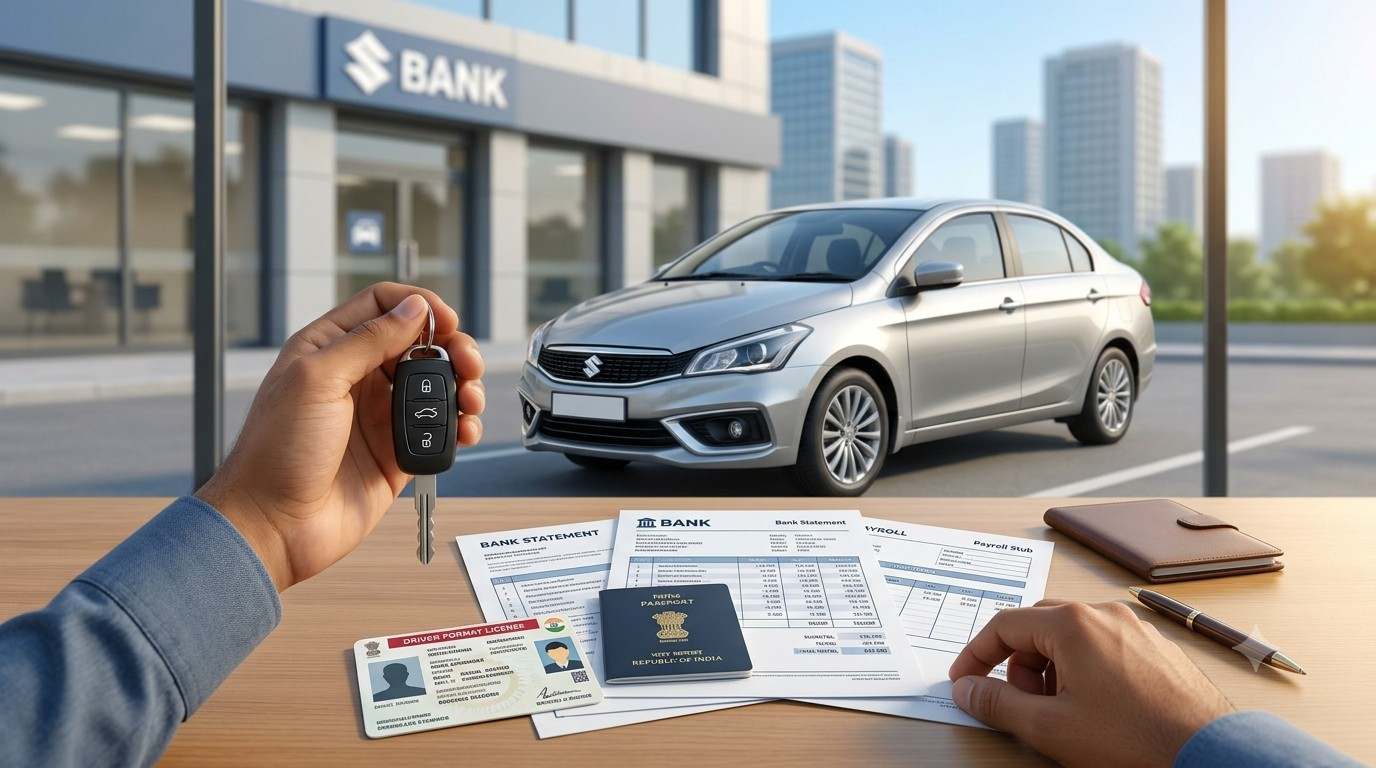
- Send a complete pack in one go. Here is which documents a car loan application needs, by applicant type.
- Use the bank where your salary lands, since it already knows your history.
- Ask for a written timeline, then plan the booking around it.
Does the answer change for an EV loan?
The method stays the same, with two extra checks:
A simple scorecard to decide
Score each lender from 1 to 5 on six criteria, multiply by the weight, and add up. The weights below are our editorial starting point. If you need the car in three days, raise the speed weight. If you may prepay, raise the closure weight.
| Criterion |
Weight |
What a 5 looks like |
| Total cost |
35 |
Lowest cost of borrowing on the same loan amount and tenure
|
| Approval fit |
20 |
Your profile fits the lender’s policy comfortably |
| Prepayment and closure terms |
15 |
No or low charges to exit early |
| Speed to sanction |
10 |
Sanction well within your booking window |
| Fee and term transparency |
10 |
KFS and sanction letter are clear, with no surprises |
| Service and grievance route |
10 |
Clear support and a covered complaint route |
Case study: Rohan’s two offers
Rohan is a hypothetical buyer, not a real customer. He’s 31, salaried at a private firm, with about 20% of his pay variable. His score is 705, and he needs ₹8 lakh over five years for a ₹10 lakh on-road car. His dealer wants finance confirmed within five days, or delivery slips by about two weeks.
He has two offers:
| |
Bank |
NBFC |
| Rate |
9.6% floating |
11.0% fixed |
| EMI |
About ₹16,840 |
About ₹17,390 |
| Total interest |
About ₹2,10,400 |
About ₹2,43,400 |
| Processing fee (before GST) |
₹4,000 |
₹12,000 |
| Cost of borrowing |
About ₹2,14,400 |
About ₹2,55,400 |
| Time to sanction |
7 working days |
2 days |
| Prepayment |
No charge (floating, sanctioned after 1 January 2026) |
Foreclosure charge in the agreement |
Rohan’s first instinct was to take the NBFC for the speed. That would have cost him about ₹41,000 more. So he asked the bank what usually delays files. Then he sent a complete pack at once: KYC, address proof, three salary slips, six months of statements, Form 16, the dealer’s quote and a short employer letter explaining his variable pay. The bank sanctioned in four days.
Here’s how he scored the two:
| Criterion |
Weight |
Bank |
NBFC |
| Total cost |
35 |
5 |
3 |
| Approval fit |
20 |
3 |
4 |
| Prepayment and closure terms |
15 |
4 |
3 |
| Speed to sanction |
10 |
3 |
5 |
| Fee and term transparency |
10 |
4 |
4 |
| Service and grievance route |
10 |
4 |
3 |
| Weighted score (out of 100) |
|
81 |
70 |
The bank won, and the main reason was that Rohan fixed the speed problem instead of paying for it. If the bank had declined him, the NBFC would have been the right call, after he’d read its foreclosure clause. These figures are illustrative and fees are shown before GST. The ratings are Rohan’s own judgement calls, so yours may differ.
A quick checklist
- Get written offers from one bank and one NBFC for the same loan amount and tenure.
- Verify that any NBFC is RBI-registered and that its name matches the sanction letter.
- Work out the cost of borrowing for each offer.
- Check the rate type, prepayment terms and every add-on.
- Score both offers with the scorecard, weighting speed and closure to suit you.
- Fix any gap that’s cheap to fix, such as missing documents, before you pay more for it.
Five questions buyers ask after the basics
My bank pre-approved me, but the dealer’s finance partner quoted a lower EMI. Which should I trust?
Neither until you compare like with like. A pre-approved offer is conditional, and the dealer’s quote may get its lower EMI from a longer tenure, a lower loan amount or a special scheme. Ask for the KFS from each, with the same loan amount and tenure. Then check whether the scheme comes with a smaller cash discount or a higher car price, because that can quietly cancel the saving.
Can I apply to both a bank and an NBFC at once without hurting my credit score?
You can, but each full application can add an enquiry to your report. Ask each lender for an indicative quote using basic details first. Then apply fully to your top choice and keep the second as a fallback within a few days. Sending out five applications to see who says yes is what hurts.
I took an NBFC loan at a higher rate. Can I move it to a bank later?
Often yes, through a balance transfer, but run the break-even first. Say you owe ₹6 lakh with four years left and the new rate is 1.5 points lower. Because the balance keeps shrinking, the average amount you owe over those years is closer to ₹3.3 lakh. So the saving is roughly ₹3.3 lakh × 1.5% × 4 years, about ₹19,800. If foreclosure plus the new processing fee comes to ₹21,000, switching loses money. The earlier in the loan you switch, and the bigger the rate gap, the better it works.
What happens if my lender merges, is acquired or changes its name during my loan?
Your loan agreement and obligations continue, usually on the same terms. Ask for written notice of the change and make sure you pay the right entity. Keep your agreement and every statement, and ask the successor for a fresh statement. At closure, the no-dues certificate and the paperwork for removing hypothecation will come from the successor, so keep the trail of names handy.
Is “zero processing fee” or “100% on-road funding” a red flag?
Not automatically, but ask where the cost moved. A waived fee can reappear as a higher rate, a longer tenure or financed add-ons. And 100% funding means a bigger principal, so more interest every month, plus no equity cushion if the car’s value falls. Run the cost of borrowing on that offer and compare it with a version that has a down payment.