
 Khyati Sharma 2026-08-19
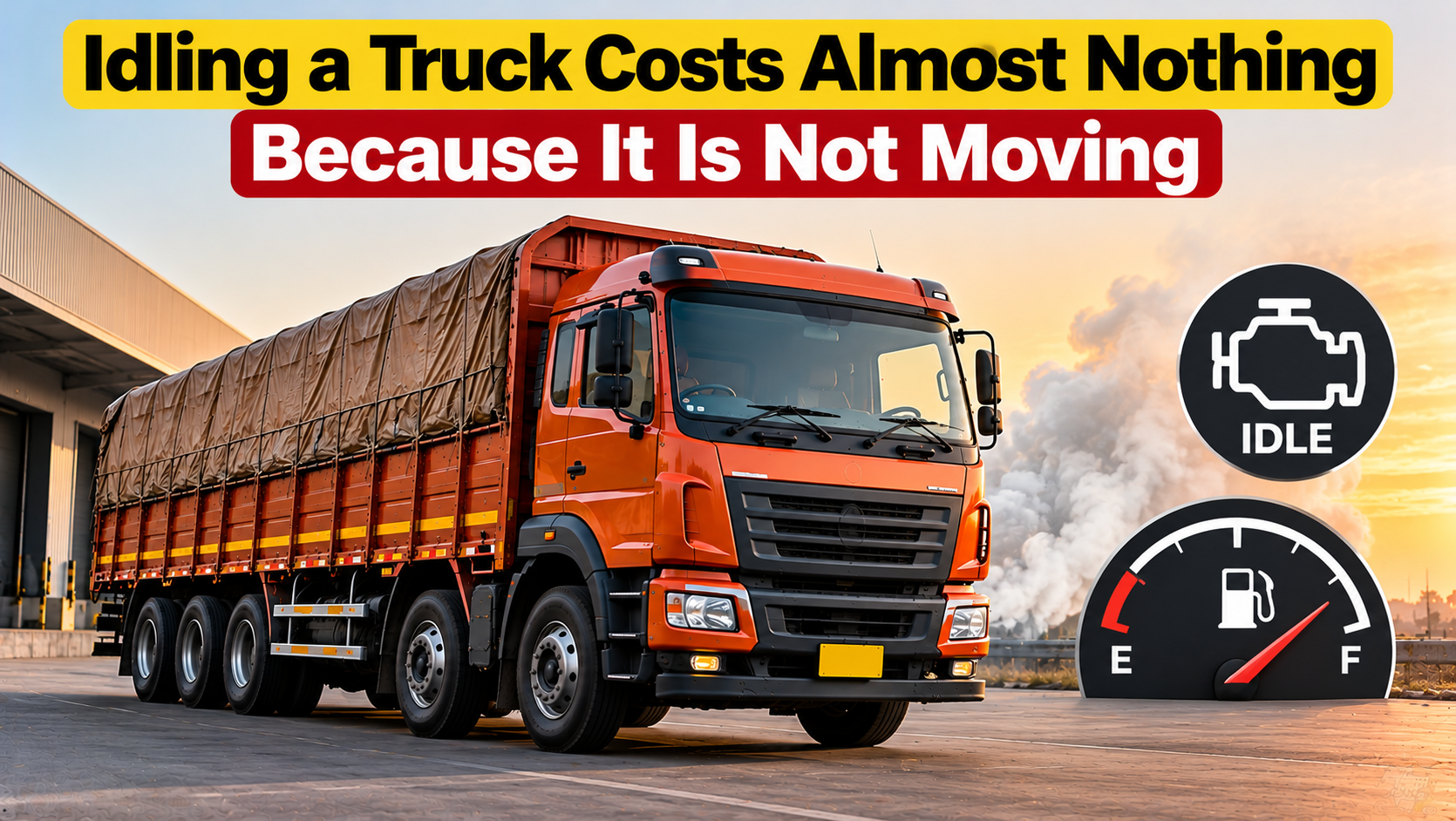
Many truck drivers and fleet operators believe that a truck consumes very little fuel when its engine is running but the vehicle is stationary. Since the truck is not covering any distance, they assume that idling does not create a significant operating expense.
However, this is a common misconception. A truck engine continues consuming diesel even when the vehicle is not moving. Whether it is waiting at a loading point, standing in traffic, parked outside a warehouse or keeping the air conditioning running during a break, the engine uses fuel to remain operational.
Apart from diesel consumption, unnecessary idling can also contribute to engine wear, emissions and maintenance expenses over time. When multiplied across several trucks and hundreds of operating hours, these costs can become significant for a transport business.
The actual cost depends on engine size, vehicle type, engine condition, idle speed, accessories being used and the duration of idling. Therefore, truck operators should consider idle time as part of their overall fuel and operating expenses.
How to Choose Between Two Similar Car Models: A Decision Framework
A stationary truck with its engine running still consumes fuel. The engine must continue operating to maintain combustion, power electrical systems and run accessories such as air conditioning, cooling fans and other equipment.
A truck may not record any kilometres during this period, but its fuel tank continues to lose diesel.
For example, a truck waiting for several hours at a warehouse may consume a noticeable quantity of fuel without completing even one kilometre. If this happens regularly, the accumulated expense can affect the profitability of a transport operation.
Idling may sometimes be necessary for safety, operational or mechanical reasons. However, allowing a truck to run unnecessarily while stationary is not a cost-free activity.

Idling occurs when a vehicle's engine is running while the truck remains stationary. The engine operates at a relatively low speed, commonly called idle RPM.
Even at low RPM, the engine needs fuel to maintain combustion. The fuel is burned to keep the engine running and support its mechanical and electrical systems.
Several components may continue operating during idling:
Engine lubrication system.
Cooling system and radiator fan.
Alternator and electrical systems.
Air-conditioning compressor, when operating.
Power steering and other engine-driven accessories, depending on vehicle design.
Electronic control systems and onboard equipment.
The amount of fuel consumed depends on how the truck is configured and which accessories are being used.
A truck idling with its air conditioning switched on may consume more fuel than one running with fewer accessories. Similarly, a larger engine may use more fuel per hour than a smaller engine, although actual consumption varies considerably between models.
There is no single fuel-consumption figure that applies to every commercial vehicle. Different trucks have different engine capacities, idle speeds, fuel systems and accessory loads.
For illustration, consider a hypothetical heavy-duty truck that consumes 2 litres of diesel per hour while idling. If it remains stationary with the engine running for three hours, it would consume approximately six litres of diesel.
At an illustrative diesel price of ₹90 per litre, this would represent ₹540 in fuel expenditure without the truck travelling any distance.
The calculation below shows how idle time can affect fuel expenses under different operating conditions.
|
Daily idling time |
Assumed fuel consumption |
Diesel used |
Cost at ₹90/litre |
|
1 hour |
2 litres/hour |
2 litres |
₹180 |
|
2 hours |
2 litres/hour |
4 litres |
₹360 |
|
3 hours |
2 litres/hour |
6 litres |
₹540 |
|
4 hours |
2 litres/hour |
8 litres |
₹720 |
|
5 hours |
2 litres/hour |
10 litres |
₹900 |
For a fleet operating 20 trucks, even one unnecessary idling hour per vehicle per day could create a considerable combined fuel expense. The impact becomes larger when the same pattern continues throughout the month.
Why Do Trucks Remain Idle for Long Periods?
Does an Empty Truck Really Save Fuel? The Truth About Fuel Consumption on Return Trips
Commercial vehicles often experience unavoidable waiting periods. However, some idling happens because of poor planning or operating habits.
1. Waiting at Loading and Unloading Points
Trucks frequently wait outside warehouses, factories, distribution centres and markets. Loading and unloading delays can sometimes last several hours.
Drivers may leave the engine running to keep the cabin comfortable or avoid restarting the vehicle later. However, unnecessary engine operation during long waiting periods increases fuel consumption.
Better appointment scheduling and coordination with loading teams can help reduce these delays.
2. Traffic Congestion
Heavy traffic is another major reason for engine idling. Trucks operating in busy cities, industrial areas and highway bottlenecks may spend considerable time stationary.
Although some idling is unavoidable in traffic, drivers can avoid unnecessary engine operation during extended stops where safe and permitted.
3. Keeping the Air Conditioning Running
During hot weather, drivers may keep the engine running to operate the air-conditioning system while taking a break.
This increases fuel consumption because the engine continues working to power the relevant accessories. The additional fuel requirement depends on the air-conditioning system, outside temperature and cabin cooling demand.
Fleet operators should provide suitable rest arrangements so drivers do not need to keep the truck running unnecessarily.
4. Waiting at Checkpoints and Entry Gates
Commercial vehicles may spend time waiting at toll facilities, security gates, industrial premises and warehouse entry points.
Some of these delays are unavoidable, but better route planning, documentation and coordination can reduce waiting time in certain operations.
5. Driver Habits
Some drivers leave the engine running whenever they stop, even when the vehicle will remain stationary for an extended period.
This can happen during short breaks, meal stops or overnight parking. Driver awareness and clear idling policies can help address this habit.
A Turbocharged Engine Needs Several Minutes of Idling After Every Drive
Fuel consumption is the most immediate expense associated with unnecessary idling, but it is not the only concern.
An engine running at idle continues accumulating operating hours. These hours matter because maintenance schedules may be based on engine hours, distance travelled or a combination of both, depending on the manufacturer's recommendations.
Long periods of idling can also contribute to certain maintenance concerns.
Engine Wear and Lubrication
The engine continues operating while stationary, so internal components remain in motion. The lubrication system continues circulating oil, but prolonged low-load operation can create conditions that differ from normal driving.
The actual impact depends on engine design, maintenance condition and operating temperature. It is not correct to assume that every minute of idling causes serious damage, but unnecessary operation adds engine running hours.
Battery and Electrical System
The alternator generally supplies electrical power when the engine is running. However, vehicles with substantial electrical loads may place additional demands on the charging system.
If the engine is switched off while accessories continue drawing power, the battery may discharge. Drivers should follow the manufacturer's instructions for electrical equipment and battery management.
Diesel Particulate Filter Concerns
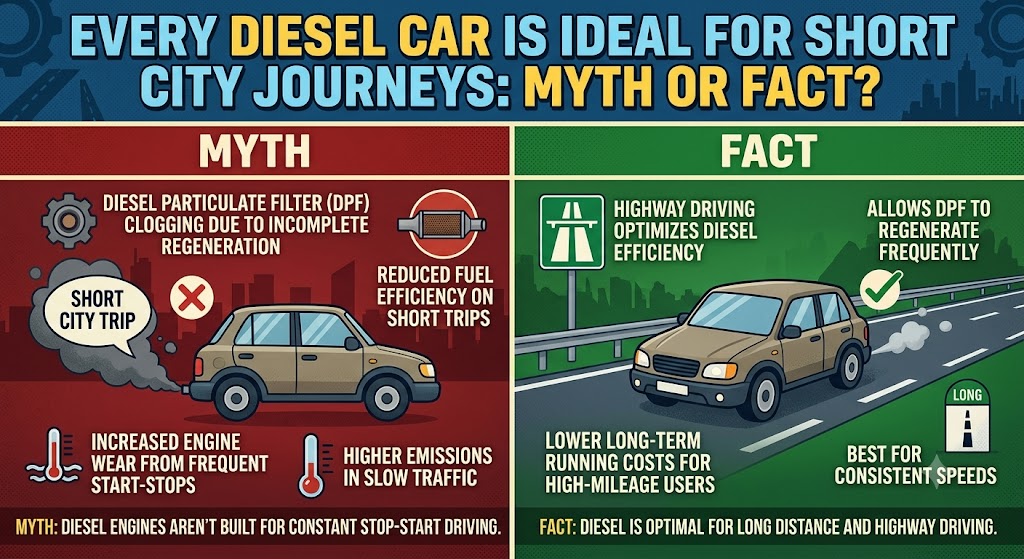
Many modern diesel trucks use diesel particulate filters (DPFs) to control particulate emissions.
Extended low-load operation and frequent short trips can affect exhaust temperatures and DPF regeneration conditions in some vehicles. This may increase the likelihood of regeneration-related issues if the vehicle's operating pattern is unsuitable.
Drivers should follow the manufacturer's guidance regarding DPF warnings and regeneration. They should not attempt to bypass or disable emissions-control equipment.
Fuel consumption is not the only environmental concern. A running diesel engine releases exhaust emissions even when the truck is stationary.
These emissions can include nitrogen oxides, particulate matter and carbon dioxide. The quantity depends on the engine, emissions-control system, fuel and operating conditions.
Unnecessary idling can therefore contribute to local air pollution, particularly around warehouses, residential areas, loading zones and crowded transport hubs.
Reducing avoidable idling can help lower fuel use and emissions simultaneously.

Fleet owners do not need complicated technology to begin controlling idling. A combination of driver awareness, operational planning and vehicle monitoring can make a difference.
1. Switch Off the Engine During Long Stops
Drivers should switch off the engine during extended stops when it is safe and permitted to do so.
However, they must follow manufacturer instructions and consider operational requirements, including air-brake systems, engine temperature, battery condition and other vehicle-specific factors.
2. Improve Loading and Unloading Coordination
Fleet managers can coordinate arrival times with warehouses and customers to reduce unnecessary waiting.
Digital appointment systems and better communication between drivers and loading teams can help improve turnaround time.
3. Monitor Idle Hours
Modern commercial vehicles and fleet-management systems may provide engine-hour and idling information.
Fleet managers can use this data to identify vehicles that spend unusually long periods with their engines running.
Tracking idle time also helps companies understand which routes, customers or facilities create the most waiting delays.
4. Train Drivers
Drivers should understand that fuel is consumed even when the truck is stationary.
Training programmes can explain the financial and environmental impact of unnecessary idling. Companies can also introduce reasonable idle-time targets based on vehicle type and operating conditions.
5. Use Suitable Auxiliary Systems
Some commercial vehicles are equipped with auxiliary power systems or other technologies designed to operate certain equipment without keeping the main engine running continuously.
Where suitable and supported by the manufacturer, these systems can reduce main-engine idling. Their cost, compatibility and maintenance requirements should be evaluated before installation.
6. Plan Routes and Breaks Better
Traffic congestion, long queues and poorly planned stops can increase idle hours.
Fleet operators can use route planning, traffic information and suitable rest-stop arrangements to reduce avoidable waiting. Drivers should never compromise mandatory rest breaks or safety simply to reduce idling.
A Puncture Repair Is Safe Anywhere on a Tyre – Myth or Fact?
Not necessarily. There are situations where the engine may need to remain running because of safety, mechanical or operational requirements.
For example, certain trucks require specific procedures before shutting down after heavy-duty operation. Vehicles with particular air-pressure, hydraulic or auxiliary systems may also have operating requirements that drivers must follow.
Frequent restarting should also be considered in line with the manufacturer's guidance and the vehicle's starter and battery system.
The objective is not to switch off the engine at every possible moment. It is to avoid unnecessary idling while following the correct procedures for the specific truck.
Yes. Idling a truck is not free simply because the vehicle is not moving. The engine continues consuming diesel, operating mechanical components and producing exhaust emissions.
A few minutes of idling may appear insignificant, but repeated waiting periods can add up to several litres of diesel over time. Across a large commercial fleet, this can become a meaningful operating expense.
Truck operators should monitor idle hours, improve loading schedules, train drivers and follow manufacturer recommendations for engine operation.
The key lesson is simple: a truck does not need to travel kilometres to consume fuel. Whenever its engine is running, it is using resources. Reducing unnecessary idling can help transport businesses control fuel expenses, manage engine operating hours and reduce emissions.