Khyati Sharma 2026-10-12
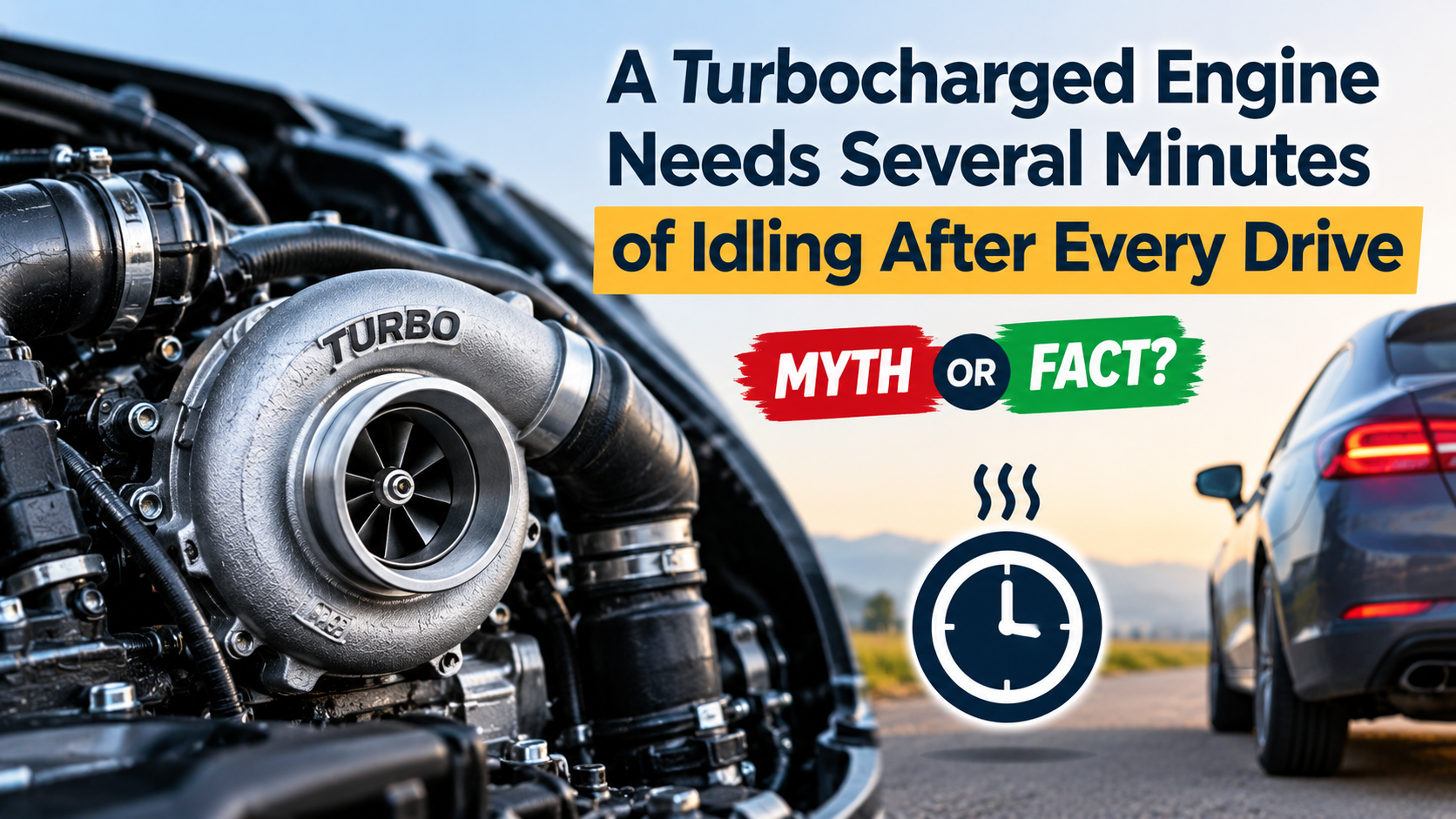
A common belief among car owners is that a turbocharged engine must be left idling for several minutes after every drive to protect the turbocharger from damage. Many drivers follow this practice, especially after highway journeys, believing that switching off the engine immediately can cause overheating, oil starvation or expensive mechanical failures.
But is this advice still relevant to modern cars? The answer is mostly a myth. While turbochargers do require proper lubrication and temperature management, most modern turbocharged passenger cars do not need several minutes of idling after every trip. The correct approach depends on how the vehicle has been driven, the engine's design and the manufacturer's recommendations.
How to Choose Between Two Similar Car Models: A Decision Framework
A turbocharged engine uses exhaust gases to spin a turbine connected to a compressor. The compressor pushes more air into the engine, allowing it to burn more fuel and produce greater power than a naturally aspirated engine of similar size, under suitable operating conditions.
Turbocharging helps manufacturers deliver a combination of performance and fuel efficiency. It is commonly used in petrol and diesel cars, including compact SUVs, premium sedans and performance vehicles.
However, the turbocharger operates under demanding conditions. Its rotating components can reach very high speeds, while the turbine side is exposed to hot exhaust gases. Engine oil is therefore essential for lubricating the turbocharger's bearings and, in many designs, helping remove heat.
This is why some drivers believe the engine must always idle before being switched off. The idea has a technical basis, but the need for a long cooldown has changed with modern engine technology.
The practice became popular because older turbocharged engines could be more sensitive to heat management after hard driving.
When an engine was working under heavy load, the turbocharger and exhaust components became extremely hot. Turning off the engine stopped the oil pump, which could interrupt oil circulation while some turbocharger components remained hot.
Under certain conditions, the residual heat could cause the oil trapped inside the turbocharger to degrade or form deposits. This process is often referred to as oil coking. Deposits can interfere with lubrication and contribute to premature wear.
Allowing the engine to idle briefly after demanding driving could help reduce turbocharger temperature before shutdown.
However, this does not mean every turbocharged engine requires several minutes of idling after every journey. Modern vehicles often use improved lubrication systems, better thermal management and, in some applications, additional cooling arrangements designed to manage heat after the engine is switched off.
How to Compare Car Variants: Base vs Mid vs Top Trim
For most modern passenger cars, several minutes of idling after every drive is unnecessary. Modern turbochargers and engine-management systems are designed to handle high operating temperatures, and some vehicles incorporate cooling systems that continue managing heat after the engine is switched off. Turbocharger manufacturer Garrett Motion also explains that the traditional cooldown requirement has largely become unnecessary in modern vehicles.
However, this does not mean every turbocharged vehicle can be switched off immediately under every circumstance. The owner's manual remains the most reliable guide because cooldown requirements differ between engines and vehicles.
For example, Kia's owner's manuals advise idling for approximately one minute after high-speed or extended driving that places the engine under heavy load. Mazda's guidance for certain turbocharged models recommends at least 30 seconds after highway-speed driving or climbing a long hill.
These examples show why the advice should not be treated as a universal rule. Some vehicles require a short cooldown in specific situations, while others manage thermal conditions differently.
1. After normal city driving
If you have driven through regular city traffic at moderate speeds, a long idle period is generally unnecessary. The engine usually experiences less sustained load than during hard acceleration or prolonged high-speed driving.
2. After a highway journey
If you have driven at high speed for a prolonged period, a short cooldown may be appropriate, depending on your vehicle's manual. Where possible, the final few minutes of gentle driving can also help reduce engine load before parking.
3. After climbing a steep hill
Driving uphill with a heavy load can make the engine and turbocharger work harder. If you stop immediately after a demanding climb, follow the manufacturer's recommended cooldown procedure.
4. After spirited driving or track use
Repeated hard acceleration, high engine speeds and sustained boost can generate substantial heat. A cooldown is particularly important if the manufacturer specifies one for these conditions.
|
Driving condition |
Recommended approach |
|
Normal city commuting |
Usually no extra idling is needed |
|
Gentle driving before parking |
Often provides time for temperatures and load to settle |
|
Extended high-speed driving |
Check the owner's manual for cooldown instructions |
|
Long uphill climb under heavy load |
Follow the vehicle's specified cooldown procedure |
|
Hard driving or track use |
Allow the recommended cooldown before shutdown |
|
Heavy-duty turbocharged diesel vehicle |
Follow its specific shutdown instructions |
For instance, certain Kia models recommend about one minute of idling following high-speed or extended heavy-load driving, while some Mazda models specify at least 30 seconds after particular demanding journeys. These are model-specific examples, not universal timings.
Yes, leaving an engine running while the vehicle is stationary consumes fuel without moving the car. The exact amount depends on engine size, engine load, fuel type, air-conditioning use and other factors.
If your car has already completed a routine journey and does not require a cooldown, idling for several unnecessary minutes offers little benefit. It also increases emissions and adds avoidable running time.
A better approach is to drive smoothly near the end of your journey, avoid aggressive acceleration immediately before parking and follow the manufacturer's shutdown guidance. This supports sensible engine care without turning every stop into a lengthy waiting period.
New Car Dealer Negotiation Tips That Actually Work
Leaving the engine idling for too long is not the only maintenance issue drivers should consider. The following habits can be more important to long-term reliability.
Ignoring oil changes: Use the oil grade and specification recommended by the manufacturer, and follow the service schedule.
Accelerating hard immediately after a cold start: Give the engine time to establish proper lubrication and reach normal operating conditions through gentle driving.
Using the wrong engine oil: Incorrect oil can compromise lubrication and affect turbocharger reliability.
Ignoring warning lights: Investigate engine, oil-pressure or overheating warnings promptly.
Neglecting air filters and intake systems: Restricted airflow or leaks can affect engine and turbocharger performance.
Modifying engine software without proper support: Unapproved tuning can increase operating loads beyond the manufacturer's intended limits.
Ignoring unusual noises or smoke: Whining noises, excessive exhaust smoke or a sudden loss of power should be checked by a qualified technician.
Routine maintenance and correct operating practices matter far more than blindly following a fixed idling rule.
|
Statement |
Myth or Fact? |
|
Every turbocharged car needs five minutes of idling after every trip. |
Myth |
|
Turbochargers need proper lubrication and temperature management. |
Fact |
|
Hard driving can make a cooldown necessary on some vehicles. |
Fact |
|
Modern turbocharged cars never need cooldown time. |
Myth |
|
The owner's manual should determine the correct shutdown procedure. |
Fact |
|
Unnecessary idling consumes fuel. |
Fact |
The claim that a turbocharged engine needs several minutes of idling after every drive is a myth for most modern passenger cars. While turbochargers operate under high temperatures and depend on proper lubrication, modern designs and thermal-management systems have reduced the need for routine, prolonged idling.
The important distinction is between normal driving and demanding use. After an ordinary city commute, an extended idle period is generally unnecessary unless the manufacturer says otherwise. After sustained high-speed driving, a steep climb or hard driving, a short cooldown may be recommended.
The best way to protect a turbocharged engine is to maintain it correctly, use the specified engine oil, drive gently when the engine is cold and follow the vehicle-specific shutdown instructions. That approach is more effective than assuming every turbocharged car must idle for several minutes after every journey.