Khyati Sharma 2026-08-28
Tyres are among the most important safety components of any car or motorcycle. They are the only parts of a vehicle that maintain direct contact with the road, making their condition extremely important for braking, acceleration, cornering and overall stability.
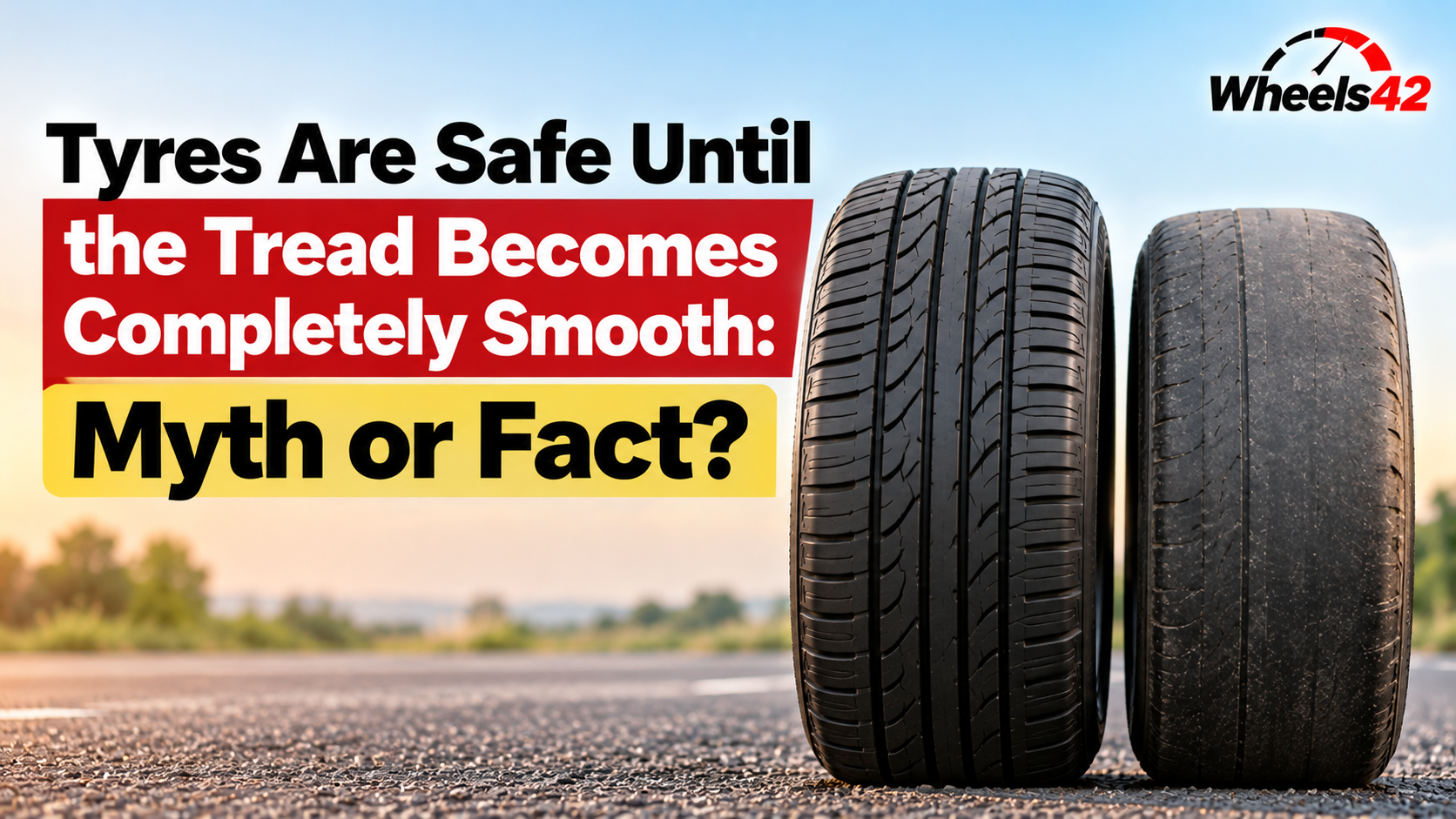
However, many vehicle owners follow a common misconception: tyres are safe to use until their tread becomes completely smooth. Some drivers believe that replacing tyres before the tread disappears is unnecessary because the vehicle can still move normally on the road.
This assumption can be dangerous.
Tyre tread is not just a pattern designed to improve appearance. It plays an important role in maintaining grip, particularly on wet roads. As the tread wears down, the tyre gradually loses its ability to channel water away from the contact area, increasing the risk of reduced traction and aquaplaning.
A tyre does not need to become completely bald before it becomes unsafe. In fact, waiting until the tread disappears can put the driver, passengers and other road users at risk.
So, is this belief a myth or fact? Let's understand how tyre tread works, why it matters and when you should consider replacing your vehicle's tyres.
Company-Fitted vs Aftermarket Accessories: Which Is Better?
Myth.
Tyres are not necessarily safe until their tread becomes completely smooth. Their performance can deteriorate significantly even when some tread pattern is still visible.
As a tyre wears down, its grooves become shallower. These grooves help move water away from the contact patch, allowing the rubber to maintain better contact with the road surface.
When tread depth decreases, the tyre becomes less effective at managing water during rainfall. This can increase braking distances, reduce wet-road grip and make the vehicle more difficult to control.
The problem becomes particularly serious during heavy rainfall, when water accumulates on roads and increases the possibility of aquaplaning.
Therefore, tyre replacement should be based on tread depth, wear patterns, tyre age, damage and manufacturer recommendations rather than waiting for the tread to disappear completely.

Tyre tread refers to the patterned grooves and blocks on the outer surface of a tyre that comes into contact with the road.
These patterns are designed to provide grip and help manage water, dirt and other road conditions.
Different tyres have different tread designs depending on their intended purpose. Passenger car tyres, motorcycle tyres, SUV tyres and off-road tyres may use different patterns to meet their performance requirements.
The main functions of tyre tread include:
1. Improving road grip: Tread patterns help the tyre maintain traction under different driving conditions.
2. Removing water: Grooves help channel water away from the contact area, improving wet-road performance.
3. Supporting braking: Adequate tread depth contributes to effective braking, particularly on wet surfaces.
4. Improving handling: Properly maintained tyres help maintain predictable steering and cornering behaviour.
5. Supporting stability: Tread design and tyre condition influence how consistently the vehicle responds during acceleration, braking and turning.
Without sufficient tread depth, tyres may struggle to deliver their intended performance, particularly in challenging weather conditions.
Braking performance depends on several factors, including tyre condition, road surface, vehicle speed, braking system and weather conditions.
Tyre tread is particularly important when braking on wet roads.
When a vehicle moves over a wet surface, water can accumulate between the tyre and the road. The grooves in the tread help move this water away from the contact patch.
As the tread becomes shallower, the tyre has less capacity to manage water effectively.
This can reduce available traction and increase stopping distances in certain wet-road conditions.
For example, a vehicle travelling at highway speeds may require more distance to stop when its tyres have insufficient tread, especially during rainfall.
The exact difference depends on the tyre design, vehicle, speed, road surface and amount of water present.
This is why drivers should never assume that tyres with visible tread are automatically safe.
Best Time of the Year to Buy a New Car in India
A bald tyre is a tyre that has lost most or all of its usable tread pattern.
Such tyres are particularly dangerous in rainy conditions because they have limited ability to channel water away from the contact area.
One of the biggest risks is aquaplaning.
Aquaplaning occurs when a layer of water builds up between the tyre and the road, reducing or temporarily removing direct tyre-to-road contact.
When this happens, the driver may experience:
Reduced steering response.
Loss of traction.
Poor braking performance.
Difficulty maintaining vehicle direction.
Reduced vehicle stability.
In severe situations, the driver may temporarily lose control of the vehicle.
The risk generally increases with higher speeds, standing water, insufficient tread depth and unsuitable tyre pressure.
This is why tyres should be replaced before they become bald.

Tyre tread depth is generally measured in millimetres. A new passenger car tyre commonly has approximately 7–9 mm of tread, although the actual figure varies by tyre model and design.
Many passenger car and motorcycle tyres use tread-wear indicators to help identify when the tread has reached its replacement limit.
For many passenger car tyres, a commonly used minimum tread-depth reference is 1.6 mm. However, the applicable legal requirements can vary by country and vehicle category.
Reaching the minimum limit does not mean the tyre will provide the same performance as a new tyre. Wet-weather performance may deteriorate considerably before that point.
For this reason, drivers should monitor tread depth regularly and consider replacing tyres earlier if they frequently drive in heavy rain or difficult road conditions.
Always follow the vehicle and tyre manufacturer's recommendations and applicable local regulations.
Checking tyre tread does not always require a visit to a service centre. Vehicle owners can perform basic inspections at home using a tyre tread-depth gauge.
Here are some simple steps:
Step 1: Park the vehicle safely
Park the car or motorcycle on a level surface and switch off the engine.
Step 2: Inspect the tyre surface
Look at the tread pattern and check whether the grooves appear shallow or uneven.
Step 3: Check the tread-wear indicators
Many tyres have small raised indicators inside the tread grooves. When the surrounding tread wears down to the same level as these indicators, the tyre has reached its designed replacement warning level.
Step 4: Use a tread-depth gauge
A tread-depth gauge provides a more accurate measurement of the remaining tread.
Step 5: Inspect different areas
Check the inner, centre and outer sections of the tyre. Uneven wear can indicate incorrect tyre pressure, alignment issues, suspension problems or other mechanical concerns.
If you notice exposed cords, bulges, deep cuts or significant damage, have the tyre inspected immediately. Do not rely on tread depth alone to judge its safety.
How to Set a Realistic Car Buying Budget (On-Road Price Explained)
Tyres do not always wear evenly. Sometimes, damage or ageing can make a tyre unsafe even when sufficient tread appears to remain.
Watch out for these warning signs:
1. Shallow tread grooves: Reduced tread depth can affect wet-road grip and water evacuation.
2. Visible tread-wear indicators: When the tread reaches the wear indicators, the tyre needs replacement.
3. Cracks on the sidewall: Cracks may indicate ageing, rubber deterioration or damage.
4. Bulges or bubbles: These can indicate internal structural damage and create a risk of sudden tyre failure.
5. Exposed cords: Visible internal reinforcement means the tyre is unsafe and should not be used.
6. Uneven tread wear: Excessive wear on one side or in the centre may indicate pressure, alignment or suspension problems.
7. Repeated air pressure loss: Frequent pressure loss can indicate punctures, valve problems or other damage that requires inspection.
Yes. Tyre pressure plays an important role in how tyres wear over time.
Incorrect pressure can affect the contact area between the tyre and the road, leading to uneven tread wear.
When tyres are underinflated, their outer shoulder areas may experience increased wear. Underinflation can also generate additional heat and increase rolling resistance.
Overinflated tyres may experience greater wear around the centre of the tread, depending on the tyre and vehicle conditions.
Both situations can affect tyre performance and lifespan.
Vehicle owners should check tyre pressure regularly, preferably when the tyres are cold, and follow the pressure recommendations provided by the vehicle manufacturer.
|
Tyre Check |
What to Look For |
Why It Matters |
|
Tread depth |
Shallow grooves and wear indicators |
Helps identify when replacement is necessary |
|
Tyre pressure |
Correct recommended PSI or bar |
Supports even wear and safe handling |
|
Sidewall condition |
Cracks, cuts and bulges |
Helps identify structural damage |
|
Uneven wear |
Inner, centre or outer tread wear |
May indicate alignment or pressure problems |
|
Tyre age |
Manufacturing date and ageing signs |
Helps identify deterioration over time |
|
Surface damage |
Nails, sharp objects and exposed cords |
Helps prevent tyre failure |
|
Wheel alignment |
Uneven or rapid wear |
Helps maintain predictable handling |
Yes. Tyre age is another important factor that vehicle owners should not ignore.
Tyres are made from rubber compounds that gradually deteriorate due to heat, sunlight, oxygen exposure and environmental conditions.
As tyres age, their rubber can become harder and develop cracks. This may affect grip and overall performance even if the tread depth appears acceptable.
Most tyre manufacturers recommend regular professional inspection of older tyres and provide guidance on when they should be replaced.
Some manufacturers recommend replacement around ten years from the manufacturing date as an absolute maximum, regardless of tread condition, while also recommending earlier replacement or inspection depending on usage and ageing.
The manufacturing date can generally be identified through the DOT code on the tyre sidewall for tyres carrying that marking.
Drivers should always follow the tyre manufacturer's specific age recommendations.

Yes. Motorcycle tyres require particular attention because their condition directly influences balance, cornering and braking.
Unlike cars, motorcycles rely on two tyres to maintain stability. Reduced tread depth can affect wet-road grip and make the motorcycle more difficult to control in challenging conditions.
Worn motorcycle tyres may also reduce confidence while cornering, especially on wet or slippery surfaces.
Riders should regularly inspect both front and rear tyres for:
Reduced tread depth.
Uneven wear.
Sidewall cracks.
Bulges or damage.
Incorrect tyre pressure.
Visible tread-wear indicators.
Motorcycle owners should also use tyres that meet the manufacturer's specifications for size, load rating and speed rating.
Replacing tyres at the correct time is an important part of motorcycle safety.
Many vehicle owners unknowingly reduce tyre life or compromise safety by ignoring basic maintenance.
Here are some mistakes worth avoiding:
1. Waiting until tyres become bald: Tyres should be replaced before reaching an unsafe condition.
2. Ignoring tread-wear indicators: These indicators provide a useful warning about tread deterioration.
3. Checking only the centre tread: Tyres can wear unevenly, so the entire tread surface needs inspection.
4. Ignoring tyre pressure: Incorrect inflation can cause uneven wear and affect handling.
5. Using old tyres for too long: Rubber deterioration can make tyres unsafe even when tread remains.
6. Ignoring sidewall damage: Cuts, cracks and bulges can indicate serious structural problems.
7. Mixing unsuitable tyres: Different tyre specifications can affect vehicle handling and stability. Always follow the manufacturer's recommendations.
The belief that tyres remain safe until their tread becomes completely smooth is a dangerous myth.
Tyre tread plays an important role in maintaining grip, controlling water and supporting effective braking. As the tread wears down, wet-weather performance can deteriorate, increasing the risk of longer stopping distances and aquaplaning.
Vehicle owners should regularly check tread depth, tyre pressure, sidewall condition and manufacturing age. They should also pay attention to tread-wear indicators and replace tyres before they reach an unsafe condition.
A tyre does not have to look completely bald to become dangerous. Waiting too long can compromise vehicle safety, particularly during monsoon conditions and emergency braking.
Ultimately, tyres are not components where delaying maintenance is worth the risk. Replacing them at the right time helps maintain better control, predictable handling and safer journeys.














Kia Cars
₹13.50 - 20.00 Lakh

Land Rover
₹83.90 - 98.75 Lakh