Khyati Sharma 2026-10-19
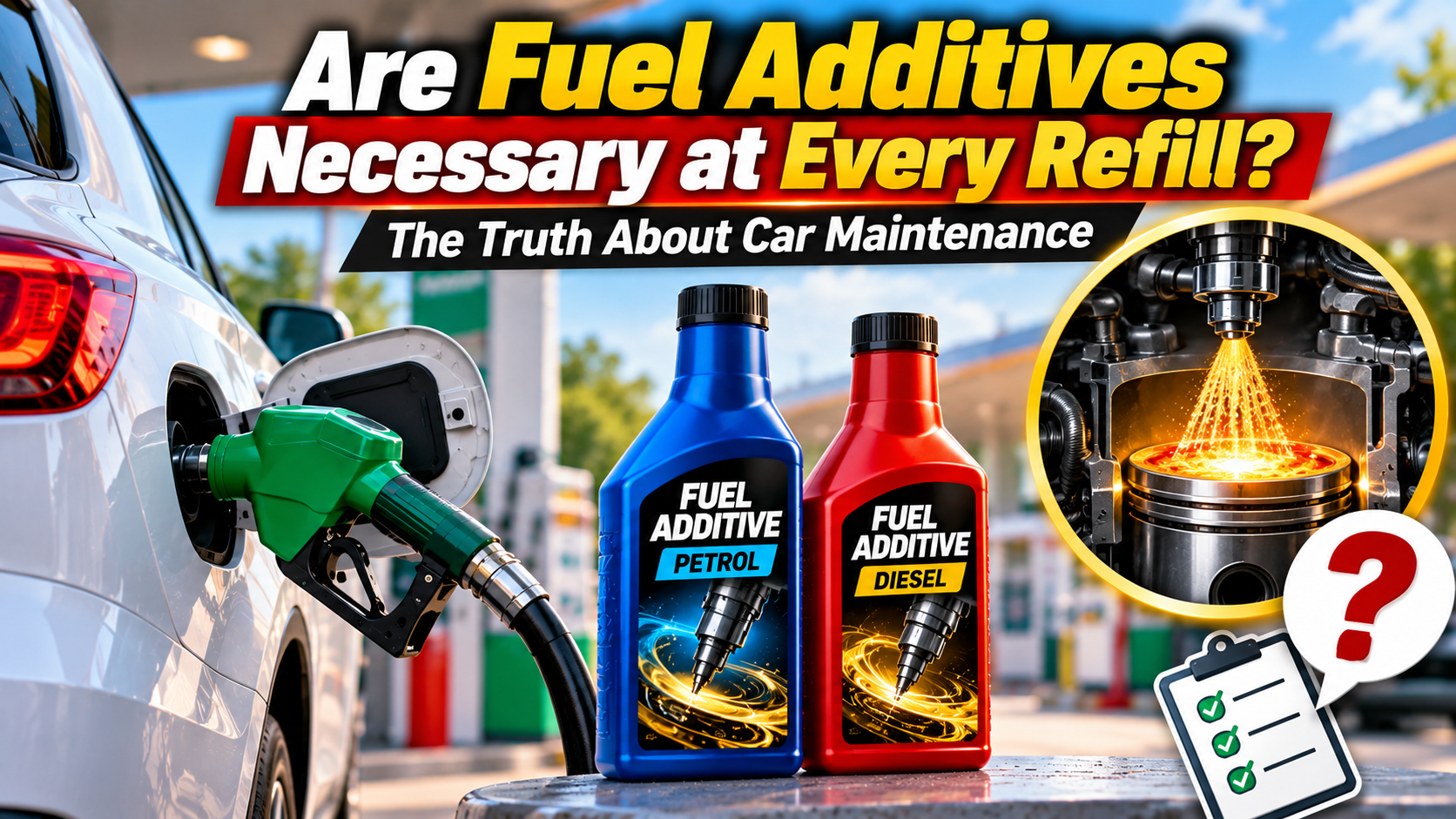
Many car owners believe that adding a fuel additive every time they fill their petrol or diesel tank improves mileage, keeps the engine clean and increases vehicle life. Fuel additives are widely promoted as products that can clean fuel injectors, remove deposits, improve combustion and help engines perform more efficiently.
However, fuel additives are not necessary at every refill for most modern cars. Vehicles designed to run on standard, manufacturer-approved fuel generally do not require an additional aftermarket additive each time the tank is filled. Whether an additive is useful depends on the vehicle, the type of fuel, the product's formulation and the problem it is intended to address.
Using an unsuitable product or adding more than the recommended quantity may offer no benefit and, in some cases, could cause damage. Before spending money on fuel additives, it is worth understanding what they do, when they can help and how to maintain a car properly.
How Many Airbags Do You Really Need? A Safety Primer
Fuel additives are chemical products designed to change or improve certain properties of petrol or diesel. Some are mixed into fuel at the refinery, while others are sold separately for motorists to add to their vehicle's tank.
Commercial fuel additives can serve different purposes. Some contain detergents intended to help control deposits in the fuel system. Others are formulated to improve fuel stability, manage moisture or address specific diesel-fuel concerns.
The additives already present in commercial petrol and diesel are designed to meet applicable fuel standards. Consequently, a car using the correct fuel from a reliable source does not automatically need an additional bottle of additive.
Aftermarket additives should be selected according to the vehicle manufacturer's recommendations rather than advertising claims alone.
For most everyday petrol and diesel cars, the answer is no.
Modern engines are designed to operate using fuel that meets the required specifications. Fuel quality standards and the detergents included in some fuels help support reliable operation under normal conditions.
Adding an aftermarket product at every refill may therefore provide little or no additional benefit. If the engine is running properly, fuel economy is normal and the vehicle is maintained on schedule, there may be no reason to use a separate additive.
There are situations in which a specific product may be useful. For example, an additive approved by the manufacturer may be recommended for a particular fuel-system concern or operating condition. Some vehicles may also require special treatment in extreme temperatures or under specific fuel-quality conditions.
The important distinction is between a product recommended for a defined purpose and one marketed as a universal solution for every vehicle.
New Car vs Used Car: Which One Should You Buy?
The way a fuel additive works depends on its chemical composition and intended purpose.
1. Fuel Injector Cleaning
Some additives contain detergent ingredients designed to help control or remove certain deposits in fuel injectors. Deposits can interfere with fuel delivery and, in some circumstances, contribute to rough running or reduced performance.
However, not every engine develops the same types of deposits. For example, deposits on the intake valves of some direct-injection petrol engines may not be effectively addressed by a tank additive because the fuel does not wash over those valves.
If an engine has a genuine fuel-system problem, the correct diagnostic procedure is more useful than assuming that a general-purpose additive will fix it.
2. Deposit Control
Combustion and fuel-system components can accumulate deposits over time. Detergents in fuel and suitable additive products may help control certain deposits, depending on the engine design and formulation.
This does not mean every car needs extra detergent at every refill. The effectiveness of an additive depends on its ingredients, concentration, the deposits involved and whether the product is suitable for that engine.
3. Fuel Stability
Fuel can deteriorate during prolonged storage, particularly when stored in unsuitable conditions. Certain products are designed to help stabilise fuel for specific storage situations.
These products are different from routine injector cleaners. A fuel stabiliser intended for stored fuel is not automatically a useful addition to a car that is driven regularly.
4. Diesel-Fuel Protection
Some diesel additives are designed for particular concerns, such as cold-weather operability, lubricity or water management. Their usefulness depends on the fuel specification, climate and vehicle requirements.
Drivers should not assume that every diesel car needs an additive simply because diesel fuel has different properties from petrol.
Using an appropriate additive at its specified dosage is not necessarily harmful, but frequent use does not guarantee better mileage or engine performance.
You May Spend More Without Seeing a Benefit
If the engine is already operating correctly and the fuel meets the required specification, an additional additive may not noticeably improve performance.
Buying a bottle at every refill can become an unnecessary recurring expense. Over months or years, that money may be better spent on scheduled servicing, quality tyres and timely replacement of maintenance parts.

Incorrect Dosage Can Cause Problems
Fuel additives are formulated to be used at specific concentrations. Adding more than the recommended quantity does not necessarily improve cleaning or combustion.
Excessive or unsuitable chemical treatment may create compatibility problems with fuel-system components or emission-control equipment. Always follow the product instructions and vehicle manufacturer's guidance.
The Wrong Product May Not Solve the Problem
A rough-running engine, poor mileage or difficult starting can have many causes. These include worn spark plugs, clogged filters, incorrect tyre pressure, faulty sensors, injector problems and mechanical wear.
A fuel additive cannot reliably correct every one of these issues. Using one repeatedly without identifying the cause can delay proper repairs.
Petrol and diesel engines have different fuel-system designs, operating requirements and potential maintenance concerns. Therefore, the usefulness of an additive depends partly on the type of engine.
Petrol additives are commonly marketed for injector cleaning and deposit control. Diesel additives may also target fuel lubricity, water-related concerns or cold-weather performance.
Neither category automatically requires an additive at every refill. The correct approach is to use the specified fuel and follow the maintenance guidance for the individual vehicle.
The following table summarises the general position.
|
Fuel Additive Type |
Main Purpose |
Necessary at Every Refill? |
Recommended Approach |
|
Petrol injector cleaner |
Helps control certain injector deposits |
No |
Use only when suitable and needed |
|
Diesel injector cleaner |
Helps manage certain diesel fuel-system deposits |
No |
Follow vehicle and product guidance |
|
Fuel stabiliser |
Helps preserve fuel during certain storage conditions |
No |
Consider for prolonged storage when appropriate |
|
Diesel anti-gel additive |
Helps address cold-weather fuel gelling |
No |
Use only when required for the climate and fuel |
|
Water-management treatment |
Intended for specific moisture-related concerns |
No |
Identify the issue and check compatibility |
|
Manufacturer-approved additive |
Addresses a specified vehicle or fuel requirement |
Only if directed |
Follow the manufacturer's instructions |
Fuel additives are often advertised as a way to increase fuel efficiency. However, there is no universal mileage improvement that applies to every car or every additive.
If deposits are affecting fuel delivery or combustion, a suitable treatment may help restore some lost performance. In a vehicle that already runs properly, the improvement may be negligible or impossible to notice.
Mileage depends on several factors, including driving style, traffic conditions, tyre pressure, vehicle load, engine condition, fuel quality and air-conditioning use.
For example, repeated hard acceleration and sudden braking can increase fuel consumption even when the engine is in good condition. Similarly, underinflated tyres can increase rolling resistance.
Drivers seeking better mileage should first focus on regular maintenance and efficient driving rather than relying on additives to deliver a guaranteed improvement.
A vehicle that develops a fuel-related problem may show symptoms such as:
Uneven engine idling or hesitation during acceleration.
Difficulty starting the engine.
Unexpectedly poor fuel economy.
Loss of power under normal driving conditions.
An illuminated engine warning light.
These symptoms do not prove that the fuel system needs an additive. They can also indicate ignition, electrical, sensor, air-intake or mechanical problems.
If the symptoms persist, have the vehicle inspected by a qualified technician. A diagnostic check can help identify the actual cause and prevent unnecessary spending on products that may not solve it.
Petrol vs Diesel vs CNG vs Electric Cars: How to Choose the Right Fuel Type
There are several practical ways to protect an engine without purchasing fuel additives at every refill.
Use the Correct Fuel
Check the owner's manual for the required fuel type and specifications. Use petrol or diesel that complies with the vehicle's requirements, and avoid fuel from sources with questionable quality.
Follow the Service Schedule
Replace filters, engine oil, spark plugs and other maintenance items at the intervals specified by the manufacturer. Proper servicing helps maintain performance and reliability.
Maintain Correct Tyre Pressure
Check tyre pressure regularly and use the recommended values for your vehicle and load. Correct pressure supports handling, tyre life and fuel efficiency.
Drive Smoothly
Avoid unnecessary acceleration, excessive idling and repeated hard braking. Anticipating traffic and maintaining a suitable speed can help reduce fuel consumption.
Investigate Problems Early
If mileage drops suddenly or the engine begins running unevenly, seek a diagnosis rather than repeatedly pouring additives into the tank. Fixing the underlying problem is usually the more effective long-term solution.
Read Product Labels Carefully
If an additive is genuinely needed, confirm that it is compatible with the vehicle, fuel type and emissions equipment. Use only the recommended quantity and frequency.

Some motorists assume that premium fuel or a separate additive is always necessary to keep an engine clean. That is not universally true.
Fuel products differ in octane or cetane rating, detergent formulation and other specifications. A higher octane rating does not automatically mean that a petrol fuel will deliver better mileage in an engine designed for regular petrol.
Likewise, premium diesel or petrol should not be treated as a substitute for maintenance. Choose fuel that meets the vehicle's requirements, and consider any additional benefits only when supported by the fuel specifications and the manufacturer's recommendations.
For most modern cars, fuel additives are not necessary at every refill. Correct fuel, scheduled maintenance and good driving habits are usually sufficient for everyday operation.
A suitable additive can be useful for a specific, identified purpose, but its effectiveness depends on the product and the vehicle. It should not be treated as a guaranteed way to increase mileage, restore engine power or prevent every fuel-system problem.
Before buying an additive, check the owner's manual, confirm that the product is compatible and understand why it is needed. If the car is experiencing poor performance or unusual fuel consumption, a proper inspection is a better starting point.
The smartest way to protect your engine is to use the right fuel, maintain the vehicle regularly and avoid spending money on treatments that offer no clear benefit.
Bottom line: Do not add fuel additives at every refill simply out of habit. Use them only when they are appropriate for your vehicle and the specific purpose involved.
















Kia Cars
₹13.50 - 20.00 Lakh