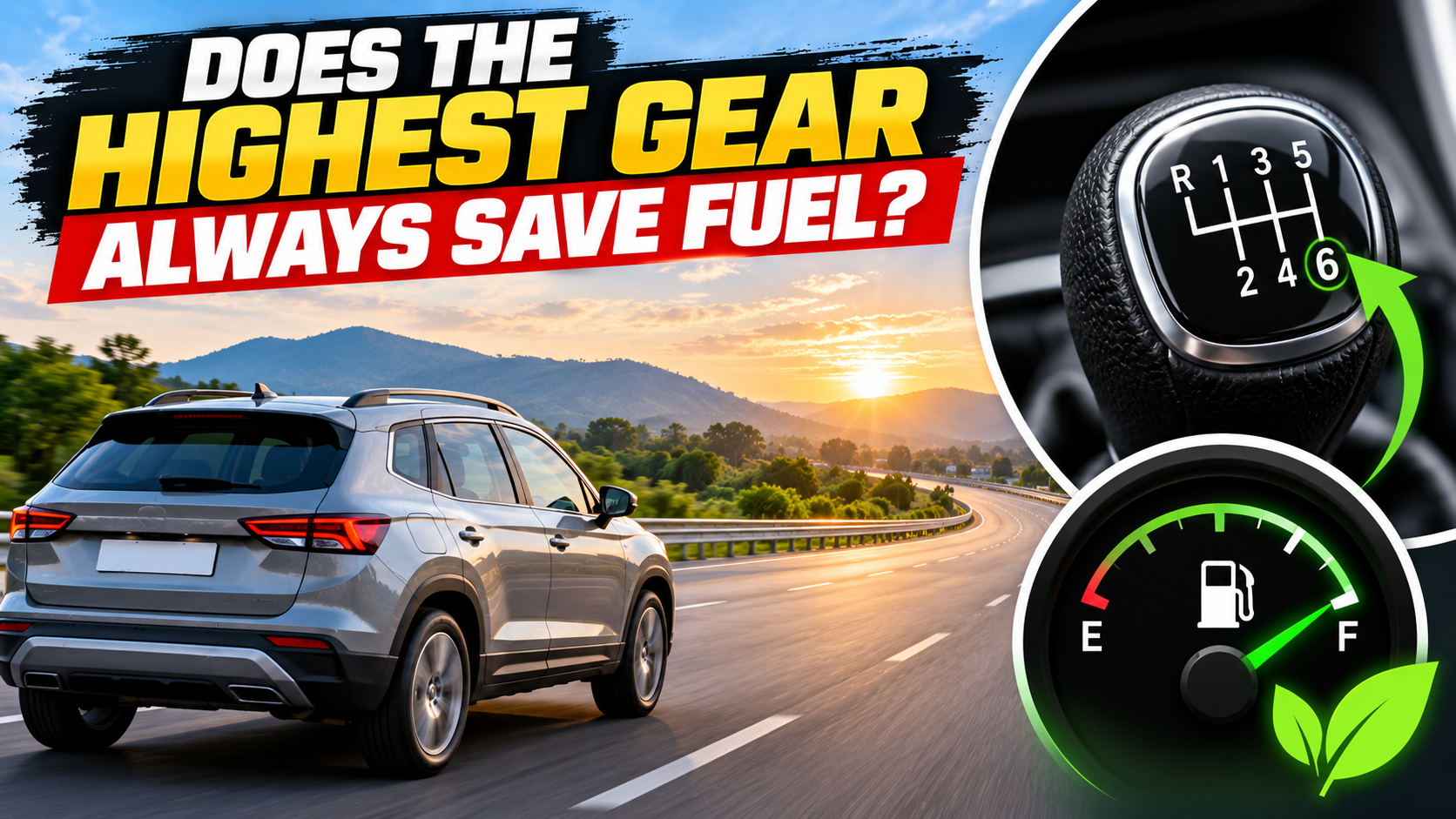
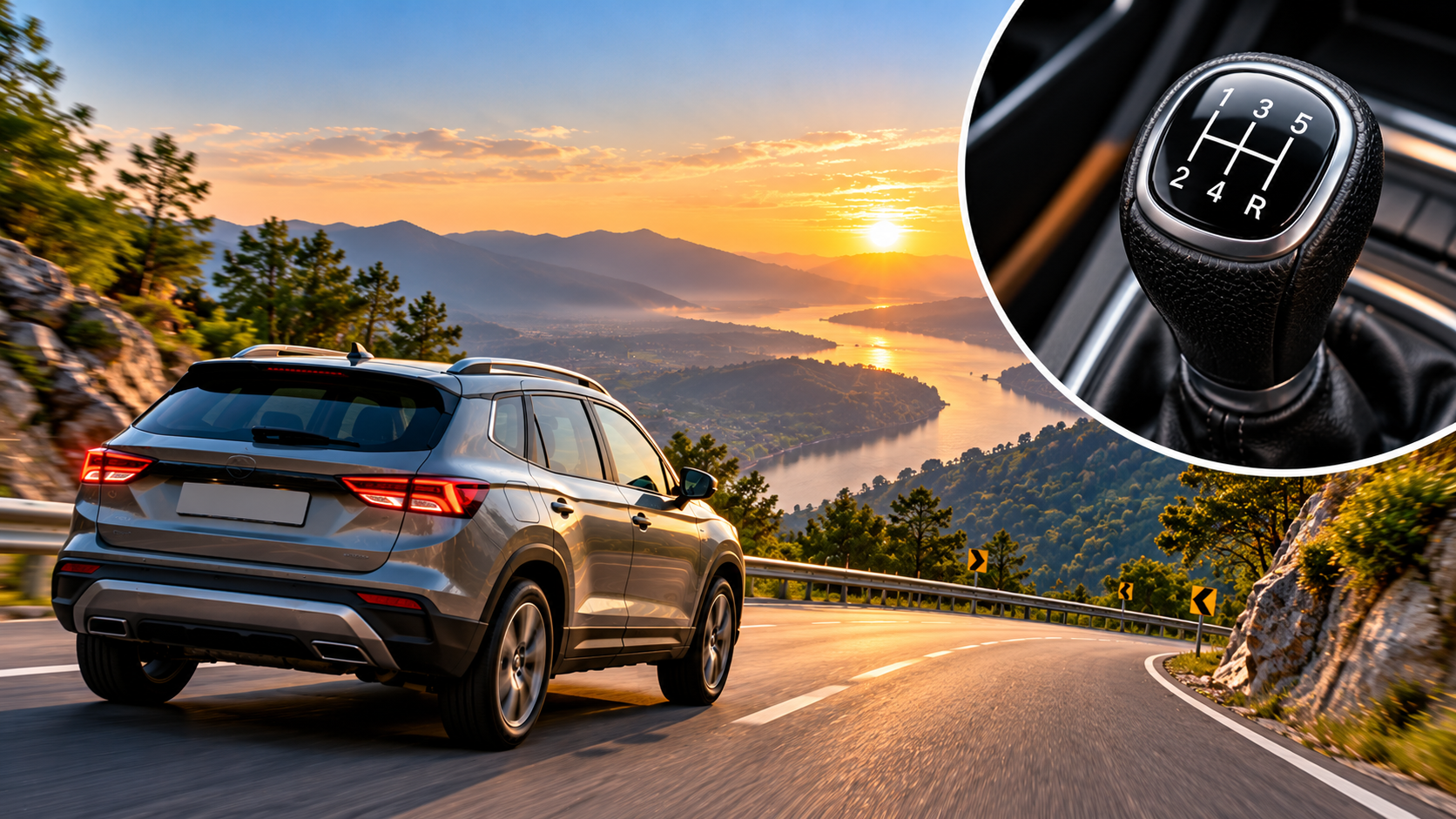
Many drivers believe that driving in the highest gear always saves fuel. The logic seems simple: a higher gear keeps engine revolutions per minute (RPM) low, so the engine should consume less petrol or diesel. While this idea is often correct during steady highway driving, it is not a universal rule.
Driving in the highest gear is economical only when the engine can handle the vehicle's speed and load comfortably. If the gear is too high for the situation, the engine may struggle, vibrate or require more throttle to maintain speed. In some cases, shifting to a lower gear can improve efficiency and make driving smoother.
The most economical driving technique involves choosing the right gear for the road, speed, traffic, incline and engine response. Understanding how gears work can help you save fuel, reduce unnecessary engine strain and improve the overall driving experience.
How to Get the Best Discount on a New Car in India
What Does the Highest Gear Actually Do?
A car's gearbox allows the engine to operate across different speeds while transferring power to the wheels. Lower gears provide greater torque multiplication, helping the vehicle move from a standstill, climb hills and accelerate.
Higher gears are designed primarily for maintaining speed with lower engine RPM. In many manual cars, fifth or sixth gear is intended for cruising at moderate or high road speeds.
For example, when driving on a flat highway at a constant speed, shifting from fourth to fifth gear may reduce engine RPM. If the engine remains within its efficient operating range, fuel consumption can decrease.
However, the gearbox does not create fuel savings simply because the gear number is higher. The engine still needs to produce enough power to overcome rolling resistance, aerodynamic drag, gradients and the vehicle's weight.
That is why the correct gear depends on driving conditions rather than the gear number alone.
How Engine RPM Affects Fuel Economy

Engine RPM indicates how many times the engine's crankshaft rotates per minute. It is an important factor in understanding fuel consumption, but lower RPM does not automatically mean better mileage.
When a car travels at a steady speed on level ground, a higher gear generally reduces engine RPM. This can reduce internal friction and pumping losses, helping the engine operate more efficiently.
However, every engine has an operating range in which it produces power efficiently. If RPM falls too low, the engine may struggle to generate the torque needed to maintain speed.
For example, imagine driving a manual petrol car at 40 km/h in fifth gear. The engine may feel sluggish when you press the accelerator. Shifting to third or fourth gear can raise RPM and allow the engine to respond more effectively.
The objective is not to keep RPM as low as possible. It is to maintain a suitable balance between engine speed, load and power demand.
New Car vs Used Car: Which One Should You Buy?
When Driving in the Highest Gear Saves Fuel
Driving in the highest gear can be an effective fuel-saving technique in several situations.
1. Cruising on a Flat Highway
A flat highway with light traffic is one of the best situations for using the highest suitable gear. Once the vehicle reaches a steady cruising speed, the engine generally does not need frequent acceleration.
Using fifth or sixth gear, where available, can reduce RPM and help minimise fuel consumption. The driver should still maintain a speed appropriate for road conditions and legal limits.
2. Maintaining a Constant Speed
Frequent acceleration and braking waste energy. When traffic is flowing smoothly, maintaining a consistent speed in an appropriate high gear can improve fuel economy.
This is especially useful on open roads where sudden speed changes are unnecessary.
3. Driving on Level Roads with a Light Load
A car carrying only its driver and a small amount of luggage may require less engine power than the same vehicle carrying several passengers and heavy cargo.
Under light-load conditions, the engine may be able to maintain speed comfortably in a higher gear.
4. Using Cruise Control Where Appropriate
On suitable highways, cruise control can help maintain a steady speed and avoid unnecessary acceleration. Some modern vehicles also use adaptive cruise control and engine-management systems to optimise operation.
However, cruise control may not always save fuel on hilly roads because the vehicle can accelerate to maintain its set speed while climbing. Driver judgement remains important.
When the Highest Gear Can Waste Fuel

There are situations in which using the highest gear is less efficient or places unnecessary strain on the engine.
1. Driving at Low Speeds
A high gear at a very low road speed can cause the engine to run below its comfortable operating range. The car may hesitate, vibrate or respond poorly when the accelerator is pressed.
Downshifting to a lower gear allows the engine to produce the required power more comfortably.
2. Climbing Steep Hills
Climbing requires additional power because the engine must overcome gravity as well as normal road resistance.
If the engine struggles in the highest gear, shifting down can help maintain momentum and avoid excessive throttle input. The appropriate gear depends on the gradient, vehicle load, engine type and speed.
3. Overtaking Another Vehicle
Overtaking requires rapid and predictable acceleration. A high gear may limit the engine's immediate response, particularly in cars with smaller engines.
Downshifting when safe can provide better acceleration. Drivers should never compromise safe following distance or attempt an overtaking manoeuvre simply to maintain a particular gear.
4. Carrying Heavy Loads
Passengers, luggage, roof boxes and trailers increase the power required to move a vehicle. A gear that works well with a light load may not be suitable when the car is heavily loaded.
Using a lower gear when needed can prevent the engine from labouring and make it easier to control speed.
5. Driving in Stop-and-Go Traffic
In congested urban traffic, the car frequently slows down, stops and accelerates. The highest gear is rarely suitable at low speeds.
Selecting the correct lower gear helps maintain smooth movement and reduces the need for excessive clutch slipping in manual vehicles.
Manual vs Automatic Car: Pros and Cons Explained
Highest Gear vs Lower Gear: Which Is More Economical?
|
Driving condition
|
Most suitable approach
|
Expected fuel-economy effect
|
|
Steady highway cruising
|
Highest suitable gear
|
Often improves economy
|
|
Flat road at moderate speed
|
Use a high gear if the engine runs smoothly
|
Can reduce fuel consumption
|
|
Very low speed
|
Select a lower appropriate gear
|
Avoids engine lugging
|
|
Steep uphill climb
|
Downshift when needed
|
Helps the engine deliver power efficiently
|
|
Overtaking
|
Select a gear that provides safe acceleration
|
Prioritises responsive performance
|
|
Heavy load or towing
|
Choose a gear suited to the load
|
Reduces strain and improves control
|
|
Stop-and-go traffic
|
Use the appropriate low gears
|
Avoids unnecessary clutch slipping
|
|
Descending a steep hill
|
Use a suitable lower gear for engine braking
|
Reduces reliance on continuous braking
|
Does the Rule Differ Between Petrol and Diesel Cars?
Yes. Petrol and diesel engines can respond differently to gear selection because they have different torque characteristics and operating ranges.
Petrol Cars
Petrol engines often need higher RPM than comparable diesel engines to deliver strong acceleration. Using a high gear at low speed can make a petrol car feel sluggish.
For economical driving, shift up when the engine is running smoothly and the car can maintain speed without excessive throttle. Avoid forcing the engine to accelerate from very low RPM in a high gear.
Diesel Cars
Diesel engines typically produce strong torque at relatively low RPM. This can make them comfortable cruising in a higher gear, particularly on highways.
However, diesel engines also have minimum comfortable operating speeds. If the car vibrates, struggles to accelerate or requires heavy throttle input, a lower gear may be more appropriate.
Neither petrol nor diesel vehicles achieve their best fuel economy simply by staying in the highest gear at all times.
Petrol vs Diesel vs CNG vs Electric Cars: How to Choose the Right Fuel Type
What About Automatic and CVT Cars?
Automatic transmissions handle gear selection differently from manual gearboxes. Traditional automatics can select lower gears when more power is needed, while continuously variable transmissions (CVTs) adjust their ratios to suit driving conditions.
Modern transmissions often use engine load, accelerator position, road speed and driving mode to select an appropriate ratio.
In most everyday situations, drivers can leave the transmission in its normal Drive mode and allow it to manage gear selection. However, some cars offer Eco, Sport or manual modes that change transmission behaviour.
Eco mode may encourage earlier upshifts and softer acceleration, while Sport mode may hold lower gears for longer to improve responsiveness. Neither mode guarantees the lowest fuel consumption in every situation.
The best approach is to drive smoothly, avoid unnecessary acceleration and use the manufacturer's recommended driving modes.
Seven Practical Tips to Improve Fuel Economy

Choosing the right gear is only one part of efficient driving. These habits can also help reduce fuel consumption.
-
Accelerate gently. Avoid pressing the accelerator harder than necessary when moving away from a stop.
-
Shift up at the appropriate time. In a manual car, change gears according to the owner's manual and the engine's response.
-
Maintain a steady speed. Anticipate traffic and avoid unnecessary acceleration and braking.
-
Check tyre pressure. Underinflated tyres increase rolling resistance and can reduce mileage.
-
Reduce unnecessary weight. Remove heavy items that you do not need to carry.
-
Maintain the vehicle regularly. Follow recommended servicing intervals and use the correct engine oil.
-
Avoid excessive speed. Aerodynamic drag increases as speed rises, so faster highway driving can use considerably more fuel.
These habits work together. Even a driver who selects gears correctly may achieve poor mileage through aggressive acceleration, excessive speed or inadequate maintenance.

Common Myths About Driving in the Highest Gear
Myth 1: Lower RPM always means better mileage.
Reality: Lower RPM can help, but the engine must still operate comfortably and produce enough power for the conditions.
Myth 2: You should shift into the highest gear as early as possible.
Reality: Shifting too early can make the engine labour. Follow the recommended shift points and pay attention to how the vehicle responds.
Myth 3: A lower gear always consumes more fuel.
Reality: A lower gear generally increases engine RPM at a given road speed, but it can be more appropriate when climbing hills, accelerating or carrying a heavy load.
Myth 4: The highest gear is always best on highways.
Reality: It is usually suitable for steady cruising, but steep inclines, strong headwinds and heavy loads can require a lower gear.
Conclusion: Choose the Right Gear, Not Just the Highest Gear
Driving in the highest gear can improve fuel economy when the car is cruising steadily on a level road and the engine is operating comfortably. However, it is not always the most economical choice.
Low speeds, steep hills, heavy loads and acceleration demands can make a lower gear more suitable. The goal is to keep the engine within its efficient operating range while maintaining smooth, safe control of the vehicle.

 Khyati Sharma 2026-10-19