
 Khyati Sharma 2026-10-01
When buying a new car, safety is one of the most important factors to consider. Many buyers compare features such as airbags, ABS, electronic stability control, crash-test ratings and advanced driver-assistance systems before choosing a vehicle. Among these features, airbags often receive special attention.
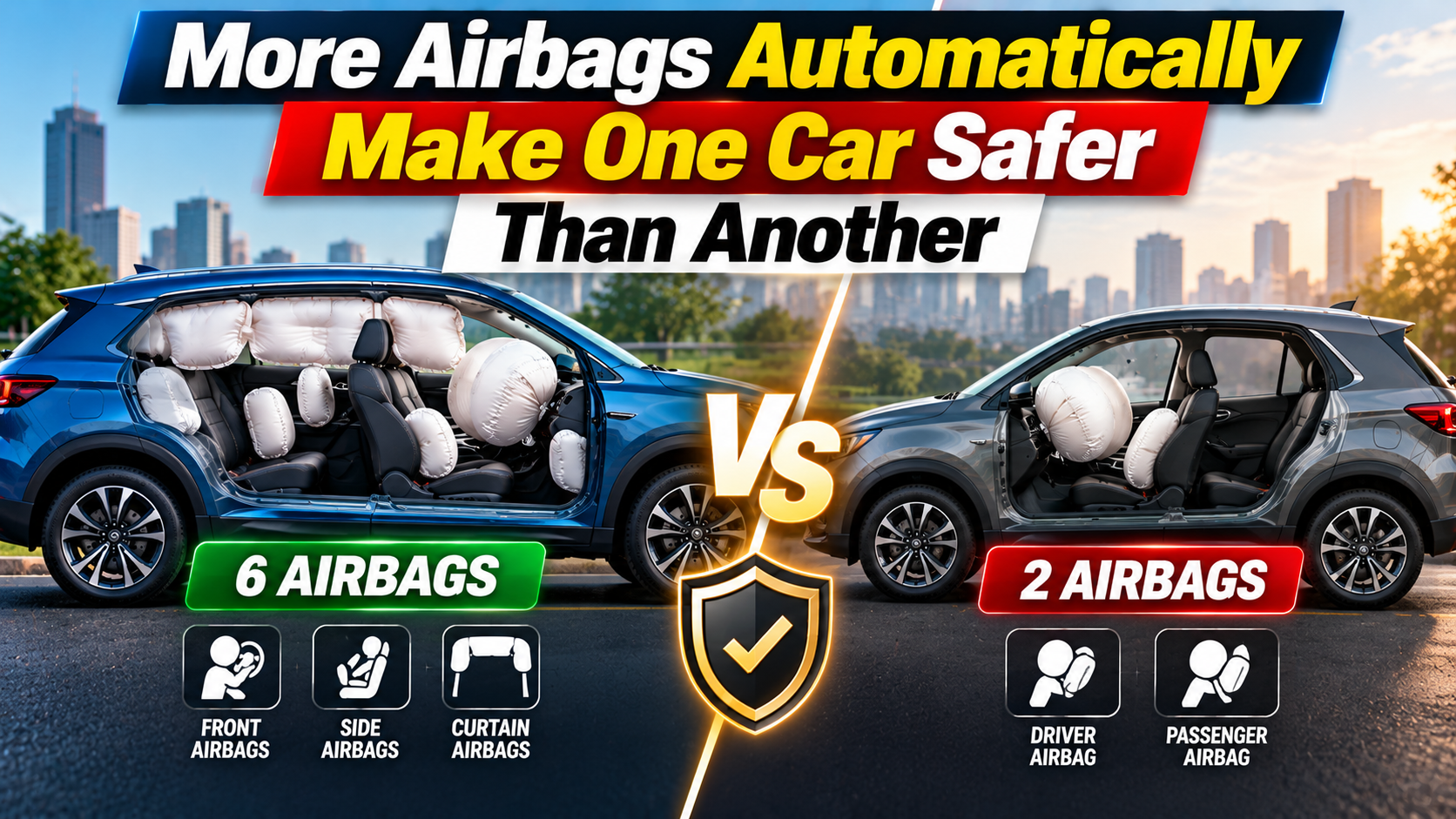
Some people believe that a car with six airbags is automatically safer than a car with two airbags. Others assume that adding more airbags guarantees better protection in every accident. But is this really true?
No. More airbags can improve occupant protection, but the number of airbags alone does not determine how safe a car is. Their effectiveness depends on their placement, design, deployment strategy, seatbelt use, crash performance and the vehicle's overall safety engineering.
For example, a well-engineered car with effective front and side-impact protection may provide better protection in certain crash scenarios than a vehicle with more airbags but weaker overall crash performance. However, all other things being equal, additional well-designed airbags can provide valuable protection for occupants.
In this article, we explain how airbags work, the difference between various types of airbags, why more airbags do not automatically mean greater safety, and what buyers should check before purchasing a car.
How Many Airbags Do You Really Need? A Safety Primer
Airbags are supplementary restraint systems designed to reduce the risk of certain injuries during a collision. They inflate rapidly during qualifying crashes to help cushion occupants and reduce the impact between their bodies and parts of the vehicle's interior.
Modern airbags work with seatbelts rather than replacing them. Seatbelts help restrain occupants and control their movement, while airbags provide additional cushioning and protection in particular impact situations.
When a vehicle experiences a crash that meets the system's activation conditions, sensors send information to the airbag control unit. The system evaluates the impact and may trigger one or more airbags.
The airbags inflate within milliseconds and then begin deflating to absorb energy and help manage occupant movement.
However, airbags do not deploy in every accident. Deployment depends on factors such as the direction and severity of the impact, the vehicle's design and the control system's programming.
Airbags are also designed for specific seating positions and crash scenarios. A front airbag, for example, is not intended to provide the same protection as a side-curtain airbag during a side collision.

Different airbags protect different parts of the body and respond to different types of collisions. Understanding these differences is more useful than simply counting the number of airbags.
1. Front Airbags
Front airbags are generally designed to protect the driver and front passenger during certain frontal collisions.
The driver's airbag is usually located in the steering wheel, while the front passenger's airbag is commonly installed in the dashboard.
These airbags help reduce the risk of certain head and chest injuries by cushioning occupants as they move forward during a crash.
However, front airbags are not a complete solution for every type of accident. Their effectiveness depends on the crash conditions, seatbelt use and the occupant's seating position.
2. Side Airbags
Side airbags are designed to provide protection during certain side-impact collisions. Depending on the design, they may be positioned in the front seats or elsewhere in the vehicle.
Side impacts can be particularly challenging because the space between an occupant and the striking vehicle is often limited.
Side airbags can help reduce the risk of certain chest, torso or other injuries, depending on their placement and design.
3. Curtain Airbags
Curtain airbags generally deploy from the roof area along the side windows. They are designed to help protect occupants' heads in certain side-impact crashes and may provide additional protection in some rollover situations, depending on the vehicle.
Curtain airbags can be especially valuable for occupants sitting in the rear seats, provided the system is designed to protect those seating positions.
However, the coverage offered varies between vehicles. Buyers should check whether the curtain airbags extend along the full passenger cabin or cover only selected rows.
4. Knee Airbags
Knee airbags are designed to help manage the movement of the driver's or passenger's lower body in certain collisions.
Their purpose is to reduce the risk of specific injuries and help control occupant positioning during the crash. They supplement, rather than replace, the protection provided by seatbelts and other restraint systems.
A knee airbag is not automatically more important than every other safety feature. Its value depends on the vehicle's overall restraint design and the crash scenarios being considered.
5. Centre Airbags
Some vehicles feature a centre airbag designed to deploy between front occupants during certain side-impact collisions.
This can help reduce the risk of occupants striking each other during a crash. Centre airbags are not available in every vehicle and are designed for specific restraint-system configurations.
6. Rear-Seat Airbags
Some vehicles offer additional airbags or advanced restraint systems intended to improve protection for rear passengers. Availability and design vary significantly.
When buying a family car, it is important to examine the safety equipment provided for both front and rear occupants instead of focusing only on the driver's seat.
How to Set a Realistic Car Buying Budget (On-Road Price Explained)
No. The number of airbags is only one part of a car's safety package.
Airbags are designed to work alongside the vehicle's body structure, seatbelts, head restraints, electronic stability control and other safety technologies. Their effectiveness depends on how these systems work together.
Consider two hypothetical cars.
Car A has six airbags, but its crash performance, restraint calibration and structural protection are relatively weak in a particular type of collision. Car B has four airbags, but its body structure, seatbelts and restraint systems perform better in the same crash scenario.
It is possible for Car B to offer better protection in that scenario, even though it has fewer airbags. This is an illustrative example, not a claim about any particular vehicle.
On the other hand, if two vehicles have similarly strong crash performance and well-engineered restraint systems, additional airbags that cover more seating positions or impact scenarios can provide meaningful extra protection.
The important question is not simply, "How many airbags does this car have?" It is also, "How effectively does the complete safety system protect occupants?"
|
Safety factor |
Why it matters |
What buyers should check |
|
Number of airbags |
More airbags can extend protection to additional body areas or seating positions |
How many airbags are fitted and where they are located |
|
Crash-test rating |
Indicates performance under a specific assessment programme |
Rating organisation, testing year and individual scores |
|
Body structure |
Helps manage crash energy and protect the passenger compartment |
Structural performance in relevant crash tests |
|
Seatbelts and pretensioners |
Help restrain occupants and manage movement during a crash |
Seatbelt availability, reminders and restraint features |
|
Side and curtain airbags |
Can improve protection in certain side impacts |
Whether protection extends to the relevant seating positions |
|
Electronic stability control |
Helps the driver maintain control in certain situations |
Whether the system is standard equipment |
|
Automatic emergency braking |
Can help avoid or reduce the severity of some collisions |
System availability, operating limits and performance assessments |
|
Child occupant protection |
Helps protect children when suitable restraints are correctly installed |
Child-safety assessment results and compatible restraint arrangements |
Airbag placement determines which occupants and body areas receive protection in particular crash scenarios.
For example, two cars may both advertise six airbags, but their configurations may differ. One may have front, side and curtain airbags, while another may use a different arrangement.
Even when the total number is identical, the protection offered to rear passengers or during certain side impacts may not be the same.
Buyers should therefore check the manufacturer's specifications to understand the exact configuration. They should also confirm whether the listed equipment is standard across all variants or available only in higher trims.
The term "six airbags" alone does not provide enough information to evaluate the complete restraint system.
One of the biggest misconceptions about airbags is that they can protect occupants without seatbelts.
In reality, airbags are generally designed to work with seatbelts. Seatbelts help keep occupants in the appropriate position, while airbags provide additional cushioning and restraint during certain collisions.
Without a seatbelt, an occupant may move too far forward or sideways before the airbag deploys. This can reduce the intended protective effect and increase the risk of injury.
An occupant who is not wearing a seatbelt may also be thrown around the cabin or ejected from the vehicle in a severe crash.
Every passenger should wear a properly fitted seatbelt on every journey, including those sitting in the rear. Children should use suitable child restraints according to their size and the manufacturer's instructions.

Petrol vs Diesel vs CNG vs Electric Cars: How to Choose the Right Fuel Type
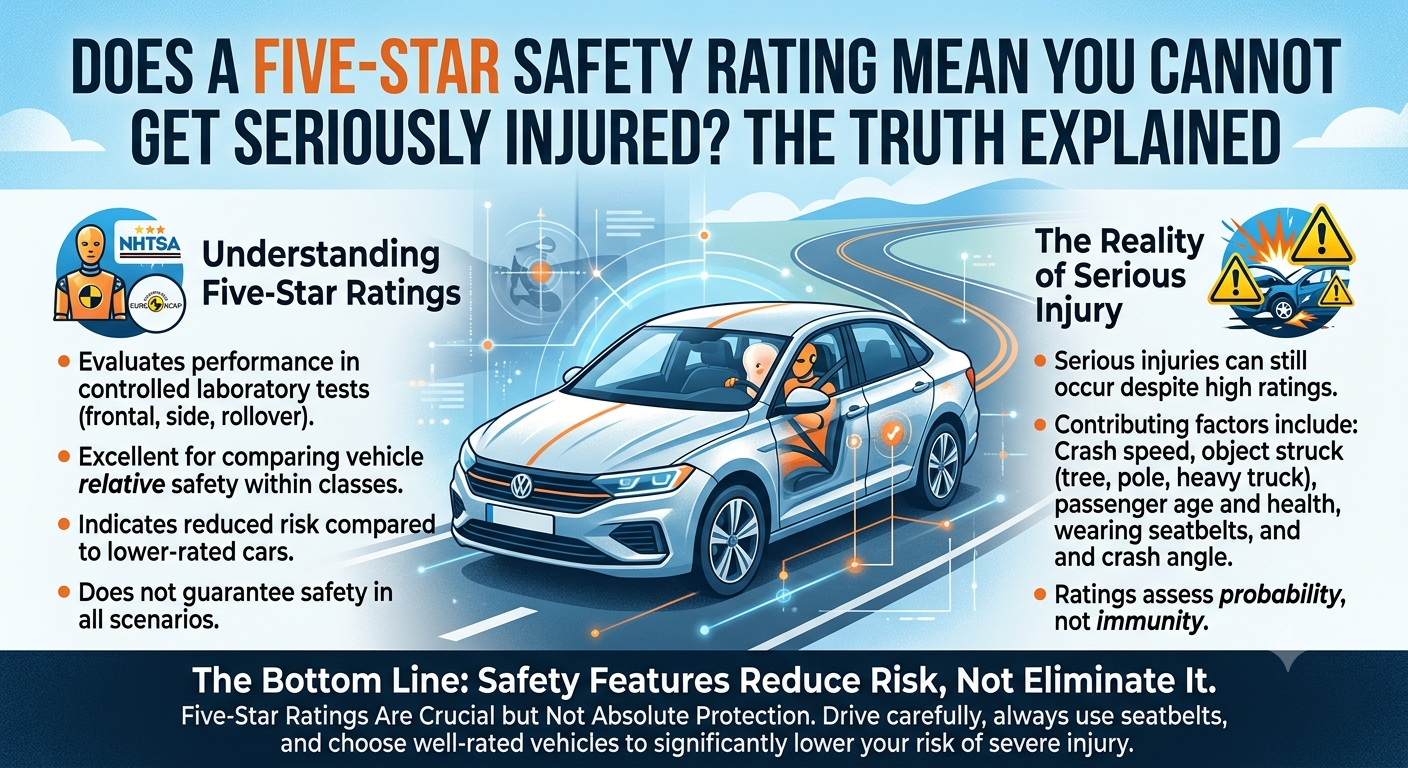
No. Even a vehicle equipped with numerous airbags cannot eliminate every risk of serious injury.
The forces involved in a collision depend on speed, impact direction, the other vehicle or object involved, vehicle compatibility and many other factors.
Airbags can reduce the risk of certain injuries, but they cannot guarantee protection in every crash. Their deployment also depends on whether the collision meets the system's activation conditions.
A car's overall safety performance depends on much more than its airbag count. A strong passenger compartment, effective restraint systems, appropriate crash-energy management and technologies that help prevent accidents are all important.
For this reason, buyers should look for strong independent crash-test results and comprehensive safety equipment rather than relying on a single specification.
If safety is a priority, consider the following points before making a purchase.
1. Check the crash-test rating. Look for assessments from recognised organisations, such as Bharat NCAP, and verify that the result applies to the model and variant you are considering.
2. Compare the individual scores. Examine adult occupant protection, child occupant protection and other published results rather than focusing only on the overall star rating.
3. Check the airbag configuration. Confirm the number, location and seating-position coverage of the airbags.
4. Look for electronic stability control. This technology can help maintain control in certain situations where a vehicle might otherwise skid or lose stability.
5. Examine seatbelt features. Seatbelt reminders, pretensioners and load limiters can contribute to occupant protection, depending on the system fitted.
6. Consider active safety technology. Features such as automatic emergency braking may help prevent or reduce the severity of some collisions. Their capabilities and limitations vary by vehicle.
7. Verify the variant. Safety equipment can differ between entry-level and top-end versions of the same model. Check the exact variant's specifications before booking.
8. Use the safety equipment correctly. Wear seatbelts, install child restraints properly and follow the owner's manual instructions.
More airbags can improve a car's safety by providing additional protection in certain crash scenarios and covering more occupants or body areas. However, a higher airbag count does not automatically make one car safer than another.
The design and placement of airbags, the strength of the vehicle structure, seatbelt performance, crash-test results and active safety systems all contribute to occupant protection.
When comparing two cars, do not choose solely on the basis of whether one has six airbags and the other has four. Examine their overall crash performance, the type of airbags provided, the safety features available in the exact variant and the protection offered to rear passengers.
The best choice is a vehicle with strong independent safety-test performance, a well-designed restraint system and appropriate safety equipment for all occupants.









Hyundai
₹5.99 - 11.88 Lakh