 Khyati Sharma 2026-08-05
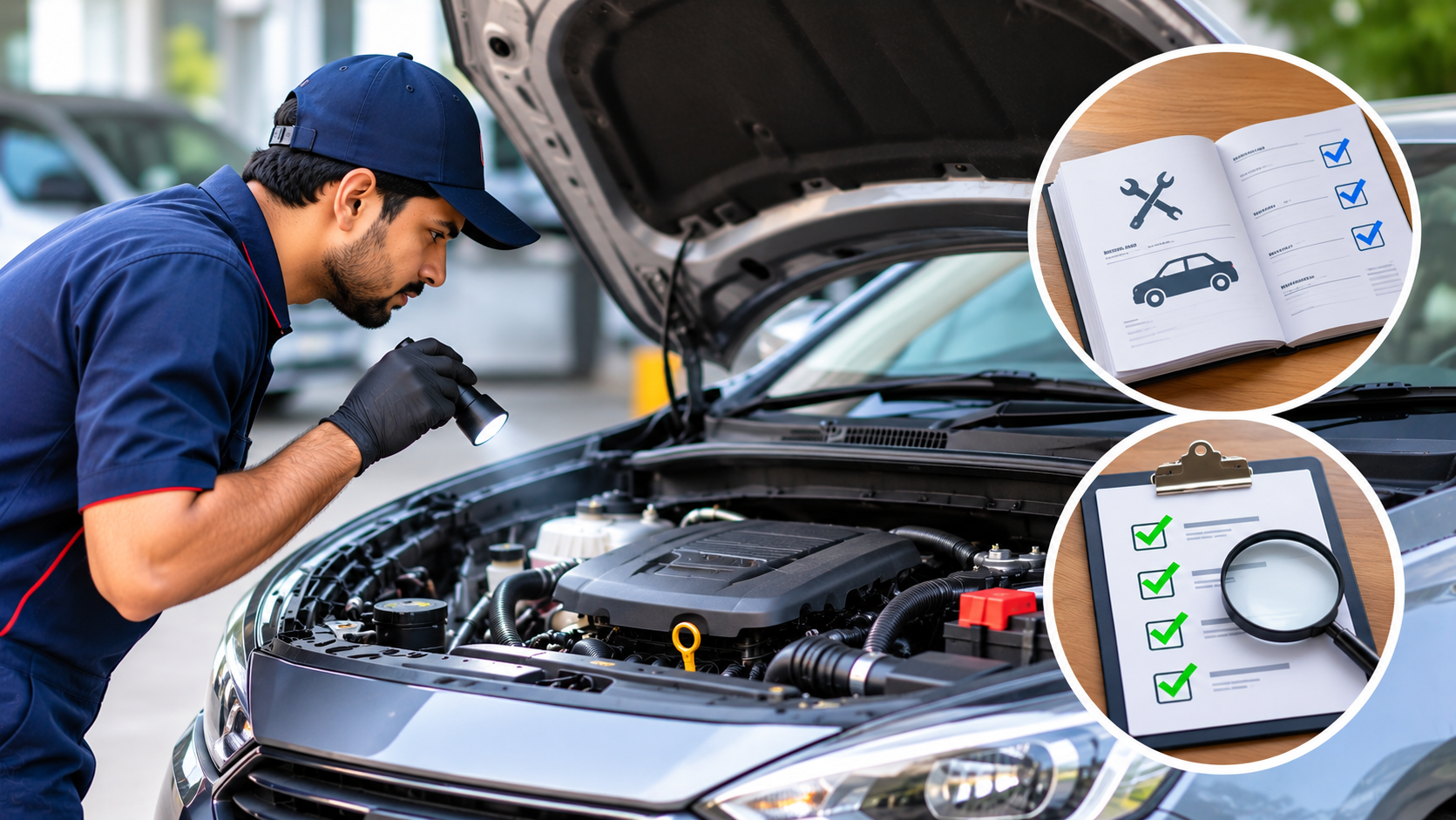
Buying a second-hand car with a complete service history can feel reassuring. When a seller provides invoices, maintenance records and an authorised service centre booklet, buyers often assume that the vehicle has been properly maintained and is ready for trouble-free ownership.
A full service history is certainly a positive sign. It helps buyers understand when the vehicle was serviced, which components were replaced and whether scheduled maintenance was carried out. It can also make it easier to verify the car's recorded kilometres and previous repair work.
However, does a complete service history mean you can skip an independent inspection?
No. Even a car with a full service history should undergo an independent pre-purchase inspection before you buy it.
Service records mainly tell you what maintenance and repairs were documented in the past. They do not necessarily reveal the vehicle's current mechanical condition, hidden accident damage, developing faults or problems that appeared after its last service.
Car Waiting Period: How to Get Your New Car Faster
A full service history generally means that records are available for the vehicle's scheduled maintenance and documented repairs.
Depending on the manufacturer and service centre, these records may include:
Date and kilometres at each service.
Engine oil and oil filter replacement.
Air filter and fuel filter replacement.
Brake pad and brake fluid maintenance.
Coolant replacement.
Battery replacement.
Tyre replacement and rotation.
Transmission-related maintenance.
Major component repairs.
Parts replaced under warranty.
These records help establish how the vehicle was maintained during its previous ownership.
They are particularly useful when the service entries are consistent and supported by genuine invoices.
However, service history does not guarantee that every component is currently working correctly. It also cannot prove that the car has never been involved in an accident or that no problems have developed since the last recorded service.
Think of service history as evidence of past maintenance, not a guarantee of present condition.
One common mistake is assuming that a recently serviced vehicle must be mechanically perfect.
A regular service usually involves scheduled checks and maintenance according to the manufacturer's recommendations. It does not necessarily include a detailed inspection of every mechanical and structural component.
Some developing problems may not be obvious during routine servicing.
For example:
A clutch may be close to the end of its useful life.
Suspension bushes may be worn.
Brake discs may require replacement soon.
An automatic gearbox may show occasional jerks.
A battery may be approaching the end of its service life.
An engine may have a minor oil leak.
Air conditioning performance may be declining.
These issues can develop between scheduled services.
An independent inspection helps identify existing problems and components that may require attention shortly after purchase.

Accident history is one of the most important reasons to arrange an independent inspection.
A vehicle may have a complete service record and still have been involved in a collision.
Not every accident results in an insurance claim or a detailed entry in the regular service booklet. Minor repairs may also be carried out at independent body shops.
An experienced inspector should examine areas such as:
Front and rear bumpers.
Bonnet and boot lid.
Doors and fenders.
A, B and C pillars.
Chassis and structural members.
Radiator support.
Suspension mounting points.
Boot floor and spare-wheel well.
Look for uneven panel gaps, inconsistent paintwork, unusual welding, damaged mounting points and signs of structural repairs.
A repainted panel does not automatically indicate a major accident. However, structural damage or poorly executed repairs require careful investigation.
A professional inspection can help distinguish between cosmetic repairs and potentially serious damage.
Manual vs Automatic Car: Pros and Cons Explained
When purchasing a used car, the seller wants to complete the sale, while the buyer wants to understand the vehicle's actual condition.
An independent inspection provides an additional assessment from a professional who is not relying solely on the seller's description.
You can arrange an inspection through a qualified independent mechanic or a reputable vehicle inspection service.
Ideally, the inspector should have experience with the specific make, model, engine and transmission.
The inspection should cover the vehicle's mechanical systems, bodywork, electronics, safety equipment and underbody.
Ask for a written report instead of relying only on a verbal opinion.
This report can help you decide whether to proceed, negotiate the price or reject the vehicle.
The engine and gearbox are among the most expensive components to repair. Therefore, they deserve particular attention during a pre-purchase inspection.
Engine inspection
A mechanic should examine:
Engine oil leaks and seepage.
Coolant leakage.
Unusual knocking or rattling sounds.
Excessive vibration.
Irregular idling.
Exhaust smoke.
Cooling system condition.
Belts, hoses and accessible engine mounts.
Whenever possible, ask for a cold-start inspection. Starting the engine when it is completely cold can sometimes reveal noises or starting problems that may not be noticeable after it warms up.
Transmission inspection
The gearbox should be checked during a test drive.
For manual cars, inspect clutch operation, gear engagement and unusual transmission noises.
For automatic cars, observe whether gear changes are smooth and whether there is hesitation, slipping, jerking or delayed engagement.
The inspection method should be appropriate for the specific transmission type. Some modern automatic gearboxes have operating characteristics that differ from conventional automatic transmissions.
A full service history cannot replace these checks.
Company-Fitted vs Aftermarket Accessories: Which Is Better?
A car may have been serviced regularly but still require suspension or braking repairs.
These components directly affect driving comfort, handling and safety.
The inspector should examine:
Suspension: Check shock absorbers, struts, bushes, ball joints and suspension mounting points for wear or damage.
Brakes: Inspect brake pads, discs, callipers, brake hoses and fluid condition.
Tyres: Check tread depth, uneven wear, cracks and tyre manufacturing dates.
Steering: Look for excessive play, unusual noises and alignment-related problems.
Uneven tyre wear can sometimes indicate incorrect alignment, worn suspension components or previous impact damage.
If the brakes vibrate or the car pulls to one side during braking, investigate the cause before purchasing it.
Modern cars contain electronic control units that monitor and manage various vehicle systems.
An independent inspection may include an electronic diagnostic scan to check for stored fault codes.
Depending on the vehicle, the scan may help identify issues involving:
Engine management.
Transmission control.
ABS and braking systems.
Airbag systems.
Electronic steering.
Sensors and control modules.
Emissions-related systems.
However, a diagnostic scan is not a complete health certificate.
A vehicle may have an intermittent fault that is not currently active. Some problems may also be mechanical rather than electronic.
Inspectors should interpret the diagnostic results alongside physical checks and a road test.
Do not assume that a dashboard without warning lights or a scan showing no active faults proves that the vehicle is problem-free.

The underside of a used car can reveal problems that are difficult to identify during a normal walk-around inspection.
Ask the mechanic to inspect the vehicle on a suitable lift.
Important areas include:
Chassis and structural members.
Floor panels.
Suspension mounting points.
Exhaust system.
Brake and fuel lines.
Engine and transmission underside.
Signs of corrosion.
Evidence of oil or fluid leakage.
Unusual welding or repairs.
In India, vehicles used in coastal regions, flood-affected areas or places with harsh road conditions may require particular attention to corrosion and underbody damage.
Fresh underbody coating is not automatically suspicious, but the inspector should check whether it hides previous repairs or corrosion.
Petrol vs Diesel vs CNG vs Electric Cars: How to Choose the Right Fuel Type
Some problems are easy to overlook during a short inspection.
Test the air conditioning and all important electrical features before buying the car.
Check:
Air conditioning cooling performance.
Power windows.
Central locking.
Headlights and tail-lights.
Indicators and hazard lights.
Infotainment system.
Reverse camera.
Parking sensors.
Electric mirrors.
Seat adjustment functions.
Sunroof, if fitted.
Instrument cluster and warning lights.
Electrical repairs can sometimes be expensive, particularly in vehicles with advanced electronics and multiple control modules.
Do not assume that every feature works simply because the vehicle has a complete service history.
|
Inspection factor |
Full service history |
Independent inspection |
|
Previous servicing |
Shows documented maintenance |
Checks available records and current condition |
|
Engine condition |
Provides past repair details |
Examines present mechanical condition |
|
Transmission |
May show previous servicing |
Checks operation and possible faults |
|
Accident damage |
May show documented repairs |
Physically examines body and structure |
|
Suspension |
May list replaced components |
Checks current wear and performance |
|
Brakes |
Shows previous maintenance |
Measures and examines present condition |
|
Tyres |
May show replacement history |
Checks current condition and wear |
|
Electrical system |
May show recorded repairs |
Tests available features and scans systems |
|
Underbody |
Usually limited information |
Allows physical inspection |
|
Future repair costs |
Cannot guarantee future condition |
Can identify current and upcoming repair needs |
The cost of an independent pre-purchase inspection depends on the vehicle, inspection provider, city and depth of the checks.
A basic inspection may cover exterior condition, engine operation, tyres, brakes and a short road test.
A more detailed inspection may include:
Diagnostic scanning.
Paint thickness measurements.
Underbody examination.
Structural damage checks.
Engine and transmission assessment.
Written inspection report.
Buyers should ask what is included before booking an inspection.
Do not choose an inspection service only because it offers the lowest price. The inspector's experience, coverage and quality of reporting are more important.
Even if an inspection costs a few thousand rupees, it may help prevent much larger repair expenses later.
Ex-Showroom vs On-Road Price: What's the Real Difference?
Trusting the service booklet completely: A full service history is useful, but it cannot establish the vehicle's entire current condition.
Skipping the test drive: Always drive the vehicle and check how the engine, gearbox, steering and brakes behave.
Ignoring accident repairs: A car with regular servicing may still have hidden structural damage.
Checking only the engine: Suspension, brakes, electronics and underbody condition are equally important.
Ignoring warning lights: Investigate warning lights instead of accepting explanations without verification.
Not checking the documents: Verify the Registration Certificate, insurance, loan status and available service records.
Relying only on the seller's mechanic: An independent assessment gives buyers another perspective.
Before paying the full amount or completing the ownership transfer, follow a few basic steps.
Collect the complete service history and supporting invoices.
Verify the kilometres recorded in the service documents.
Ask about previous accidents and major repairs.
Arrange an independent pre-purchase inspection.
Take a proper test drive.
Check the RC, insurance and other relevant documents.
Review the inspection report and estimated repair expenses.
Negotiate the final price based on the vehicle's actual condition.
If the seller refuses an independent inspection without a reasonable explanation, consider it a warning sign.
A full service history is one of the strongest positive signs when buying a used car. It helps establish the vehicle's maintenance background and gives buyers more confidence about its previous servicing.
However, it cannot guarantee that the car is free from mechanical problems, accident damage or developing faults.
An independent inspection provides a separate assessment of the vehicle's current condition. It can identify repair requirements, safety concerns and potential expenses that may not appear in the service records.