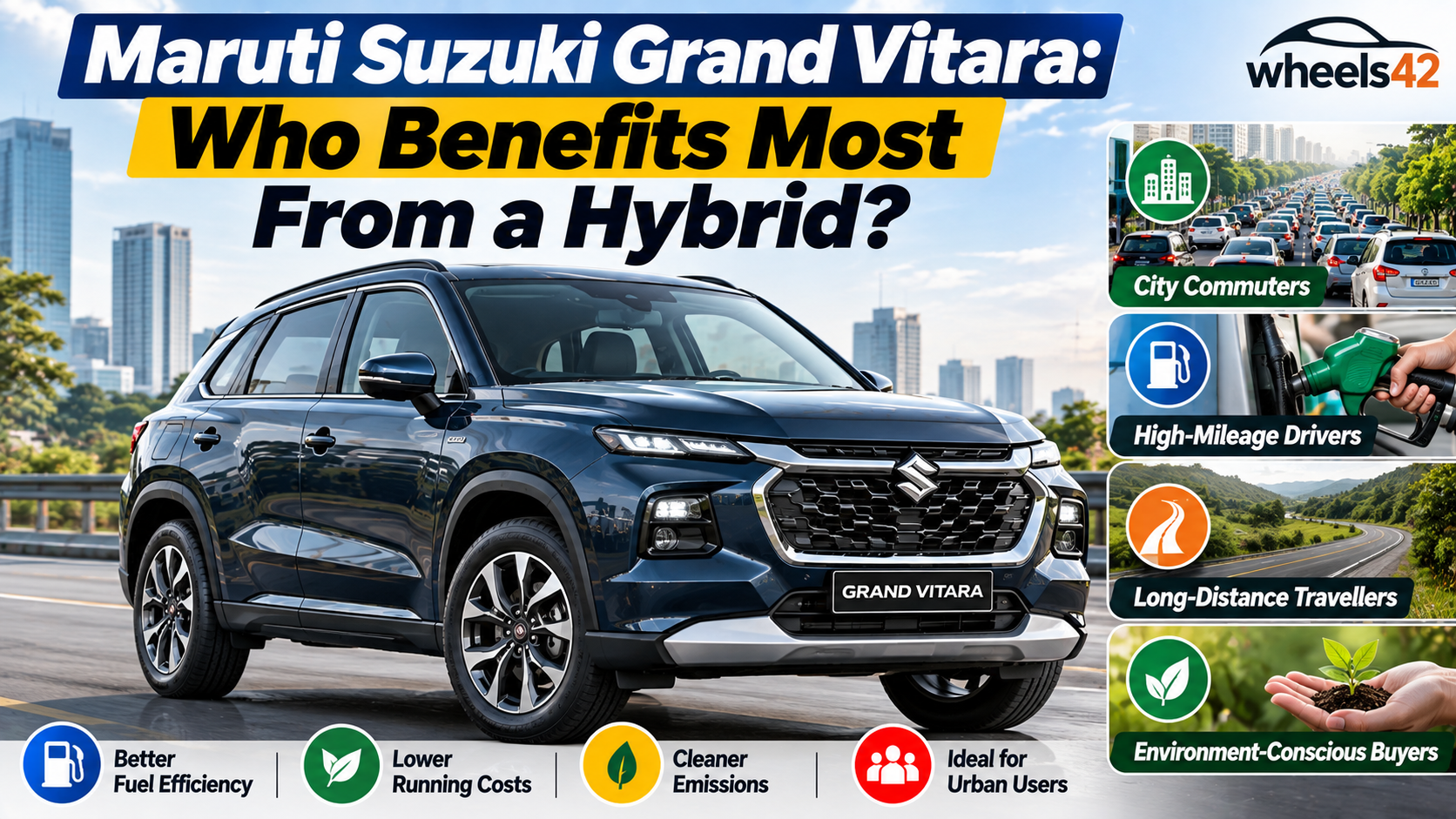
The Maruti Suzuki Grand Vitara is available with different powertrain choices, including a strong-hybrid system designed to reduce fuel consumption during everyday driving. But a hybrid powertrain is not automatically the right choice for every SUV buyer.
The biggest benefits depend on how far you drive, where you drive and how often you encounter traffic.
For someone spending long hours in city traffic, the hybrid system can offer a different ownership experience from a conventional petrol SUV. For a buyer who drives relatively short distances or mostly uses highways, the calculation can be different.
So, who actually benefits most from choosing the Grand Vitara hybrid?
What Is the Grand Vitara Strong Hybrid?
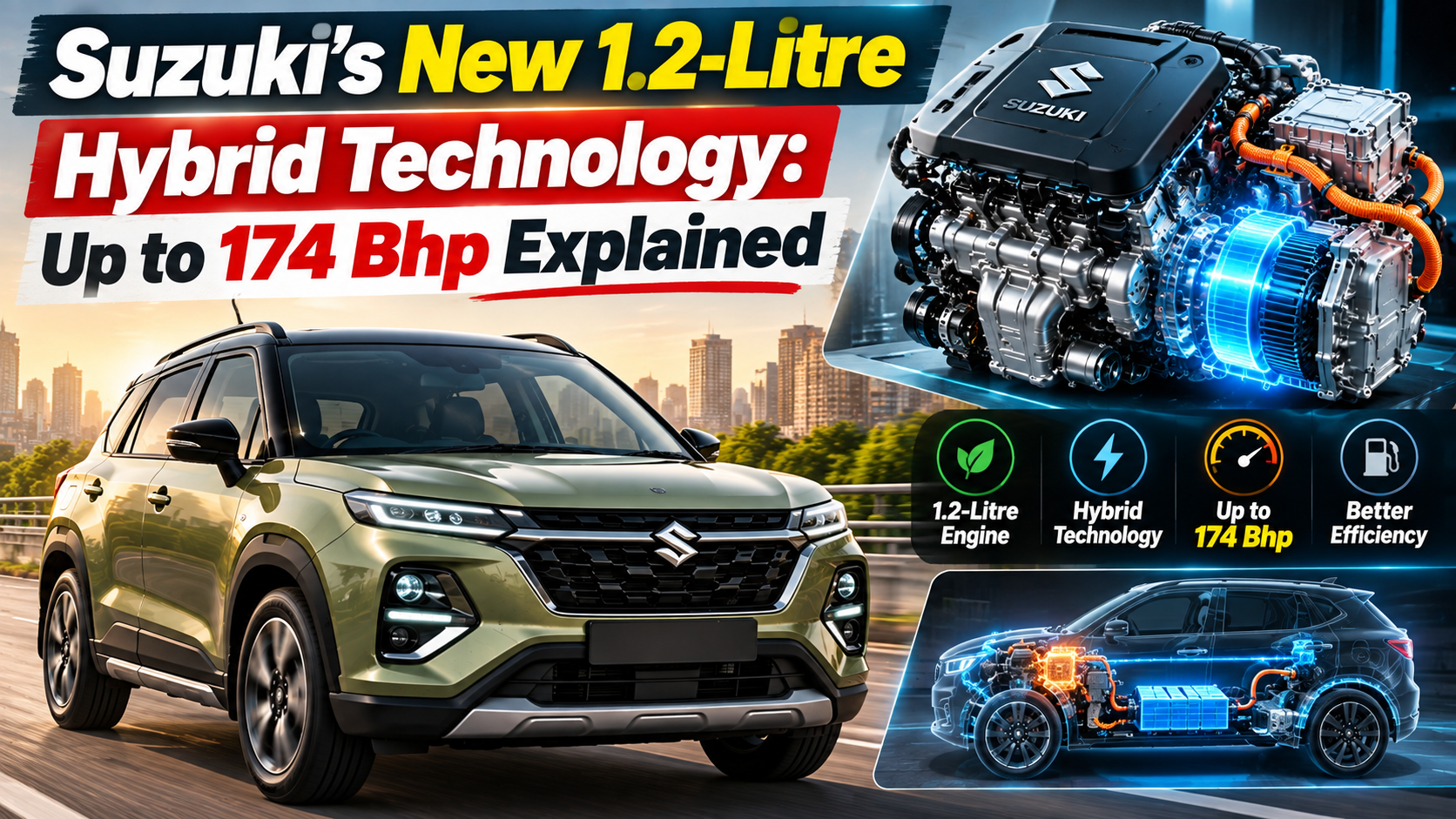
The Grand Vitara's strong-hybrid powertrain combines a petrol engine with an electric motor and battery system.
Unlike a mild-hybrid setup, a strong hybrid can use electric power for certain driving conditions. The petrol engine and electric motor can work together when additional performance is required, while the system can also recover energy during deceleration.
This makes the hybrid particularly relevant in stop-and-go traffic, where repeated acceleration and braking provide more opportunities for the hybrid system to operate efficiently.
Grand Vitara Hybrid: Key Concept
|
Feature
|
Strong Hybrid
|
|
Petrol engine
|
Yes
|
|
Electric motor
|
Yes
|
|
Hybrid battery
|
Yes
|
|
Regenerative braking
|
Yes
|
|
EV operation
|
Possible under suitable conditions
|
|
Main objective
|
Improved fuel efficiency
|
|
Best suited to
|
High-mileage urban users
|
Who Benefits Most From the Hybrid?
1. Drivers Who Spend a Lot of Time in City Traffic
Urban traffic is one of the situations where a strong hybrid can make the most sense.
Frequent stops, slow-moving traffic and repeated acceleration can allow the electric motor to contribute more often. Instead of relying entirely on the petrol engine, the hybrid system can use stored electrical energy under suitable conditions.
For people who drive through congested city roads every day, this can potentially reduce fuel consumption.
2. High-Mileage Drivers
The hybrid becomes more interesting as annual driving distance increases.
Consider two buyers:
|
Buyer
|
Approx. Annual Driving
|
Hybrid Consideration
|
|
Occasional driver
|
5,000 km
|
Benefits may be limited
|
|
Regular user
|
10,000 km
|
More useful
|
|
High-mileage user
|
15,000+ km
|
Greater potential benefit
|
|
Heavy urban user
|
20,000+ km
|
Strong case to evaluate hybrid
|
| |
|
|
These are usage examples rather than guaranteed fuel-cost savings. Actual results depend on traffic, driving style, fuel prices and vehicle usage.
A person covering significantly more kilometres each year has more opportunities to benefit from improved fuel efficiency.
3. Owners Who Want Better Fuel Efficiency
Fuel economy is one of the main reasons to consider the Grand Vitara strong hybrid.
The system is designed to use the petrol engine and electric motor efficiently, particularly during conditions where an electric motor can provide assistance.
However, claimed efficiency figures should not be treated as guaranteed real-world mileage. Your results can vary depending on:
- Traffic conditions
- Average speed
- Air-conditioning usage
- Driving style
- Passenger load
- Road conditions
- Tyre pressure
- Highway versus city usage
4. Buyers Who Regularly Drive in Stop-and-Go Conditions
A conventional petrol engine can be less efficient when a vehicle repeatedly accelerates, slows and stops.
The hybrid system is designed around exactly these types of driving cycles.
Regenerative braking can recover some energy during deceleration and store it in the hybrid battery. That stored energy can subsequently be used by the electric motor.
This makes the technology particularly relevant for commuters who spend considerable time in crowded urban traffic.
Who May Not Need the Hybrid?
The strong hybrid has advantages, but there are situations where its benefits may be less important.
1. Low Annual Mileage
If you drive only a few thousand kilometres each year, the fuel savings may not be enough to justify choosing a hybrid purely for financial reasons.
In such a case, buyers should compare the purchase price difference with their expected annual fuel savings.
2. Mostly Highway Driving
Highway driving at relatively steady speeds can reduce some of the situations where a hybrid has its biggest efficiency advantages.
The electric motor can still assist the vehicle, but the benefit may differ from what a driver experiences in urban traffic.
3. Buyers Focused Mainly on Purchase Price
Hybrid technology adds complexity and can affect the purchase price.
A buyer whose priority is keeping the initial purchase cost low should compare the hybrid with the regular petrol version rather than assuming the hybrid will automatically be cheaper to own.
Grand Vitara Hybrid vs Petrol: What Should You Consider?
|
Factor
|
Strong Hybrid
|
Petrol
|
|
Initial purchase cost
|
Generally higher
|
Generally lower
|
|
Fuel-efficiency focus
|
High
|
Moderate
|
|
City traffic
|
Particularly suitable
|
Suitable
|
|
Highway use
|
Suitable
|
Suitable
|
|
Low annual mileage
|
May offer fewer financial benefits
|
Can make more sense
|
|
High annual mileage
|
More attractive to evaluate
|
Fuel costs can be higher
|
|
Electric assistance
|
Yes
|
No strong-hybrid electric drive
|
|
Regenerative braking
|
Yes
|
Conventional system
|
The correct choice depends on the buyer's usage rather than simply the availability of hybrid technology.
Does the Grand Vitara Hybrid Save Money?
This is one of the most important questions for potential buyers.
A hybrid can use less fuel, but the overall financial benefit depends on several variables.
For example:
Annual fuel saving = difference in fuel consumption × annual kilometres × fuel price
However, the purchase-price difference must also be considered.
A buyer driving 20,000 km every year may have a different ownership calculation from someone driving only 5,000 km.
Therefore, instead of looking only at mileage, buyers should calculate their expected annual fuel expenditure.
Why City Drivers Could Benefit More
The hybrid system has particular relevance to urban driving because city traffic involves frequent changes in speed.
During suitable conditions, the electric motor can assist acceleration, while regenerative braking can recover some energy during deceleration.
This can make the powertrain particularly interesting for people who regularly deal with:
- Traffic signals
- Congested roads
- Stop-and-go traffic
- Short urban trips
- Frequent acceleration and braking
However, real-world efficiency will vary.
What About Long-Distance Trips?
The Grand Vitara hybrid can also be used for highway travel and long-distance journeys.
However, highway users should not assume that the hybrid will always deliver the same efficiency advantage as it can in urban conditions.
At steady highway speeds, the petrol engine can play a larger role in moving the vehicle.
For someone whose driving consists mostly of long highway journeys, the decision should therefore include purchase price, luggage requirements, performance preferences and expected fuel consumption rather than focusing exclusively on hybrid efficiency.
Grand Vitara Hybrid: Who Should Consider It?
The strong hybrid is particularly worth considering if you:
- Drive regularly in cities
- Cover a high number of kilometres every year
- Spend significant time in traffic
- Prioritise fuel efficiency
- Want electric assistance without needing external charging
- Plan to keep the vehicle for several years
- Want an SUV with a hybrid powertrain
Who Should Compare Other Options?
You may want to compare the regular petrol version if you:
- Drive very little each year
- Mostly drive on open highways
- Prioritise a lower purchase price
- Are unlikely to keep the vehicle for many years
- Don't spend much time in congested traffic
Grand Vitara Hybrid: Questions Buyers Should Ask
Before choosing the hybrid, ask yourself:
How many kilometres do I drive each year?
Higher annual usage generally gives the efficiency advantage more opportunity to matter.
Where do I drive most?
If most of your driving is in heavy city traffic, the hybrid becomes more relevant.
How long will I keep the car?
A longer ownership period gives you more time to potentially recover a higher upfront cost through fuel savings.
What is my priority?
If fuel efficiency is a major priority, the hybrid deserves closer consideration. If purchase price is the main concern, compare both powertrain options carefully.

 Khyati Sharma 2026-09-27