Khyati Sharma 2026-08-29
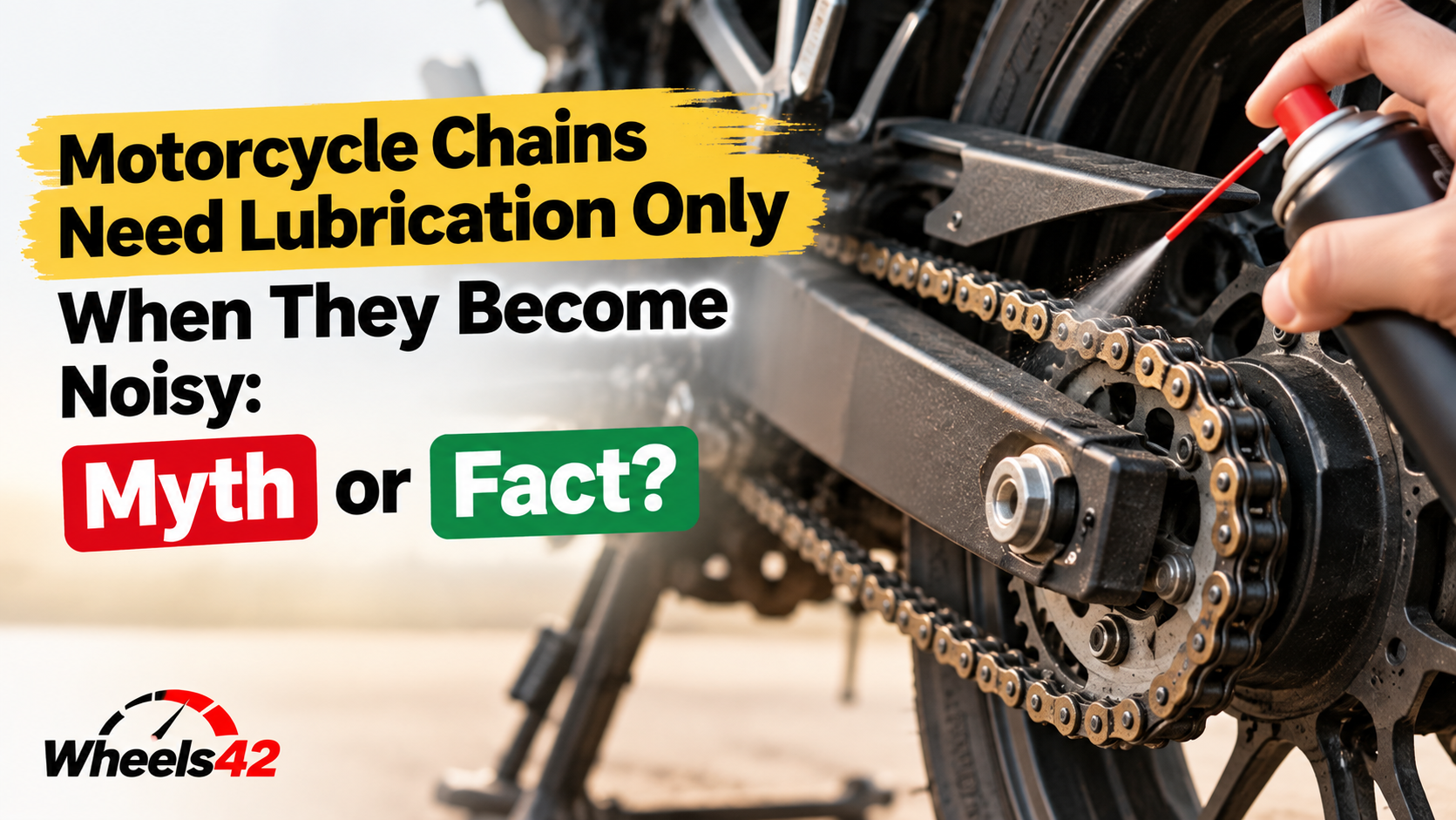
Many motorcycle riders pay attention to their bike's chain only when they start hearing unusual sounds while riding. A dry or poorly maintained chain can produce clicking, squeaking or rattling noises, which often remind riders that maintenance is necessary. However, waiting until the chain becomes noisy before applying lubricant is not a good maintenance practice.
A motorcycle chain is one of the most important components of a conventional chain-driven motorcycle. It transfers power from the engine's transmission output sprocket to the rear wheel, allowing the motorcycle to move. During everyday riding, the chain experiences continuous friction, tension, dirt accumulation and exposure to water.
Regular lubrication helps reduce friction, protect moving components and improve chain life. If riders wait until the chain becomes noisy, the chain may already have experienced unnecessary wear.
The important thing to understand is that chain lubrication should be based on maintenance intervals, riding conditions and the motorcycle manufacturer's recommendations, rather than sound alone.
Louder Exhausts Automatically Make a Motorcycle More Powerful
Myth.
A motorcycle chain does not need to become noisy before it requires lubrication. In fact, regular lubrication is a preventive maintenance activity that helps avoid excessive friction and premature wear.
A chain can become dry without producing noticeable noise. Riders may continue using the motorcycle without realising that the chain needs attention.
By the time unusual noises become noticeable, the chain may have already lost some of its protective lubrication. Dirt, moisture and friction can also accelerate wear on the chain and sprockets.
Lubricating the chain regularly helps maintain smooth movement between its components and reduces metal-to-metal contact.
Therefore, riders should follow the recommended maintenance schedule instead of treating chain noise as the only warning sign.

A motorcycle chain contains several moving parts that operate continuously whenever the rear wheel is driven.
Modern motorcycle chains commonly use sealed designs such as O-ring, X-ring or similar configurations. These chains contain internal grease sealed around the pin and bushing areas. However, the external rollers and contact surfaces still require suitable chain lubrication to reduce friction and protect against corrosion.
Here are some important reasons why motorcycle chain lubrication matters.
1. Reduces friction: Lubrication helps minimise friction between the chain's moving external components and the sprockets.
2. Prevents corrosion: Motorcycle chains are exposed to rain, moisture, dust and changing weather conditions. Suitable chain lubricant helps protect exposed metal surfaces from rust.
3. Reduces premature wear: Proper lubrication helps reduce unnecessary wear on chain components and sprockets.
4. Supports smoother operation: A properly maintained chain can operate more smoothly and quietly.
5. Improves component life: Regular cleaning, lubrication and correct adjustment help extend the service life of the chain and sprockets.
Using Only the Rear Brake Is the Safest Way to Stop a Motorcycle: Myth or Fact?
Ignoring chain maintenance can create several problems over time. A motorcycle chain works under significant mechanical load, and poor lubrication can increase friction and accelerate component wear.
Some common consequences include:
Increased friction: A poorly lubricated chain can experience greater friction during operation, affecting smooth power transfer.
Rust formation: Moisture and road exposure can cause corrosion, particularly when the motorcycle is frequently used in rainy conditions.
Uneven chain wear: Poor maintenance can contribute to uneven wear across chain components.
Sprocket damage: A worn or poorly maintained chain can accelerate wear on the front and rear sprockets.
Unusual noise: A dry, dirty or incorrectly adjusted chain may produce clicking, squeaking or rattling sounds.
Reduced reliability: Severe chain wear or damage can increase the risk of mechanical failure while riding.
In extreme cases, a damaged or poorly maintained chain can break or come off the sprocket, potentially causing loss of drive and creating a dangerous riding situation.

There is no single lubrication interval that applies to every motorcycle. The correct frequency depends on the manufacturer's recommendations, chain design, riding conditions and the type of lubricant being used.
As a general maintenance guideline, many riders check their chain every 500–1,000 km and lubricate it when necessary. Some motorcycles may require more frequent attention, particularly when used in demanding conditions.
Riders should consider lubricating the chain after:
Riding through heavy rain or wet roads.
Washing the motorcycle.
Riding on dusty or muddy roads.
Extended highway journeys, depending on the chain's condition and lubricant instructions.
Noticing that the chain appears dry or its external surfaces need protection.
Always refer to the owner's manual for the recommended inspection and lubrication intervals. The manufacturer's instructions should take priority over general maintenance estimates.
Not every motorcycle experiences the same riding conditions. A bike used mainly on clean city roads may require less frequent chain attention than one regularly used on muddy roads or during heavy rainfall.
Different riding environments affect chain cleanliness and lubrication.
City riding: Frequent traffic stops, acceleration and braking expose the chain to repeated changes in load. Regular inspection is important.
Highway riding: Longer journeys expose the chain to continuous operation and road debris. Checking the chain before and after longer trips is a sensible habit.
Rainy conditions: Water can wash away external lubricant and increase the risk of corrosion. Inspect and lubricate the chain after wet rides as recommended by the manufacturer.
Off-road riding: Mud, sand and dust can accumulate around the chain and sprockets. Cleaning and inspection may be required more frequently.
Hot weather: High temperatures and demanding riding conditions can influence lubricant performance. Use a lubricant suitable for the motorcycle and follow its application instructions.
A Wider Rear Tyre Improves Every Motorcycle’s Handling: Myth or Fact?
Applying lubricant is not complicated, but using the correct procedure is important.
Here is a simple maintenance process riders can follow.
Step 1: Park the motorcycle safely
Park the motorcycle on a stable, level surface. Switch off the engine and allow hot components to cool. Use the centre stand or an appropriate paddock stand if recommended for the motorcycle.
Step 2: Inspect the chain
Check the chain for rust, stiff links, unusual wear and visible damage. Also inspect the sprocket teeth for signs of excessive wear.
Step 3: Clean the chain
If the chain is dirty, use a motorcycle-chain-compatible cleaner and a suitable soft chain brush. Avoid aggressive chemicals that could damage the chain's seals.
Step 4: Allow the chain to dry
After cleaning, allow the chain to dry properly before applying lubricant.
Step 5: Apply suitable chain lubricant
Use a lubricant specifically designed for your motorcycle's chain type. Apply it according to the product instructions, concentrating on the appropriate chain surfaces.
Step 6: Allow the lubricant to settle
Give the lubricant the recommended time to settle or dry before riding. This helps reduce excessive lubricant being thrown off during operation.
Step 7: Check chain slack
Inspect chain slack according to the motorcycle manufacturer's specifications. Lubrication does not replace chain adjustment.
No. Not every oil or lubricant is suitable for motorcycle chains.
Using an unsuitable product may result in poor lubrication, excessive dirt accumulation or damage to certain chain components.
Motorcycle-specific chain lubricants are designed to provide suitable protection while remaining compatible with the chain's construction.
For sealed chains, always select a product that is safe for the relevant O-ring or X-ring material.
Avoid applying excessive lubricant. Too much lubricant can attract dirt, create a mess around the rear wheel and swingarm, and increase the amount of lubricant thrown off during riding.
It is also important to avoid spraying lubricant onto the rear tyre, brake disc or brake pads. Contaminated braking surfaces can seriously reduce braking performance.
Does a Higher Engine Capacity Mean a Faster Bike? Understanding CC, Power and Speed
Although riders should not wait for noise before lubricating their chains, certain symptoms can indicate that maintenance or inspection is necessary.
Look out for these warning signs:
Dry-looking chain: External surfaces appear dry or lack the expected protective lubricant.
Rust formation: Visible rust indicates that the chain needs inspection and appropriate cleaning.
Stiff links: Some links do not move freely when the chain is inspected.
Unusual noise: Clicking, squeaking or rattling may indicate dryness, incorrect tension, wear or another mechanical issue.
Excessive slack: The chain moves beyond the manufacturer's specified slack range.
Uneven movement: The chain appears tighter in some positions than others.
Worn sprocket teeth: Sprocket teeth appear hooked, damaged or excessively worn.
If the chain has damaged links, significant corrosion, excessive wear or abnormal tight spots, lubrication alone will not solve the problem. Have it inspected by a qualified mechanic and replace worn components when necessary.
|
Maintenance Check |
Why It Matters |
Recommended Action |
|
Chain lubrication |
Reduces friction and protects exposed surfaces |
Use suitable chain lubricant at recommended intervals |
|
Chain cleaning |
Removes dirt, mud and accumulated debris |
Use a compatible chain cleaner and soft brush |
|
Chain slack |
Maintains correct chain tension |
Follow the owner's manual specifications |
|
Rust inspection |
Identifies corrosion before it becomes severe |
Clean and assess the affected areas |
|
Stiff link inspection |
Helps identify damaged or worn chain components |
Consult a mechanic if links do not move freely |
|
Sprocket inspection |
Identifies excessive wear and damaged teeth |
Replace worn sprockets as required |
|
Seal inspection |
Helps identify damage to sealed-chain components |
Replace the chain if damage is significant |
Many riders believe that lubricating the chain automatically improves fuel efficiency. While proper chain maintenance helps reduce unnecessary friction and supports efficient power transfer, the actual improvement in fuel economy may be small or difficult to measure.
Motorcycle mileage depends on several factors, including engine condition, tyre pressure, riding style, traffic conditions, vehicle load and maintenance quality.
A neglected chain can increase mechanical losses, but applying extra lubricant does not guarantee better mileage.
The main purpose of chain lubrication is to maintain proper chain operation, reduce wear and protect the components.

Even riders who regularly lubricate their chains can make mistakes that affect performance and component life.
1. Lubricating without cleaning: Applying lubricant over excessive dirt and grime can create a sticky mixture that attracts more debris.
2. Using the wrong lubricant: General-purpose oils or unsuitable chemicals may not provide the protection required by a motorcycle chain.
3. Applying too much lubricant: Excessive lubricant can collect dirt and spread onto nearby components.
4. Ignoring chain tension: A properly lubricated chain can still be damaged if it is too tight or too loose.
5. Ignoring unusual sounds: Chain noise should never be dismissed. It may indicate a maintenance problem or mechanical damage.
6. Forgetting sprocket inspection: Replacing only the chain while ignoring severely worn sprockets can affect the performance and life of the new chain.
7. Using unsafe cleaning methods: Never use a running engine to rotate the rear wheel while cleaning or lubricating the chain by hand. Keep fingers away from the chain and sprockets, and follow the motorcycle manufacturer's safety instructions.
The belief that motorcycle chains need lubrication only when they become noisy is a myth. Chain lubrication is preventive maintenance, not simply a solution for an existing problem.
A chain may become dry or lose its protective external lubrication without producing any noticeable sound. Waiting for unusual noises can allow unnecessary friction, corrosion and wear to develop.
Regular inspection, appropriate cleaning, timely lubrication and correct chain adjustment are essential for maintaining a motorcycle's drivetrain.
Riders should follow the manufacturer's maintenance schedule and consider their riding conditions when deciding how frequently the chain needs attention.
Ultimately, a little preventive maintenance can help avoid expensive repairs and improve the reliability of your motorcycle. Do not wait for your bike to make unusual noises. Take care of its chain before problems appear.














Honda
₹19.00 - 23.54 Lakh

BMW
₹111.28 - 190.95 Lakh