
 Khyati Sharma 2026-11-14
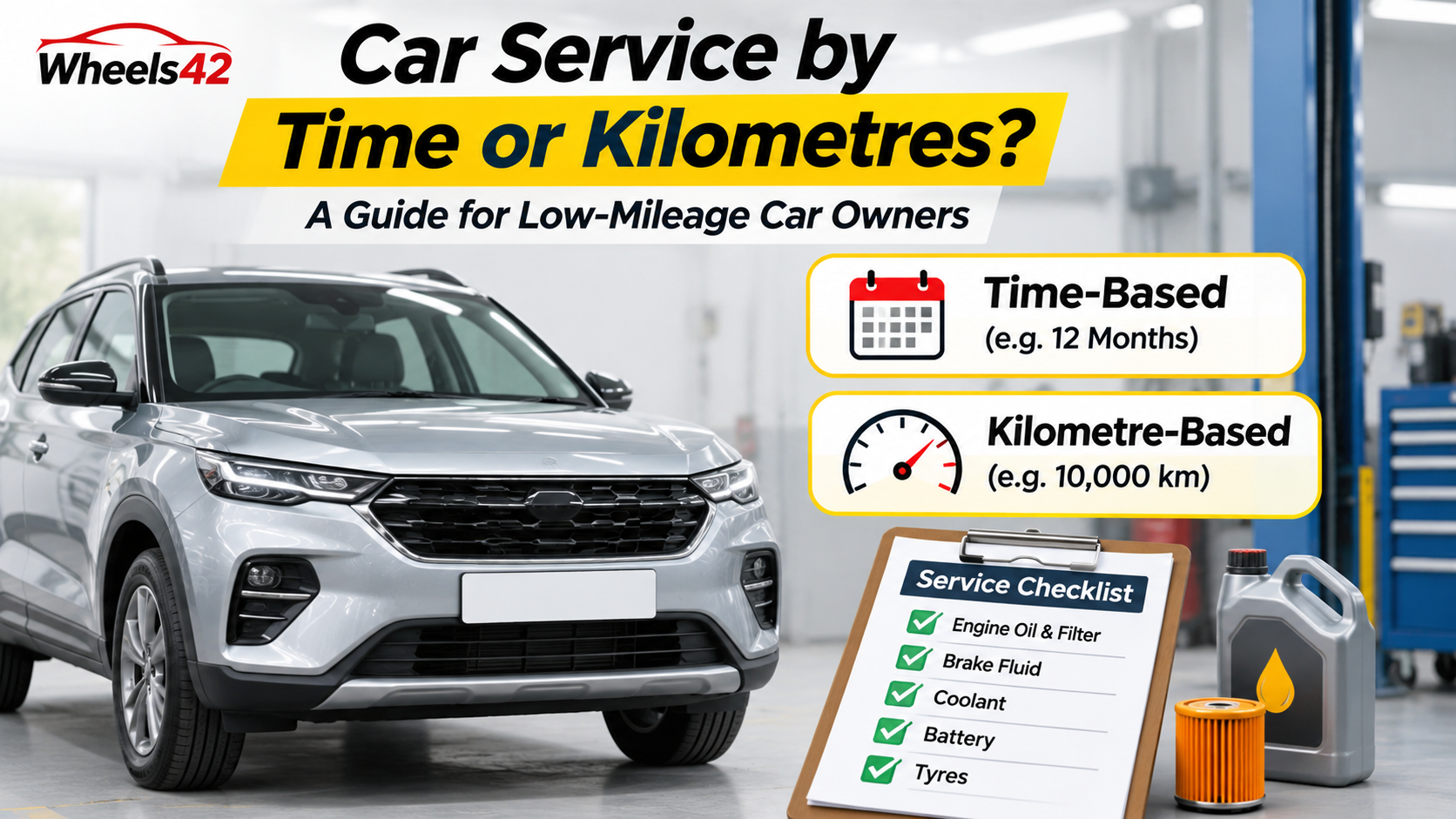
Many car owners believe that servicing is necessary only after covering a certain number of kilometres. However, this is not always true. A car that travels only 2,000–3,000 km in a year may still require regular maintenance, even if it has not reached the distance mentioned in its service schedule.
Modern vehicles have maintenance requirements based on both driving distance and time. Engine oil, brake fluid, coolant, filters, tyres, batteries and other components can deteriorate or require inspection even when the car spends most of its time parked.
This is particularly important for people who use their vehicles mainly for weekend trips, short city journeys or occasional family outings. Low annual mileage does not automatically mean that a car needs less maintenance.
So, should you service your car according to time or kilometres? The answer depends on the manufacturer's recommended maintenance schedule. When both limits are mentioned, the general rule is to follow whichever comes first.
How Can You Get a Lower Interest Rate on Your Car Loan?
Car manufacturers recommend servicing at specific intervals to keep vehicles operating safely and efficiently. These intervals are generally calculated using either distance travelled, elapsed time or a combination of both.
Kilometre-based servicing considers the amount of work performed by the vehicle. For example, engine oil, filters, brakes and tyres experience wear as the car is driven.
Time-based servicing considers ageing and deterioration that can happen even when the vehicle is not being used regularly. Certain fluids absorb moisture, rubber components age, batteries gradually lose charge and moisture can accumulate in different areas.
This is why manufacturers often provide maintenance schedules that mention both months and kilometres.
For example, a vehicle's service schedule might specify engine oil replacement every 10,000 km or 12 months, whichever comes first. If the owner drives only 4,000 km during the year, the vehicle may still need an oil change when the 12-month limit arrives.
The exact interval varies by manufacturer, model, engine and operating conditions. Owners should always check the maintenance schedule provided with their particular vehicle.
The phrase 'whichever comes first' is important when reading a car's maintenance schedule.
It means that servicing should be completed as soon as either the specified time limit or distance limit is reached.
Consider a car with a recommended engine oil replacement interval of 10,000 km or 12 months.
If the owner covers 10,000 km in eight months, the kilometre limit arrives first, so the oil should be replaced at that point.
If the owner covers only 3,000 km in 12 months, the calendar limit arrives first, so the scheduled oil replacement should not be postponed simply because the car has travelled fewer kilometres.
The same principle may apply to other maintenance items, although each component can have a different replacement or inspection interval.
For example, brake fluid may have a time-based replacement recommendation, while an air filter may be checked according to its condition and the manufacturer's schedule.
Do not assume that every component follows the same 10,000-km or 12-month rule.

A car that remains parked for long periods may appear to require very little maintenance. However, inactivity does not stop every ageing process.
Several components can develop problems even when the vehicle covers very few kilometres.
Engine Oil Can Age Over Time
Engine oil lubricates moving engine components, helps control heat and carries contaminants away from important internal surfaces.
Although oil degradation is strongly influenced by engine operation, temperature and driving conditions, time also matters. Short journeys can be particularly challenging because the engine may not remain at normal operating temperature long enough to evaporate accumulated moisture.
If a car is driven only occasionally, the engine oil may experience repeated cold starts and short running periods.
This is one reason manufacturers specify time-based oil replacement limits for many vehicles.
Brake Fluid Can Absorb Moisture
Brake fluid is designed to transfer pressure through the braking system. Many commonly used brake fluids are hygroscopic, meaning they absorb moisture over time.
As moisture content increases, the fluid's performance under high temperatures can be affected. This is why brake fluid replacement is often recommended at a time-based interval.
Even if a car has covered very few kilometres, its brake fluid may still reach the manufacturer's recommended replacement period.
Batteries Can Lose Charge
A parked vehicle can continue consuming a small amount of electricity through its security system, onboard computers, clock and other electronic features.
If the vehicle is not driven regularly, the battery may gradually lose charge. Heat, battery age and electrical faults can increase the risk of starting problems.
Low-mileage owners should periodically check battery health and charging performance rather than waiting for the car to fail to start.
Tyres and Rubber Components Can Age
Tyres can lose pressure while a vehicle is parked. Their rubber compounds also age with time and environmental exposure.
Other rubber components, including hoses, seals and belts, can also deteriorate depending on age, heat and operating conditions.
Therefore, a low odometer reading does not guarantee that every component is in good condition.
A Used Luxury Car Costs the Same to Maintain as a Similarly Priced New Hatchback
Not every component needs replacement simply because a certain number of months have passed. However, several items deserve attention when a car is driven infrequently.
Engine oil and oil filter: Follow the manufacturer's time and kilometre limits. Replace them when the specified interval arrives.
Brake fluid: Check its replacement schedule and condition. Do not postpone a time-based replacement merely because the brakes have been used less frequently.
Coolant: Follow the specified replacement interval and inspect the cooling system for leaks, contamination and incorrect levels.
Battery: Check its condition, terminal connections and charging performance, particularly if the car remains parked for long periods.
Tyres: Check pressure, tread depth, visible damage and signs of ageing.
Air-conditioning system: Inspect cabin filters and check the system if airflow, cooling or odour problems develop.
Rubber hoses and belts: Inspect for cracks, swelling, leaks, fraying or other visible deterioration.
The manufacturer's maintenance chart should determine which items need replacement and which only require inspection.
|
Maintenance Basis |
What It Considers |
Examples |
What Owners Should Do |
|
Kilometre-based |
Wear caused by distance and usage |
Tyres, brake pads, air filters and certain engine components |
Follow the specified kilometre intervals and inspection recommendations |
|
Time-based |
Ageing and deterioration over time |
Engine oil, brake fluid, coolant and certain rubber components |
Follow the calendar-based replacement or inspection schedule |
|
Combined schedule |
Both elapsed time and distance |
Routine periodic servicing |
Follow whichever limit arrives first |
|
Condition-based checks |
Actual condition of a component |
Battery, tyres, brakes and visible leaks |
Inspect regularly and repair or replace when necessary |
The owner's manual or service booklet is the most reliable place to find the correct maintenance intervals for your vehicle.
Look for the scheduled maintenance section and identify the recommended service periods. These may be listed in months, kilometres or both.
For example, a schedule may show:
First inspection: 1,000 km or one month
Regular service: 10,000 km or 12 months
Further maintenance: 20,000 km or 24 months
These figures are only an illustration and should not be treated as a universal schedule for every car.
Pay attention to the symbols used in the maintenance chart. Manufacturers commonly use letters such as:
I: Inspect and replace or adjust if necessary.
R: Replace or change.
C: Clean.
L: Lubricate.
The meaning of these symbols should be checked in the relevant owner's manual.
Some vehicles also have separate schedules for normal and severe driving conditions. If your car regularly operates in heavy traffic, dusty areas, extreme temperatures or on frequent short journeys, the severe-use schedule may apply.
Hatchback vs Sedan vs SUV: Which Car Type Suits You Best?
Yes. Frequent short journeys can create more demanding operating conditions than some longer trips.
When an engine starts from cold, it takes time to reach its normal operating temperature. If the car is switched off after travelling only a short distance, moisture and fuel-related contaminants may not be removed as effectively from the engine oil.
Repeated short trips can also mean more frequent cold starts, increased battery demand and limited time for the alternator to replenish the charge used during starting.
This does not mean that every short journey requires additional servicing. Instead, owners should check whether their manufacturer's severe-use recommendations apply.
For people who mostly drive in congested city traffic, the maintenance schedule may need to be followed more carefully than the normal-use schedule suggests.
If the manufacturer's schedule specifies annual servicing, yes. The owner should follow that recommendation even when the car has covered only a small distance.
However, annual servicing does not mean that every part must be replaced every year.
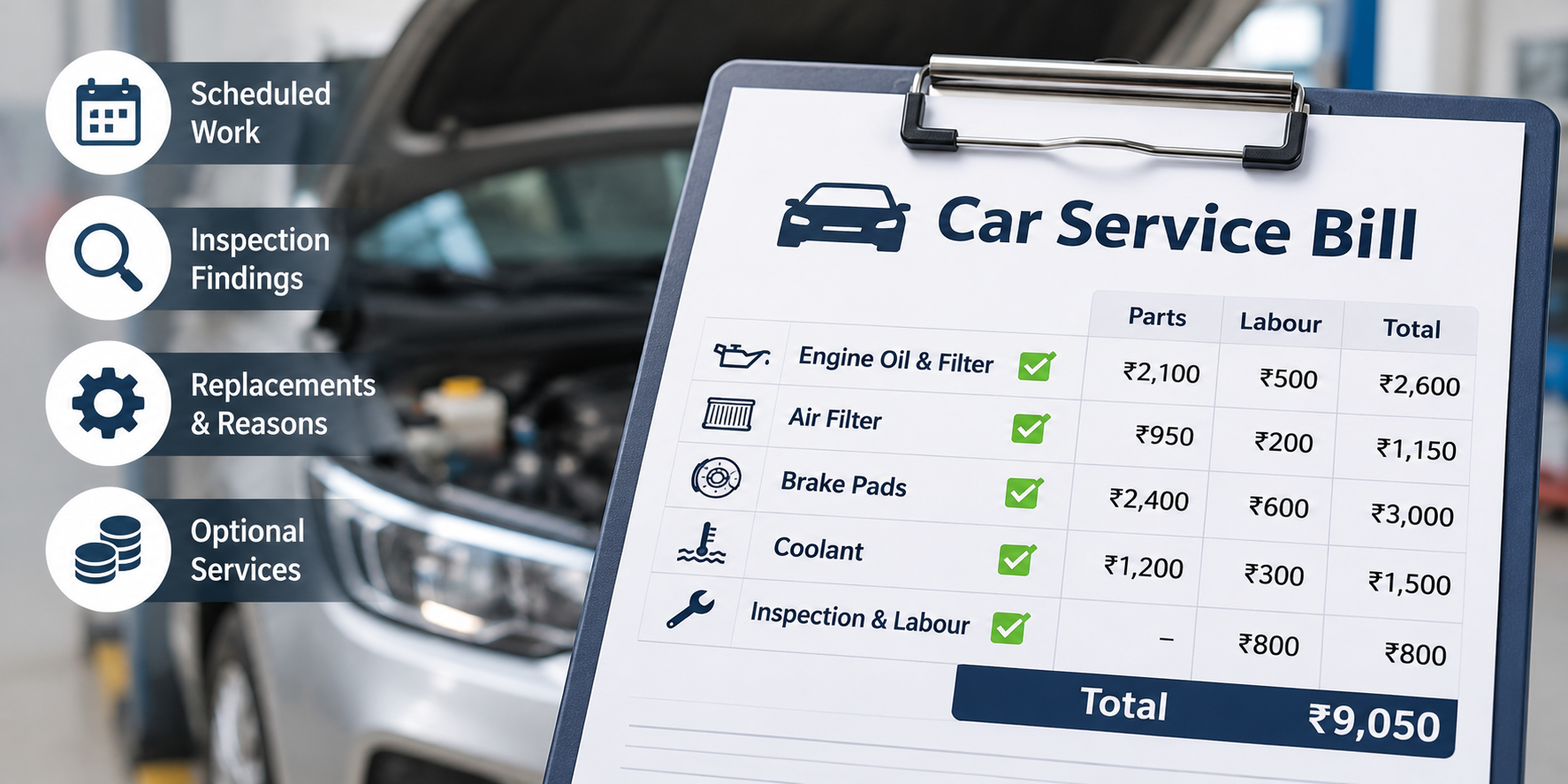
A routine service can include inspection of important components, checking fluid levels, identifying leaks, testing the battery and assessing the condition of brakes and tyres.
Replacement should be carried out when the scheduled interval, inspection findings or manufacturer instructions require it.
For example, an air filter may still be in good condition and may not need replacement at every visit. Similarly, brake pads should be replaced according to their remaining thickness and the manufacturer's specifications.
This approach helps prevent two common mistakes: skipping necessary maintenance because the car is rarely driven and spending money on unnecessary part replacements.

The basic principle of following the manufacturer's time and usage-based maintenance schedule applies across different powertrains, but the actual maintenance requirements vary.
Petrol cars: Engine oil, oil filters, spark plugs, coolant, brake fluid and other components must be maintained according to the specific schedule. Frequent short trips may also affect engine oil condition.
Diesel cars: In addition to regular engine maintenance, owners should pay attention to fuel filters, emission-control systems and manufacturer recommendations for vehicles used mainly on short journeys.
Hybrid cars: Hybrid vehicles still have maintenance requirements for their petrol engines, braking systems, tyres and fluids. The hybrid battery and related electrical systems should be inspected according to the manufacturer's guidance.
Electric cars: Electric vehicles do not require engine oil or spark plug replacement. However, they still need checks of tyres, brakes, suspension, cabin filters, battery systems and other applicable components. Some EVs also have coolant and brake-fluid maintenance requirements.
Low annual mileage does not remove the need for these checks. Owners should use the maintenance schedule designed for their particular powertrain.
How to Choose Between Two Similar Car Models: A Decision Framework
Regular servicing is important, but it should not become an excuse for replacing components that are still within their recommended service life.
Start by maintaining a simple service record that includes the date, odometer reading, work completed and parts replaced.
Before approving a replacement, ask the workshop why it is required. Find out whether the part has reached its scheduled replacement interval, failed an inspection or developed a specific problem.
You can follow these practical steps:
Keep a record of the last service date and odometer reading.
Check the owner's manual before every scheduled service.
Ask the workshop to distinguish between inspection and replacement jobs.
Request an explanation for any additional repair recommendation.
Keep invoices and service records for warranty and resale purposes.
Check tyres, lights, battery and fluid levels periodically between services.
Do not skip a manufacturer-recommended service simply to save money. Instead, avoid unnecessary replacements and insist on a clear explanation of the work being recommended.
An EV’s Advertised Range Is What Every Owner Will Achieve: Myth or Fact?
Owners who rarely drive can follow a simple routine between scheduled services.
Check tyre pressure periodically and inspect the tyres for damage. Look for visible fluid leaks underneath the vehicle and check the battery if starting becomes slow.
Keep the car clean and dry, particularly if it is parked outdoors. Make sure the air-conditioning system, lights, wipers and other electrical features operate correctly.
If practical, take the vehicle for a proper drive occasionally, following safe driving practices and local conditions. Repeatedly starting the engine for only a few minutes is not a substitute for driving it sufficiently to reach normal operating temperature.
For vehicles that remain unused for extended periods, follow the manufacturer's storage instructions. A compatible battery maintainer may be useful in some cases, but its suitability should be checked before use.
Car servicing should not be decided by kilometres alone, especially for owners who drive only occasionally. Time-based maintenance is equally important because certain fluids, batteries, tyres and rubber components can age even when the vehicle spends most of its life parked.
The most important rule is to follow the maintenance schedule provided by the manufacturer. When both time and distance limits are specified, service the vehicle according to whichever limit arrives first.
At the same time, low-mileage owners should not replace every component automatically. Regular inspections, accurate service records and condition-based decisions can help separate essential maintenance from work that can safely wait.
A car that travels only a few thousand kilometres every year still deserves proper care. Following the correct schedule can help maintain reliability, safety and long-term ownership value.












Toyota
₹258.51 - 269.48 Lakh