
 Khyati Sharma 2026-08-22
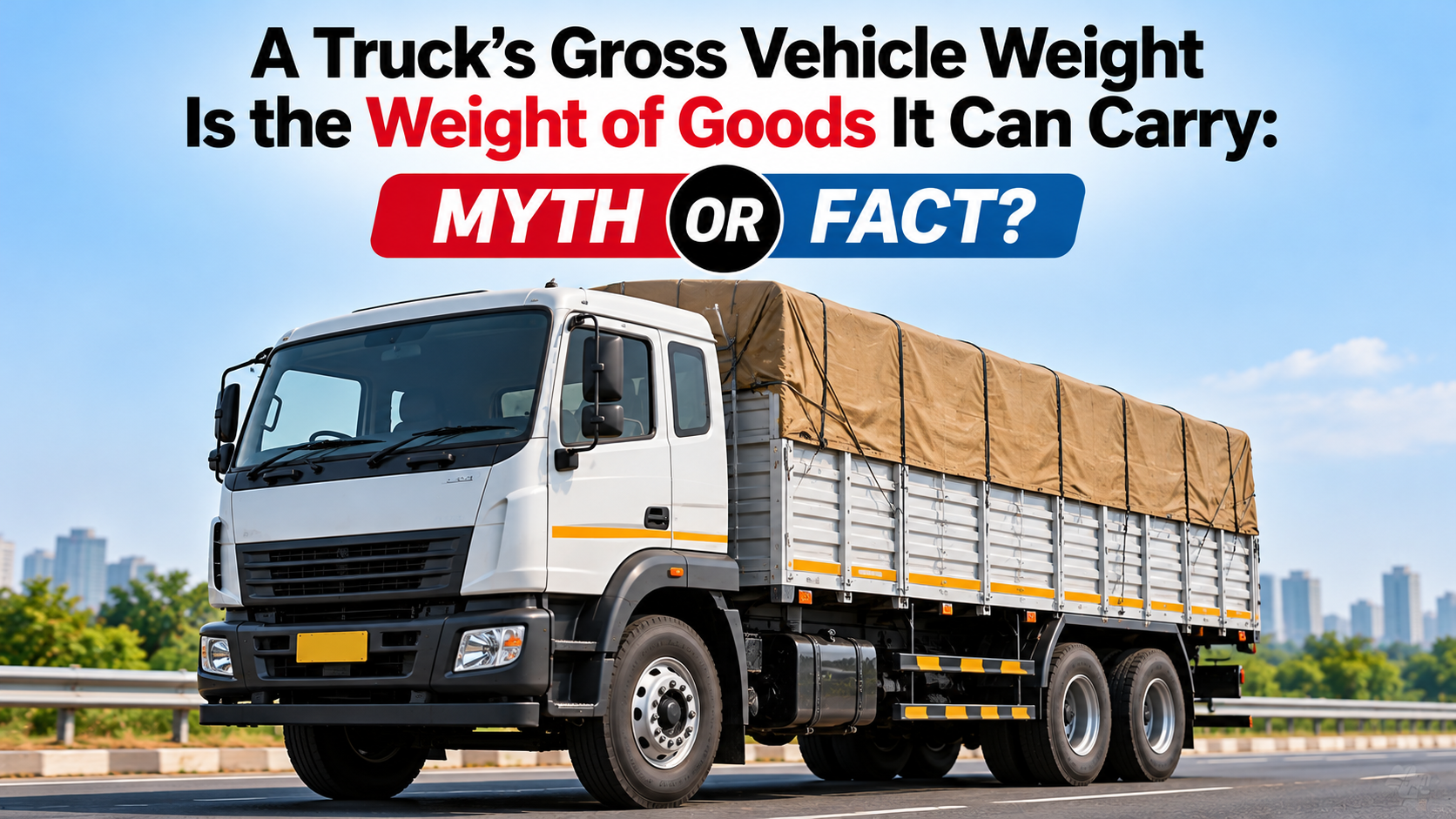
Many people believe that a truck's Gross Vehicle Weight (GVW) refers to the maximum weight of goods it can transport. However, this is a common misunderstanding. GVW actually represents the maximum permissible total weight of a fully loaded vehicle, including its own weight, passengers, fuel, equipment and cargo. The weight of goods a truck can carry is known as its payload capacity.
Understanding the difference between GVW and payload capacity is important for truck owners, transport operators, fleet managers and drivers. These two terms are closely related, but they do not mean the same thing.
For example, if a truck has a GVW of 16,000kg, it does not mean that it can carry 16,000kg of goods. The truck itself has a considerable weight, and this must be included when calculating how much cargo it can legally and safely transport.
Incorrectly understanding these terms can lead to overloading, vehicle damage, increased maintenance expenses, reduced braking performance and road safety risks.
Does a Bigger Truck Always Earn More Money? Understanding Truck Size, Costs and Profitability
Gross Vehicle Weight, commonly known as GVW, refers to the maximum permissible total weight of a vehicle when it is fully loaded.
It includes the weight of the vehicle itself and everything being carried in or on it.
The GVW generally accounts for:
Vehicle chassis and body.
Engine and transmission.
Fuel and other operating fluids.
Driver and passengers.
Tools and accessories.
Loading equipment and additional fittings.
Goods or cargo being transported.
In simple terms, GVW represents the maximum allowed total weight of the loaded truck, rather than the weight of the goods alone.
For example, consider a commercial truck with a GVW of 16,000kg. If the vehicle's operating weight, including its body and other equipment, is 6,000kg, the remaining capacity for the driver, passengers, cargo and other permitted load is 10,000kg.
The actual cargo capacity may be slightly lower because the driver, fuel and other items also contribute to the total weight.

Payload capacity refers to the maximum additional weight a vehicle can carry within its permitted weight limit.
For a commercial truck, payload mainly represents the goods or materials it can transport. However, the exact available cargo capacity must account for the driver, passengers, fuel and any equipment or accessories that are not already included in the vehicle's stated unladen or kerb weight.
The basic calculation is:
Payload Capacity = GVW − Vehicle Weight
For a more accurate practical calculation, the weight of occupants, fuel, additional equipment and other items must also be considered if they are not included in the vehicle weight used for the calculation.
For example:
Maximum GVW: 16,000kg
Vehicle operating weight: 6,000kg
Remaining payload allowance: 10,000kg
If the driver, fuel and additional equipment account for another 500kg, the available goods-carrying capacity becomes approximately 9,500kg.
This is why transport operators should never assume that the full difference between GVW and a basic vehicle weight figure can be used for cargo.
GVW and payload capacity are connected, but they describe two different measurements.
GVW tells us the maximum permitted total weight of the loaded truck, while payload capacity indicates how much additional weight it can carry.
A truck with a higher GVW generally has the potential to carry a heavier load, but its actual payload depends on its own weight, body configuration, equipment and vehicle specifications.
For example, two trucks may have the same GVW but different payload capacities. If one truck has a heavier body or additional equipment, less weight remains available for transporting goods.
This is why buyers should compare both GVW and payload capacity when selecting a commercial vehicle.
Calculating payload capacity is relatively straightforward, provided the correct vehicle weight is used.
Let's understand this with an example of a commercial truck.
Suppose a truck has the following specifications:
GVW: 12,000kg
Unladen vehicle weight: 4,500kg
The theoretical difference is:
12,000kg − 4,500kg = 7,500kg.
This means the total remaining weight allowance is 7,500kg.
However, if the driver, fuel and additional equipment weigh 400kg and are not included in the stated unladen weight, the available goods-carrying capacity becomes:
7,500kg − 400kg = 7,100kg.
Therefore, the truck cannot simply carry 7,500kg of goods in this example.
Operators should always check the manufacturer's specifications and the vehicle's approved weight limits before calculating the final cargo allowance.
|
Parameter |
Truck A |
Truck B |
|
Gross Vehicle Weight (GVW) |
12,000kg |
16,000kg |
|
Unladen Vehicle Weight |
4,500kg |
6,000kg |
|
Remaining Weight Allowance |
7,500kg |
10,000kg |
|
Driver, Fuel and Other Items |
400kg |
500kg |
|
Illustrative Goods Capacity |
7,100kg |
9,500kg |
The table shows that a truck with a GVW of 16,000kg does not automatically carry 16,000kg of goods. Its available cargo capacity is determined by subtracting the vehicle's own weight and other applicable loads.
Kerb weight and GVW are two important terms used when discussing vehicle weight.
Kerb weight generally refers to the weight of a vehicle with its standard equipment and specified operating fluids, such as engine oil and coolant, and typically includes fuel according to the manufacturer's stated measurement standard. It normally excludes occupants and cargo.
GVW, on the other hand, is the maximum permissible total weight of the vehicle when loaded.
The difference between these two figures gives an indication of the vehicle's carrying capacity. However, the exact calculation must follow the manufacturer's definitions and account for any additional items not included in the kerb-weight figure.
For commercial trucks, the body type and equipment fitted to the chassis can significantly affect the final payload capacity.
For example, a truck fitted with a heavy container body, refrigerated unit or specialised loading equipment may have less capacity available for goods than a lighter-body version with the same GVW.

GVW is an important specification because it helps determine how much total weight a truck can legally and safely carry.
Understanding this measurement offers several benefits.
How Many Airbags Do You Really Need? A Safety Primer
1. Prevents Vehicle Overloading
Overloading occurs when the total loaded weight exceeds the vehicle's permitted GVW or another applicable weight restriction.
Carrying excessive weight can put additional stress on the engine, transmission, suspension, tyres and braking system.
Truck operators should calculate the complete loaded weight before sending a vehicle on the road.
2. Improves Road Safety
A heavily overloaded truck may require more distance to stop. Excessive weight can also affect steering, stability and braking performance.
On steep roads, sudden braking or emergency manoeuvres can become more difficult when a vehicle is carrying more than its permitted load.
Following GVW limits helps reduce these risks.
3. Reduces Maintenance Costs
Overloading places additional stress on important vehicle components.
This may result in faster tyre wear, suspension damage, brake wear and increased strain on drivetrain components.
Maintaining the correct loaded weight can help reduce unnecessary mechanical stress and improve vehicle reliability.
4. Helps in Commercial Vehicle Selection
Transport businesses should consider GVW and payload capacity when purchasing a truck.
A vehicle with a higher GVW may appear attractive, but its actual goods-carrying capacity depends on its operating weight and body configuration.
Choosing the right vehicle helps businesses match carrying capacity with their transportation requirements.
5. Supports Better Fleet Management
Fleet managers need accurate weight information to plan routes, calculate loads and improve vehicle utilisation.
Understanding GVW helps prevent incorrect loading decisions and supports more efficient commercial transportation operations.
Driving a truck beyond its permitted GVW can create serious safety and operational problems.
Some possible consequences include:
Increased braking distance: Additional weight can make it more difficult for the braking system to stop the vehicle effectively.
Tyre damage: Excessive load can increase tyre stress, heat generation and the risk of tyre failure.
Suspension problems: Overloading can place excessive pressure on springs, shock absorbers and other suspension components.
Reduced vehicle stability: A heavily loaded truck may become more difficult to control, particularly during cornering and emergency manoeuvres.
Higher fuel consumption: Carrying unnecessary weight can increase the energy required to move the vehicle.
Legal consequences: Exceeding applicable permitted weight limits can result in enforcement action, penalties and restrictions on continuing the journey, depending on the applicable regulations.
Overloading is therefore not simply a matter of carrying extra goods. It can affect the safety of the driver, other road users and the vehicle itself.
Company-Fitted vs Aftermarket Accessories: Which Is Better?
Yes. GVW includes the weight of the complete vehicle in its loaded configuration, including its body and permanently fitted equipment.
This is particularly important for commercial vehicles because many trucks are sold as chassis-cab models and later fitted with different body types.
For example, a truck may be fitted with:
Open cargo bodies.
Closed container bodies.
Tipper bodies.
Refrigerated cargo units.
Tanker bodies.
Specialised industrial equipment.
Each body configuration has a different weight. A heavier body reduces the weight available for cargo while the vehicle must still remain within its permitted GVW.
Therefore, buyers should check the weight of the completed vehicle rather than relying only on the basic chassis weight.
GVW and GCW are also sometimes confused.
GVW refers to the maximum permissible total weight of an individual vehicle, such as a truck.
GCW, or Gross Combination Weight, refers to the total weight of a towing vehicle and its attached trailer or combination when loaded.
For example, when a truck pulls a trailer, the weight of the complete combination becomes important. The permitted weight must comply with the applicable vehicle and combination limits.
GCW is particularly relevant for tractor-trailers and other commercial transport combinations.
Truck owners should refer to the vehicle's official documentation and manufacturer information to confirm its permitted weight.
Useful places to check include:
Vehicle registration certificate.
Manufacturer's specification sheet.
Vehicle information plate or manufacturer's label.
Approved body-builder documentation, where applicable.
Applicable vehicle regulations.
The registration certificate and manufacturer documentation are particularly important because they provide information about the vehicle's approved weight limits.
Operators should also use a certified weighbridge when necessary to check the actual loaded weight of a truck.
It is important to remember that staying within GVW alone does not always guarantee compliance. Axle-weight limits, tyre load ratings and other applicable restrictions must also be respected.