
 Khyati Sharma 2026-09-30
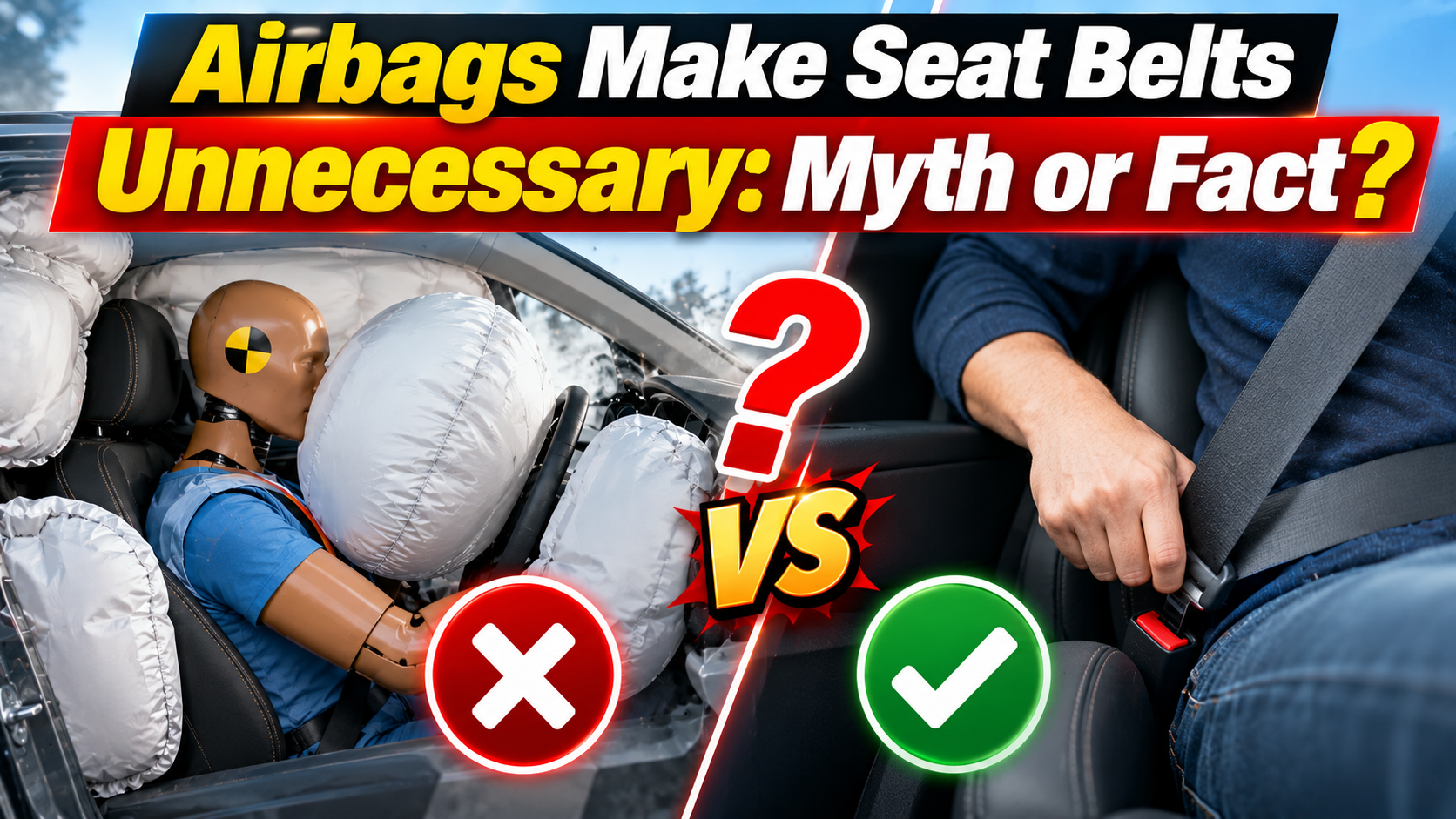
Modern cars are equipped with several safety features, including airbags, seat belts, anti-lock braking systems and electronic stability control. Among these technologies, airbags are considered an important part of vehicle safety. However, some drivers and passengers believe that airbags provide enough protection to make seat belts unnecessary.
This is a dangerous misconception. Airbags do not replace seat belts. Both systems are designed to work together to reduce the risk of serious injuries during a crash. Even if a car has six airbags, a driver or passenger should always wear a seat belt.
Understanding how these safety features work can help car owners make better decisions and protect themselves and their families on the road.
How to Choose Between Two Similar Car Models: A Decision Framework
No, airbags do not make seat belts unnecessary. They perform different functions during an accident and provide the best protection when used together.
A seat belt holds the occupant in position and helps control the body's movement when a vehicle suddenly slows down. An airbag inflates rapidly during certain collisions and provides a cushioning surface that can reduce the risk of some head and upper-body injuries.
Without a seat belt, an occupant can move forward or sideways before the airbag deploys. This movement may place the person too close to the airbag or outside the position where it is designed to provide protection.
According to the US National Highway Traffic Safety Administration (NHTSA), airbags are supplemental protection systems intended to work with seat belts, not replace them. The agency also warns that an inflating airbag can cause serious injuries when an occupant is improperly positioned.

Seat belts are among the most important safety features in a car. When a vehicle brakes suddenly or hits another object, the vehicle's speed can decrease rapidly, but the occupants' bodies continue moving because of inertia.
A properly fitted seat belt helps restrain the body and spread crash forces across stronger areas, including the pelvis and chest.
Here are some important benefits of seat belts:
They help prevent ejection: A seat belt reduces the risk of an occupant being thrown out of the vehicle during a collision.
They reduce contact with the interior: Seat belts help prevent occupants from striking the steering wheel, dashboard or windscreen.
They keep occupants in position: Proper restraint helps occupants remain in a better position for airbag protection.
They protect rear-seat passengers: People sitting in the back also need seat belts because they can be thrown forward during a crash.
They work with other safety systems: Seat belts complement airbags and other vehicle safety technologies.
The World Health Organization reports that wearing a seat belt can reduce the risk of death among vehicle occupants by up to 50%. The exact level of protection depends on the crash and other circumstances.
How Many Airbags Do You Really Need? A Safety Primer
Airbags are designed to inflate extremely quickly when sensors detect a collision that meets the vehicle's deployment criteria. The inflated bag provides a cushioning surface between the occupant and parts of the vehicle.
Depending on the vehicle, airbags may be installed in the steering wheel, dashboard, seats and roof-side areas. Different types are designed to provide protection in different crash situations.
For example, front airbags are primarily intended to provide protection in certain frontal collisions. Side airbags and curtain airbags can provide additional protection in some side-impact crashes.
However, airbags do not deploy in every accident. Their operation depends on factors such as the severity and direction of the impact, sensor readings and the vehicle manufacturer's system design.
In a relatively minor collision, the seat belt may provide sufficient protection without an airbag deploying. An airbag designed for frontal impacts may also not deploy in a particular side collision.
This is why drivers should never depend on airbags alone.
|
Safety feature |
Main function |
Key benefit |
|
Seat belt |
Restrains the occupant and controls body movement |
Helps prevent ejection and reduces impact with the vehicle interior |
|
Front airbag |
Provides cushioning in certain frontal crashes |
Helps reduce some head and upper-body injuries |
|
Side airbag |
Provides cushioning during certain side impacts |
Helps protect the torso, depending on its design |
|
Curtain airbag |
Deploys along the side-window area |
Helps protect occupants' heads in certain side crashes |
|
Seat belt and airbags together |
Provide complementary restraint and cushioning |
Offer more complete protection than relying on airbags alone |
Travelling without a seat belt can increase the risk of serious injury, even in a modern car with advanced safety features.
1. The airbag may injure you
Airbags inflate at high speed. If an unrestrained occupant moves too close to the deployment area, the force of the expanding airbag can cause serious injuries.
2. You may hit the steering wheel or dashboard
Airbags do not cover the entire interior of a vehicle. Without a seat belt, your body may move beyond the airbag's intended protective position and strike hard surfaces.
3. You may injure another passenger
During a collision, an unrestrained occupant can be thrown forward or sideways. This movement can injure the occupant and other people inside the vehicle.
4. You may be thrown out of the vehicle
In a severe crash, an occupant who is not wearing a seat belt may be ejected. This can result in life-threatening injuries.
5. Rear-seat passengers can also be injured
Passengers sitting in the rear seats should not assume they are safe without seat belts. During a collision, they can move forward with considerable force, potentially injuring themselves and front-seat occupants.

Yes. A car with six, seven or more airbags still requires occupants to wear seat belts.
The number of airbags alone does not determine how safe a vehicle is. Overall protection also depends on crash-test performance, body structure, seat-belt design, restraint-system calibration and correct occupant positioning.
Additional airbags can improve protection in particular types of crashes, but they do not eliminate the need for seat belts.
When comparing cars, buyers should examine the complete safety package rather than choosing a vehicle based only on its airbag count.
|
Common myth |
Actual fact |
|
Airbags replace seat belts |
Airbags supplement seat belts and work best with them |
|
Six airbags make seat belts optional |
Seat belts remain essential regardless of airbag count |
|
Rear-seat passengers do not need seat belts |
Rear-seat occupants should buckle up on every journey |
|
Airbags deploy in every accident |
Deployment depends on the crash and vehicle design |
|
Seat belts are unnecessary on short trips |
Collisions can happen even close to home |
|
A loosely worn seat belt provides enough protection |
The belt must fit correctly to provide its intended protection |
Following a few basic precautions can help you get the intended protection from your vehicle's safety systems.
1. Wear a seat belt on every journey. Drivers and all passengers should buckle up before the vehicle moves, including on short trips.
2. Position the seat belt correctly. The lap belt should sit low across the hips, while the shoulder belt should cross the chest and shoulder. Never place the shoulder belt behind your back or under your arm.
3. Maintain a safe seating position. Drivers should sit comfortably upright and maintain enough distance from the steering wheel for safe control. Avoid leaning forward unnecessarily.
4. Use suitable child restraints. Children should use an age- and size-appropriate child seat or restraint system according to the manufacturer's instructions. A rear-facing child seat should never be placed in front of an active passenger airbag. Follow the vehicle manual and applicable local guidance on child seating.
5. Check safety-system warnings. If the airbag warning light stays on or the seat-belt system shows a fault, have the vehicle inspected by a qualified technician.
6. Replace deployed airbags after a crash. Airbags are generally designed for one deployment. Follow the manufacturer's repair instructions and use a qualified repair facility before returning the vehicle to service.
7. Make sure every passenger is restrained. An adult sitting in the rear seat should wear a seat belt, even if the front occupants are already buckled up.
Best Time of the Year to Buy a New Car in India
The claim that airbags make seat belts unnecessary is a myth. Airbags are valuable safety features, but they are designed to supplement seat belts rather than replace them.
Seat belts help restrain occupants, limit their movement and position them for better airbag protection. Airbags provide additional cushioning in certain crashes for which they are designed to deploy.
Whether your car has two airbags or a more advanced multi-airbag system, the safest habit is simple: wear your seat belt correctly every time you travel. No safety feature can guarantee that a crash will cause no injuries, but using the available safety systems correctly can improve your protection.