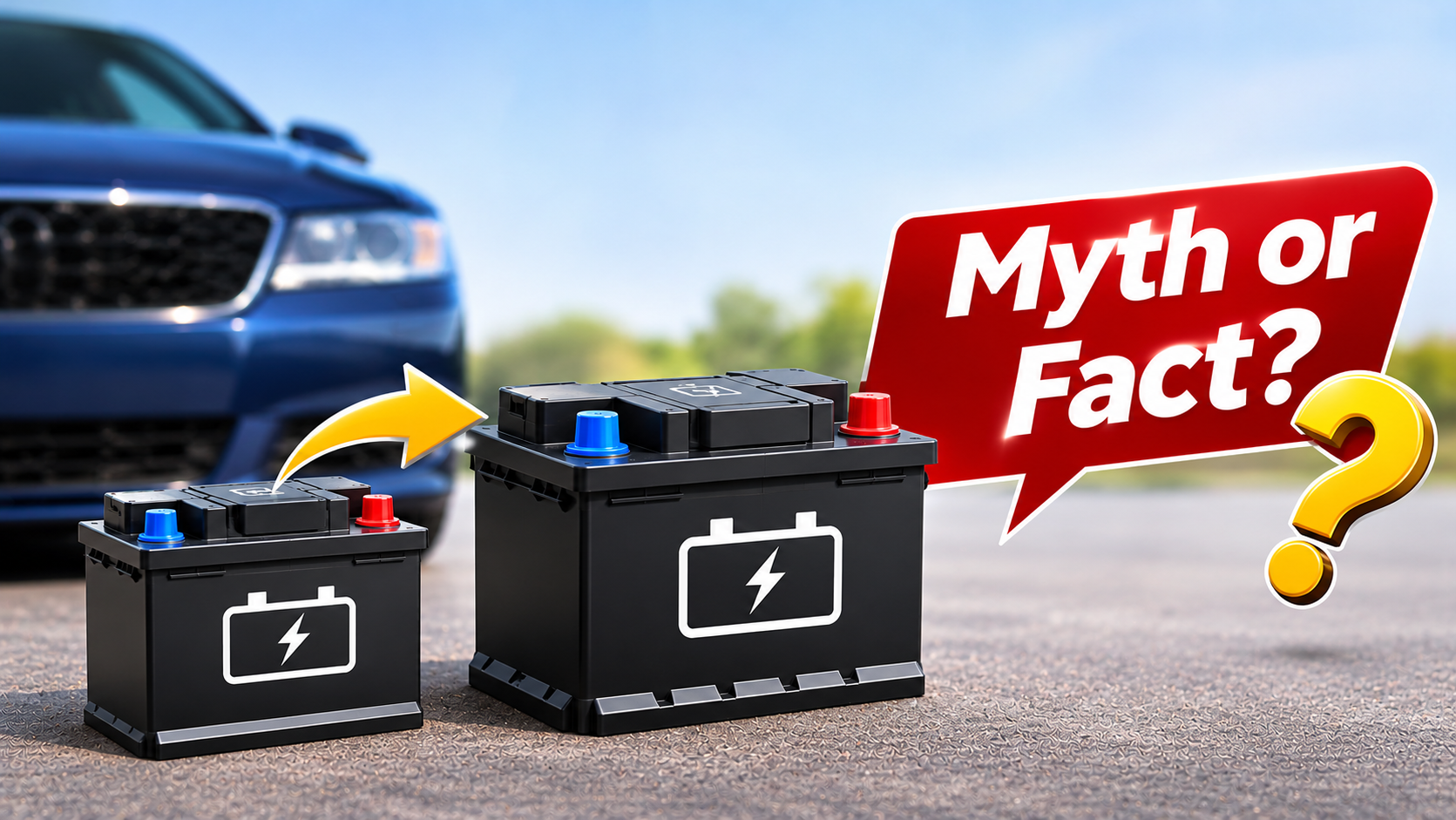
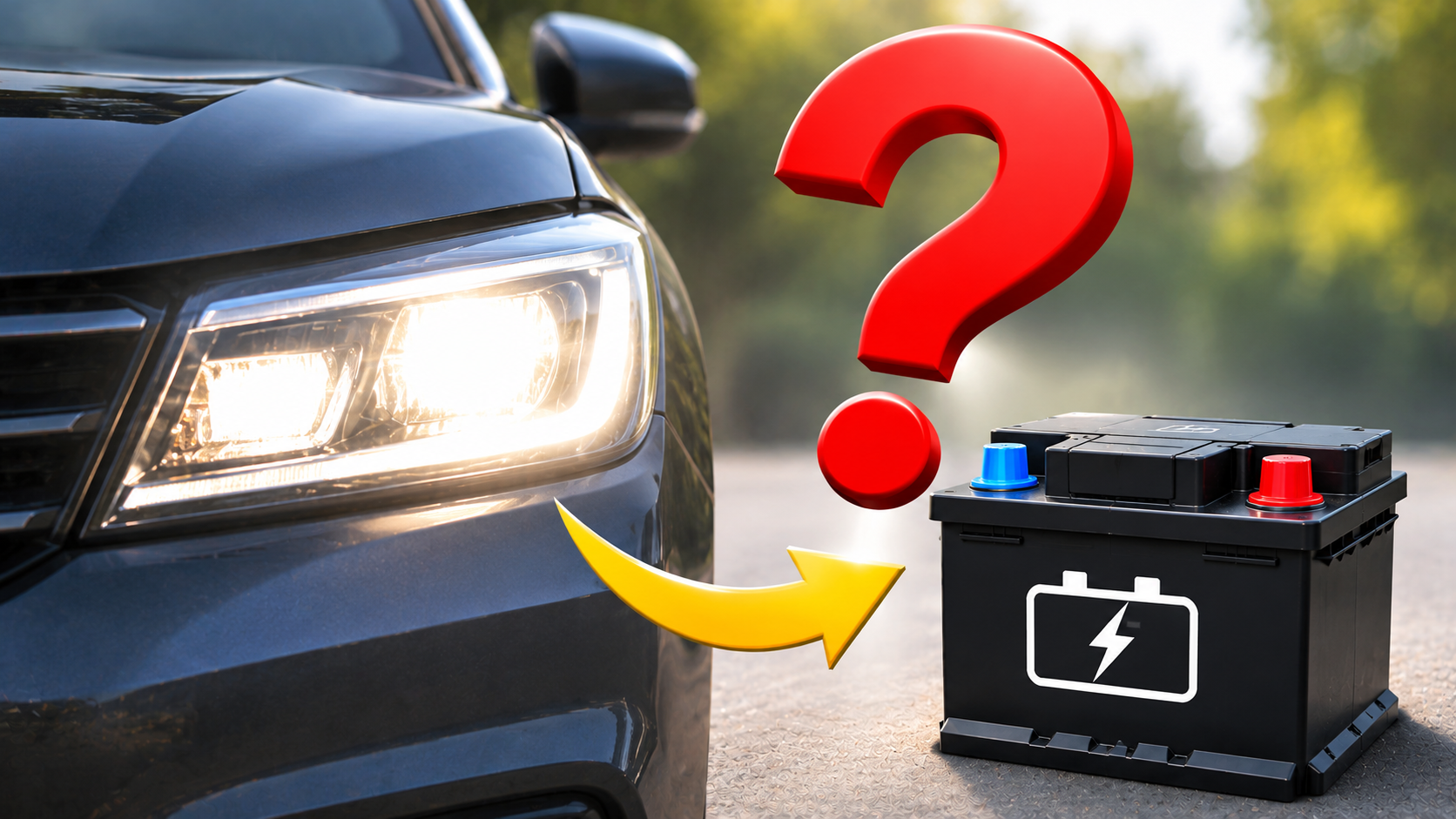
A bigger car battery is not necessarily a better choice. The right battery depends on your vehicle's electrical requirements, engine type, battery dimensions, terminal position, cold cranking amps (CCA) and charging system compatibility.
Many car owners believe that upgrading to a battery with higher capacity will automatically provide better starting performance, longer backup and improved reliability. While a battery with higher capacity can offer certain advantages, choosing one without checking the manufacturer's specifications can create unnecessary problems.
For example, installing a physically larger battery may seem like a good upgrade, but it might not fit properly in the battery tray. Similarly, a battery with a higher amp-hour rating may not be the most suitable option if it does not match the vehicle's charging system or battery technology.
Understanding battery capacity and compatibility is more important than simply choosing the biggest battery available.
A car battery is responsible for supplying electrical power to start the engine and operate several electrical components. It also supports the vehicle's electrical system when the engine is switched off.
When replacing an old battery, many owners consider purchasing one with a higher capacity. Their assumption is simple: more battery capacity means more power and better performance.
However, choosing a battery is not that straightforward. A battery that is too large, incompatible or incorrectly specified may create installation and charging problems.
Petrol vs Diesel vs CNG vs Electric Cars: How to Choose the Right Fuel Type
1. What Does a Bigger Car Battery Actually Mean?
When people talk about a bigger battery, they may be referring to three different things:
-
Physical size: The actual length, width and height of the battery.
-
Amp-hour capacity (Ah): The amount of electrical charge a battery can store and deliver over time under specified test conditions.
-
Cold Cranking Amps (CCA): The battery's ability to deliver starting current under cold-temperature test conditions.
These specifications are different and should not be confused.
For example, a battery with a higher Ah rating generally has greater storage capacity than a smaller-capacity battery of the same technology. However, that does not automatically mean it will start every engine better.
Similarly, a battery with higher CCA may provide stronger starting capability, but it must still be compatible with the vehicle.
The best battery is one that meets the manufacturer's requirements rather than simply having the highest numbers.

2. Does a Higher Ah Battery Improve Car Performance?
Amp-hour capacity is one of the most important specifications when selecting a car battery.
A battery with a higher Ah rating can generally store more electrical energy than a comparable battery with a lower rating.
This can be useful for vehicles with higher electrical requirements, provided the battery is approved for that application.
For example, a vehicle equipped with additional factory-fitted electrical equipment may require a battery with a particular capacity.
However, installing a much higher-capacity battery does not automatically improve engine performance, acceleration, fuel efficiency or horsepower.
The battery mainly supplies electrical power for starting and supporting electrical systems. Once the engine is running, the alternator and vehicle charging system supply most of the electrical power required by the vehicle.
Therefore, upgrading to a higher Ah battery simply to improve driving performance is generally unnecessary.
Manual vs Automatic Car: Pros and Cons Explained
3. Why Cold Cranking Amps Matter More Than You Think
Cold Cranking Amps, commonly known as CCA, indicate how effectively a battery can deliver starting current in cold conditions.
Starting an engine requires considerable electrical current, particularly when temperatures are low.
Engine oil can become more viscous in cold weather, increasing the effort required to turn the engine. At the same time, battery performance can decrease at lower temperatures.
A battery with an appropriate CCA rating helps the starter motor receive sufficient current during engine starting.
This is particularly important for:
-
Diesel vehicles with higher starting-current requirements.
-
Cars operating in colder regions.
-
Vehicles with larger engines.
-
Cars that regularly experience difficult starting conditions.
However, choosing an extremely high CCA battery is not always necessary. The battery should meet or exceed the manufacturer's specified starting requirements while maintaining compatibility with the vehicle.

4. Can a Bigger Battery Damage Your Car?
A larger-capacity battery does not automatically damage a car. In many cases, a compatible battery with slightly higher capacity can work perfectly well.
The problem occurs when owners install batteries without checking compatibility.
Here are some potential issues.
Incorrect Physical Dimensions
Every vehicle has a designated battery tray and mounting arrangement.
A battery that is physically too large may not fit properly. It can interfere with nearby components, wiring or the bonnet.
An incorrectly secured battery can also move during driving, potentially damaging its terminals or connections.
Wrong Terminal Position
Battery terminals must match the vehicle's cable arrangement.
If the positive and negative terminals are positioned differently, the existing cables may not reach safely.
Incorrect connections can cause serious electrical damage. Battery polarity must always be checked before installation.
Incompatible Battery Technology
Modern cars may use conventional flooded lead-acid, Enhanced Flooded Battery (EFB) or Absorbent Glass Mat (AGM) batteries.
These technologies have different charging and operating characteristics.
For example, vehicles equipped with start-stop systems may require an EFB or AGM battery, depending on the manufacturer's specification.
Replacing an AGM battery with an ordinary flooded battery without approval can affect charging performance and battery life.
Charging System Compatibility
A larger battery does not necessarily require a different alternator. A compatible charging system can charge a battery with a modestly higher capacity.
However, a deeply discharged, high-capacity battery may require more time to recharge.
The vehicle's charging strategy, alternator output, battery management system and battery chemistry all matter.
The safest approach is to follow the manufacturer's approved battery specifications.
How Many Airbags Do You Really Need? A Safety Primer
5. Understanding Different Types of Car Batteries
Before upgrading, it is important to understand that car batteries are available in different technologies.
Conventional Flooded Lead-Acid Batteries
These are commonly used in standard vehicles. They are generally economical and suitable for cars with conventional electrical systems.
Enhanced Flooded Batteries (EFB)
EFB batteries are designed to handle more frequent charge and discharge cycles than conventional flooded batteries. They are commonly used in certain vehicles with basic start-stop systems.
Absorbent Glass Mat (AGM) Batteries
AGM batteries use an absorbent glass mat to hold the electrolyte. They offer improved cycling capability and are used in many vehicles with advanced start-stop systems and higher electrical demands.
Lithium-Based Batteries
Some specialised vehicles and aftermarket applications use lithium-based batteries. These require specific battery management and charging compatibility. They should not be treated as direct replacements for conventional batteries without checking the vehicle manufacturer's requirements.
Choosing the wrong battery technology can reduce battery life and affect vehicle operation.
6. One Table: What Should You Check Before Buying a Bigger Battery?
|
Battery Specification
|
What It Means
|
What You Should Check
|
|
Ah Rating
|
Battery storage capacity
|
Follow the recommended capacity range
|
|
CCA
|
Cold-starting current capability
|
Meet the manufacturer's starting requirement
|
|
Physical Dimensions
|
Length, width and height
|
Ensure it fits the battery tray
|
|
Terminal Position
|
Location of positive and negative terminals
|
Match the vehicle's cable arrangement
|
|
Battery Technology
|
Flooded, EFB, AGM or other types
|
Use the approved battery technology
|
|
Voltage
|
Electrical system voltage
|
Match the vehicle's required voltage
|
|
Reserve Capacity
|
Ability to supply power for a specified period under test conditions
|
Consider the manufacturer's recommendation
|
|
Battery Management
|
Vehicle system that monitors battery operation
|
Check whether registration or coding is required
|
7. Do Modern Cars Need Special Batteries?
Yes. Modern vehicles can have more complicated electrical systems than older cars.
Features such as automatic start-stop technology, advanced infotainment systems, electronic parking brakes, driver assistance systems and multiple control modules increase the importance of using the correct battery.
Some vehicles also have a Battery Management System (BMS). This system monitors battery condition, charging and electrical consumption.
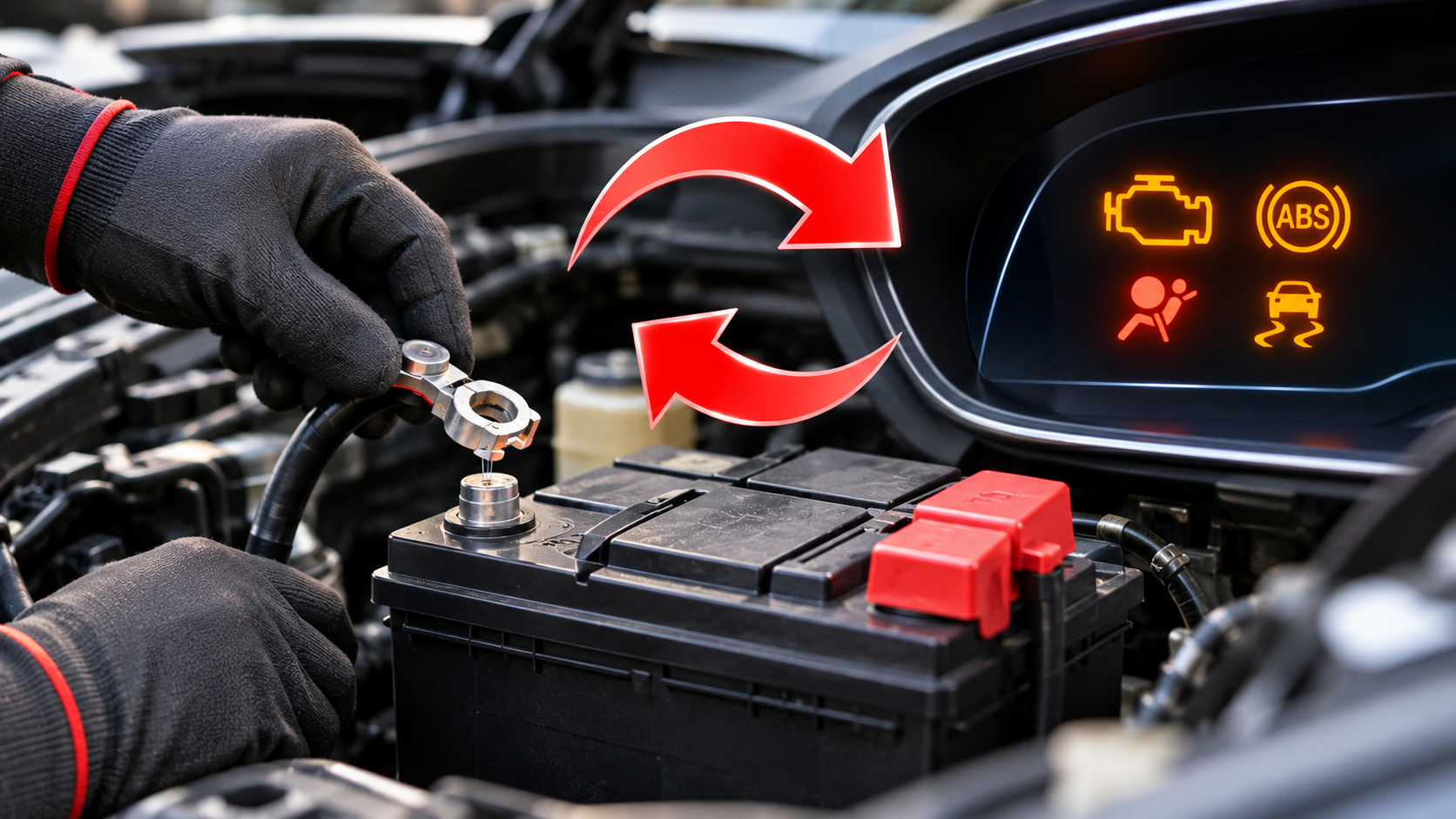
When replacing the battery in certain vehicles, the new battery may need to be registered or coded using a diagnostic tool.
This allows the vehicle's charging system to recognise the replacement battery and apply the appropriate charging strategy.
If the battery is replaced without following the required procedure, the vehicle may not manage charging as intended.
Therefore, owners of modern cars should check the replacement procedure in the owner's manual or consult an authorised service centre.
How to Set a Realistic Car Buying Budget (On-Road Price Explained)
8. When Is Upgrading to a Bigger Battery Actually Useful?
A higher-capacity battery can be useful in certain situations, provided the vehicle manufacturer approves the upgrade.
Vehicles With Higher Electrical Requirements
Some vehicles have additional factory-fitted electrical equipment that requires greater battery capacity.
An approved higher-capacity battery may provide the required electrical reserve.
Vehicles Operating in Cold Regions
Cold weather can reduce battery performance and increase engine-starting demands.
A suitable battery with the recommended CCA rating is particularly important in these conditions.
Vehicles With Long Parking Periods
Cars that remain parked for extended periods may benefit from a battery with suitable reserve capacity, but a larger battery is not a substitute for identifying parasitic electrical drains.
A compatible battery maintainer may be more useful when a vehicle is not driven regularly.
Vehicles With Approved Battery Upgrades
Some manufacturers offer multiple battery capacities for the same vehicle depending on engine, equipment or market specification.
If a higher-capacity option is officially approved for the vehicle, it may be a suitable upgrade.

9. Common Mistakes Car Owners Make While Upgrading Batteries
Many battery problems occur because owners focus only on price or capacity.
Here are some mistakes worth avoiding:
-
Buying a battery simply because it has a higher Ah rating.
-
Ignoring the recommended CCA rating.
-
Choosing a battery that does not fit the original mounting arrangement.
-
Installing an ordinary battery in a vehicle requiring AGM or EFB technology.
-
Ignoring the positive and negative terminal positions.
-
Not checking the warranty and manufacturing date.
-
Replacing the battery without checking the alternator.
-
Ignoring battery registration requirements in modern vehicles.
-
Choosing an unverified aftermarket battery without checking compatibility.
A battery replacement should be based on technical requirements rather than assumptions about size and power.
10. How to Choose the Right Battery for Your Car
Before purchasing a replacement battery, start by checking the owner's manual or the manufacturer's recommended battery specification.
You should also inspect the label on the existing battery and confirm its capacity, CCA, dimensions and technology.
However, do not assume that the existing battery is necessarily the correct specification. It may have been replaced previously with an unsuitable model.
A professional battery test can help determine whether the existing battery has lost capacity or whether another electrical problem is responsible for starting difficulties.
You should also check the alternator and charging system before installing a replacement battery.
Finally, purchase a battery from a reliable manufacturer or authorised dealer and check the warranty coverage.
Conclusion: Is a Bigger Battery Always Better?
Myth. A bigger battery is not always a better upgrade for your car.
A battery with higher Ah capacity or CCA can provide advantages in certain applications, but only when it matches the vehicle's electrical requirements and manufacturer-approved specifications.
Physical dimensions, terminal position, battery technology and charging-system compatibility are equally important.
Instead of purchasing the biggest battery available, choose one that offers the correct capacity, reliable starting performance and compatibility with your vehicle.
The right battery will provide dependable starting, support electrical equipment and help maintain the long-term reliability of your car.

 Khyati Sharma 2026-11-01