
 Khyati Sharma 2026-11-02
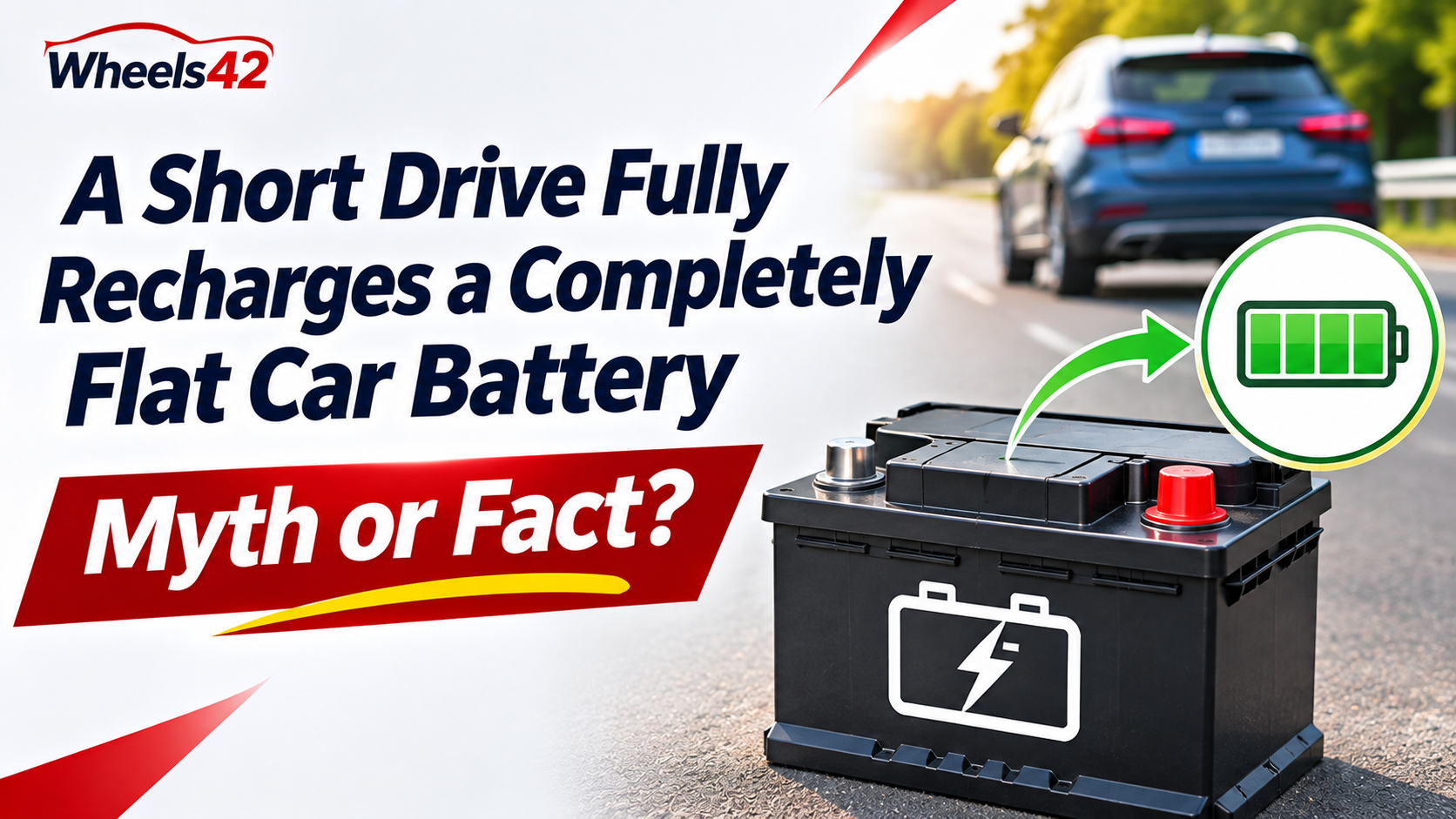
A short drive can help recharge a car battery, but it generally cannot restore a completely discharged battery to full capacity. The alternator generates electricity while the engine is running and supplies power to the vehicle's electrical systems. It also sends charging current to the battery. However, the amount of charge restored depends on driving time, engine speed, battery condition, alternator performance and electrical consumption.
Many drivers believe that after jump-starting a car, driving for 10–15 minutes is enough to bring the battery back to normal. Although the vehicle may start again after such a drive, this does not necessarily mean the battery is fully charged.
Understanding how the charging system works can help car owners avoid unexpected breakdowns, repeated jump-starting and premature battery replacement.
A car battery is one of the most important components of a vehicle's electrical system. It supplies the initial electrical energy needed to start the engine and supports several electrical functions when the engine is switched off. It also helps stabilise the vehicle's electrical supply.
When a battery becomes completely flat, many drivers immediately look for jumper cables or roadside assistance. Once the engine starts, they often assume that a short drive will restore the battery's full capacity.
Car Waiting Period: How to Get Your New Car Faster
Most conventional petrol and diesel vehicles use an alternator to generate electricity while the engine is running. The alternator is driven by the engine through a belt and supplies electrical power to the vehicle.
When the driver starts the car, the battery delivers a large amount of current to operate the starter motor. Once the engine starts, the alternator begins supplying electricity to the vehicle's electrical systems and replenishing the battery's charge.
The charging process depends on several factors, including alternator output, engine speed, battery condition and electrical demand.
In older vehicles, alternator charging is generally more straightforward. Modern vehicles, however, may use intelligent charging systems that adjust the alternator's output according to battery requirements, fuel efficiency and energy-management strategies.
This means that the battery may not receive a constant charging current throughout every journey.

The main reason is that charging a battery requires time. A completely discharged battery may have lost a substantial amount of stored electrical energy.
A short journey may provide enough energy to improve the battery's condition slightly, but it does not guarantee a full recharge.
There are several reasons behind this.
Limited Charging Time
A drive lasting five or ten minutes provides only a limited charging opportunity. During this period, the alternator must also supply electricity to the vehicle's electrical equipment.
The battery therefore may not receive enough energy to recover from a deep discharge.
Even a 20–30-minute journey cannot guarantee a full recharge, particularly if the battery was completely flat before starting.
Engine Speed and Driving Conditions
Alternator output changes with engine speed and operating conditions. During slow-moving city traffic, frequent stops and extended idling, charging conditions may be less favourable.
A steady journey may provide better charging conditions than repeated short trips, although it still does not guarantee that a deeply discharged battery will become fully charged.
Electrical Accessories Consume Power
Modern vehicles use electricity for many functions, including headlights, air conditioning, infotainment systems, cooling fans, heated windows and electronic control units.
When these systems are operating, the alternator must supply their electrical requirements before any remaining capacity can be used to recharge the battery.
High electrical demand can therefore slow down battery recovery.
New Car vs Used Car: Which One Should You Buy?
There is no fixed driving duration that guarantees a full recharge. The time required depends on battery capacity, discharge level, battery age, temperature, alternator performance and the vehicle's charging strategy.
A small battery that has only partially discharged may recover more quickly than a large battery that has been completely depleted.
|
Charging Method |
Expected Result |
Important Consideration |
|
5–10 minutes of driving |
Limited charge recovery |
Usually insufficient after deep discharge |
|
20–30 minutes of driving |
Some additional charge |
Full recharge is not guaranteed |
|
Longer steady drive |
Greater charging opportunity |
Depends on alternator and battery condition |
|
Standard compatible battery charger |
Controlled battery charging |
Charging time depends on battery capacity and charger output |
|
Smart battery charger |
Adjusts charging according to battery condition |
Often suitable for recovering deeply discharged batteries |
Jump-starting is a method of supplying external electrical power to start a vehicle when its battery cannot provide enough current.
Another vehicle or a suitable jump starter supplies the required power through jumper cables or designated connection points.
Once the engine starts, the alternator begins supplying electrical power and charging the battery.
However, jump-starting does not mean that the battery has been recharged. It simply helps the vehicle start.
For example, imagine a car that has remained parked for several weeks. Its battery becomes deeply discharged, and the driver uses jumper cables to start the engine.
The vehicle may operate normally after starting, but the battery could still have insufficient stored energy to start the engine again after being switched off.
This is why drivers should not assume that a successful jump-start has solved the battery problem.
Manual vs Automatic Car: Pros and Cons Explained
Yes. For a completely flat battery, a compatible external battery charger is generally a more suitable charging method than relying on a short drive.
A battery charger supplies controlled electrical current to the battery and can gradually restore its charge.
Modern smart battery chargers can automatically adjust charging according to the battery's condition and type. Some models also provide maintenance modes for vehicles that remain parked for extended periods.
However, choosing the correct charger is important.
Different vehicles may use conventional flooded lead-acid batteries, AGM batteries or EFB batteries. These battery types can have different charging requirements.
Owners should always check the vehicle manufacturer's recommendations and the charger's compatibility before connecting it.
A battery that is deeply discharged or damaged may also require professional inspection rather than repeated charging attempts.
Yes. Repeatedly allowing a conventional lead-acid battery to become deeply discharged can reduce its lifespan and ability to store electrical energy.
One common problem is sulphation. This occurs when lead sulphate crystals build up on the battery plates during discharge. If a battery remains discharged for an extended period, some of this sulphation can become difficult to reverse.
As a result, the battery may lose capacity and become less effective at starting the engine.
Deep discharge can also expose existing weaknesses in an old battery. Even if the battery accepts some charge after jump-starting, it may not retain enough energy for reliable operation.
This is why battery health testing is important when a vehicle repeatedly experiences starting problems.

Pre-Delivery Inspection (PDI): A Checklist Before You Take Delivery
A car battery generally provides several warning signs before it completely fails. Recognising these symptoms can help drivers take preventive action.
Slow Engine Cranking
If the engine takes longer than usual to start, the battery may not be supplying sufficient current. This is particularly noticeable during cold starts.
Dim Headlights
Headlights that appear unusually dim when the engine is switched off may indicate a weak or discharged battery.
However, dim lights can also be caused by electrical connection problems or other faults.
Battery Warning Light
If the battery warning light appears while driving, it may indicate a problem with the charging system.
The issue could involve the alternator, wiring, belt or battery connections. It should not automatically be assumed that the battery itself is faulty.
Repeated Jump-Starting
If the vehicle needs frequent jump-starting, the battery may be reaching the end of its useful life.
Alternatively, there may be an alternator fault or an electrical drain that continues when the vehicle is parked.
Electrical System Problems
Weak battery voltage can sometimes cause unusual behaviour in electronic systems, dashboard displays and vehicle accessories.
Drivers should have the electrical system checked instead of repeatedly attempting to recharge the battery through short journeys.
If your car battery becomes flat and the engine starts successfully after jump-starting, follow these steps.
1. Do not switch off the engine immediately: Allow the charging system to operate, but remember that idling alone may not restore sufficient charge.
2. Drive safely: A longer steady journey may provide more charging opportunity than a very short trip. However, it should not be treated as a guaranteed full recharge.
3. Reduce unnecessary electrical consumption: Avoid using electrical accessories that are not required, provided doing so does not compromise safety or visibility.
4. Arrange external charging: If the battery was deeply discharged, use a suitable battery charger according to the manufacturer's instructions.
5. Get the battery tested: A battery health test can help determine whether the battery can still hold sufficient charge.
6. Inspect the alternator: If the battery repeatedly becomes flat, check the alternator and charging system as well.
Drivers should also follow the vehicle manufacturer's jump-starting procedure. Incorrect connections can damage electronic components or create safety risks.
Petrol vs Diesel vs CNG vs Electric Cars: How to Choose the Right Fuel Type
Preventive maintenance is often the easiest way to avoid battery-related problems.
Drive the vehicle regularly rather than leaving it unused for long periods.
Switch off headlights and electrical accessories after parking.
Keep battery terminals clean and properly connected.
Check battery condition periodically, especially before long journeys.
Inspect the alternator and charging system if warning signs appear.
Avoid repeated deep discharges.
Use a compatible battery maintainer if the vehicle remains unused for an extended period.
Car owners should also consider the battery's age and usage conditions. Frequent short trips may not provide enough charging time to replace the energy used during starting, particularly when several electrical accessories are operating.
A periodic battery test can help identify declining performance before the vehicle refuses to start.
Hatchback vs Sedan vs SUV: Which Car Type Suits You Best?
Not necessarily. Although a longer drive provides more opportunity for the alternator to replenish the battery, it does not guarantee a full charge.
A faulty alternator, damaged battery, poor electrical connections or an excessive electrical load can prevent normal charging.
Modern charging systems may also deliberately vary alternator output, meaning that battery charging does not always happen at a constant rate.
If the battery remains weak after a longer journey, it is better to have the battery and charging system tested rather than continuing to drive in the hope that the problem will disappear.
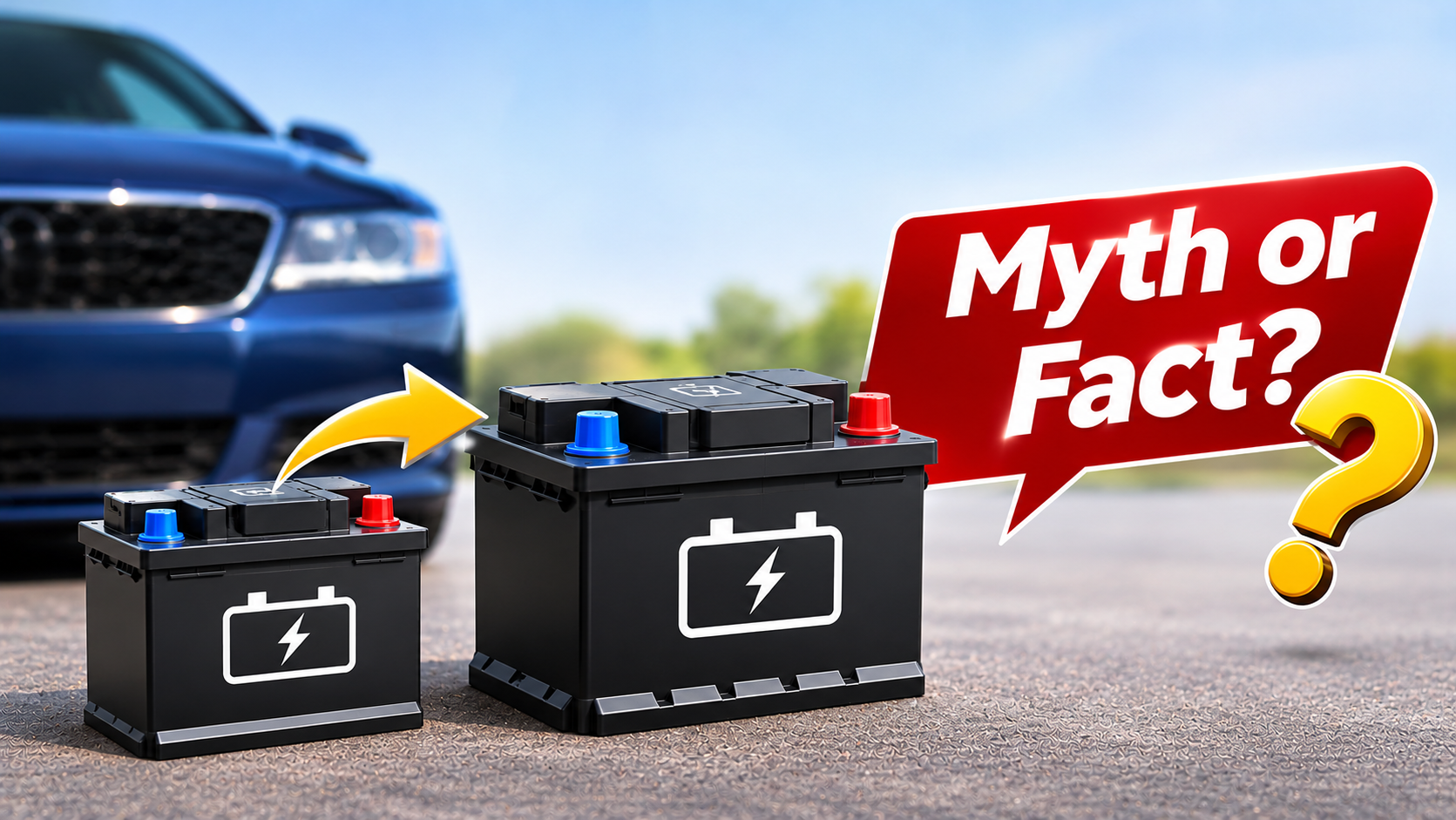
Myth. A short drive does not fully recharge a completely flat car battery.
Driving can help restore some battery charge because the alternator generates electricity while the engine is running. However, a deeply discharged battery generally requires more charging time than a short journey can provide.
A compatible external battery charger is usually the better option for restoring a heavily discharged battery. If the battery repeatedly becomes flat, drivers should also inspect the alternator, electrical connections and possible parasitic electrical drains.
Understanding the difference between jump-starting a vehicle and fully recharging its battery can help car owners avoid unexpected breakdowns, protect battery life and maintain reliable vehicle performance.