





2026-10-20

A car loan lets you drive home a car today and pay for it over time. You pay a down payment, the lender covers the eligible rest, and you repay in monthly instalments called EMIs, which include interest. Most buyers look at the EMI first, but the real cost sits in the interest, fees and tenure. This guide covers each piece in order.
| Your question | Short answer |
| What is a car loan? | Borrowed money for part of a car’s price, repaid in monthly EMIs with interest. |
| How is the EMI calculated? | From three inputs: loan amount, interest rate and tenure. |
| What decides my interest rate? | Your credit profile, income, the loan terms and the lender’s policy. |
| Is the lowest EMI the best deal? | Usually no. A longer loan lowers the EMI but raises total interest. |
| What’s the biggest mistake buyers make? | Comparing only the EMI and ignoring fees, tenure and total cost. |
| What do I do after the last EMI? | Get the closure papers and remove the lender’s entry from your RC. |
A car loan is borrowed money for a car. The lender pays part of the price, you cover the rest as a down payment, and then you repay the lender in equal monthly instalments for an agreed period. You get the car now, but you take on a fixed monthly bill for years.
Why do people choose it? Few buyers want to pay the full price in cash, and a loan spreads the cost out. The trade-off is interest, plus a repayment obligation that doesn’t pause if your income dips. Keep both sides in mind as you read.
Until you repay, the lender usually has a hypothecation interest in the car. The lender holds that claim as security, and your registration certificate (RC) can show the lender’s name. That’s normal, but it has a practical effect. You can’t simply sell the car and keep the money while the claim is still open.
When you make the final payment, the lender releases its claim. The RC still shows the entry, though, until you finish the removal process. Section 13 covers that.
Most people work this backwards. They fall for a car, then ask the dealer what the EMI looks like. Start with your monthly budget instead, then the loan amount, then the car. Dealers can make almost any car look affordable by stretching the tenure, so the EMI on its own tells you very little.
The sticker price on the showroom board isn’t what you’ll pay. The ex-showroom price covers the car itself. The on-road price adds registration charges, road tax, insurance and other dealer-billed costs, and that’s the number your budget has to cover. The ex-showroom vs on-road price gap trips up plenty of buyers, mostly because they only notice it when the quotation arrives.
A lender then decides how much it will fund. That depends on its own policy, how it values the car, and your profile. It may not fund every rupee of the on-road price, so ask for the eligible amount in writing before you plan around it.
Here’s a simple example.
| Component | Illustrative amount |
|---|---|
| Car’s on-road price | ₹10,00,000 |
| Buyer’s down payment | ₹2,00,000 |
| Loan required | ₹8,00,000 |
Treat this as an illustration only. It isn’t a standard 20% down payment, and no lender promises to fund the rest.
Your down payment does one job. It lowers the principal, which is the amount you borrow, and less borrowing usually means less interest. But don’t empty your savings to get there. An emergency fund protects you far more than a slightly smaller EMI does.
And here’s the catch. A lender may offer to finance a high share of the car’s price. That shows how much the lender is willing to lend, not how much you should borrow. Every extra rupee you borrow comes back with interest, often for years.
The EMI is only one slice of what the car costs you each month. A realistic car buying budget looks at the whole picture, including the on-road cost and the running expenses that follow. The EMI has to fit comfortably, not just squeeze in on the last day of the month.
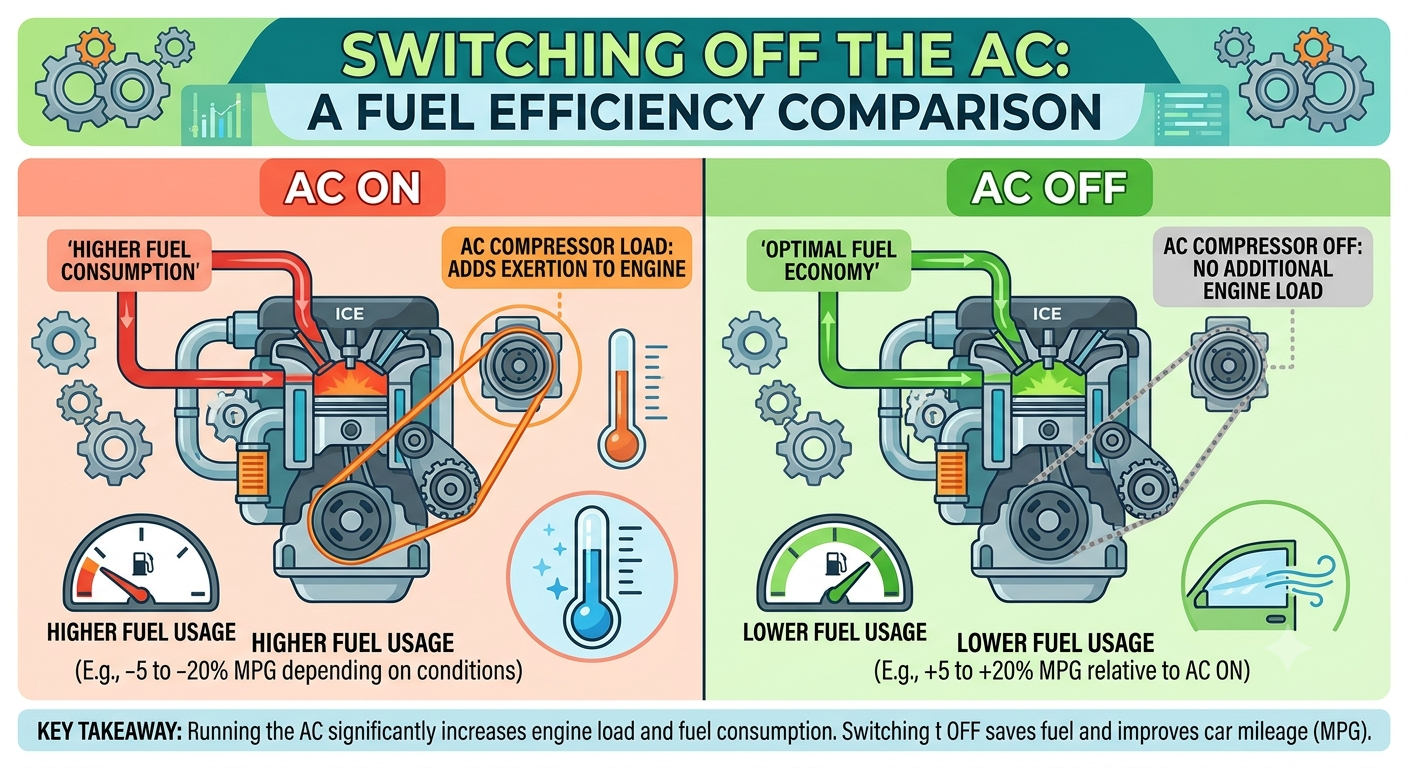
Running costs are the part people underestimate. Fuel is the big one, and in Indian summers, AC use can eat into mileage more than many buyers expect. Our look at whether switching off the AC really saves much fuel shows how much that habit actually changes things.
Lenders run their own assessments, and every household is different, so there’s no single ratio that fits everyone. Use your own numbers instead of someone else’s rule of thumb. Once you do, you’ll have an EMI range before you talk to a lender or dealer.
Three numbers do the job: the loan amount, the monthly interest rate and the number of monthly instalments. They go into one formula. A calculator does the maths for you, but knowing the formula helps you spot a bad offer.

Where P is the loan principal, r is the monthly interest rate as a decimal, and n is the total number of monthly instalments.
To get r, divide the annual rate by 12 and then by 100. A 9% annual rate becomes 0.75% a month, or 0.0075 in the formula.
This is a reducing-balance calculation. Each EMI covers interest on the balance still outstanding, plus some principal. As you repay, the interest part shrinks and the principal part grows. That’s why the early EMIs feel heavier on interest.
Say you borrow ₹8,00,000 at a hypothetical 9% a year, paid monthly, with no extra charges included. Here’s what changes as the tenure stretches.
| Loan tenure | Approx. monthly EMI | Total interest | Total repayment |
| 3 years | ₹25,440 | ₹1,15,832 | ₹9,15,832 |
| 5 years | ₹16,607 | ₹1,96,401 | ₹9,96,401 |
| 7 years | ₹12,871 | ₹2,81,186 | ₹10,81,186 |
Compare the 3-year and 7-year rows. The longer loan cuts the EMI roughly in half, but the interest bill more than doubles. That’s the trade-off in one line.
So what should you take from this? A shorter tenure usually means a higher EMI and lower total interest. A longer tenure lowers the EMI and raises the total cost. The smallest EMI isn’t always the cheapest loan, and that’s the lesson most people miss.
These figures are rounded to the nearest rupee and are only illustrations. They aren’t a quote from any lender, and real offers can differ in rate, fees and terms.
[EMI calculator goes here: inputs for loan amount, interest rate and tenure, showing EMI, total interest and total repayment.]
There isn’t one car loan rate in India. The rate you’re offered depends on your profile, the car, the loan terms and the lender. The rate in an advertisement is a starting point, not a promise.
Think of the advertised rate as the best-case number the lender is happy to show. Your offer may sit higher, depending on the factors below.
Your credit score and credit report come first for most lenders. They show how you’ve handled debt in the past. Your income and existing obligations matter too, because they show how much room you have for one more EMI. Your job or business profile counts, and so do the loan amount and tenure you choose.
The car itself changes the picture. New and used cars can be priced differently, and the model, its age and the lender’s own policy all play a part. Your relationship with the lender and any offers running at the time can shift the rate as well.
Rates move, so check the lender’s own page and the date it was updated. For example, SBI’s official rate page, updated on 15 October 2026, lists these ranges.
| Category (SBI, updated 15 October 2026) | Rate range |
|---|---|
| New car loans | 8.55% to 9.50% |
| Certified pre-owned car loans | 10.60% to 15.75% |
The same page reports a mean rate of 8.9% for auto loans in Q2 of FY 2026-27. These are SBI’s own figures. They aren’t a market-wide average, and they don’t tell you what you’ll pay. Your credit profile and loan terms can change the final offer.
Old promotional rates are a common trap, too. If you saw a low rate in an ad a few months back, check it against the current lender page before you plan around it.
With a fixed rate, the rate stays the same for an agreed period, so your EMI stays predictable. With a floating rate, the rate can move with a benchmark or the lender’s reset terms, so your cost can rise or fall.
| Fixed rate | Floating rate |
|---|---|
| The contractual rate generally stays the same for the agreed fixed-rate period. | The rate can change with the applicable benchmark or contract reset terms. |
| Gives more predictable interest costs. | Can gain or lose when rates move. |
| Early repayment charges depend on the contract and applicable rules. | Prepayment protections may apply under RBI directions. |
Don’t assume every car loan is floating, and don’t assume every lender offers both. The exact product terms and the sanction date decide which rules apply to you.
The headline rate is only part of the cost. Fees, insurance add-ons and prepayment rules can make a lower-rate loan more expensive than a higher-rate one. So compare the total cost, not the number on the poster.
| Cost or charge | What to check |
|---|---|
| Interest | The quoted rate, and whether interest is calculated on a reducing balance. |
| APR | The yearly cost figure that folds in interest and certain loan charges, calculated under the applicable rules. |
| Processing fee | How much it is, and whether it’s refundable if you cancel. |
| Documentation or admin fees | Whether a separate fee applies. |
| Stamp duty or legal charges | Whether they apply to your loan and your state. |
| Penal charges | What the contract says about missed payments or defaults, and when they apply. |
| Prepayment or foreclosure charges | The conditions for paying part or all of the loan early. |
| Insurance and add-ons | Whether they’re in the quote, and whether each one is optional. |
Interest is the number everyone compares. APR goes a step further. It folds the interest and certain upfront charges into one yearly figure, which makes two offers easier to compare. The exact calculation follows the rules that apply to the loan, so ask the lender to show the APR in writing.
The RBI’s Key Facts Statement (KFS) helps here too. For covered retail loans, it’s meant to show the key loan details, including the overall cost, in plain language. Ask for it, then read it next to your sanction letter and loan agreement.
Put both offers on the same footing first. Use the same loan amount and the same tenure. Then compare the EMI, total interest, upfront and recurring fees, total repayment, prepayment terms and whether the rate is fixed or floating.
Here’s the trap. A five-year loan from one lender and a seven-year loan from another can’t be judged on EMI alone. The lower EMI may simply come from the longer loan. Line them up on the same tenure, and the real difference shows up fast.
Choose the type that matches your purchase. A category name doesn’t make a loan cheaper, though. Your final terms do that.
| Loan type | Best for | What to consider |
|---|---|---|
| New car loan | Buying a new car | Eligible funding, on-road costs, rate and tenure |
| Used car loan | Buying a pre-owned car | Vehicle age, valuation, condition and financing cost |
| Electric car loan | Buying an EV | EV-specific offers, if the lender has them. Compare charging costs separately. |
| Pre-approved car loan | Applying with an existing offer | Whether the offer is conditional and what final checks remain |
| Balance transfer or refinancing | Moving an existing loan to a new lender | Remaining principal, new fees, revised EMI and total future cost |
| Top-up finance | Borrowing more against an existing eligible facility, where offered | Eligibility, added debt and total repayment |
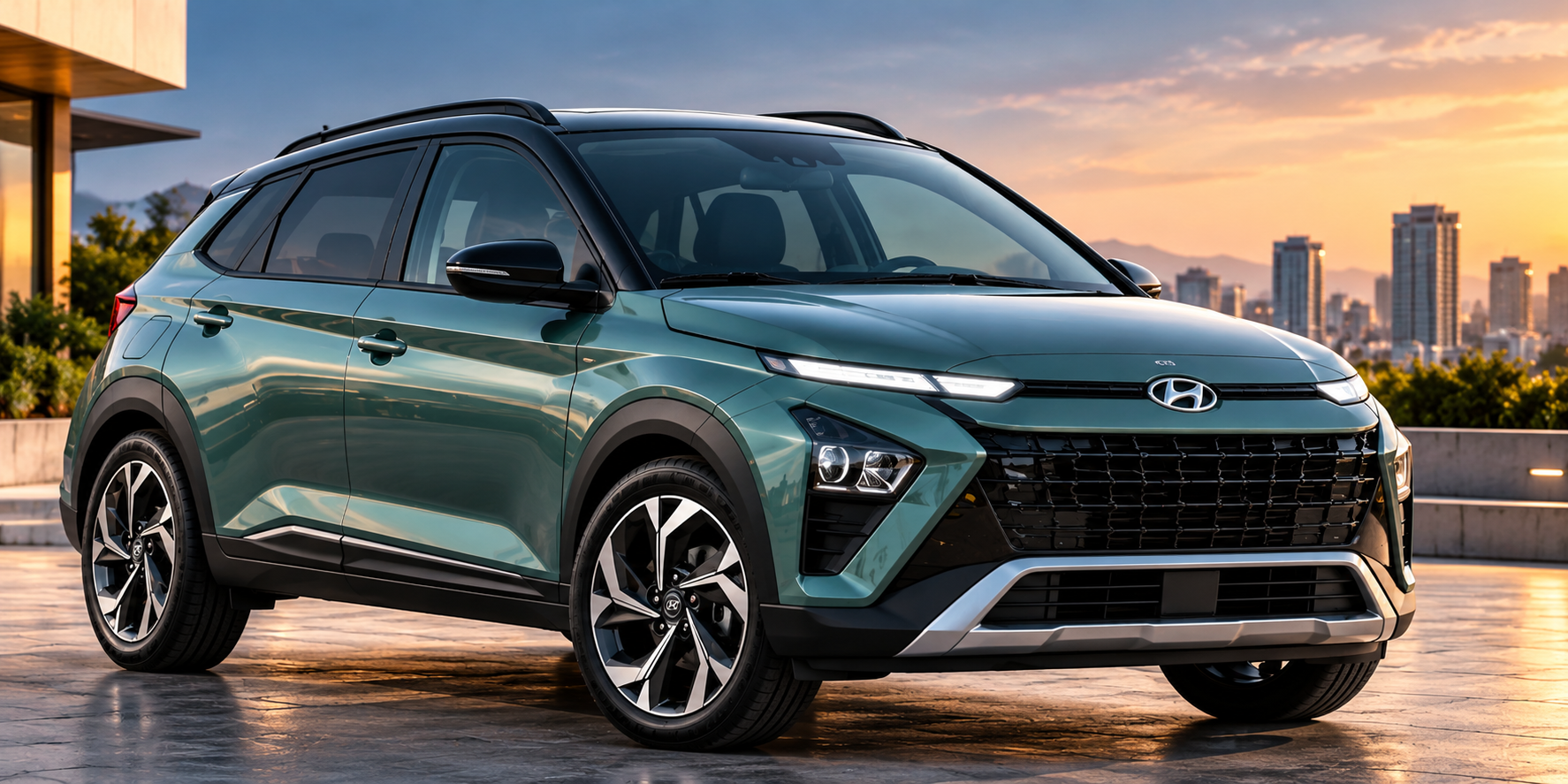
If you’re buying a used car, the rules shift. The vehicle’s age, valuation and condition affect how much a lender will fund and at what rate. Before you commit, weigh the new car vs used car trade-offs, because that choice changes your loan as much as the car itself.
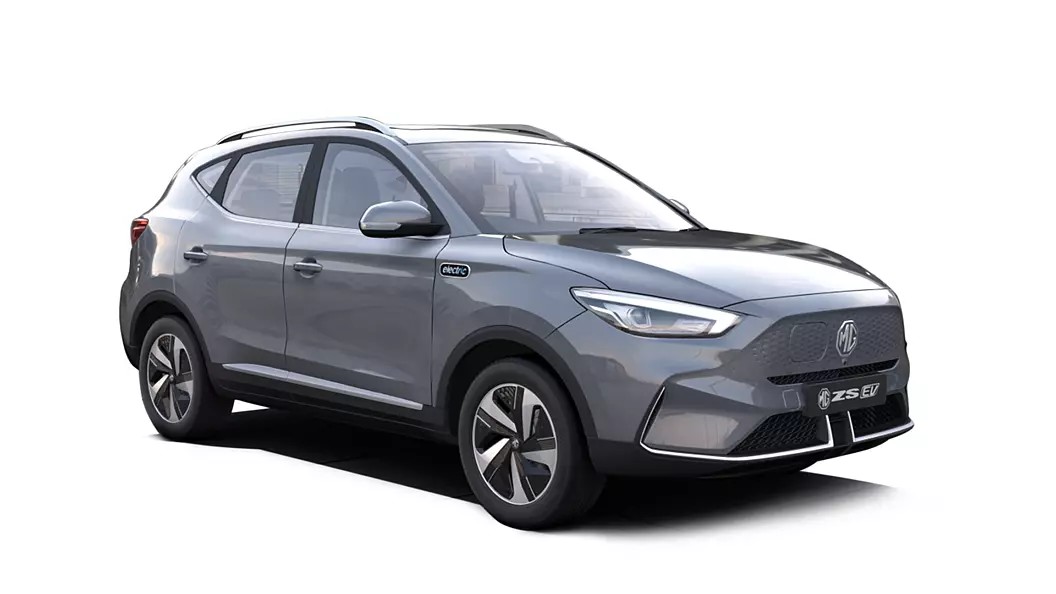
Going electric? Battery health matters for long-term use, so it’s worth a thought while you compare EV loan offers. Our article on whether fast charging really harms an EV battery covers the battery side of that decision.
Lenders want to know one thing: can you repay without strain? They check your age and residency, your income, your job or business stability, your existing EMIs and your credit history. There’s no universal minimum salary or age, so treat these as the questions the lender will ask, not as a pass-or-fail test.
Lenders usually check your age and residency, and some set a minimum income depending on the product. Salaried applicants need stable employment. Self-employed applicants need to show that the business is running and earning. Your existing EMIs and other debts count, and so does your repayment capacity. The vehicle matters too, including its type, age and value.
Notice what’s missing from that list: a magic number. Each lender sets its own rules, so the best way to learn your chances is to check the lender’s published criteria or ask directly.
Your CIBIL score is a three-digit number from 300 to 900, built from your credit history. CIBIL is a credit bureau owned by TransUnion. A higher score can help your application look better to a lender, but it doesn’t guarantee approval. The lender reviews the whole file, including your income and existing obligations.
The parts of your credit history you can control are fairly clear. Your repayment record comes first. Then comes how much of your available credit you’re using, how many new credit applications you’ve made recently, and any mistakes on your report. Your existing loans and repayment obligations round out the list.
Give yourself a few weeks of preparation before you apply. That beats sending applications to five lenders and wondering why each one says no.
A co-applicant can strengthen a joint application in some cases. But a co-applicant shares the repayment responsibility and the credit consequences, so both people should understand that before they sign.
The goal is simple. Prepare first, so that if a lender says no, you know why and what to fix.
You’ll need proof of who you are, where you live, how you earn, and which car you’re buying. The exact list depends on whether you’re salaried or self-employed, and on the lender.
Expect to share your PAN or another accepted identity and KYC document, plus address proof the lender accepts. Lenders often ask for salary slips or a salary certificate, along with bank statements that show your salary credits. Form 16 or other income tax documents may be requested too. You’ll also need a vehicle quotation or pro forma invoice from the dealer.
Start with KYC and address proof, then add bank statements and income tax returns. Depending on the lender, you may also need financial statements or other proof of business income. If your business is registered, bring the registration papers too. The vehicle quotation is still on the list.
Lenders publish their own checklists, and they don’t all match. Federal Bank, for example, lists separate requirements for salaried, self-employed and non-resident applicants. Use those as a guide, not as universal rules.
Car purchase paperwork overlaps with loan paperwork, but the two aren’t identical. Our documents required to buy a new car checklist covers the purchase side, so you can prepare both sets together.
Before you submit, ask the lender for its own checklist. Requests for extra income, business or vehicle papers are common, and chasing them later slows the whole file.
Your loan rarely runs on its own. It moves alongside your car booking, and knowing the new car booking process helps you line up the two timelines. Here’s the usual order.
Each route can work. Banks lend directly. NBFCs (non-banking financial companies) lend too, under their own rules and often with different products. Dealers usually arrange finance through partner lenders. The dealer route is convenient, since the paperwork happens in one place. But the lender still sets your rate and terms, so look past the convenience to that lender and the full offer.
Compare the actual loan offer, service quality, disbursement timeline, fees, documents and support. Don’t pick a route just because the counter felt friendlier.
It depends on the lender, how complete your documents are, how much verification the lender needs, the car you choose, and how quickly the final approvals move. A complete file with clean documents usually moves faster. Don’t plan around a fixed timeline unless the lender publishes one you can check.
Pick the lowest-cost loan that meets your real need and still leaves room in your monthly budget. The lowest EMI and the lowest total cost aren’t always the same loan.
A larger down payment reduces the principal and can cut future interest. But it shouldn’t wipe out the money you need for emergencies and other goals. A longer tenure lowers the EMI and raises total interest, as the earlier example showed. The right balance depends on your cash and your monthly room.
Before you sign, look at three numbers. First, the monthly EMI. Second, the total repayment over the full tenure. Third, what’s left in your monthly budget after the EMI and running costs. If any one of them makes you uneasy, change the loan amount, the tenure or the car. Don’t drain your savings to make the numbers work.
Most people check the first two and skip the third. That third number decides whether owning the car feels easy or stressful.
A rejection stings, but it’s rarely the final answer. Find the reason, fix what you can, then apply again with a stronger file.
Common reasons include a thin or limited credit history, existing debts that take up too much of your income, income that’s hard to verify, wrong details in the form, missing documents, or a car that doesn’t fit the lender’s policy. Some of these you can fix in a few weeks. Thin credit history takes longer.
A rejected application isn’t proof that you’ll never get a loan. Usually it points to one thing that needs fixing. Waiting until that’s done beats firing off more applications, which can add enquiries to your credit report.
Once the car is yours, the loan keeps costing you every month. You can cut that cost by choosing a shorter tenure if your budget allows, prepaying when you have spare cash, or refinancing when the total remaining cost drops. And never miss an EMI, because late payments cost more than most people expect.
A shorter tenure works if the EMI still fits your budget. Part-prepayment helps when you have surplus money, but check whether the lender charges for it first. Refinancing or a balance transfer makes sense only when the total remaining cost goes down. Paying on time avoids late charges and damage to your credit history. Some lenders also offer repayment options that can lower the overall cost, so ask what’s available.
Before you prepay, compare the interest you’ll save with any charges. Keep enough savings in hand, too. Money you prepay can’t come back to you in an emergency.
The rules changed recently. The RBI’s Pre-payment Charges on Loans Directions, 2025, apply to loans sanctioned or renewed on or after 1 January 2026. For those loans, the Directions prohibit prepayment charges on floating-rate loans given to individuals for purposes other than business. The Directions also cover other loan categories and set out when charges can apply.
Don’t assume the same exemption covers fixed-rate loans. The lender’s policy and your loan contract matter. Before you prepay or close, check your rate type, the sanction or renewal date, your sanction letter, the loan agreement and the KFS.
Run the numbers before you switch.
A lower rate alone isn’t enough. Compare the total cost from today until the loan ends, including the new loan’s fees and any closure charges on the old one.
Paying the last EMI isn’t the finish line. You still need the lender’s closure confirmation, and then you have to remove the hypothecation from your RC. Skip this step and the lender’s name stays on your vehicle record.
Form 35 needs to be signed by the registered owner and the financier, along with the financier’s due-clearance documents and the applicable fees. Some supporting documents vary by state, so check your state’s requirements before you visit the RTO.
Keep your final loan statement, the closure letter and the updated RC together. You’ll need them if a record doesn’t match, and a future buyer will ask for the RC when you sell.
No single score guarantees approval, and there’s no universal minimum across lenders. Lenders look at your score alongside income, existing EMIs, repayment history and other criteria. A higher score generally improves your chances of favourable consideration, but it won’t make up for a weak overall profile.
Some lenders consider applicants without an established credit history, but it depends on their policies. They may weigh your income, job profile, down payment and other proof that you can repay. Expect a closer look, and possibly different terms.
Salaried applicants may be able to offer other income proof if the lender allows it. Self-employed applicants are usually assessed on business and income documents instead. Your employment type and the lender’s documentation rules are separate questions, so ask the lender what it accepts.
A bigger down payment reduces the amount you borrow, which usually lowers total interest. But keep enough cash for emergencies, because a car loan won’t cover a medical bill or a gap between jobs.
Not always. A shorter tenure usually cuts total interest but raises the EMI. The best tenure keeps the total cost low and still lets you repay comfortably every month.
Yes, some lenders offer used car financing. The car’s age, condition and valuation, along with your profile, can affect eligibility, the rate and the tenure. Compare used car offers the same careful way you’d compare new car offers.
Usually yes, through part-prepayment or full foreclosure. Check your rate type, sanction date and loan agreement, since the applicable rules and charges depend on them. The prepayment section above explains the details.
Yes. Lenders report how you repay, and that history feeds into your credit profile. Timely EMIs help build a healthy record, while missed payments can hurt it.
You may face late charges, follow-up calls or messages from the lender, and negative entries on your credit report. The loan agreement may allow further action too. If money is tight, call the lender before the due date, because early conversations usually open more options than waiting does.
Generally, no, not freely. The lender’s hypothecation stays in place until the loan is cleared. You’ll need to coordinate with the lender and the buyer to settle the dues and complete the transfer and registration steps. Selling with the lien unresolved creates problems for both you and the buyer.
Get your closure documents, complete the hypothecation removal through your RTO, and keep your updated RC and loan records. Check that the RC shows the change before you file the papers away.