Khyati Sharma 2026-11-07
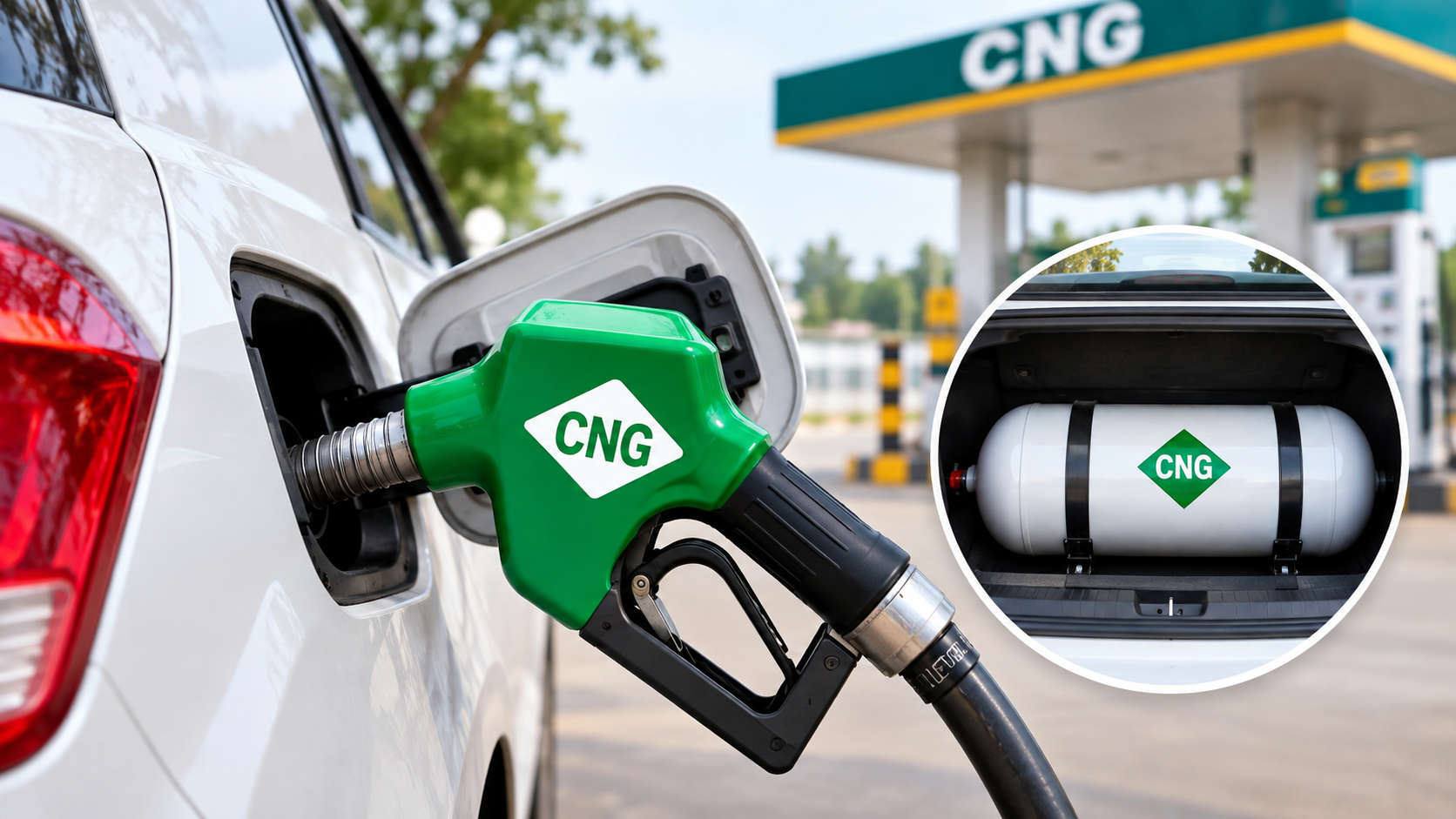
A full CNG tank does not always hold exactly the same quantity of gas at every refill. Many CNG vehicle owners believe that once their tank is filled completely, the amount of gas should remain identical every time. However, this is a common misconception.
In reality, the quantity of CNG filled into a vehicle can vary depending on several factors, including gas temperature, filling pressure, station equipment, residual gas in the cylinder and ambient weather conditions.
For example, a CNG car might receive 7.5 kg of gas during one refill and 8.2 kg during another, even when the filling process appears similar. This difference does not automatically mean that the fuel station has supplied less gas or that the vehicle has developed a problem.
Understanding how CNG filling works can help vehicle owners avoid confusion, monitor fuel expenses and maintain their vehicles more effectively.
Manual vs Automatic Car: Pros and Cons Explained
Compressed Natural Gas, commonly known as CNG, is a gaseous automotive fuel primarily made up of methane. It is widely used in passenger cars, taxis, buses and commercial vehicles because it can offer lower running costs than petrol in many situations.
Unlike petrol or diesel, which are stored as liquids, CNG is stored in specially designed high-pressure cylinders.
In India, automotive CNG systems commonly operate at a nominal service pressure of around 200 bar, although actual pressure varies with temperature and operating conditions.
Because CNG is a compressed gas, the amount that can be stored in a cylinder depends not only on the cylinder's physical size but also on the pressure and temperature of the gas.
This is one of the main reasons why a CNG tank may not receive the same number of kilograms during every refill.
Several factors influence the actual quantity of CNG that enters a vehicle during refuelling.
1. Gas Temperature Affects Filling Quantity
Temperature plays an important role in determining how much CNG can be stored inside a cylinder.
When gas becomes warmer, its pressure tends to increase if the cylinder volume remains constant. During fast filling, compression and gas movement can increase the temperature inside the cylinder.
As a result, the filling equipment may reach its pressure limit before the cylinder contains as much gas mass as it could at a lower temperature.
After the gas cools, the pressure may decrease, even though no gas has escaped.
This explains why a cylinder filled under different temperature conditions may receive different quantities of CNG.
2. Filling Pressure Can Vary Between Stations
CNG filling stations use compressors, storage systems and dispensing equipment to deliver gas into vehicle cylinders.
However, the available filling pressure may differ between stations or even at the same station during different periods.
For example, a station experiencing heavy demand may have different available storage pressure compared with a station operating under lighter demand.
A lower available filling pressure can result in less gas being transferred into the vehicle cylinder.
Therefore, two stations may deliver different quantities of CNG to the same vehicle, even when the driver considers both refills complete.
3. Some Gas Remains Inside the Cylinder

A CNG cylinder does not need to be completely empty before refuelling.
Even when the vehicle's fuel gauge shows a low level, some compressed gas may remain inside the cylinder.
The amount of remaining gas depends on how much fuel the vehicle has consumed and the pressure at which the refilling process begins.
For example, if one refill starts with 1 kg of gas remaining and another starts with 2 kg remaining, the amount needed to reach a similar final condition will be different.
This is why comparing only the kilograms purchased during two refills can be misleading.
4. Weather Conditions Influence CNG Filling
Changes in ambient temperature can also affect CNG filling.
During hot weather, the cylinder and gas may already be relatively warm before refuelling begins. In cooler weather, the initial temperature may be lower.
Since gas pressure is temperature-dependent, the amount of CNG transferred before the dispenser reaches its filling limit may change.
However, it is not correct to assume that every winter refill will always provide more CNG than every summer refill. Station settings, gas temperature and initial cylinder pressure also matter.
Best Time of the Year to Buy a New Car in India
5. Filling Speed Can Make a Difference
Fast filling can produce greater temperature changes inside the cylinder.
When gas enters the cylinder rapidly, the gas may become warmer, affecting its pressure during the filling process.
Some filling systems use temperature compensation to manage these changes, but filling performance can still vary depending on equipment and conditions.
Therefore, a fast refill and a slower refill may not always result in identical quantities of gas.
6. Automatic Cut-Off Settings at CNG Stations
Modern CNG dispensers use control systems to stop filling when specified operating limits are reached.
These limits help ensure that the filling process remains within the intended pressure and temperature conditions.
However, equipment calibration, temperature compensation and station operating conditions can influence the final amount delivered.
A dispenser stopping automatically does not guarantee that the same mass of gas has entered the cylinder as during a previous refill.
7. Gas Composition Can Affect Filling and Mileage
CNG primarily contains methane, but its exact composition can vary slightly depending on the natural gas supply.
Changes in gas composition can affect density and energy content.
Since CNG is sold by weight in India, customers pay for the measured kilograms delivered rather than the volume of gas.
However, two refills containing the same number of kilograms may not always provide exactly the same energy content or driving range.
One common misunderstanding among vehicle owners is the difference between cylinder capacity in litres and the amount of CNG measured in kilograms.
CNG cylinder capacity is commonly expressed as water capacity in litres. This refers to the internal volume of the cylinder, not the number of litres of liquid fuel it can hold.
For example, a cylinder with a 60-litre water capacity does not automatically hold 60 kg of CNG.
The actual mass of gas stored depends on pressure, temperature and gas properties.
|
Factor |
Effect on CNG filling |
|
Higher gas temperature |
May reduce the mass filled at a given pressure limit |
|
Lower gas temperature |
May allow more gas mass at the same pressure |
|
Lower station pressure |
Can reduce the final quantity delivered |
|
Higher residual cylinder pressure |
Usually reduces the amount needed during refilling |
|
Fast filling |
Can increase gas temperature during compression |
|
Dispenser control settings |
Influence when filling stops |
|
Gas composition |
Can affect density and energy content |
Not necessarily.
If a vehicle receives less CNG than expected, it does not automatically indicate incorrect measurement or dishonest practices.
Normal variations in filling pressure, gas temperature and the amount of fuel already present inside the cylinder can explain differences.
However, unusually large or repeated differences should not be ignored.
Vehicle owners can check the dispenser reading, retain payment receipts and compare refills over time.
If there is a consistent unexplained discrepancy, customers can request a measurement verification or raise a complaint with the station operator or the relevant legal metrology authority.

The amount of CNG stored in the cylinder directly influences how far a vehicle can travel before the next refill.
Suppose a CNG car delivers an average mileage of 25 km/kg.
If the vehicle receives 8 kg of usable CNG, the theoretical driving range would be approximately 200 km.
If it receives 7 kg, the theoretical range would be approximately 175 km.
This represents a difference of 25 km.
These figures are illustrative. Actual driving range depends on traffic, road conditions, driving style, vehicle load, air-conditioning usage and the usable gas remaining in the cylinder.
A difference in driving range does not always mean that the engine has become less efficient.
Petrol vs Diesel vs CNG vs Electric Cars: How to Choose the Right Fuel Type
Although drivers cannot control every factor affecting CNG filling, they can follow several practical steps.
Choose reliable filling stations: Use authorised CNG stations with properly maintained and calibrated dispensing equipment.
Monitor fuel consumption: Record the kilograms purchased and the distance travelled between refills. Compare mileage over several refills rather than relying on a single reading.
Maintain the vehicle regularly: Follow the manufacturer's recommended maintenance schedule for the CNG system, including inspections of the cylinder, valves, pipes and associated components.
Check for unusual symptoms: A persistent gas smell, unexpected loss of pressure or sudden reduction in range may indicate a problem requiring professional inspection.
Avoid unsafe refuelling practices: Never attempt to bypass automatic cut-off systems or request filling beyond approved pressure limits.
The belief that a full CNG tank always holds the same quantity at every refill is incorrect.
Unlike liquid fuels, compressed natural gas is highly sensitive to changes in temperature and pressure. The amount of gas already present in the cylinder, station operating conditions and dispenser settings can also influence the quantity delivered.
Small differences between refills are often normal and do not necessarily indicate a vehicle problem or inaccurate fuel measurement.
For CNG vehicle owners, the best approach is to monitor fuel consumption over several refills, maintain the vehicle properly and use authorised filling stations.
Understanding these factors can help drivers make better decisions, avoid unnecessary concerns and manage their vehicle's running costs more effectively.














Mercedes-Benz
₹482.69 Lakh