Roof racks are popular accessories among car owners who need extra storage space for luggage, bicycles, camping equipment and other travel essentials. They are particularly useful for long-distance journeys and family road trips when the boot does not provide enough room. However, many drivers believe that an empty roof rack has no effect on fuel consumption because nothing is being carried on it.
This belief is incorrect. Even when a roof rack is completely empty, it can increase a vehicle's aerodynamic drag and affect fuel efficiency. The additional resistance becomes more noticeable at higher speeds, particularly during highway driving.
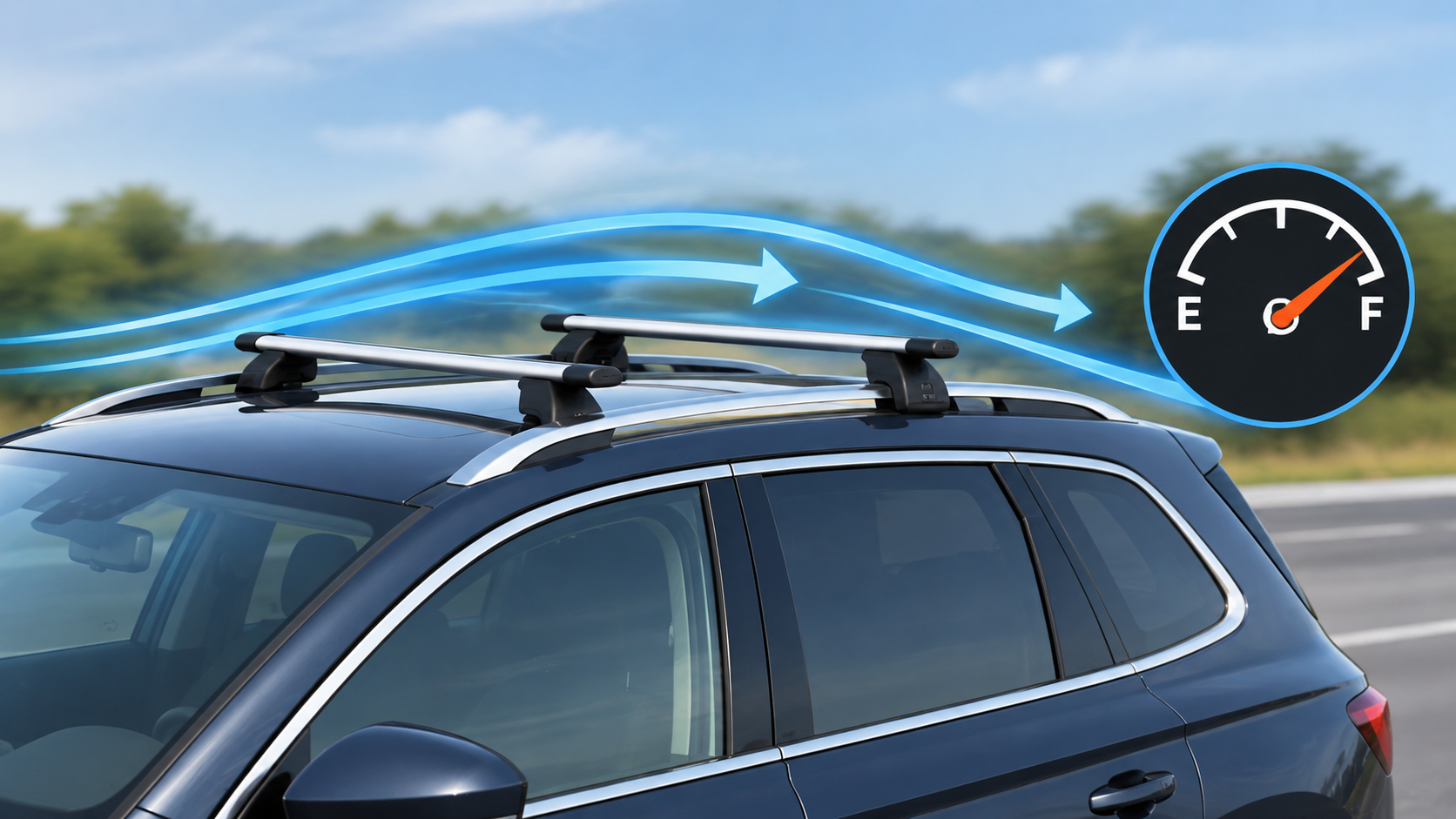
A roof rack changes the airflow around a vehicle. Instead of allowing air to pass smoothly over the roof, its bars, mounting brackets and other exposed components disturb the airflow. This creates additional aerodynamic resistance, requiring the engine to work harder to maintain speed.
The actual effect depends on the roof rack's design, vehicle shape, driving speed and weather conditions. Some modern roof racks are designed to reduce wind resistance, but they can still affect efficiency when left installed.
How to Choose Between Two Similar Car Models: A Decision Framework
Does an Empty Roof Rack Affect Fuel Consumption?
Yes. An empty roof rack can increase fuel consumption even when it is not carrying any luggage or equipment.
The main reason is aerodynamic drag. When a vehicle moves forward, air flows around its body. A car is designed with a particular shape to reduce resistance and allow air to move smoothly around the roof, windscreen, sides and rear section.
Installing a roof rack introduces additional components into this airflow. Crossbars, mounting feet, clamps and exposed brackets can create turbulence and increase resistance.
As a result, the engine needs to produce additional power to overcome the extra drag, especially at higher speeds. This can increase fuel consumption.
The effect may be relatively small during slow city driving, where aerodynamic resistance is less significant. However, on highways, where vehicles travel at higher and more consistent speeds, the difference can become more noticeable.
Therefore, removing an unused roof rack can be a simple way to improve aerodynamic efficiency.
Why Does an Empty Roof Rack Create Aerodynamic Drag?
Aerodynamic drag is the resistance experienced by a vehicle as it moves through the air. Every vehicle experiences this resistance, but external accessories can increase it by disturbing the airflow.
A roof rack creates additional exposed surfaces above the vehicle's roof. Air moving over these components may separate, swirl and form turbulent regions.
These disturbances increase the amount of energy required to move the vehicle through the air.
There are several reasons why an empty roof rack can affect fuel efficiency.

1. Crossbars Disturb Airflow
Crossbars are among the most common roof rack components. They extend across the roof and create additional surfaces for air to hit.
Even when no luggage is installed, the crossbars can increase aerodynamic resistance. Their shape, thickness, positioning and distance from the roof influence how much turbulence they generate.
Square or poorly shaped bars may create more resistance than streamlined aerodynamic bars.
2. Mounting Brackets Increase Wind Resistance
Roof racks require mounting feet, clamps or other support structures to remain securely attached to the vehicle.
These components may sit above the roofline and disturb airflow. Their effect depends on the rack design and how much of the mounting structure is exposed.
3. Wind Noise Can Indicate Airflow Disturbance
Some roof racks produce humming, whistling or wind noise at higher speeds.
This noise often results from turbulent airflow around the bars and mounting points. While wind noise does not directly measure fuel consumption, it can indicate that the rack is disturbing the airflow.
4. Larger Accessories Can Increase Drag Further
Some drivers leave additional accessories installed even when they are not being used. These may include bicycle carriers, cargo baskets, roof boxes and kayak mounts.
Such accessories can have a greater aerodynamic effect than basic crossbars because they expose larger surfaces to moving air.
How to Get the Best Discount on a New Car in India
How Much Can an Empty Roof Rack Increase Fuel Consumption?
The increase in fuel consumption varies considerably between vehicles and roof rack designs. There is no single percentage that applies to every car.
An aerodynamic roof rack fitted to a streamlined SUV may have a different effect from a wide, box-shaped rack installed on a compact hatchback.
Driving speed is also an important factor. Aerodynamic drag increases rapidly as speed rises. In simplified terms, drag force increases approximately with the square of vehicle speed under comparable conditions.
This means that a roof rack that has a relatively small effect at city speeds may create a more noticeable difference during highway driving.
Fuel consumption can also be influenced by:
-
Vehicle body shape and roof height.
-
Roof rack design and crossbar profile.
-
Distance between the roof and crossbars.
-
Driving speed and acceleration.
-
Headwind, crosswind and weather conditions.
-
Tyre pressure and vehicle load.
-
Air conditioning use and traffic conditions.
Drivers should avoid assuming that every roof rack increases fuel consumption by a fixed amount. The actual difference needs to be measured under comparable driving conditions.
Empty Roof Rack vs Removed Roof Rack: What Is the Difference?
|
Roof Rack Setup
|
Aerodynamic Effect
|
Possible Fuel Efficiency Impact
|
|
Roof rack completely removed
|
Restores the original roof profile
|
Usually the lowest drag
|
|
Empty standard crossbars
|
Creates additional airflow disturbance
|
May increase fuel consumption
|
|
Empty aerodynamic crossbars
|
Designed to reduce turbulence
|
May have a smaller impact than basic bars
|
|
Roof rack with cargo basket
|
Adds exposed surfaces and turbulence
|
Can increase drag further
|
|
Roof box installed
|
Creates a large additional surface
|
May significantly affect efficiency
|
|
Bicycle carrier installed
|
Adds aerodynamic resistance
|
Can increase fuel consumption even without a bicycle, depending on design
|
Why Is the Effect More Noticeable at Highway Speeds?
Speed plays an important role in determining how much aerodynamic drag affects fuel consumption.
At lower speeds, a vehicle generally faces less aerodynamic resistance. Rolling resistance from tyres, mechanical losses and stop-and-go driving may account for a larger share of energy consumption.
At highway speeds, aerodynamic resistance becomes increasingly important.
For example, a car travelling at 100 km/h needs to overcome more air resistance than the same car travelling at 50 km/h. If a roof rack increases drag, the additional resistance also becomes more significant as speed increases.
This is why drivers may notice a greater difference in fuel efficiency during long highway journeys than during short city trips.
The effect can be particularly relevant for vehicles that regularly travel long distances at high speeds.

Do Aerodynamic Roof Racks Reduce Fuel Consumption?
Aerodynamic roof racks are designed to reduce wind resistance compared with conventional designs.
They often feature streamlined crossbars, rounded or wing-shaped profiles and improved mounting arrangements. These features help air move more smoothly around the accessory.
However, aerodynamic does not mean drag-free.
Even a well-designed roof rack can increase resistance compared with a vehicle that has no roof rack installed. The advantage is that it may reduce the additional drag created by a less aerodynamic alternative.
Some roof rack manufacturers also offer removable accessories or covers that help improve airflow when the rack is not being used.
When purchasing a roof rack, buyers should consider:
-
Aerodynamic crossbar design.
-
Vehicle-specific compatibility.
-
Weight and mounting arrangements.
-
Manufacturer-approved load limits.
-
Wind noise performance.
-
Ease of removal and installation.
Choosing a suitable roof rack can help reduce unnecessary aerodynamic penalties.
Should You Prepay Your Car Loan? How Much Interest You Can Save
Does a Roof Box Consume More Fuel Than Empty Crossbars?
A roof box can create more aerodynamic resistance than empty crossbars, depending on its size, shape and positioning.
Unlike basic crossbars, a roof box presents a larger surface area to the airflow. Its height, width, length and installation position influence how air moves around the vehicle.
A poorly positioned or oversized roof box can create considerable turbulence. This may increase fuel consumption, particularly during highway driving.
However, modern roof boxes are designed with aerodynamic shapes to reduce resistance. Some are longer and narrower, while others have tapered front and rear sections.
Drivers should select a roof box that suits their vehicle and luggage requirements rather than choosing the largest available option.
When the roof box is not required, removing it is generally preferable to leaving it installed throughout the year.
How to Reduce Fuel Consumption When Using a Roof Rack
Roof racks are useful accessories, and drivers do not need to avoid them completely. Instead, they should use them efficiently and remove unnecessary equipment when it is not needed.
Here are some practical ways to reduce the effect of roof accessories on fuel consumption.
1. Remove Empty Roof Racks When Not Required
This is one of the simplest ways to reduce unnecessary aerodynamic drag. If you do not regularly use the roof rack, consider removing it after your journey.
2. Choose Aerodynamic Crossbars
When purchasing a roof rack, look for streamlined crossbars rather than bulky designs. Check compatibility with your vehicle and follow the manufacturer's installation instructions.
3. Remove Unused Roof Boxes
Roof boxes can create additional resistance even when they are empty. Remove them when they are not required for travel.
4. Avoid Carrying Unnecessary Accessories
Bicycle carriers, cargo baskets and other external accessories should be removed when they are not being used.
5. Follow Recommended Driving Speeds
Higher speeds generally increase aerodynamic resistance. Maintaining a steady, legal speed can help improve fuel efficiency and reduce unnecessary stress on the vehicle.
6. Maintain Correct Tyre Pressure
Incorrect tyre pressure can also affect fuel consumption. Check tyre pressure regularly and follow the manufacturer's recommended figures.
7. Install the Rack Correctly
A poorly installed roof rack can create unnecessary noise and aerodynamic disturbance. Follow the manufacturer's instructions and ensure all components are securely fitted.

Is It Safe to Drive Without Removing an Unused Roof Rack?
Yes, driving with an empty roof rack is generally safe when the accessory is correctly installed, compatible with the vehicle and within the manufacturer's specifications.
However, safety and fuel efficiency are two different considerations.
A properly fitted rack may be safe to use while still increasing aerodynamic drag. Drivers should also consider wind noise, mounting security and the vehicle's maximum permitted roof load.
Before driving, check that:
-
All mounting points are secure.
-
Crossbars are correctly positioned.
-
No components are loose or damaged.
-
The rack does not interfere with doors, sunroofs or other vehicle features.
-
The manufacturer's speed and load restrictions are followed.
Never exceed the vehicle's permitted roof load. Remember that the maximum roof load generally includes the weight of the rack and any accessories or luggage installed on it.
Banks vs NBFCs for a Car Loan: How to Choose in India
How Can You Test Whether Your Roof Rack Affects Fuel Efficiency?
Drivers who want to understand the actual effect of a roof rack on their vehicle can perform a simple comparison.
First, record the vehicle's fuel consumption over a regular route with the roof rack installed. Then remove the rack and repeat the journey under similar conditions.
For a meaningful comparison, try to maintain:
-
Similar driving speeds.
-
The same route and direction.
-
Similar traffic conditions.
-
Similar tyre pressure.
-
Similar vehicle load.
-
Similar weather conditions.
Repeat the test several times because a single journey may produce misleading results.
Use the same fuel measurement method for both tests. The vehicle's dashboard fuel economy display can provide an indication, but measuring fuel used over a sufficiently long distance may provide a more useful comparison.
Remember that wind, traffic, temperature and driving behaviour can influence the results. The comparison should therefore be treated as an estimate rather than a laboratory measurement.
Final Verdict: Is an Empty Roof Rack Bad for Fuel Efficiency?
The claim that roof racks have no effect on fuel consumption when empty is a myth. Even without luggage, a roof rack can disturb airflow and increase aerodynamic drag.
The effect depends on the vehicle, rack design and driving conditions. It is generally more noticeable at higher speeds, where aerodynamic resistance becomes a more important factor.
For drivers who regularly use roof racks, choosing an aerodynamic design can help reduce the additional resistance. However, those who rarely need one should consider removing it when it is not in use.
A simple habit of removing unused roof accessories can help improve aerodynamic efficiency, reduce wind noise and avoid unnecessary fuel consumption over time.

 Khyati Sharma 2026-11-09