
 Khyati Sharma 2026-11-10
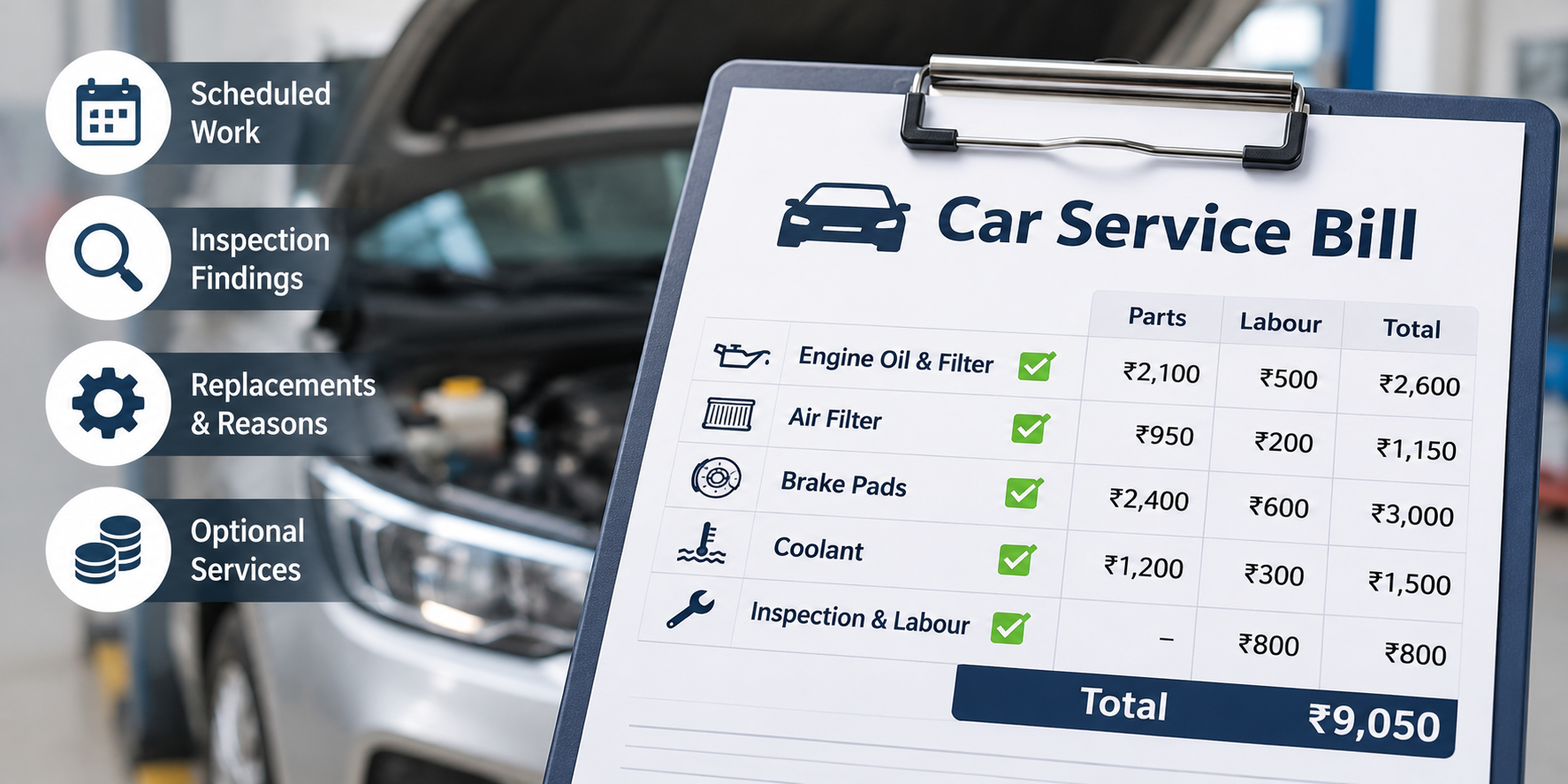
Taking your car to a service centre is a routine part of vehicle ownership, but understanding the final service bill can sometimes be confusing. A typical car service invoice may include engine oil, filters, labour charges, inspection fees, replacement parts, consumables and additional services recommended by the workshop.
Some items are necessary to maintain the vehicle according to the manufacturer's schedule, while others may be recommended after an inspection. There may also be optional treatments that improve convenience or appearance but are not essential for every vehicle.
For many car owners, the biggest challenge is knowing which replacements are genuinely required and which services can be postponed or declined.
A service advisor may recommend replacing brake pads, cleaning the AC system, changing transmission fluid or carrying out wheel alignment. However, each recommendation should have a clear reason supported by the vehicle's condition, maintenance schedule or inspection findings.
Understanding your car service bill helps you make informed decisions, control maintenance expenses and avoid approving unnecessary work. This guide explains the main sections of a service invoice, common replacement items, optional services and the questions you should ask before authorising repairs.
New Car Delivery Day: What to Check Before You Drive Off
The first thing to understand is that scheduled maintenance and repairs are not the same.
Scheduled maintenance refers to work recommended by the vehicle manufacturer at specific time or distance intervals. It may include engine oil replacement, filter changes, fluid inspections and general vehicle checks.
Repairs are carried out when a component develops a fault, becomes damaged or no longer performs as intended.
For example, replacing engine oil at the recommended service interval is scheduled maintenance. Replacing a damaged alternator after an electrical problem is a repair.
Your invoice should make it reasonably clear which items belong to routine maintenance and which are additional repairs.
Before approving the work, ask the service centre to identify the scheduled items separately from inspection-based recommendations.
This makes it easier to understand why the bill has increased compared with your previous service.
Engine oil is one of the most important items on a routine car service bill.
It lubricates moving engine components, helps manage heat, reduces friction and carries contaminants towards the oil filter.
Over time, engine oil deteriorates because of heat, oxidation and contamination. This is why manufacturers specify replacement intervals based on time, distance or operating conditions.
The oil filter should generally be replaced along with the engine oil according to the manufacturer's maintenance schedule.
When checking the invoice, look for:
Engine oil grade and specification.
Quantity of oil used.
Price per litre.
Oil filter part number and price.
Labour charges, if listed separately.
Do not assume that every engine uses the same oil grade. The correct specification depends on the engine and manufacturer's recommendations.
If the workshop recommends a different oil grade or an additional oil treatment, ask why it is suitable for your vehicle.

Your car generally has two different filters that may appear on a service invoice.
Engine air filter: This cleans the air entering the engine. It helps prevent dust and dirt from reaching sensitive engine components.
Cabin air filter: This filters air entering the passenger compartment through the heating, ventilation and air conditioning system.
Both filters collect contaminants over time, particularly when the vehicle is regularly driven on dusty roads.
A dirty engine air filter may restrict intake airflow, while a clogged cabin filter can reduce airflow from the AC vents.
Before approving replacement, ask the technician to show you the condition of the old filter. Check whether it is damaged, heavily contaminated or has reached its scheduled replacement interval.
Replacement intervals vary between vehicles and driving conditions. Cars frequently driven through construction zones or dusty roads may require more frequent inspections.
A Bigger Battery Is Always a Better Upgrade for Your Car – Myth or Fact?
Brake-related work is one of the most important parts of vehicle maintenance because it directly affects safety.
Your service bill may include brake pad replacement, disc inspection, brake cleaning or brake fluid replacement.
Brake pads: These create friction against the brake discs to slow down the vehicle. They wear with use and need replacement when they reach the manufacturer's specified wear limit.
Brake discs: These rotate with the wheels and work with the brake pads. They should be inspected for excessive wear, scoring, cracks and thickness below the permitted limit.
Brake fluid: This transfers hydraulic pressure through the braking system. It can absorb moisture over time, which may reduce braking performance. Replacement should follow the manufacturer's time-based or condition-based recommendation.
If a workshop recommends brake pad replacement, ask for the remaining pad thickness and, where relevant, the manufacturer's minimum specification.
If the brake discs also need replacement, request an explanation of their condition. Replacing discs automatically with every set of brake pads is not necessary for every vehicle.
Never postpone repairs when braking performance is compromised. A soft brake pedal, fluid leakage, severe grinding or a brake warning light requires prompt professional attention.
Several fluids help your vehicle operate safely and efficiently. Your service invoice may include inspections or replacements involving engine coolant, transmission fluid, brake fluid and other manufacturer-specified fluids.
Engine coolant: It helps regulate engine temperature and protects the cooling system against corrosion and freezing when the correct specification is used.
Transmission fluid: It lubricates and helps operate the transmission. Its replacement schedule depends on the gearbox type and manufacturer's instructions.
Brake fluid: It transfers braking force through the hydraulic system.
Power steering fluid: This applies to vehicles with hydraulic power steering systems. Many newer cars use electric power steering and do not require this fluid.
Washer fluid: This helps clean the windscreen and maintain visibility.
Do not approve fluid replacement simply because the workshop recommends a generic service package. Ask which fluid needs attention, what specification is required and why it is due.
Different transmission types may have different service requirements. A manual gearbox, conventional automatic, CVT and dual-clutch transmission should not automatically be treated as having identical fluid replacement procedures.

Tyre-related services can also appear on your car service bill.
These may include tyre rotation, wheel alignment, wheel balancing, puncture repair and tyre replacement.
Each service has a different purpose.
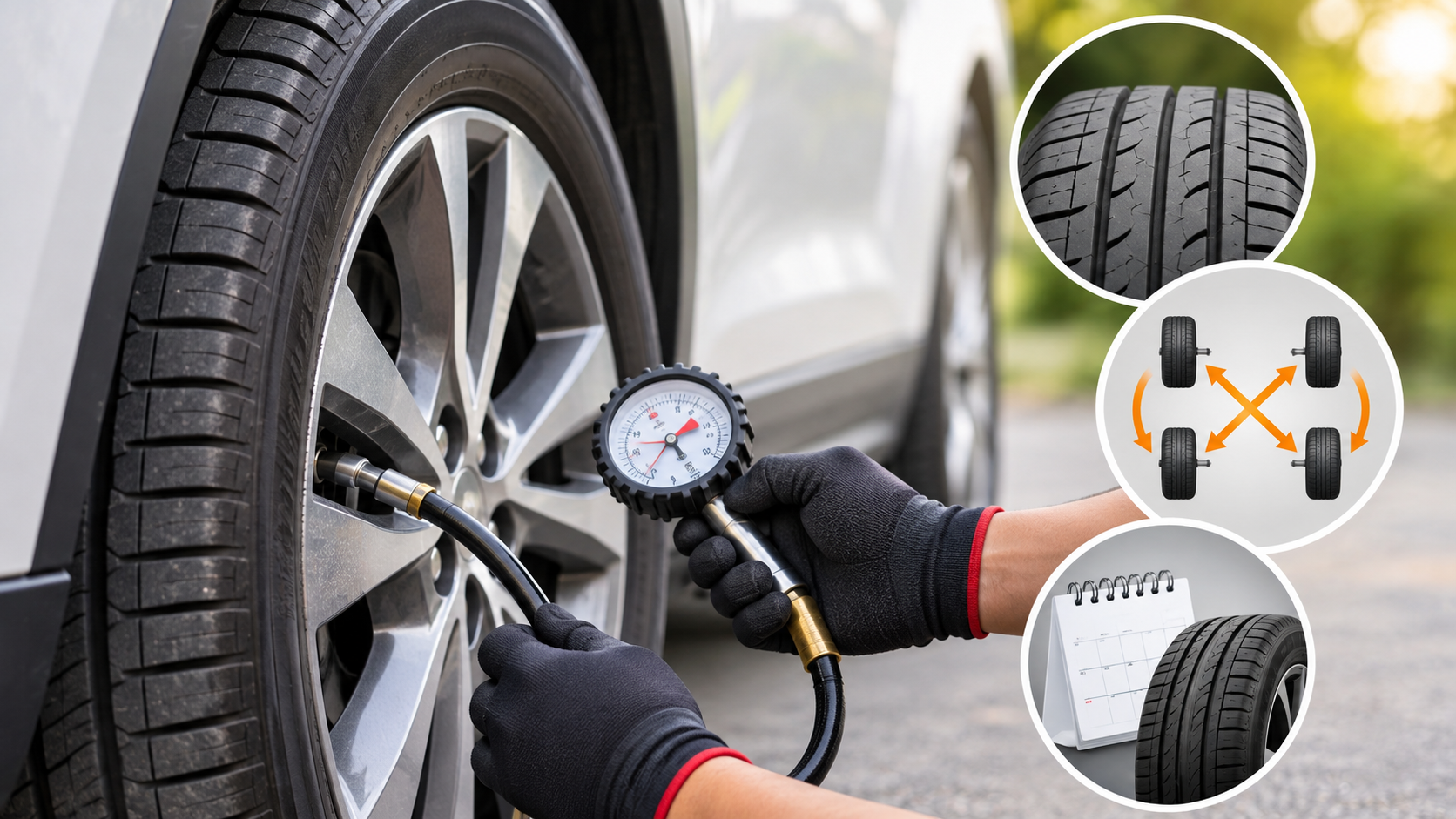
Tyre rotation: Changes the position of tyres to help manage uneven wear. The rotation pattern depends on the vehicle's drivetrain, tyre type and manufacturer's recommendation.
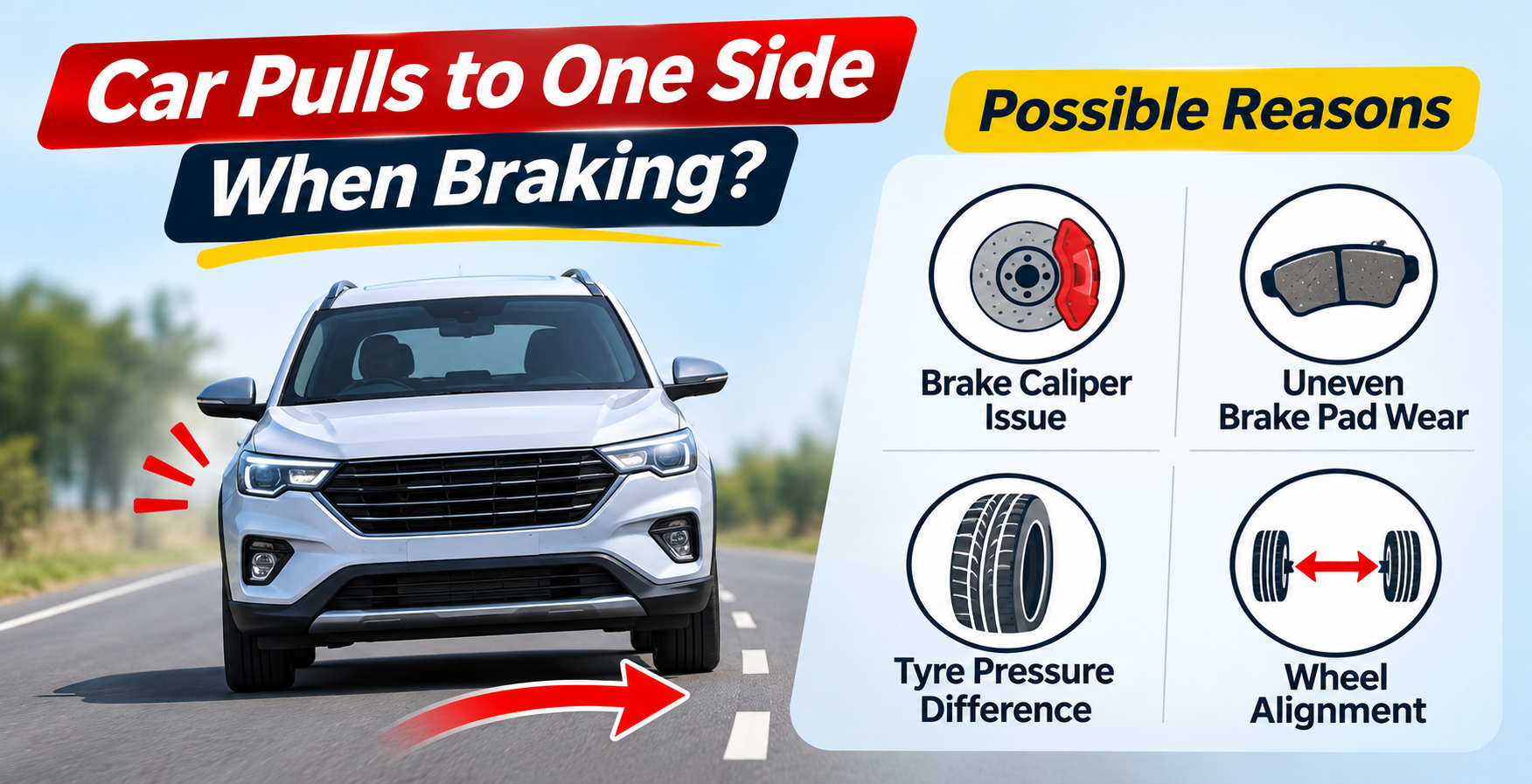
Wheel alignment: Adjusts wheel angles according to the specified settings. Incorrect alignment can contribute to uneven tyre wear and steering problems.
Wheel balancing: Corrects uneven weight distribution in a wheel-and-tyre assembly. Imbalance can cause vibration, particularly at certain speeds.
These services are not automatically required at every scheduled service.
For example, if the steering pulls to one side or tyres show uneven wear, alignment inspection may be appropriate. If the steering wheel or vehicle vibrates at particular speeds, balancing may be required.
Ask the workshop to explain the symptom or inspection result supporting the recommendation.
Down Payment and Car Loan EMI: How Much Should You Pay?
A routine inspection may identify components that are approaching the end of their useful life.
Common examples include:
Battery.
Drive belt or auxiliary belt.
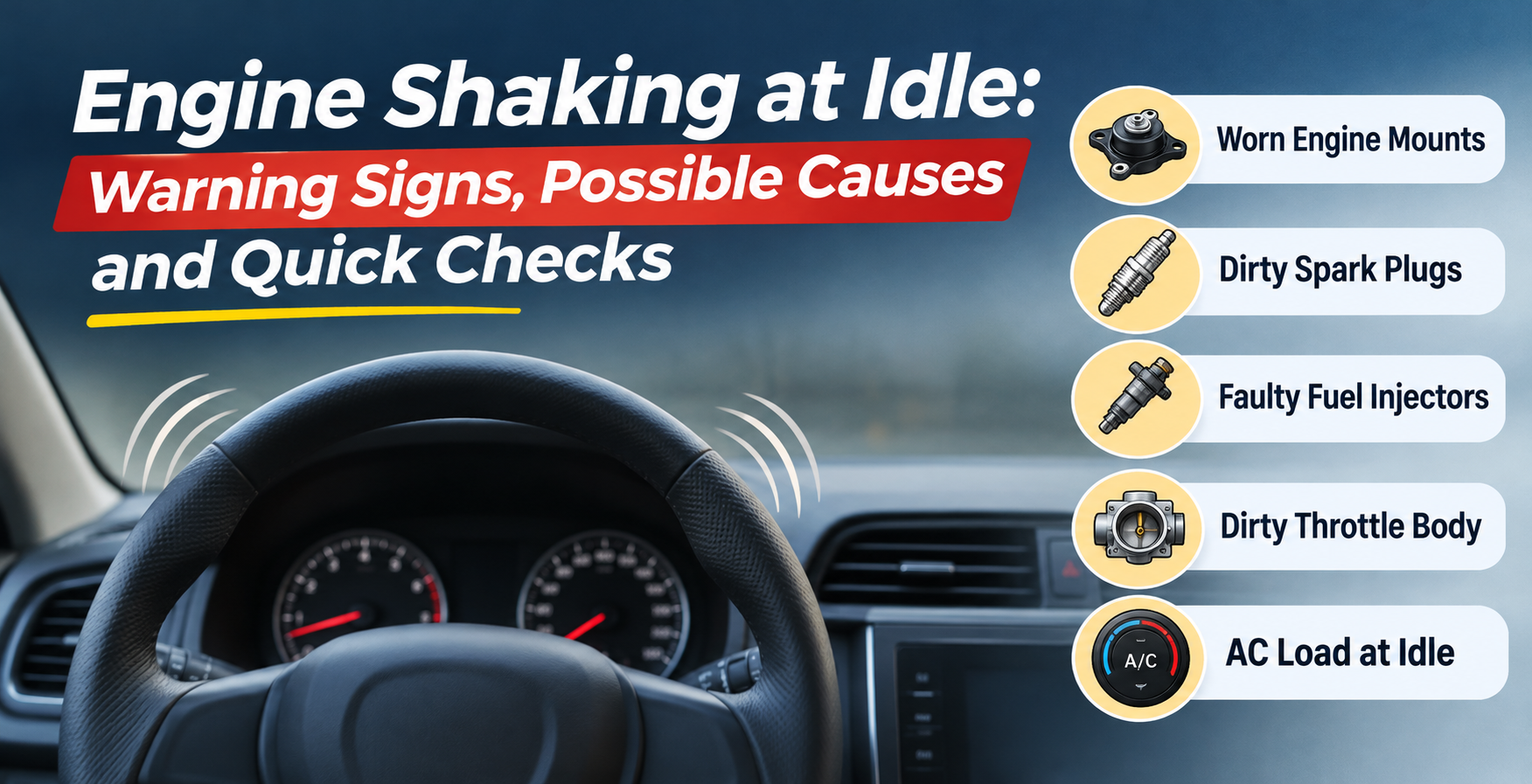
Spark plugs.
Wiper blades.
Brake pads.
Tyres.
Suspension bushes.
Engine mounts.
These components do not all require replacement at the same interval.
A battery may need replacement if it fails a suitable condition or load test. A drive belt may need replacement if it shows cracking, damage or reaches its specified replacement interval.
Spark plug replacement depends on the engine design and the manufacturer's schedule. Some vehicles use long-life spark plugs, while others require more frequent replacement.
Wiper blades should be replaced when they leave streaks, skip across the windscreen or fail to clear water effectively.
Ask for inspection evidence before approving parts that are not obviously damaged.
Service centres sometimes recommend additional treatments beyond routine maintenance.
These may include:
AC disinfectant treatment.
Engine decarbonisation.
Fuel injector cleaning.
Engine flush.
Paint protection.
Interior deep cleaning.
Underbody coating.
Ceramic coating.
Special cleaning packages.
Some optional services may be useful in particular circumstances, but they are not automatically required at every service.
For example, an AC cleaning treatment may be appropriate if the ventilation system has a persistent unpleasant smell or visible contamination. However, replacing a cabin filter and diagnosing the source of moisture may be more relevant in some cases.
Similarly, engine flush products should not be treated as a standard requirement for every oil change. Ask the technician to explain the specific problem and whether the vehicle manufacturer recommends the procedure.
Cosmetic services such as paint protection and interior detailing are generally a matter of personal preference rather than mechanical necessity.
You can request a separate estimate for optional services and decide later.
An itemised estimate is one of the most useful documents to request before your vehicle enters the workshop.
|
Bill Item |
What It Means |
What to Check |
|
Engine oil |
Lubrication fluid replacement |
Grade, quantity and specification |
|
Oil filter |
Filters contaminants from engine oil |
Correct part and replacement interval |
|
Engine air filter |
Cleans incoming engine air |
Condition and scheduled replacement |
|
Cabin filter |
Filters air entering the cabin |
Dust accumulation and airflow |
|
Brake pads |
Friction components used for braking |
Remaining thickness and wear |
|
Brake fluid |
Hydraulic braking fluid |
Manufacturer replacement schedule |
|
Coolant |
Helps regulate engine temperature |
Correct specification and condition |
|
Spark plugs |
Support petrol-engine ignition |
Service interval and condition |
|
Labour charges |
Cost of technician work |
Job description and labour time |
|
Consumables |
Materials used during service |
Actual items and applicable charges |
|
Optional treatments |
Additional cleaning or protection |
Whether genuinely needed |
Compare the estimate with the final invoice. If additional work was carried out, ask whether it was approved before completion.

You do not need to be a mechanical expert to understand your service bill. Asking a few direct questions can help you make better decisions.
Why does this part need replacement?
Ask whether it has reached its service interval, failed an inspection or developed visible damage.
Can you show me the problem?
Request photographs, measurements or the old component wherever practical.
Is this work necessary immediately?
Some repairs are safety-critical and should not be delayed. Other maintenance items may be scheduled for a later visit if the manufacturer permits it.
Is the service manufacturer-recommended?
Ask whether the work appears in the vehicle's maintenance schedule or is an additional workshop recommendation.
What happens if I postpone it?
Ask about the risks, particularly if the recommendation involves brakes, tyres, steering, cooling or other safety-related systems.
Can I get a separate estimate?
A separate estimate helps you compare costs and distinguish essential repairs from optional treatments.
Hatchback vs Sedan vs SUV: Which Car Type Suits You Best?
A few simple habits can make vehicle servicing more transparent.
Keep your service records: Maintain previous invoices, job cards and maintenance reports. This helps prevent unnecessary repeat replacements.
Follow the owner's manual: Use the manufacturer's recommended service intervals and fluid specifications.
Request an inspection report: Ask for details of any components marked as worn, damaged or requiring attention.
Approve additional work in writing: Confirm the revised estimate before the workshop carries out work beyond the original approval.
Check replaced parts: Where practical, ask to see the old components and verify that the replacement matches the approved estimate.
Separate essential and optional work: Ask the service advisor to divide safety-related repairs, scheduled maintenance and convenience treatments.
Check the final bill: Compare the invoice with the approved estimate and clarify unexpected charges before payment.
Choosing the cheapest service option is not necessarily the best way to maintain a vehicle.
Using incorrect engine oil, unsuitable filters or low-quality replacement components can create problems later.
At the same time, a higher bill does not automatically mean better service. A workshop should be able to explain every major charge and show why recommended work is necessary.
The objective should be to receive the correct maintenance at a reasonable price, using compatible parts and following the manufacturer's procedures.
A transparent service centre will explain the condition of the vehicle, provide an itemised estimate and obtain approval before carrying out additional repairs.
Understanding your car service bill is an important part of responsible vehicle ownership. Every item on the invoice should have a clear purpose, whether it is scheduled maintenance, an inspection-based repair or an optional service.
Engine oil, filters, brake components, coolant and other fluids should be replaced according to manufacturer recommendations and actual vehicle condition. Tyre services, battery replacement and other repairs should be supported by suitable inspection findings.
Optional treatments such as engine cleaning, AC treatments and cosmetic protection should be evaluated separately rather than automatically included in every service.
Before approving the final bill, ask for an itemised estimate, understand why each component needs attention and confirm the cost of additional work.
A little attention to your service invoice can help you maintain your car properly, control ownership expenses and make better decisions about repairs.












Hyundai
₹8.00 - 15.65 Lakh