Khyati Sharma 2026-08-23
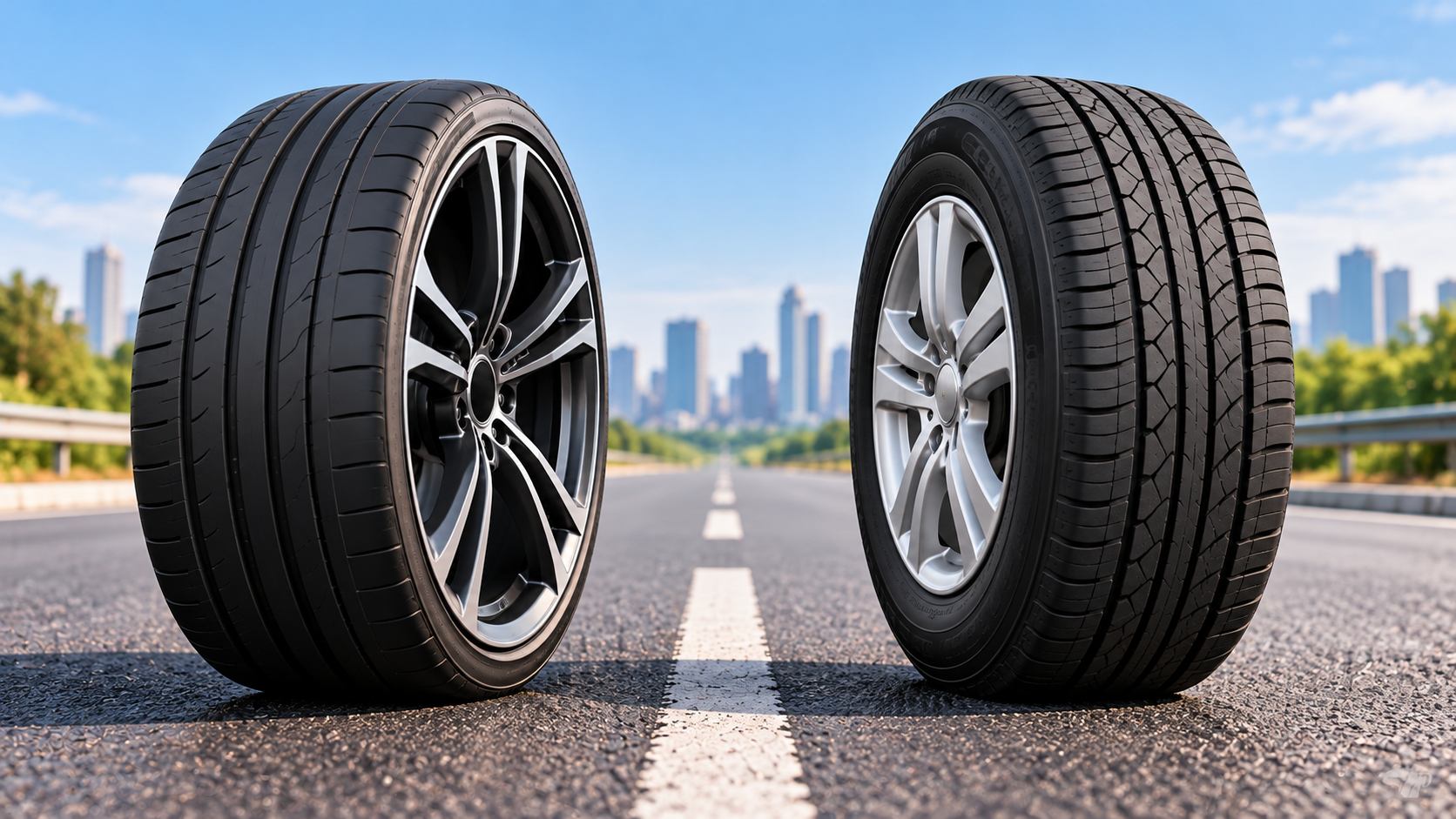
Low-profile tyres are often associated with premium cars, sporty styling and better road handling. Their shorter sidewalls and wider appearance can make a vehicle look more aggressive. However, does that mean they are the best option for every road condition? Not necessarily. While low-profile tyres can offer certain performance advantages, they also come with limitations, particularly on rough roads, potholes and uneven surfaces.
Tyres are one of the most important components of any vehicle. They influence braking performance, steering response, ride comfort, road grip, fuel efficiency and overall driving safety. Choosing the correct tyre is therefore about much more than appearance.
Many car owners believe that low-profile tyres automatically improve performance and make a vehicle safer. This is a common misconception. The right tyre depends on the vehicle's design, suspension setup, driving conditions, road quality and the manufacturer's recommendations.
Tyres Are Safe Until the Tread Becomes Completely Smooth: Myth or Fact?
A low-profile tyre is a tyre with a relatively short sidewall compared with its width. The sidewall is the section of the tyre between the wheel rim and the road-contacting tread.
Tyre sizes are usually printed on the sidewall in a format such as 205/55 R16.
Here is what each number means:
205: The tyre's width in millimetres.
55: The aspect ratio, meaning the sidewall height is 55% of the tyre's width.
R: Radial construction.
16: The wheel rim diameter in inches.
A lower aspect ratio generally means a shorter sidewall. For example, a 205/55 R16 tyre has a taller sidewall than a 205/40 R17 tyre, assuming the same nominal width.
Low-profile tyres are commonly found on sports cars, luxury vehicles and higher variants of some passenger cars. They are often paired with larger alloy wheels to create a sportier appearance.
However, a larger wheel and shorter sidewall do not automatically mean better overall performance.

One of the biggest reasons drivers choose low-profile tyres is their appearance. Larger alloy wheels with shorter tyre sidewalls can give a vehicle a premium and sporty look.
Apart from styling, low-profile tyres can also offer certain driving benefits.
New Car vs Used Car: Which One Should You Buy?
1. Better Steering Response
Low-profile tyres generally have shorter sidewalls, which can reduce sidewall flex during cornering and quick steering movements.
This may make the vehicle feel more responsive when changing direction. Drivers may notice sharper steering feedback, particularly on smooth roads.
However, steering response also depends on tyre construction, compound, tread design, inflation pressure and suspension tuning.
2. Improved Cornering Stability
A tyre's sidewall flexes when a vehicle takes a corner. A shorter sidewall can help reduce this movement, allowing the tyre to maintain a more controlled shape under certain loads.
This can improve the feeling of stability during spirited driving.
However, the actual grip available depends on the tyre's rubber compound, tread design, temperature and contact with the road. A low-profile tyre is not automatically better at cornering than a well-designed standard-profile tyre.
3. Sportier Appearance
Low-profile tyres are popular because they expose more of the alloy wheel and create a performance-oriented appearance.
Many premium cars use larger wheels and lower-profile tyres to complement their exterior design.
For some buyers, this visual improvement is an important reason to select a particular vehicle variant.

4. Potentially Better Performance on Smooth Roads
On smooth highways and well-maintained roads, performance-oriented low-profile tyres can deliver precise handling and responsive steering.
They may also be suitable for vehicles designed around sporty suspension setups.
However, the tyre must still be matched to the vehicle and its intended use.
Company-Fitted vs Aftermarket Accessories: Which Is Better?
Despite their advantages, low-profile tyres have some important disadvantages. These become particularly noticeable when driving on damaged roads, potholes, uneven surfaces and broken patches.
1. Reduced Ride Comfort
The tyre sidewall acts as an additional cushioning layer between the wheel and the road. A taller sidewall generally provides more flexibility to absorb smaller road imperfections.
Low-profile tyres have less sidewall height available to deform over bumps and uneven surfaces.
As a result, more road impact can be transmitted to the suspension and cabin.
Drivers may notice:
A firmer ride over speed breakers.
More noticeable vibrations on uneven roads.
Greater impact when crossing potholes.
Less comfort on broken road surfaces.
This can be especially important for people who regularly drive on poorly maintained roads.
2. Higher Risk of Sidewall Damage
One of the biggest disadvantages of low-profile tyres is their reduced sidewall protection.
When a vehicle hits a deep pothole or sharp road edge, the tyre can get compressed between the obstacle and the wheel rim.
With less sidewall height, there may be a greater risk of:
Sidewall bulges.
Cuts or tears.
Pinch damage.
Wheel rim bending.
Tyre failure in severe cases.
The risk depends on speed, tyre pressure, load, pothole shape and tyre construction. Low-profile tyres are not guaranteed to suffer damage, but they generally offer less cushioning against severe impacts.
3. Expensive Replacement Costs
Low-profile tyres are often fitted to larger alloy wheels. Depending on the vehicle and tyre brand, replacement tyres may cost more than conventional sizes.
Some performance-oriented low-profile tyres also use specialised rubber compounds and construction methods.
If a tyre is damaged by a pothole or road impact, the owner may need to replace it rather than repair it.
A damaged alloy wheel can add further expenses.
4. Greater Risk of Wheel Damage
The tyre protects the wheel rim from direct contact with road obstacles. A shorter sidewall provides less protection when a vehicle hits a pothole or raised road edge.
In some situations, the impact can bend or crack an alloy wheel.
This can lead to air leakage, vibration and additional repair costs.
5. Not Always Better for Everyday Driving
Low-profile tyres are often associated with sporty driving, but most everyday driving involves traffic, speed breakers, uneven roads and frequent braking.
A comfortable, properly specified standard-profile tyre may be a better option for regular commuting.
Drivers should consider their actual road conditions rather than selecting tyres only for their appearance.
|
Parameter |
Low-Profile Tyres |
Standard-Profile Tyres |
|
Sidewall height |
Shorter |
Generally taller |
|
Steering response |
Can feel sharper |
Often more comfort-oriented |
|
Cornering feel |
Less sidewall flex in many designs |
More sidewall movement may occur |
|
Ride comfort |
Generally firmer |
Generally more comfortable |
|
Pothole protection |
Lower cushioning capacity |
More sidewall cushioning |
|
Wheel protection |
Greater exposure to impact damage |
Generally better protection |
|
Appearance |
Sporty and aggressive |
Conventional |
|
Replacement cost |
Can be higher |
Often more affordable |
|
Best suited for |
Performance-focused driving and suitable roads |
Everyday driving and varied road conditions |
Indian road conditions vary significantly between cities, highways and rural areas. Some roads are smooth and well-maintained, while others have potholes, uneven patches, broken surfaces and poorly designed speed breakers.
This makes tyre selection particularly important.
For drivers who mostly travel on smooth expressways and well-maintained urban roads, low-profile tyres can provide responsive handling and a sporty appearance.
However, people who regularly drive through areas with potholes, damaged roads or uneven surfaces may benefit from tyres with a taller sidewall, provided the size is approved for their vehicle.
For example, a driver travelling daily through city traffic may encounter unexpected potholes, sharp road edges and speed breakers. A tyre with a little more sidewall height can provide additional cushioning in such conditions.
That does not mean every Indian driver should avoid low-profile tyres. It simply means that road conditions should be considered before choosing a tyre.

Another common belief is that low-profile tyres always provide shorter braking distances.
This is not necessarily true.
Braking performance depends on several factors, including:
Tyre compound and rubber quality.
Tread pattern and condition.
Road surface.
Tyre temperature.
Inflation pressure.
Vehicle weight.
Brake system performance.
ABS and electronic stability systems.
A high-quality low-profile performance tyre may offer excellent braking grip in suitable conditions. However, a well-designed standard-profile tyre can also deliver strong braking performance.
The aspect ratio alone cannot determine how quickly a vehicle will stop.
Drivers should focus on tyre quality, condition and the manufacturer's recommended specifications rather than assuming that a lower profile automatically means better braking.
Changing tyre dimensions can influence fuel efficiency, but the result depends on the complete wheel and tyre combination.
A larger alloy wheel may weigh more than the original wheel, increasing unsprung mass and rotational inertia. This can affect acceleration, suspension response and energy consumption.
Rolling resistance also plays an important role. Some performance tyres prioritise grip over efficiency, while other low-profile tyres are designed to balance both.
If the overall tyre diameter changes significantly, the speedometer and odometer readings may also become inaccurate.
Therefore, changing to a lower-profile tyre should not be done without checking the approved wheel and tyre combinations for the vehicle.
Tyre Pressure Should Be Checked Immediately After a Long Drive: Myth or Fact?
Some car owners upgrade their wheels and tyres to improve the appearance of their vehicles. However, changing tyre sizes without proper consideration can create safety and performance problems.
Before making any change, consider these points:
1. Check the manufacturer's recommendations: Always refer to the owner's manual or the vehicle manufacturer's approved tyre-size information.
2. Maintain the correct overall diameter: A major change in overall tyre diameter can affect speedometer readings, gearing and vehicle systems.
3. Check wheel compatibility: The wheel width, offset, bolt pattern and load rating must be suitable for the vehicle.
4. Consider suspension clearance: The new tyre and wheel combination should not rub against the suspension, bodywork or wheel arches.
5. Check load and speed ratings: Replacement tyres must meet the vehicle's required load and speed ratings.
6. Consult a tyre specialist: A qualified professional can help determine whether a proposed combination is suitable.
Simply fitting a larger alloy wheel and a shorter sidewall tyre does not guarantee a safe upgrade.
The best tyre is not necessarily the one with the largest wheel or shortest sidewall. It is the one that matches your vehicle and driving conditions.
Consider the following factors before buying new tyres:
Daily road conditions: Choose a tyre combination that can handle the roads you regularly travel on.
Driving style: Performance-focused drivers may prefer tyres designed for sharper handling, while everyday commuters may prioritise comfort.
Vehicle specifications: Follow the approved tyre sizes and load ratings.
Budget: Consider the purchase price, replacement availability and potential repair costs.
Weather conditions: Select tyres suitable for the climate and conditions in which you drive.
Tyre maintenance: Maintain the recommended inflation pressure and inspect tyres regularly.
Regular inspection is important regardless of tyre profile. Check for cuts, cracks, bulges, uneven tread wear and embedded objects. Replace damaged tyres when necessary.
Myth. Low-profile tyres are not the best choice for every road.
They can offer sharper steering response, reduced sidewall flex and a sporty appearance, making them attractive for performance-oriented vehicles and smooth road conditions.
However, they generally provide less cushioning over potholes and uneven surfaces. They can also increase the risk of sidewall and wheel damage during severe road impacts.
For everyday driving, particularly on roads with frequent potholes and broken surfaces, a properly selected standard-profile tyre may provide a better balance of comfort, protection and practicality.
The most important thing is to choose tyres that meet your vehicle manufacturer's specifications and suit your driving environment. Never select a tyre only because it looks sporty or has a lower aspect ratio.