Khyati Sharma 2026-09-01
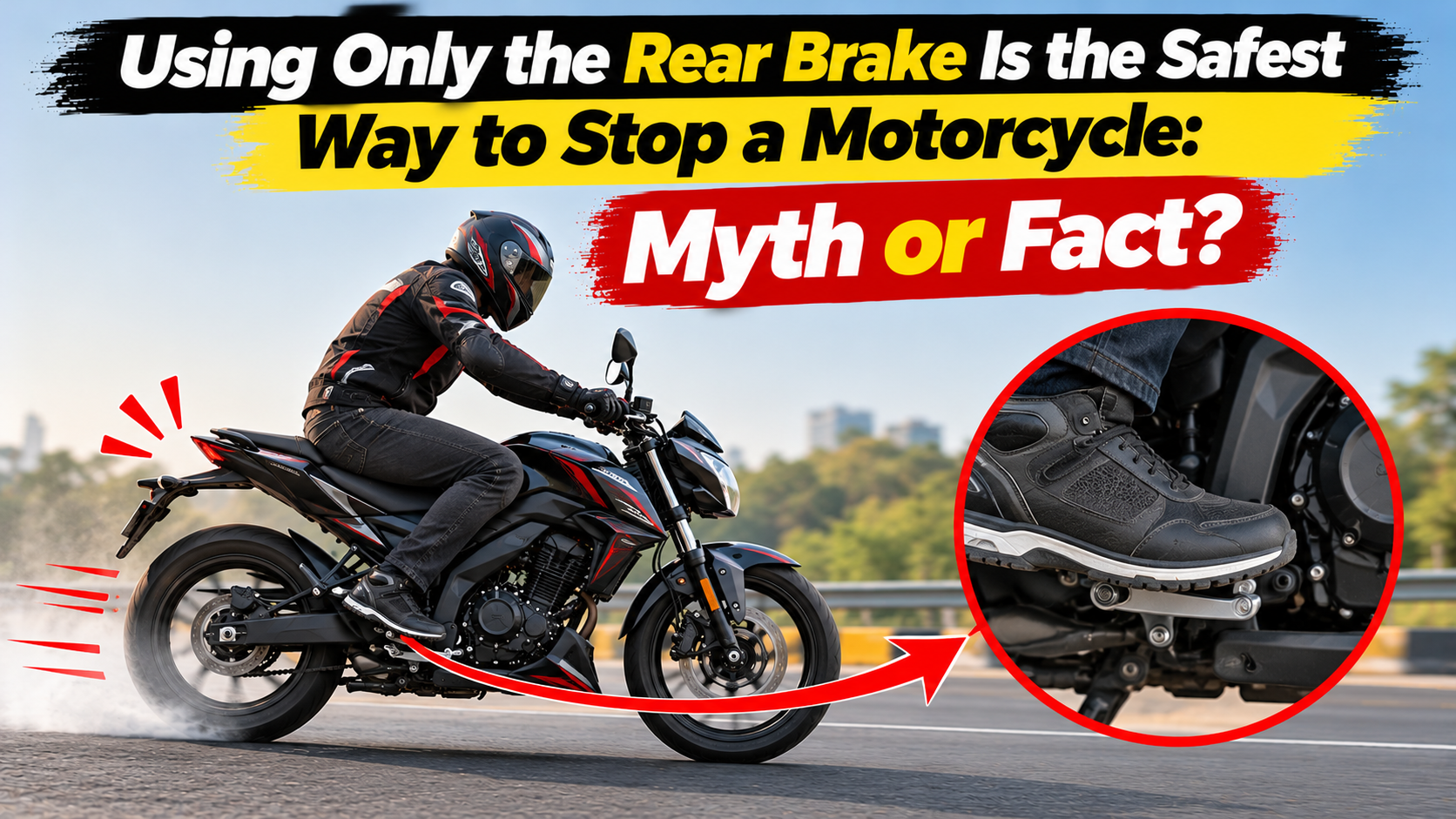
Motorcycle braking is one of the most important skills every rider must learn. Whether riding through busy city traffic, travelling on highways or navigating wet roads, knowing how to stop safely can help prevent accidents and reduce the risk of losing control.
A common belief among riders is that using only the rear brake is the safest way to stop a motorcycle. This idea often comes from the fear that applying the front brake could make the front wheel lock, throw the rider forward or cause the motorcycle to fall.
However, this belief is misleading. For most motorcycles, using both the front and rear brakes smoothly and progressively provides more effective stopping power than relying only on the rear brake. The front brake generally contributes a larger share of the available braking force during a firm stop because weight transfers towards the front wheel as the motorcycle slows down.
That does not mean riders should grab the front brake suddenly or apply maximum pressure in every situation. Safe braking requires the right technique, appropriate pressure and awareness of road conditions.
Does a Higher Engine Capacity Mean a Faster Bike? Understanding CC, Power and Speed
Most conventional motorcycles and scooters have separate front and rear braking systems, although some models use linked or combined braking systems that distribute braking force between the wheels.
Each brake plays an important role.
The front brake provides a major portion of the motorcycle's stopping force, particularly during hard braking on a straight, dry road. The rear brake helps contribute to deceleration, stabilise the motorcycle and provide additional control when used correctly.
When both brakes are used smoothly, the rider can make better use of the available tyre grip at both ends of the motorcycle.
Relying only on one brake means the rider is not fully using the available braking capability of a conventional two-brake system. The result can be a longer stopping distance, although the exact difference depends on speed, tyres, road conditions, motorcycle design and rider technique.
The safest braking method is therefore not simply about choosing the front or rear brake. It is about using the available braking system correctly.

When a motorcycle moves forward and the rider applies the brakes, the motorcycle's weight transfers towards the front wheel. This happens because the motorcycle's forward motion is being reduced.
As the front suspension compresses and the load on the front tyre increases, the front wheel can generally provide a larger share of the available braking force.
On a suitable road surface, a properly maintained motorcycle with good tyres can therefore achieve much of its stopping performance through the front brake.
The rear wheel experiences the opposite effect: as weight transfers forward, the load on the rear tyre decreases. This means the rear wheel may reach its grip limit more quickly during hard braking.
If the rider presses the rear brake too forcefully, the rear wheel can lock or slide, particularly on slippery surfaces or when the motorcycle is heavily unloaded at the rear.
However, front-brake effectiveness depends on the motorcycle's geometry, tyre grip, suspension, braking hardware and road conditions. Riders should always follow the manufacturer's instructions and practise the correct technique in a safe environment.
Manual vs Automatic Car: Pros and Cons Explained
Using only the rear brake may slow a motorcycle, but it generally limits the braking force available during a firm stop on a normal road.
There are several reasons why this approach can be less effective.
1. Stopping Distance May Increase
The rear brake alone generally cannot use the motorcycle's full braking potential on a dry, paved road.
If a rider needs to stop quickly, relying only on the rear brake can leave less available deceleration than using both brakes correctly.
Stopping distance is affected by speed, reaction time, tyre condition, road surface and braking technique. A motorcycle travelling faster has significantly more energy to lose before it comes to a complete stop.
For this reason, riders should not assume that a rear-brake-only technique will be sufficient during an emergency.
2. The Rear Wheel Can Lock
Applying too much rear-brake pressure can cause the rear wheel to lose traction and slide.
A locked rear wheel can reduce directional stability, especially if the motorcycle is turning or the road surface has loose gravel, sand, mud or water.
If the rear wheel locks, the appropriate response depends on the motorcycle, the situation and the rider's training. Avoid abrupt steering inputs and follow recognised motorcycle safety training for recovering from a rear-wheel skid.
The best strategy is to avoid creating the skid in the first place by applying the brakes progressively and keeping pressure appropriate to the available grip.
3. Emergency Stops Can Become More Difficult
In an emergency, riders need to reduce speed as effectively as the available grip and motorcycle stability allow.
If a rider habitually uses only the rear brake, they may not be prepared to use the front brake effectively when a vehicle suddenly cuts across their path or traffic stops unexpectedly.
Practising progressive braking in a controlled setting can help riders develop confidence and reduce panic during an emergency.
4. Wet Roads Make Technique Even More Important
On wet roads, painted markings, metal covers, oily patches and loose surfaces can reduce tyre grip. Both front and rear wheels may lose traction if braking inputs exceed the available grip.
This does not mean the rear brake should always be used alone in wet conditions. Instead, riders should reduce speed, increase following distance and apply both brakes smoothly, using less pressure when grip is limited.
If the motorcycle has ABS, the system can help prevent wheel lock under suitable conditions, but it cannot overcome every loss-of-traction situation.
|
Feature |
Front brake |
Rear brake |
|
Main role |
Provides a major share of stopping force |
Adds braking force and helps control deceleration |
|
Weight transfer |
Becomes more heavily loaded during braking |
Becomes less heavily loaded during braking |
|
Effectiveness during firm stops |
Generally provides greater stopping power |
Usually provides a smaller share of stopping power |
|
Risk if applied too aggressively |
Front-wheel lock or loss of control on motorcycles without effective ABS intervention |
Rear-wheel lock or skidding |
|
Best use |
Smooth, progressive application alongside the rear brake |
Smooth application alongside the front brake |
|
Wet or slippery roads |
Requires careful pressure control |
Also requires careful pressure control |
|
General recommendation |
Use progressively as conditions allow |
Combine with the front brake as appropriate |
Safe braking begins before the rider touches either brake lever or pedal. Looking ahead, anticipating traffic and maintaining enough following distance give the rider more time to respond.
Step 1: Look Ahead and Assess the Situation
Look towards the intended stopping area rather than focusing only on the vehicle immediately in front. Scan for pedestrians, vehicles, potholes, road debris and other hazards.
Early observation allows the rider to reduce speed gradually instead of making a sudden stop.
Step 2: Roll Off the Throttle
Close the throttle smoothly when braking is required. This begins reducing acceleration and prepares the motorcycle for braking.
Avoid making abrupt movements that could upset the motorcycle's balance.
Step 3: Apply the Front Brake Progressively
Squeeze the front brake lever smoothly and progressively. Build braking pressure rather than grabbing the lever suddenly.
Progressive application helps the front tyre and suspension respond to the changing load. The amount of pressure required depends on speed, road grip, motorcycle design and the urgency of the stop.
During a genuine emergency, firm braking may be necessary, but riders should learn the correct technique through recognised training rather than experimenting in traffic.

Step 4: Apply the Rear Brake Smoothly
Apply the rear brake in coordination with the front brake. The amount of rear-brake pressure required will vary as weight transfers forward.
Avoid pressing the rear brake so hard that the wheel locks. Motorcycles equipped with combined braking systems may distribute braking force differently, so riders should understand their particular model.
Step 5: Keep the Motorcycle Stable
For routine braking and emergency stops, the motorcycle should generally be as upright as practical, with the handlebars controlled and the rider looking towards the intended path.
Braking while leaned over in a corner requires additional care because the tyres are already using grip to turn. Sudden braking can reduce the grip available for cornering.
When possible, reduce speed before entering a bend. If braking is necessary while cornering, use smooth inputs appropriate to the motorcycle and road conditions.
Step 6: Practise in a Safe Environment
New riders should practise progressive stops in an empty, controlled area under suitable conditions, following professional instruction.
Learn how the front and rear brakes respond at low speeds before attempting harder stops. If the motorcycle has ABS, understand its behaviour and limitations.
Do not practise emergency braking in live traffic or on public roads where other road users could be put at risk.
Yes. Although relying exclusively on the rear brake is not generally the best approach for maximum stopping performance, the rear brake remains valuable in several situations.
Low-speed manoeuvring: Gentle rear-brake use can help manage speed during slow turns and controlled manoeuvres, particularly when combined with suitable clutch and throttle control on motorcycles with manual transmissions.
Smooth speed reduction: The rear brake can help reduce speed when a small amount of deceleration is required.
Certain loose surfaces: On gravel or uneven terrain, braking techniques may differ from those used on dry asphalt. Riders should use training specific to the motorcycle and surface rather than assuming that one brake is always safer.
Combined braking systems: Some motorcycles automatically distribute braking force when one control is used. The rider should understand the system fitted to their motorcycle and follow the owner's manual.
The important distinction is between using the rear brake as part of a controlled technique and believing that it should always be the only brake used.
Anti-lock braking systems (ABS) help prevent the wheels from locking during braking when the system detects conditions requiring intervention.
On motorcycles with ABS, the system can help the rider maintain stability and steering control during hard braking. However, ABS does not eliminate the need for correct technique.
It cannot create additional tyre grip beyond what the road surface allows, nor can it guarantee that the motorcycle will stop within a particular distance. Gravel, mud, loose sand and other surfaces may still present challenges.
Some motorcycles have ABS on both wheels, while others may have different configurations depending on the model and market. Riders should check their owner's manual to understand the system and any limitations.
Even with ABS, using both brakes correctly and maintaining a safe following distance remain important.
Riders should avoid the following mistakes:
Using only the rear brake because they fear the front brake.
Grabbing the front brake suddenly without progressively building pressure.
Applying excessive rear-brake pressure and locking the wheel.
Braking abruptly while the motorcycle is significantly leaned over.
Following another vehicle too closely.
Ignoring worn tyres, damaged brakes or low tyre pressure.
Assuming ABS can prevent every crash.
Practising emergency braking in traffic instead of a controlled area.
Regular maintenance is also essential. Brake pads, discs, fluid, tyres and other braking-related components should be inspected and serviced according to the manufacturer's schedule.
Myth: Using only the rear brake is the safest way to stop a motorcycle.
For most conventional motorcycles on normal paved roads, using both the front and rear brakes smoothly and progressively provides more effective stopping than relying only on the rear brake.
The front brake generally contributes a larger share of stopping force because weight transfers towards the front wheel as the motorcycle slows. The rear brake remains important, but excessive pressure can cause the rear wheel to lock or slide.
Safe braking depends on technique, road conditions, motorcycle design and tyre grip. Riders should practise the correct method, maintain their braking systems and leave enough space to stop safely.