
 Khyati Sharma 2026-08-26
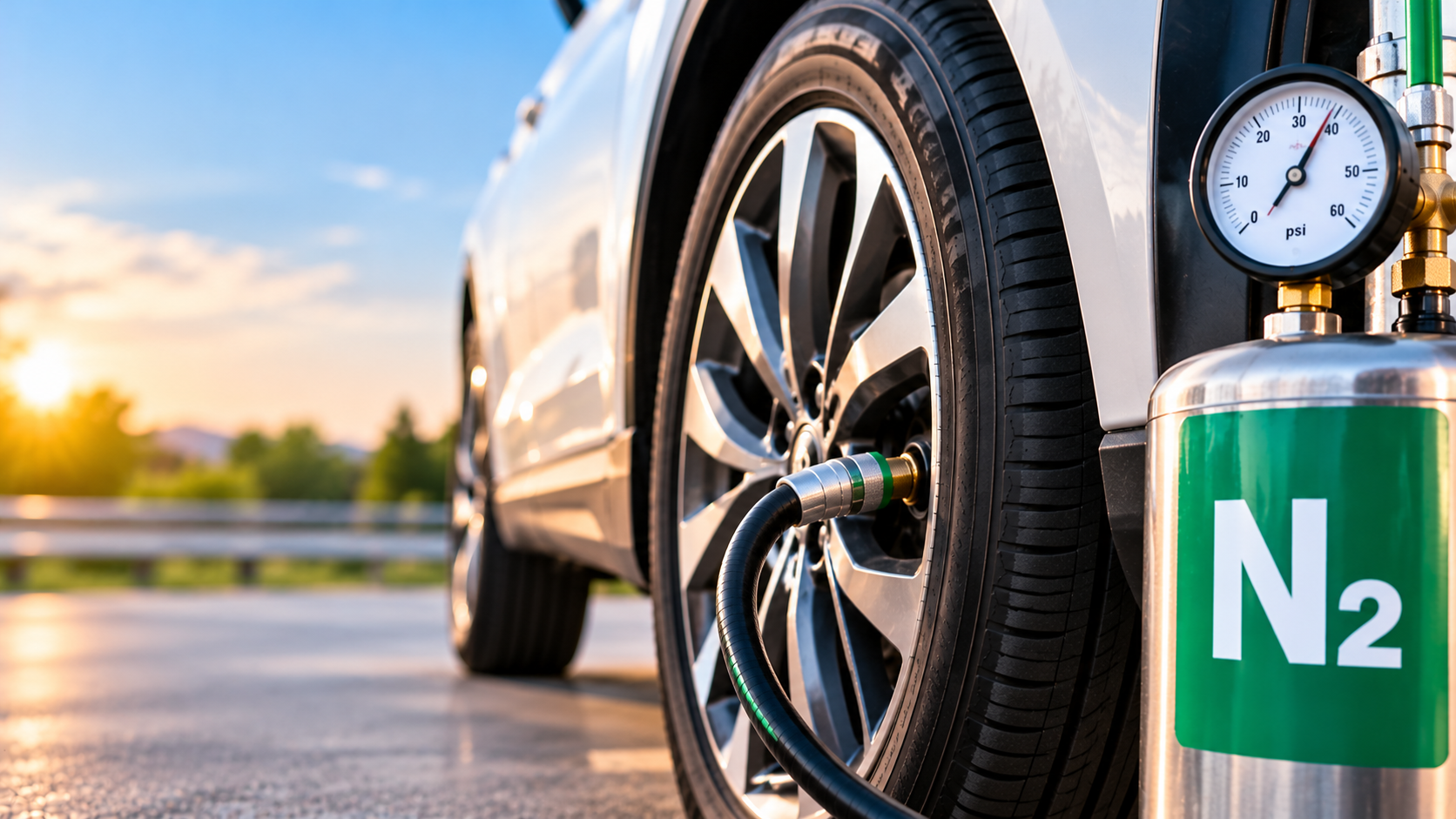
Nitrogen-filled tyres are often promoted as a better option for motorists because they can maintain pressure for longer than tyres filled with ordinary compressed air. Some tyre shops even suggest that nitrogen eliminates the need for frequent pressure checks. But is that really true?
The answer is no. Nitrogen-filled tyres can also lose pressure over time. Although nitrogen may reduce natural pressure loss through the tyre rubber, it cannot prevent air from escaping through punctures, damaged valves, loose fittings or leaks around the wheel rim.
For car and motorcycle owners, understanding the difference between nitrogen and regular compressed air is important. Both options can be used safely when the correct tyre pressure is maintained. The real key to tyre safety is regular inspection rather than relying entirely on the type of gas used for inflation.
Let's understand how nitrogen works, why tyres still lose pressure and whether nitrogen is worth choosing for everyday driving.
How to Choose Between Two Similar Car Models: A Decision Framework
Verdict: Myth.
Nitrogen-filled tyres do lose pressure. Nitrogen can reduce the rate of natural pressure loss because it permeates through tyre rubber more slowly than some of the other gases present in ordinary air. However, this does not make a tyre completely airtight.
Tyres can lose pressure through several routes, including:
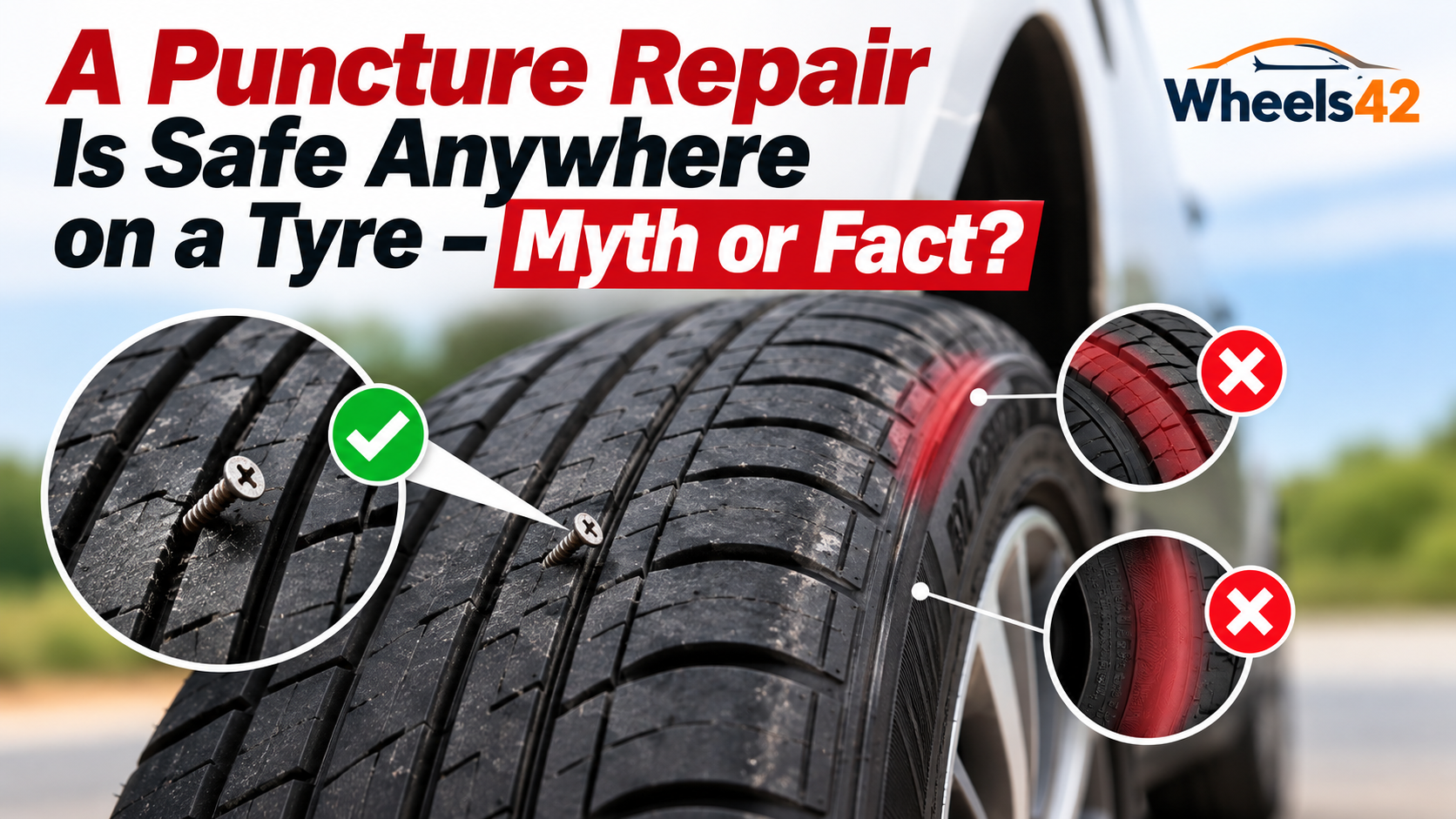
Small punctures caused by nails, screws or sharp objects.
Damaged or ageing tyre valves.
Poor sealing between the tyre and wheel rim.
Cracks or damage to the wheel.
Temperature-related changes in pressure.
Incorrect tyre installation or damaged sealing surfaces.
Even when a tyre is filled with nitrogen, these problems can still occur.
Michelin also explains that nitrogen cannot prevent pressure loss caused by leaks at the tyre-rim interface, valve and wheel. Therefore, regular pressure checks remain necessary regardless of whether a vehicle uses nitrogen or ordinary compressed air.
Nitrogen tyre inflation involves filling tyres with nitrogen-rich gas instead of using ordinary compressed air.
Normal atmospheric air already contains approximately 78% nitrogen, around 21% oxygen and small quantities of other gases. Nitrogen inflation uses a gas supply with a much higher nitrogen concentration, generally produced by separating nitrogen from compressed air.
The main difference is that nitrogen inflation can provide a drier, more controlled gas mixture with a lower oxygen content.
This is why nitrogen is commonly promoted by tyre shops and service centres as an alternative to conventional air.
However, it is important to understand that nitrogen is not a completely different type of tyre technology. The tyre itself remains the same, and the recommended inflation pressure does not change simply because nitrogen is used.

There are several reasons why nitrogen-filled tyres cannot maintain exactly the same pressure indefinitely.
1. Natural Air Permeation Through Rubber
Tyres are made using rubber compounds and other materials that are not completely impermeable to gases.
Over time, small quantities of gas can gradually pass through the tyre's inner liner and escape into the atmosphere.
Nitrogen generally permeates through tyre rubber more slowly than oxygen. This means a nitrogen-filled tyre may maintain its pressure for longer under otherwise similar conditions.
However, the difference does not mean that pressure loss stops completely.
2. Damaged or Leaking Tyre Valves
The tyre valve plays an important role in maintaining inflation pressure. It allows air or nitrogen to enter the tyre while preventing gas from escaping.
Over time, valve components can become worn, damaged or loose. A faulty valve core or deteriorated rubber valve stem can create a slow leak.
A missing or damaged valve cap can also allow dirt and moisture to enter the valve area.
Nitrogen cannot prevent pressure loss caused by a defective valve.
3. Punctures From Sharp Objects
Indian roads can expose vehicle tyres to nails, screws, glass pieces and other sharp objects.
Sometimes these objects create a slow puncture rather than causing immediate deflation. A tyre may appear normal for several hours or even days while gradually losing pressure.
This problem affects both nitrogen-filled and air-filled tyres.
If a tyre repeatedly loses pressure, it should be inspected by a qualified tyre technician rather than simply being topped up.
4. Leakage Around the Wheel Rim
A tyre must form a proper airtight seal against the wheel rim. If the rim is damaged, corroded or dirty, gas may escape from the contact area.
Poor tyre fitting can also affect the seal.
This type of pressure loss has nothing to do with whether nitrogen or ordinary air is being used. Both gases can escape through an imperfect sealing surface.
5. Temperature Changes
Tyre pressure also changes with temperature.
When the temperature rises, the pressure inside a tyre generally increases. When the temperature falls, the pressure decreases.
For example, a vehicle parked in direct sunlight may show a different pressure reading from the same vehicle parked overnight in cooler surroundings.
Nitrogen does not eliminate this basic relationship between gas temperature and pressure.
This is why drivers should check tyre pressure when the tyres are cold and follow the manufacturer's recommended figures.
|
Parameter |
Nitrogen-Filled Tyres |
Regular Air-Filled Tyres |
|
Gas composition |
High nitrogen concentration |
Approximately 78% nitrogen and 21% oxygen |
|
Natural pressure loss |
Generally slower through tyre rubber |
Can be faster because oxygen permeates more readily |
|
Moisture content |
Usually lower when supplied properly |
Depends on the compressor and air-drying system |
|
Pressure maintenance |
Regular checks still required |
Regular checks still required |
|
Puncture protection |
No special protection |
No special protection |
|
Temperature-related pressure changes |
Still occur |
Still occur |
|
Availability |
Available at selected tyre shops and service centres |
Widely available |
|
Cost |
May involve an additional charge |
Often free or inexpensive |
Although the claim that nitrogen-filled tyres never lose pressure is incorrect, nitrogen does have some genuine advantages.
1. Slower Natural Pressure Loss
Nitrogen can reduce the rate at which gas escapes naturally through tyre rubber. As a result, tyres may retain their recommended pressure for longer compared with tyres inflated using ordinary compressed air.
This can be useful for vehicles that travel regularly over long distances or operate under demanding conditions.
However, the improvement is not a replacement for regular inspections.
2. Lower Moisture Content
Properly supplied nitrogen is generally dry. This can reduce the amount of moisture entering the tyre during inflation.
Moisture in compressed air can contribute to corrosion in certain wheel components and may affect pressure behaviour under changing temperatures.
The actual benefit depends on the quality of the nitrogen supply and inflation equipment.
3. Reduced Oxidation Inside the Tyre
Nitrogen is an inert gas under normal tyre operating conditions. Using a high-purity nitrogen mixture reduces the amount of oxygen inside the tyre.
This can help limit oxidation-related effects on internal materials over time. However, it should not be considered a guarantee of longer tyre life.
Tyre condition also depends on age, heat, loading, pressure, road conditions and maintenance.
4. Useful for Certain Specialised Applications
Nitrogen inflation is used in some demanding applications where controlled inflation conditions are important.
For ordinary passenger cars and motorcycles, however, the practical benefits may be relatively modest when compared with simply maintaining the correct pressure using good-quality compressed air.
New Car Booking Process Explained Step by Step
Nitrogen itself does not automatically improve fuel efficiency or extend tyre life.
The biggest factor affecting these areas is maintaining the correct tyre pressure.
When tyres are underinflated, rolling resistance increases. This means the engine needs to work harder to move the vehicle, which can reduce fuel efficiency.
Underinflation can also cause excessive heat generation and uneven tread wear.
Similarly, overinflated tyres can cause uneven wear, particularly towards the centre of the tread, and may affect grip and ride comfort.
Therefore, a nitrogen-filled tyre running at the wrong pressure can still cause problems.
The correct approach is to use the manufacturer's recommended pressure, whether the tyre contains nitrogen or compressed air.

Many vehicle owners worry that adding regular air to a nitrogen-filled tyre will damage it.
This is not true.
Nitrogen and compressed air can be mixed safely in normal tyre applications. Adding regular air will reduce the overall nitrogen concentration, but it will not damage the tyre simply because the two gases have been mixed.
For example, if a nitrogen-filled tyre becomes underinflated and a nitrogen filling station is unavailable, topping it up with regular compressed air is better than continuing to drive with insufficient pressure.
The most important priority is restoring the correct pressure.
If you want to maintain a high nitrogen concentration, you can have the tyres checked and refilled with nitrogen during the next suitable service visit.
New Car vs Used Car: Which One Should You Buy?
Nitrogen-filled tyres still require regular pressure checks.
A sensible maintenance routine for most drivers includes:
Check tyre pressure at least once every month.
Check pressure before starting a long highway journey.
Inspect tyres after driving over a sharp object or hitting a pothole.
Check the spare tyre regularly.
Inspect valve stems and valve caps for visible damage.
Have repeated pressure loss investigated by a tyre professional.
Pressure should ideally be measured when the tyres are cold. This generally means before driving or after the vehicle has been parked for around three hours.
Always use the pressure recommended by the vehicle manufacturer. The correct figures are usually printed on a sticker inside the driver's door area, in the owner's manual or near the fuel-filler flap.
Do not use the maximum pressure printed on the tyre sidewall as the normal recommended vehicle pressure.
Even drivers who choose nitrogen sometimes make mistakes that reduce the benefits of proper tyre maintenance.
Believing Nitrogen Eliminates Pressure Checks
This is the biggest misconception. Nitrogen may slow natural pressure loss, but punctures, valves and rim leaks can still reduce inflation pressure.
Paying Extra Without Understanding the Benefits
Some tyre shops charge additional money for nitrogen inflation. Before paying, drivers should understand that the benefits for ordinary everyday driving may be limited.
If good-quality regular compressed air is available, maintaining the correct pressure is more important than choosing nitrogen.
Ignoring a Slow Leak
A tyre that repeatedly loses pressure needs inspection. Simply filling it with nitrogen again will not fix a puncture or leaking valve.
Using Incorrect Pressure Settings
Some drivers assume nitrogen requires a different inflation pressure. It does not.
The manufacturer's recommended pressure remains the correct reference, regardless of the inflation gas.
Forgetting the Spare Tyre
The spare tyre can also lose pressure over time. Drivers should inspect it regularly, even if it is rarely used.
Manual vs Automatic Car: Pros and Cons Explained
For most everyday Indian motorists, nitrogen is an optional convenience rather than an essential requirement.
Drivers who regularly travel on highways, operate vehicles under demanding conditions or prefer a dry, controlled inflation gas may find nitrogen useful.
However, motorists who primarily use their vehicles for everyday commuting can safely use regular compressed air, provided the pressure is maintained correctly.
Indian road conditions make regular tyre inspections especially important. Potholes, construction debris, sharp objects and changing temperatures can all contribute to tyre-related problems.
Instead of spending extra money only to avoid pressure checks, drivers should invest in a reliable pressure gauge and develop a monthly inspection habit.
The statement "Nitrogen-filled tyres never lose pressure" is a myth.
Nitrogen can slow natural pressure loss through tyre rubber and may offer advantages related to moisture control and oxidation. However, it cannot prevent leaks caused by punctures, damaged valves, poor rim sealing or wheel damage.
Both nitrogen-filled and regular air-filled tyres require regular pressure checks.
For everyday drivers, the most important thing is not whether the tyre contains nitrogen or compressed air. It is whether the tyre is inflated to the correct pressure and maintained in good condition.
Remember: correct tyre pressure improves handling, braking performance, fuel efficiency and tyre life. Nitrogen can be an option, but regular tyre maintenance is essential.